

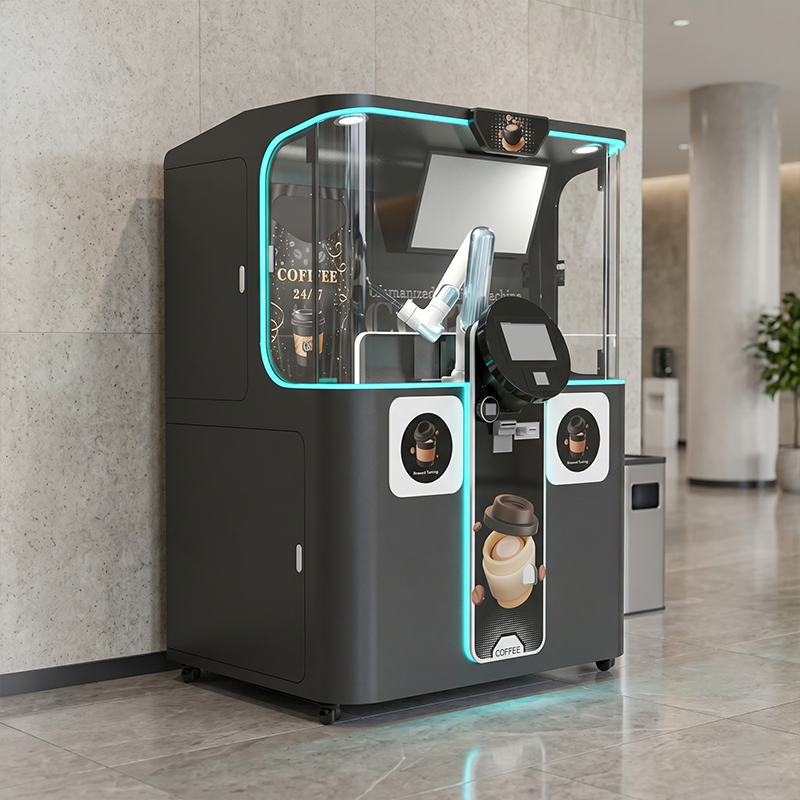
Commercial buyers should compare throughput, hygiene design, beverage flexibility, and after-sales support before choosing a machine. The right choice depends less on brand fame and more on how well the system fits the site.
How to Choose a Robot Coffee Machine Brand for Commercial Use
A robot coffee machine for business should solve a workflow problem, not just make coffee. In practice, the best brands are those that keep output stable during peak demand, simplify cleaning, and support predictable operation across many users.
Peak Throughput Requirements
Daily cup volume is the first filter because it determines whether a machine will stay efficient under load. JURA states that its professional automatic speciality machines suit locations consuming 10 to 200 cups per day, while WMF positions some fully automatic models for low, medium, and high-volume environments.
For office and workplace use, Nespresso Professional also emphasizes low-maintenance machines for high-volume consumption across different office sizes. That makes it a practical benchmark for buyers who need speed more than menu complexity.
Cleaning & Hygiene Protocols
Cleaning is a commercial requirement because beverage equipment is food-contact equipment. FDA guidance and U.S. sanitation rules require food-contact surfaces and utensils to be cleaned and sanitized to prevent contamination, and ISO 22000 frames food safety as a managed system across the supply chain.
Brands that automate cleaning or simplify maintenance reduce labor risk. WMF highlights user-friendly cleaning systems and automated cleaning options, which is important in staffed and self-service environments alike.
Comparison Table: Leading Commercial Robot Coffee Machine Brands
Brand Comparison Table: Commercial Coffee Machine Strengths and Best-Fit Scenarios
| Brand | Commercial strength | Best-fit scenario | Official source |
|---|---|---|---|
| JURA | Freshly ground specialty coffee, broad workplace fit, simple operation | Offices, showrooms, conference rooms, coffee-to-go areas | JURA Professional |
| Nespresso Professional | Capsule-based consistency, low maintenance, business-focused service model | Offices, hospitality, small businesses, guest-facing spaces | Nespresso business solutions |
| WMF | High-volume automation, cleaning systems, broad machine portfolio | Workplaces, restaurants, hotels, self-service points | WMF products |
| Yile Shangyun | Integrated vending, backend software, and OEM/ODM customization | Unattended retail, offices, transport hubs, and multi-device deployments | Yile Shangyun homepage |
Which Brands Are Best by Commercial Scenario?
The best brand depends on whether the site prioritizes service speed, drink variety, or unattended operation. A brand that excels in one setting may be average in another.
Office and Workplace Use
Office buyers usually need stable output, low noise, and minimal training. JURA and Nespresso are strong options here because both emphasize workplace suitability and ease of use, while WMF offers office-oriented fully automatic models with cleaning support.
For smaller teams, Nespresso’s business pages highlight compact, low-maintenance machines designed for office sizes of all kinds. For larger workplaces, WMF’s office solutions and cup-volume guidance make it more suitable when demand is higher and menus are broader.
Hospitality and Guest-Facing Areas
Guest-facing environments need a balance of presentation and consistency. JURA’s professional range is positioned for workplaces, showrooms, and conference rooms, while Nespresso’s business solutions are designed for employees, clients, and customers.
WMF is often stronger when the venue needs a wider menu and higher throughput. Its product pages emphasize multiple configurations for low, medium, and high-volume settings, which matters in hotels and restaurants with variable demand.
Unattended Retail and High-Traffic Sites
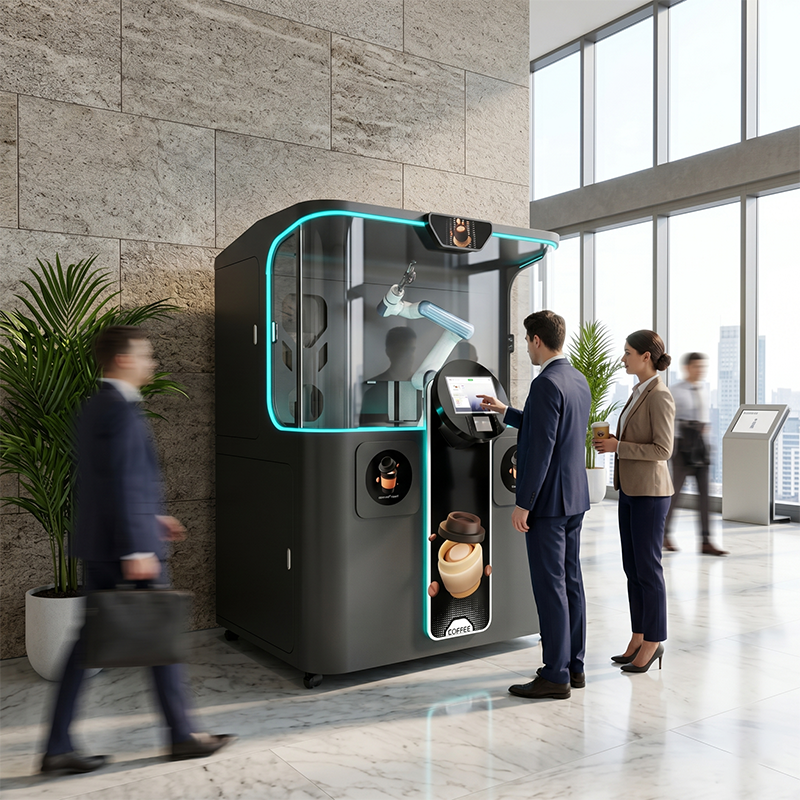
Unattended retail needs payment integration, remote management, and repeatable output more than premium barista theater. That is where vending-oriented systems become more relevant than traditional countertop machines.
Yile Shangyun fits this segment because its product structure combines intelligent drinks vending machines, service-oriented AI robots, and background management software. The company also states that it provides OEM and ODM customization, which is useful for distributors and operators building localized deployments.
Comparison Table: Commercial Selection Criteria by Use Case
Selection Table: What to Prioritize When Comparing Commercial Coffee Machine Brands
| Use case | Most important factor | Why it matters | Typical brand fit |
|---|---|---|---|
| Office breakroom | Ease of use | Reduces training and service interruptions | JURA, Nespresso, WMF |
| Hotel lobby | Drink consistency | Guests expect the same result every time | WMF, Nespresso |
| Unattended kiosk | Remote operation | Operators need monitoring and control | Vending-focused systems |
| Transport hub | Peak throughput | Short queues protect conversion | WMF, vending platforms |
| Brand activation | Interactive experience | Engagement supports traffic generation | AI robot-enabled systems |
What Commercial Buyers Should Ask Before Purchasing
Procurement should start with operating questions, not product brochures. The most useful questions are about cup capacity, cleaning frequency, ingredient format, payment support, and service response time.

- How many cups per day can the machine handle without performance loss?
- Does it support automatic cleaning or simplified sanitation steps?
- Can it run on beans, capsules, powder, or mixed beverage formats?
- Is remote monitoring available for stock, faults, and usage data?
- What is included in warranty, spare parts, and technical support?
These questions matter because commercial beverage equipment must stay operational under repeated use. FDA and U.S. sanitation rules make hygiene a baseline requirement, not an optional feature.
Cleaning, Water, and Consumables
Consumables and water quality affect both taste and uptime. Machines that use sealed capsules or standardized ingredients reduce variability, while bean-to-cup systems usually offer more menu flexibility at the cost of more maintenance.
For operators that also need cups, lids, powders, or stirrers, a supplier with a broader consumables line can simplify replenishment. Yile Shangyun’s catalog includes coffee cups, cup lids, stirring sticks, and beverage powders, which supports a one-stop procurement model.
Supplier Directory: Where Commercial Buyers Can Start
The best supplier list is the one that matches the operating model, not the loudest marketing claim. Buyers should compare a traditional commercial coffee machine supplier, a capsule-based office provider, and a vending-focused automation vendor before deciding.
- WMF for high-volume fully automatic systems and cleaning support.
- JURA Professional for workplace-friendly specialty coffee machines.
- Nespresso Professional for low-maintenance office and guest-service coffee.
- Yile Shangyun for vending-oriented automation, backend control, and OEM/ODM projects.
For buyers exploring a broader automation stack, the target website also organizes products into coffee equipment, ice-making equipment, vending machines, AI robots, and consumables. That structure is useful when a project needs more than a single robot coffee machine.
Why Some Brands Win on Total Cost of Ownership
Total cost of ownership is often more important than purchase price. A cheaper unit can become expensive if it needs frequent manual cleaning, more staff training, or slower service during peak hours.
WMF’s cleaning systems, JURA’s workplace positioning, and Nespresso’s low-maintenance business model all aim to reduce operational friction. In unattended or multi-site projects, a vending platform with remote management can lower labor costs even further.
According to industry estimates, a well-run office coffee point serving around 180 cups per day can justify automation if it reduces queue time and staff intervention. The exact payback period depends on labor rates, beverage mix, and service frequency, so operators should model their own site data.
Conclusion: The Best Brand Depends on the Operating Model
The best robot coffee machine brand for commercial use is the one that fits the site’s volume, hygiene needs, and service expectations. JURA and Nespresso are strong for offices and guest areas, WMF is strong for higher-volume professional environments, and vending-focused systems are better for unattended retail and multi-site automation.
Commercial buyers should compare not only the machine, but also cleaning workflow, software, consumables, and support. That broader view usually produces a better long-term result than choosing by brand recognition alone.
FAQ
1. What is the best robot coffee machine brand for an office?
The best office choice is usually a low-maintenance commercial coffee machine with simple operation and consistent output. JURA, Nespresso Professional, and WMF all serve workplace use well, but the right option depends on daily cup volume, menu variety, and whether you want capsule-based or bean-to-cup service.
2. Are vending-style coffee systems better than traditional commercial coffee machines?
They are better for unattended or high-traffic sites because they reduce labor and support remote operation. Traditional commercial coffee machines are often better for staffed hospitality settings where presentation, customization, and guest interaction matter more than automation.
3. How important is cleaning when choosing a commercial coffee machine?
Cleaning is critical because beverage equipment is food-contact equipment. FDA and sanitation rules require surfaces to be cleaned and sanitized to prevent contamination. A machine with automated or simplified cleaning usually lowers labor cost and reduces operational risk over time.
4. Can one supplier cover coffee, ice, and vending equipment together?
Yes. Some suppliers offer a broader commercial equipment portfolio that includes coffee systems, ice makers, vending machines, and consumables. This can simplify procurement, spare parts, and service coordination, especially for operators building a multi-format unattended retail or beverage program.
5. What should distributors ask before starting an OEM or ODM project?
Distributors should ask about customization scope, lead time, software integration, after-sales support, and local compliance. They should also confirm whether the supplier can provide branding, payment integration, and multilingual documentation, because those details affect launch speed and long-term service quality.

Post time: Jul-11-2026