

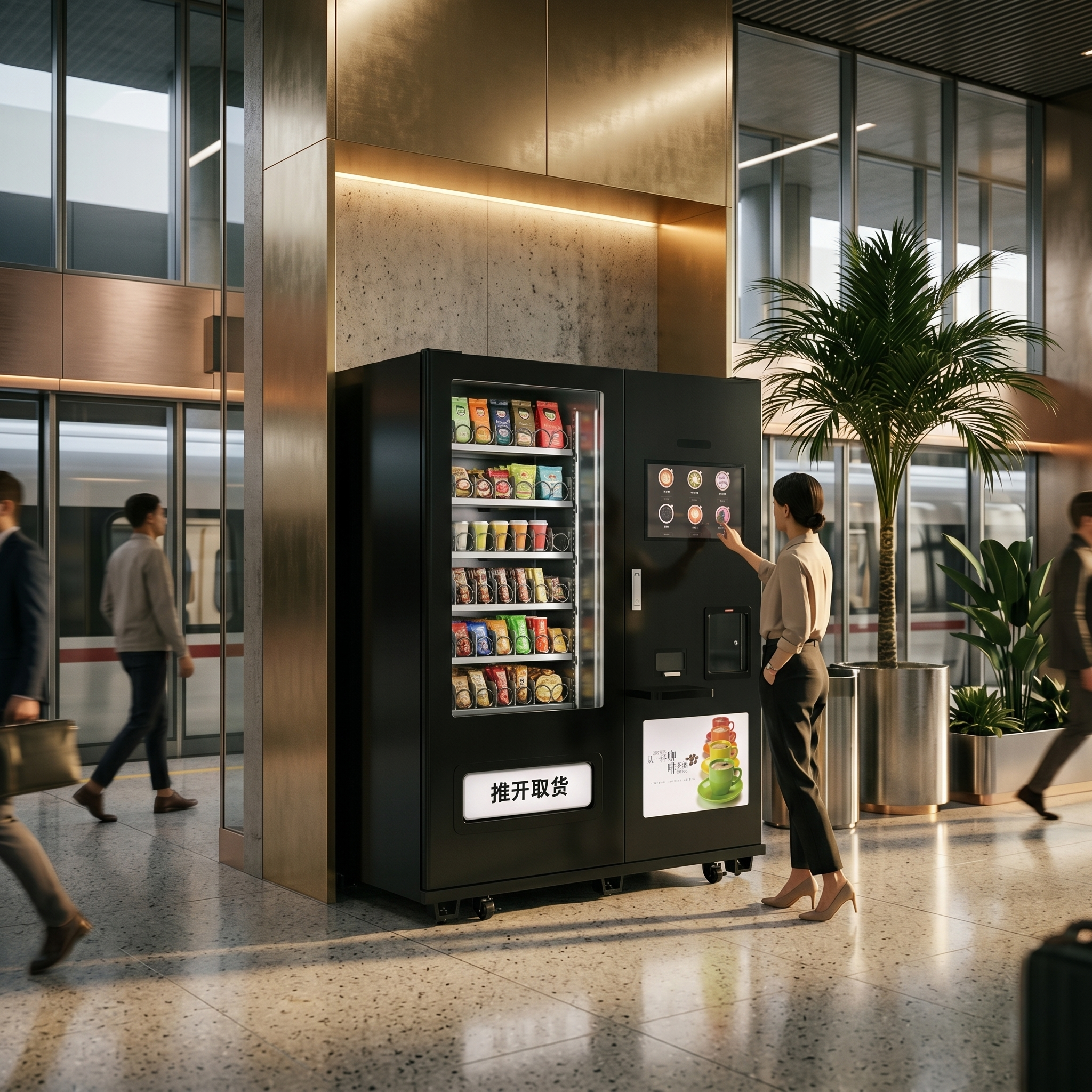
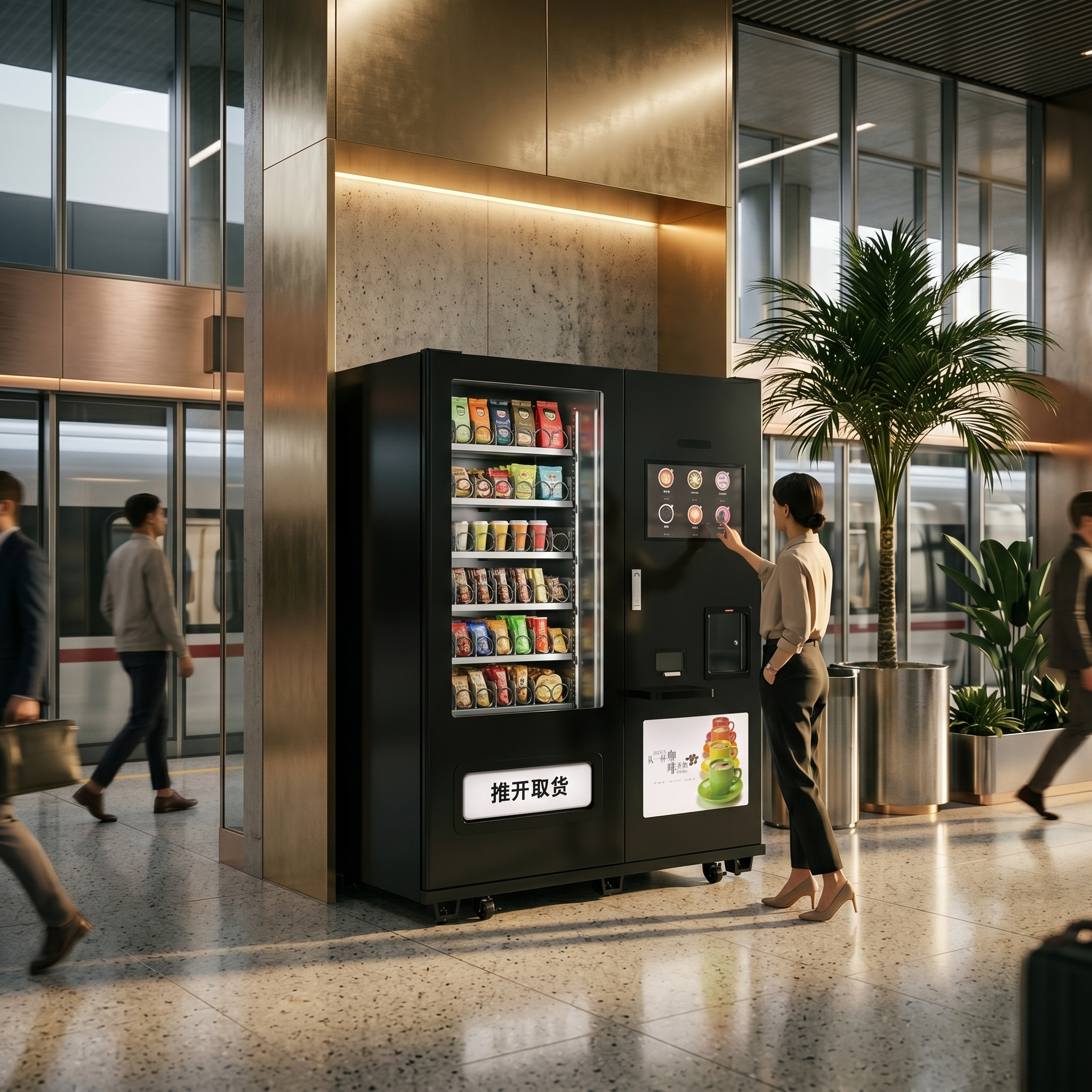
 A custom smart vending machine factory is the right partner when a retail automation project needs more than standard hardware. It can align machine design, payment methods, product handling, software integration, remote monitoring, and after-sales support with the operating model, location, and local market requirements.
- Custom equipment can match product categories, footprint, payment systems, languages, and user flows.
- A factory-led project can connect hardware, IoT software, inventory control, and operational support.
- Food safety, payment security, replenishment, cleaning, and service access should be defined before production.
- The best supplier is evaluated by lifecycle capability, not only by purchase price.
Choosing a custom smart vending machine factory helps retailers build a coordinated retail automation system instead of purchasing isolated equipment. The FDA Food Code identifies 41°F or below as the cold-holding temperature for many time and temperature control foods, making temperature management a practical design consideration for chilled vending applications. This guide explains how to evaluate customization, software, deployment, compliance, and long-term operating value.
What Does a Custom Smart Vending Machine Factory Provide?
A custom smart vending machine factory combines equipment engineering, manufacturing, software coordination, and deployment support in one project workflow. This matters because an unattended retail point is not simply a cabinet with a payment reader; it is a connected service channel that must sell, monitor stock, protect products, record transactions, and support maintenance.
The most useful factory partner begins with the commercial model. A coffee-focused site may need bean-to-cup preparation, cup dispensing, milk or flavor management, cleaning prompts, and recipe control. A mixed retail site may need refrigerated compartments, ambient shelves, flexible product lanes, and frequent replenishment. A hotel, airport, factory, school, or office building may require a different combination of speed, menu size, access control, branding, and payment localization.
Yile Shangyun positions its offering around commercial self-service retail equipment, including coffee machines, beverage equipment, ice machines, vending machines, and AI service terminals. Its stated solution model combines hardware, software, and operational services, which is relevant for buyers planning a multi-location rollout rather than a single experimental machine. Explore the commercial self-service equipment portfolio to compare the available solution direction.
Why Customization Matters in Retail Automation
Customization improves project fit when the location, assortment, customer journey, or market requirements differ from a standard machine configuration.
1. Product and workflow fit
A coffee machine designed for a busy transport hub should prioritize throughput and simplified interaction, while a desktop unit in an office or boutique hotel may prioritize compact installation and visual presentation. A combination vending machine or micro-market terminal may be more suitable where shoppers need snacks, beverages, and mixed merchandise from one retail point.
Customization can address product dimensions, shelf layout, temperature zones, dispensing logic, cup size, menu structure, cleaning access, and replenishment routines. These choices influence waste, service time, customer satisfaction, and the number of product categories the operator can support.
2. Payment and language localization
Payment design should reflect the target market rather than being added at the end of the project. Buyers may need card acceptance, mobile wallets, QR payments, cash options, closed-loop credentials, or a combination of methods. The user interface may also require multiple languages, local currency display, tax logic, accessibility considerations, and clear refund handling.
A factory that can coordinate the enclosure, controller, user interface, payment hardware, and cloud platform reduces the risk of incompatible components. It also gives the buyer one party to consult when a transaction problem crosses the boundary between hardware and software.
3. Brand and deployment consistency
Custom exterior panels, colors, screen layouts, menu graphics, and product presentation can make a machine fit the surrounding retail environment. Consistency becomes especially important when the operator deploys equipment across offices, campuses, hotels, factories, or community locations.
Brand customization should not compromise serviceability. Access doors, removable components, cable routing, cleaning points, ventilation, and replenishment access should remain practical for field technicians and operators.
Hardware, Software, and Operations Must Work as One System
Retail automation creates value only when the physical machine and operating system support the same business rules.
| System layer | Typical responsibility | Decision question | Quantitative planning input |
|---|---|---|---|
| Machine hardware | Dispensing, brewing, refrigeration, sensing, and user interaction | Can the machine handle the planned assortment and service environment? | Number of product positions and temperature zones |
| Edge controls | Local logic, sensor readings, payment communication, and fault handling | What happens if connectivity is temporarily unavailable? | Number of connected devices per site |
| Cloud platform | Remote monitoring, inventory records, alerts, recipes, and reporting | Can operators manage multiple locations from one interface? | Number of machines, locations, and user roles |
| Operations | Replenishment, cleaning, refunds, maintenance, and escalation | Who owns each task and how quickly must it be completed? | Visit frequency and response-time targets |
Remote monitoring is valuable because it turns machine status into an operational signal. Operators can identify low inventory, temperature exceptions, payment faults, door events, cleaning requirements, or consumable shortages before a customer encounters a failed purchase. The exact alert set should be agreed during design because monitoring without an assigned response process does not improve service quality.
Data governance also deserves early attention. Buyers should clarify who owns transaction data, where data is hosted, how user accounts are managed, what information is retained, and how software updates are controlled. For AI-enabled service terminals, the NIST AI Risk Management Framework provides a useful reference for discussing governance, risk identification, measurement, and management, even when the equipment is not a high-risk AI system.
How to Compare a Factory with a Trading Supplier
The key difference is not the label on the company; it is the depth of control over engineering, production, integration, testing, and support.
| Evaluation area | Factory-led partner | Reseller-only model | Buyer verification method |
|---|---|---|---|
| Mechanical customization | Can review enclosure, layout, access, and components | Usually limited to catalog options | Request drawings, samples, and revision records |
| Software integration | Can coordinate machine firmware, dashboard, and interfaces | May depend on third-party permissions | Review API, user roles, alerts, and update policy |
| Production control | Can define quality checks and configuration records | Relies on upstream manufacturer | Ask for inspection stages and acceptance criteria |
| After-sales support | Can connect spare parts and technical teams | May involve several service layers | Request escalation paths and spare-parts planning |
| Market adaptation | Can adjust language, payment, menu, and appearance | Often restricted by existing models | Review a market-specific configuration proposal |
A factory is not automatically the better choice for every buyer. A standard machine may be appropriate for a small pilot with a stable product mix and no software integration requirement. Custom development becomes more valuable when the project includes several locations, unusual products, a private-label experience, local payment requirements, or a planned operating platform.
 Food Safety, Payment Security, and Serviceability
Food and beverage automation requires operational controls as well as attractive equipment. Chilled products, milk systems, fresh ingredients, ice, and ready-to-drink beverages create different cleaning, temperature, traceability, and replenishment requirements.
The FDA Food Code 2022 is a useful reference for food-service buyers because it addresses temperature control, hygiene, equipment, and operational practices. Local authorities may apply different rules, so the project team should confirm the requirements in every deployment market rather than treating one code as universal.
For payment systems, the buyer should identify the applicable responsibilities of the operator, payment provider, device supplier, and software platform. The PCI Security Standards Council overview of PCI DSS can help teams frame discussions about protecting payment account data. The supplier should explain what payment data the machine handles, what is tokenized or transmitted, and which responsibilities remain with the merchant or acquirer.
Serviceability should be tested before mass deployment. A practical acceptance review can include product loading, payment failure recovery, network interruption, temperature alarms, cleaning access, refund handling, door access, and replacement of common wear components. The goal is not merely to confirm that a machine works on the factory floor; it is to confirm that local staff can operate it repeatedly.
Use-Case Fit: Where Custom Machines Create the Most Value
Custom smart vending machines are most useful when the operating environment has a clear service gap that conventional retail cannot efficiently cover.
- Offices: Coffee, drinks, snacks, and compact countertop equipment can extend service beyond staffed cafeteria hours.
- Airports and transport hubs: Fast interaction, multilingual menus, cashless payments, and remote fault alerts can support high traffic and limited staff availability.
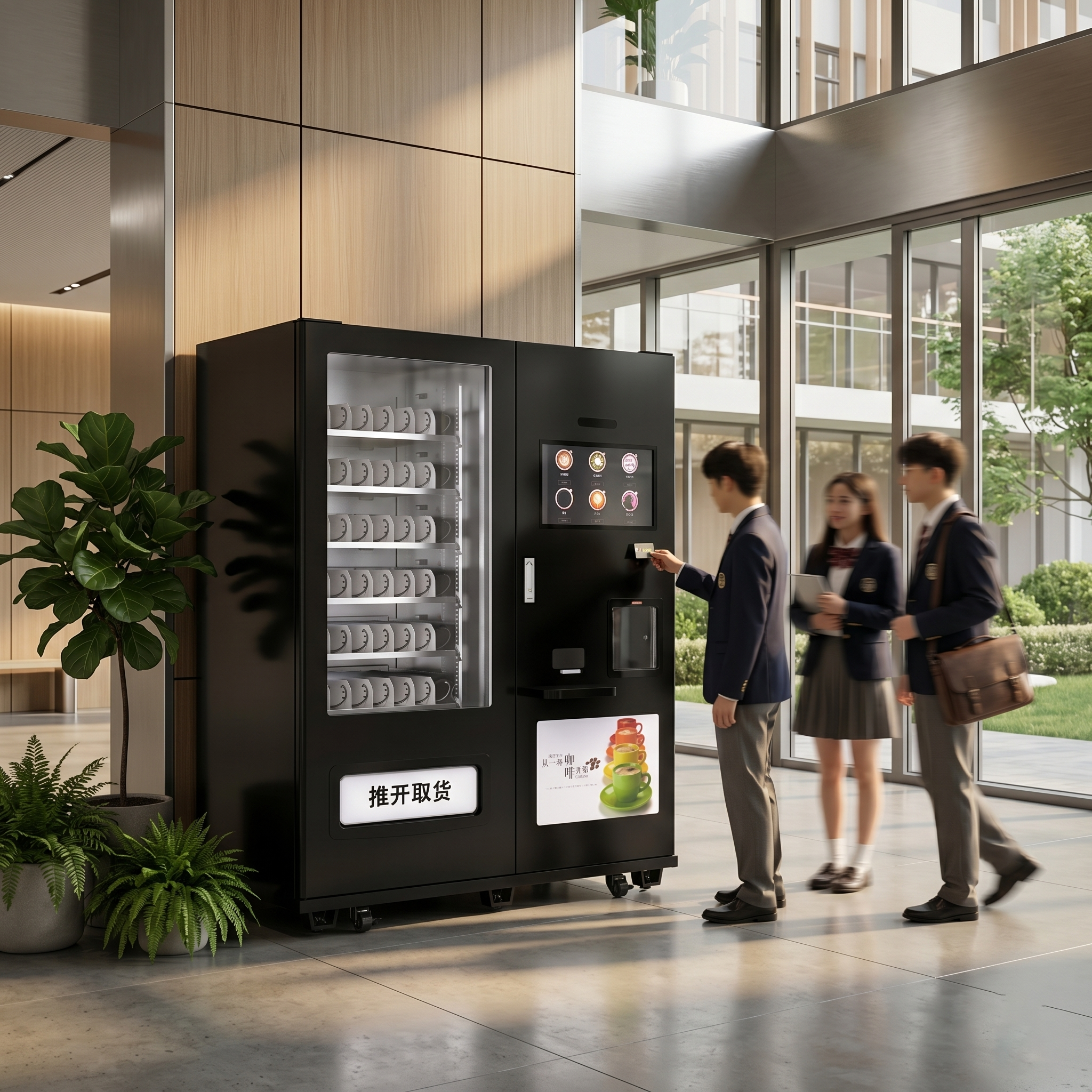
- Schools and campuses: Product selection, access schedules, payment controls, and responsible replenishment procedures should be planned with the site operator.
- Factories and industrial parks: Durable equipment, shift-based demand, simple cleaning, and reliable restocking may matter more than a large menu.
- Hotels and hospitality venues: A compact coffee or beverage solution can complement staffed service while maintaining a consistent guest experience.
- Cafes, bars, and restaurants: Automatic ice-making and ice dispensing equipment can support continuous beverage preparation when supply interruptions are costly.
The right business case should measure more than machine sales. Operators should track availability, transaction success, replenishment frequency, cleaning time, product waste, average basket value, and service incidents. These metrics help determine whether automation is improving the customer experience and reducing avoidable operating work.
A Practical Selection Process for a Smart Vending Machine Factory
A structured procurement process reduces customization risk and makes supplier proposals easier to compare.
- Define the site, customer profile, operating hours, product categories, and expected replenishment process.
- Separate mandatory requirements from preferred features, including payment, language, temperature, connectivity, and branding.
- Request a solution architecture showing the machine, software, data flow, operator dashboard, and service responsibilities.
- Ask for a pilot configuration or demonstration using representative products and real operating steps.
- Confirm installation, training, spare parts, warranty boundaries, software updates, and remote support.
- Set acceptance criteria for functionality, safety, connectivity, cleaning, payment recovery, and reporting before production.
Buyers should also ask how configuration changes are handled after launch. A menu change, new payment method, different product package, or additional language may require software work, mechanical adjustment, or only an operator setting. Understanding this distinction helps forecast future cost and rollout speed.
Frequently Asked Questions
What is a custom smart vending machine?
It is an automated retail machine adapted to a buyer’s products, layout, user interface, payment methods, software functions, branding, and operating requirements rather than being limited to a fixed catalog configuration.
Why work directly with a smart vending machine factory?
A factory-led supplier can coordinate engineering, manufacturing, software integration, testing, spare parts, and technical support. This can simplify accountability when a project involves several connected components.
Can a custom vending machine support local payment methods?
It can, provided the selected payment hardware and software support the target market and the commercial agreements are in place with payment providers. Requirements should be confirmed before production.
How does remote monitoring help operators?
Remote monitoring can show machine status, inventory conditions, faults, temperature events, and transaction information. Its value depends on accurate sensors, useful alerts, connectivity, and a defined response process.
What should be included in a pilot?
A pilot should test real products, customer interaction, payment completion, replenishment, cleaning, network interruption, refund handling, alerts, reporting, and the time required for routine service.
Are custom machines suitable for small businesses?
They can be suitable when the business has specific space, product, branding, or workflow requirements. For a simple low-volume application, a standard configuration may offer a lower-risk starting point.
What should buyers confirm about after-sales service?
Confirm warranty scope, service channels, spare-parts availability, software support, technician training, remote diagnostics, escalation procedures, and responsibility for local installation and maintenance.
About the Supplier
Yile Shangyun develops commercial self-service equipment and integrated solutions across coffee, beverages, ice, vending, and AI service terminals. Its capabilities cover OEM and ODM customization, connected management, remote monitoring, inventory operations, and multi-scenario deployment. The portfolio is designed for offices, airports, campuses, factories, hotels, cafes, parks, and communities. Review the available solutions and contact the team to discuss a project configuration.
Post time: Oct-12-2026