

Introduction
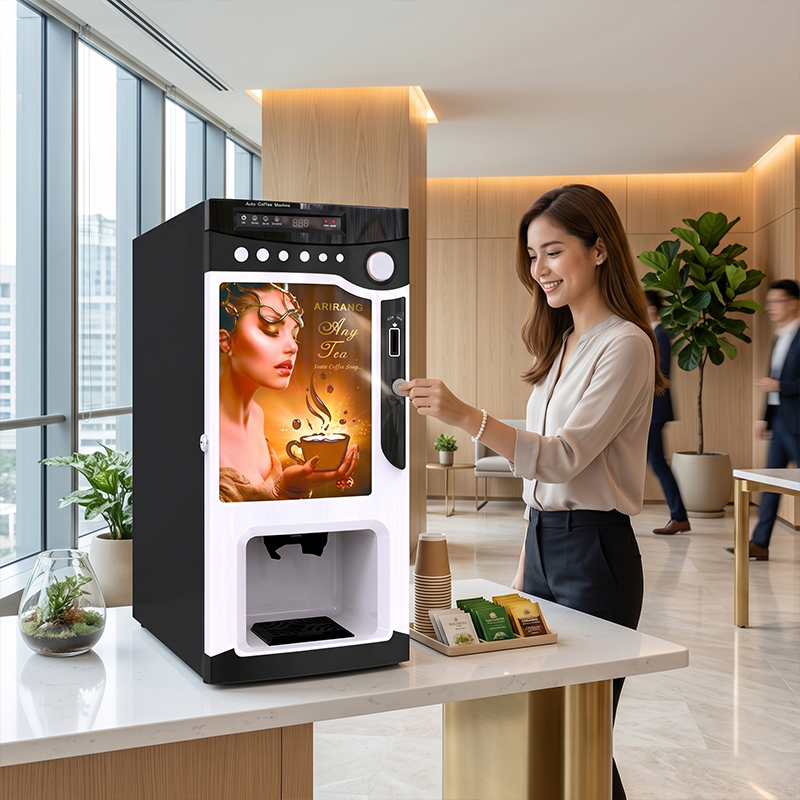
Freshly ground coffee is no longer limited to cafés or high-end break rooms. An affordable bean to cup coffee vending machine gives offices, retail sites, waiting areas, and public venues a practical way to serve better coffee with less labor, limited space, and lower upfront cost. This article explains what these machines do, where they perform best, and which features matter most when comparing models for sale, from drink variety and speed to maintenance and operating value. By the end, readers will have a clearer framework for choosing a machine that fits their location, customer demand, and budget.
Why Choose Affordable Bean-to-Cup Coffee Vending Machines
The commercial beverage landscape has shifted dramatically from instant powder dispensers to fresh-brew systems. Driven by evolving consumer palates, facilities of all sizes are now expected to provide cafe-quality beverages on demand. Today, an affordable bean to cup coffee vending machine allows businesses to meet this expectation without the premium capital expenditure traditionally associated with commercial barista setups.
By minimizing the physical footprint—often requiring less than 0.5 square meters of counter space—these units unlock high-margin revenue streams in previously unviable locations. Operating an automated coffee solution empowers non-hospitality businesses to capture consumer spend while elevating the overall visitor and employee experience.
Demand by operating environment
Different environments dictate highly specific machine requirements. In corporate offices with 50 to 200 employees, deploying a centralized bean-to-cup system can increase onsite beverage consumption by up to 40%, keeping staff engaged and on-premises during break periods. The focus in these settings is typically on beverage variety and ease of use.
Conversely, high-footfall areas like convenience stores, university libraries, or automotive waiting rooms require rapid dispense times. In these demanding environments, machines must execute the grind-to-pour process in under 45 seconds per cup to manage peak morning demand efficiently and prevent queue abandonment.
Core benefits for businesses
The financial rationale for these machines centers on exceptionally high profit margins coupled with low operational overhead. The raw material cost for a freshly ground cup of coffee typically ranges from $0.15 to $0.30, depending on bean quality, water filtration standards, and milk powder sourcing.
When dispensed at a retail price of $1.50 to $2.50, the return on investment accelerates rapidly, often paying off the hardware within the first two business quarters. Furthermore, modern automated cleaning cycles have reduced daily maintenance labor by nearly 60%, ensuring high machine uptime and consistent drink quality without requiring a trained barista on staff.
What to Compare When Evaluating Machines
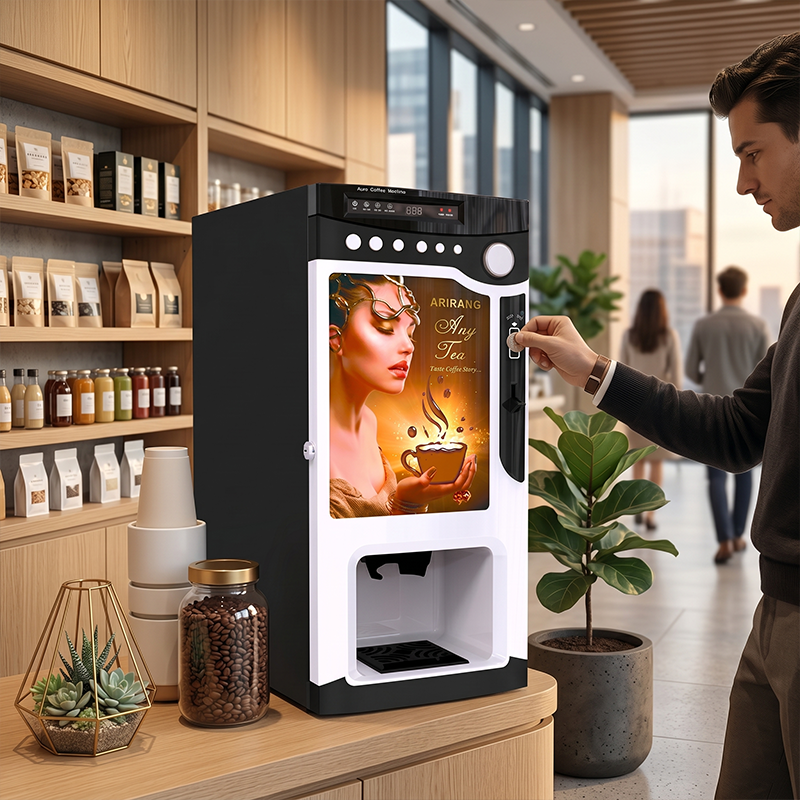
Selecting the optimal equipment requires looking past the exterior design to evaluate the internal components, telemetry capabilities, and total cost of ownership. Buyers must balance initial capital outlay with long-term reliability and the specific feature sets required by their target demographic.
Key specifications, drink options, and maintenance
Hardware specifications directly impact both beverage quality and service intervals. A commercial-grade brew group should deliver between 9 and 15 bar of pressure for proper espresso extraction, ensuring an optimal crema and flavor profile. Additionally, hopper capacities determine restocking frequency; a standard 1kg bean hopper yields roughly 100 to 120 cups before requiring a refill. Advanced models also feature automated 10-minute flushing cycles to prevent internal blockages.
| Specification | Entry-Level Commercial | Mid-Range Commercial |
|---|---|---|
| Daily Output | 50 – 80 cups | 100 – 200 cups |
| Brew Pressure | 9 bar | 15 bar |
| Bean Hopper | 500g | 1kg – 2kg |
| Drink Options | 4 – 6 recipes | 10 – 16 recipes |
Evaluating these core metrics ensures the selected bean to cup coffee vending machine can handle the anticipated volume without suffering from premature component wear or frustrating users with limited selections.
Price and value comparison
Pricing for commercial bean-to-cup systems varies significantly based on daily capacity, boiler configuration, and user interface technology. Entry-level models suitable for small offices typically range from $800 to $1,500. Mid-tier machines, featuring cashless payment readers, telemetry for remote inventory monitoring, and larger touchscreens, fall into the $1,500 to $3,500 bracket.
When comparing value, buyers must calculate the total cost of ownership over a standard 36-month lifecycle. This calculation must factor in the cost of consumable water filters, proprietary cleaning tablets, and preventative maintenance kits, which generally add 10% to 15% to the annual operating budget beyond the initial purchase price.
How to Source the Right Machine
Procuring commercial coffee equipment requires rigorous vetting of both the manufacturing partner and the machine’s technical alignment with the deployment site. A strategic sourcing approach mitigates post-purchase risks, ensures steady supply chain operations, and prevents costly mismatches between hardware capabilities and location demands.
How to verify supplier credibility and compliance
Verifying the manufacturer behind a bean to cup coffee vending machine is the most critical step in the procurement process. Buyers must demand proof of international safety and environmental certifications, strictly requiring CE, RoHS, and UL marks for machines operating in regulated markets.
A reputable manufacturer should demonstrate a hardware defect rate of less than 1.5% across their product lines and guarantee spare parts availability for at least 5 years. For businesses testing new geographic locations or unproven business models, negotiating a low Minimum Order Quantity (MOQ) of 1 to 5 units is essential before committing capital to a broader fleet rollout.
How to match the machine to business needs
Matching the hardware to the business application prevents both under-utilization and catastrophic machine failure. A location generating 200 cups per day will quickly burn out a machine rated for only 50 cups, leading to voided warranties and frequent downtime.
Planners should audit the site’s plumbing capabilities—deciding between plumbed-in direct water lines or internal 4-liter to 8-liter reservoirs—and verify local electrical standards, specifying either 110V or 220V configurations. Finally, assessing the demographic’s preference for complex milk-based drinks versus standard black coffee ensures the chosen interface and internal mixing bowls align with consumer demand, guaranteeing a seamless operational rollout and sustained profitability.
Further reading:
Key Takeaways
- The most important conclusions and rationale for bean to cup coffee vending machine
- Specs, compliance, and risk checks worth validating before you commit
- Practical next steps and caveats readers can apply immediately
Frequently Asked Questions
What size bean to cup coffee vending machine is best for my site?
Choose by daily cups: 50–80 for small offices, 100–200 for busier sites like stores, libraries, or waiting areas.
How fast should a bean to cup coffee vending machine serve drinks?
For high-footfall locations, target under 45 seconds per cup to reduce queues during peak periods.
How much does an affordable bean to cup coffee vending machine usually cost?
Small commercial models often cost $800–$1,500, while mid-range units with cashless payment and telemetry run about $1,500–$3,500.
What ongoing costs should I budget for besides the machine price?
Plan for water filters, cleaning tablets, and maintenance kits. These typically add 10%–15% to annual operating costs.
Where can I compare bean to cup coffee vending machine options on YL Vending?
You can review suitable models and automated coffee solutions at ylvending.com/products and ylvending.com/solutions.

Kely
Post time: Jun-10-2026