

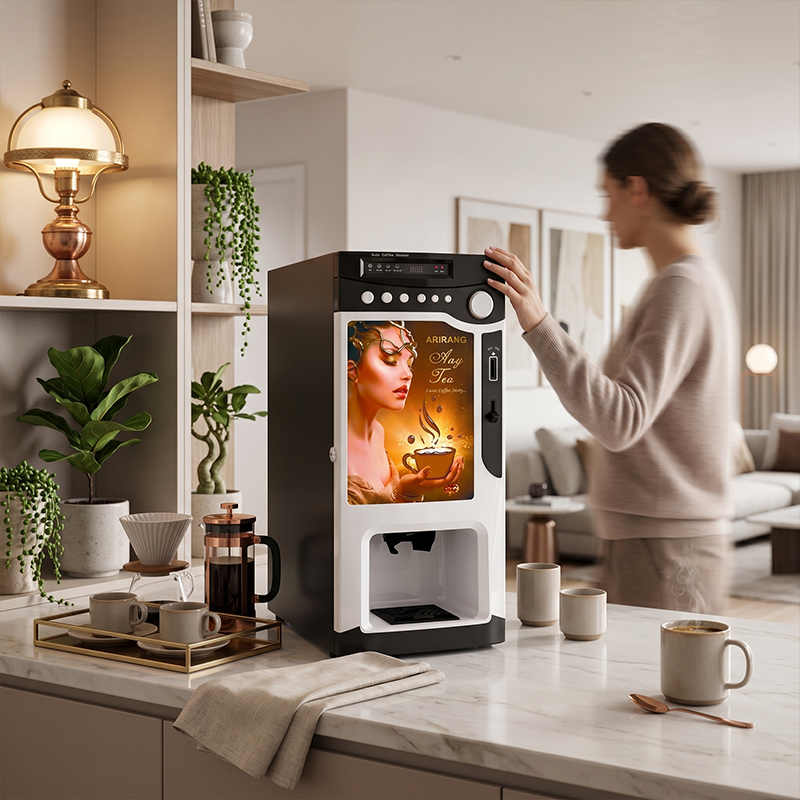
Office coffee provision now influences more than convenience: it shapes employee experience, breakroom culture, and even how appealing the workplace feels in a hybrid era. This article examines whether bean-to-cup machines are a better fit for office environments than other fresh coffee machine options, focusing on coffee quality, speed, maintenance, cost, and day-to-day usability. You’ll see where bean-to-cup systems deliver clear advantages, where they may create operational trade-offs, and how to judge if they match your team size, budget, and expectations for a more café-like workplace experience.
Why office coffee machines matter
The modern workplace has evolved significantly, shifting from a merely functional space to a destination that must actively attract and retain talent. Among the various amenities organizations deploy to enhance the workplace experience, high-quality beverage provisions have emerged as a foundational requirement rather than a luxury. Investing in a commercial-grade fresh coffee machine signals to employees that their daily comfort and satisfaction are valued by management.
Beyond simple morale, the strategic deployment of office coffee systems directly impacts daily operational rhythms. By transforming the office breakroom into a premium café-like environment, organizations can influence both the cultural dynamics and the measurable productivity of their workforce.
Employee expectations and hybrid work
In an era defined by hybrid work models, encouraging employees to commute requires providing amenities that match or exceed what they have at home. Industry surveys indicate that up to 65% of employees view premium workplace amenities as a significant factor in their willingness to return to the office. A standard drip brewer no longer meets the expectations of a workforce accustomed to specialty coffee.
Providing a high-quality coffee experience serves as a subtle but effective tool for community building. The breakroom functions as a primary collision space where cross-departmental interactions occur. When employees gather around a premium machine, it fosters organic communication and collaboration that structured meetings often fail to generate.
Business outcomes to evaluate
The financial justification for upgrading office coffee infrastructure extends well beyond the direct cost of beans and equipment. Organizations must evaluate the hidden costs of off-site coffee runs. When an employee leaves the building to purchase a specialty beverage, it typically consumes 15 to 25 minutes of working time. For an office of 50 employees, this can equate to over 100 lost productivity hours per week.
By retaining staff on-site with a premium beverage offering, businesses recapture this lost time. Furthermore, providing complimentary, high-tier coffee acts as a cost-effective employee perk. When evaluated against the costs of staff turnover and recruitment, an investment of $2,000 to $5,000 in a robust coffee system yields a rapid return on investment through sustained productivity and enhanced employee retention.
What a bean-to-cup machine is
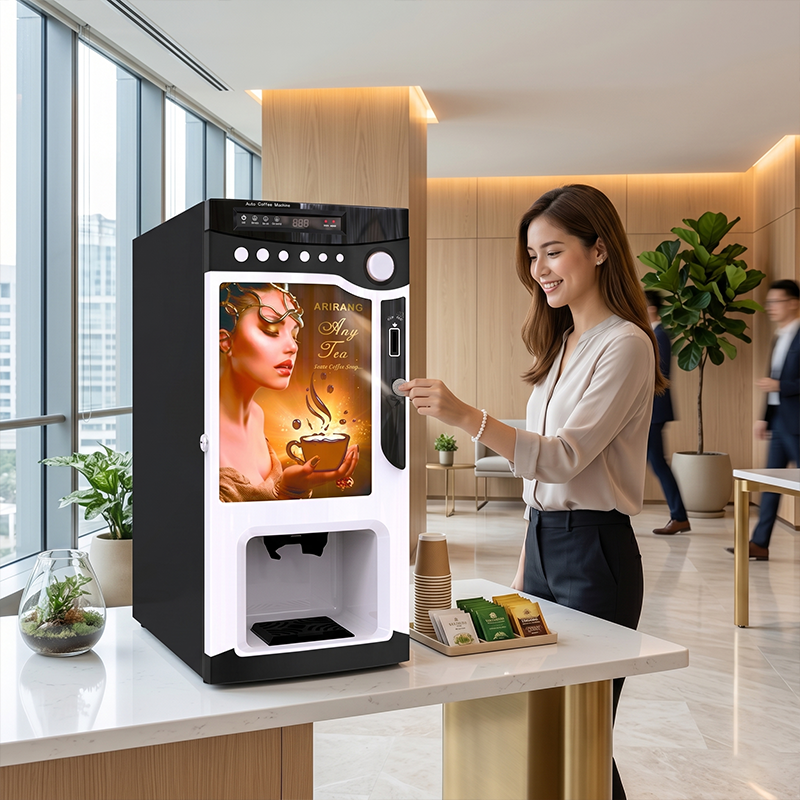
A bean-to-cup system is an automated coffee maker designed to execute the entire brewing process internally, from grinding whole roasted beans to extracting espresso and dispensing frothed milk. Unlike traditional espresso setups that require a trained barista to manually tamp grounds and steam milk, these systems rely on precision engineering to deliver a complete beverage at the touch of a button.
By integrating the grinder, brew group, and milk system into a single chassis, these machines democratize access to specialty coffee, ensuring that any user can produce a café-quality beverage regardless of their technical skill.
Core features and drink options
The defining characteristic of a bean-to-cup system is its internal burr grinder, which pulverizes whole beans immediately before extraction to preserve volatile aromatic compounds. Commercial units typically feature stainless steel or ceramic flat burrs designed to handle high volumes without overheating the grounds. Following the grind, the internal brew group tamps the coffee and forces hot water through the puck at an optimal pressure—usually between 9 and 15 bar—to extract a rich, crema-topped espresso.
Modern units feature sophisticated dual-boiler or thermoblock systems, allowing them to heat water for extraction and generate steam for milk simultaneously. The user interface usually consists of an intuitive touchscreen offering a wide menu of pre-programmed drinks, including ristrettos, flat whites, cappuccinos, and macchiatos. Advanced models also allow users to customize parameters such as beverage volume, coffee strength (gram throw per cup), and milk temperature.
How bean-to-cup compares with other office coffee systems
When selecting an office coffee solution, decision-makers typically weigh bean-to-cup systems against pod/capsule machines and traditional batch brewers. Pod machines offer convenience and low upfront equipment costs, but they suffer from high consumable expenses and negative environmental impacts due to single-use plastics or aluminum. Batch brewers excel in producing large volumes of black coffee quickly but lack the versatility to create customized, milk-based espresso drinks.
| System Type | Average Cost per Cup (USD) | Environmental Impact | Beverage Versatility | Typical Dispense Time |
|---|---|---|---|---|
| Bean-to-Cup | $0.15 – $0.30 | Low (Compostable grounds) | High (Espresso, Milk drinks) | 45 – 60 seconds |
| Pod / Capsule | $0.50 – $0.85 | High (Single-use waste) | Medium (Pre-set flavors) | 30 – 40 seconds |
| Filter / Batch | $0.05 – $0.10 | Low (Paper filters/grounds) | Low (Black coffee only) | N/A (Pre-brewed) |
As demonstrated, while a fresh coffee machine requires a higher initial capital expenditure, the substantially lower cost per cup yields long-term operational savings, particularly in environments consuming more than 30 cups daily.
Benefits and trade-offs of bean-to-cup machines
Transitioning to a highly automated coffee system introduces a new set of dynamics to the office breakroom. While the advantages in flavor and employee satisfaction are clear, facility managers must carefully weigh the operational realities, including maintenance requirements, acoustic impact, and equipment longevity.
Quality, consistency, and user experience
The primary advantage of a bean-to-cup machine is the unparalleled freshness of the beverage. Because coffee beans begin to oxidize and lose flavor within minutes of being ground, bypassing pre-ground coffee guarantees a superior sensory experience. The automated nature of the machine ensures absolute consistency; a latte poured at 8:00 AM will possess the exact same ratio of espresso to micro-foam as one poured at 4:00 PM.
This consistency elevates the user experience, transforming a mundane daily routine into an anticipated ritual. Furthermore, modern interactive touchscreens allow users to adjust strength and volume, providing a personalized experience that caters to diverse palate preferences without requiring barista training.
Costs, maintenance, and cleaning
The financial model of a bean-to-cup machine shifts the burden from operational expenditure (OPEX) to capital expenditure (CAPEX). Commercial-grade units typically range from $1,500 for small office models to over $6,000 for high-capacity systems. However, because whole bean coffee is purchased in bulk (often costing between $10 and $20 per pound), the cost per cup remains exceptionally low.
Maintenance and cleaning are the most significant trade-offs. Unlike a simple drip brewer, a machine handling fresh milk and coffee grounds requires strict daily hygiene protocols. Most commercial units feature automated cleaning cycles that take 10 to 15 minutes at the end of the day, requiring staff to insert cleaning tablets and empty drip trays. Neglecting these daily routines can lead to milk system blockages and costly technician call-outs.
Noise, speed, and capacity considerations
A frequently overlooked factor in open-plan offices is the acoustic footprint of the machine. The mechanical process of grinding dense coffee beans generates notable noise, typically registering between 65 and 75 decibels for a duration of 5 to 10 seconds per drink. Consequently, these machines should be strategically placed away from quiet zones, conference rooms, or active workstations.
Speed and throughput also dictate the machine’s viability during peak hours. A standard commercial bean-to-cup machine requires 45 to 60 seconds to grind, extract, and froth a milk-based beverage. In an office of 100 people where 40% of staff seek coffee simultaneously at 9:00 AM, a single machine may cause a bottleneck, highlighting the need for accurate capacity planning.
Operational and procurement considerations
Procuring a commercial coffee system is not a one-time transaction; it requires establishing a supportive operational framework. Facility managers must account for utility connections, preventative maintenance schedules, and the specific daily throughput demands of their workforce to ensure uninterrupted service.
Hygiene, water filtration, and servicing
Water quality is the single most critical factor in both beverage taste and machine longevity. Coffee is approximately 98% water, and the mineral content directly affects extraction. More importantly, hard water leads to calcium scale buildup inside the machine’s heating elements. Installing an inline water filtration system is mandatory in most commercial settings and can reduce scale-related maintenance calls by up to 40%.
Hygiene compliance is another strict requirement, particularly concerning the automated milk frothing systems. Machines utilizing fresh milk must adhere to local health codes regarding dairy storage, typically requiring an integrated mini-fridge that maintains milk at a constant 35°F to 40°F (2°C to 4°C). Establishing a clear service contract for quarterly preventative maintenance—including replacing O-rings, recalibrating burrs, and deep-cleaning the brew group—is essential to protect the equipment investment.
Capacity planning and workplace fit
Selecting a machine with appropriate capacity prevents premature equipment failure. Commercial machines are rated by their daily cup volume, ensuring the internal components can withstand the thermal and mechanical stress of continuous use. A machine rated for 50 cups per day will quickly degrade if forced to produce 150 cups daily.
Facility managers must also evaluate the physical workplace fit. High-capacity machines require dedicated plumbing for a direct water line and drainage, as well as specific electrical requirements (often 220V for rapid dual-boiler heating). Additionally, the physical dimensions must account for overhead clearance to allow easy refilling of the bean hoppers, which typically hold between 500 grams and 1 kilogram of coffee.
How to choose the right office coffee machine
Navigating the diverse marketplace of office coffee equipment requires aligning the technical specifications of the machinery with the demographic realities of the workplace. Organizations must assess their headcount, budget, and facility infrastructure to identify the optimal configuration. For tailored guidance, decision-makers often look to specialized vendors and resources (learn more about us) to map out a long-term beverage strategy.
Best fit by office size and needs
Office size dictates the fundamental architecture of the required machine. Small offices can operate efficiently with reservoir-based systems, while large enterprises require plumbed-in units with dual grinders and high-capacity grounds bins to minimize the labor involved in daily refilling and emptying.
| Office Headcount | Recommended Daily Capacity | Water Source Requirement | Milk System | Estimated Hardware Cost (USD) |
|---|---|---|---|---|
| 1 – 20 Staff | 30 – 50 Cups | Manual Reservoir (2-3 Liters) | Tube/Carafe | $1,200 – $2,500 |
| 20 – 50 Staff | 80 – 100 Cups | Direct Plumbed (Optional) | Integrated Fridge | $2,500 – $4,500 |
| 50 – 150+ Staff | 150 – 300+ Cups | Direct Plumbed (Mandatory) | Dual Integrated Fridge | $5,000 – $10,000+ |
As headcount scales, organizations may also need to consider deploying multiple mid-sized units across different floors or departments rather than centralizing a single massive unit, thereby reducing breakroom congestion during peak morning hours.
Selection criteria and procurement checklist
A robust procurement checklist ensures no logistical details are overlooked before installation. Key criteria include evaluating the availability of dedicated water and drain lines, verifying electrical output at the installation site, and confirming the dimensions of the counter space. Furthermore, buyers must decide whether to purchase the equipment outright, lease it, or enter into a subsidized consumable contract where the machine is provided at a discount in exchange for exclusive coffee bean purchasing agreements.
Finally, consider the user interface and accessibility. Screen navigation should be intuitive enough for guests and new hires to operate without instruction. By thoroughly vetting these criteria and choosing to contact us for comprehensive site assessments, organizations can successfully deploy a coffee solution that elevates workplace morale and operates reliably for years.
Further reading:
Key Takeaways
- The most important conclusions and rationale for fresh coffee machine
- Specs, compliance, and risk checks worth validating before you commit
- Practical next steps and caveats readers can apply immediately
Frequently Asked Questions
Are bean-to-cup coffee machines better than pod machines for offices?
Often yes. They deliver fresher coffee, more drink choices, and lower long-term cost per cup, while reducing single-use pod waste.
How many employees can a fresh coffee machine support?
It depends on daily cups and rush times. For accurate sizing, match machine output and drink menu to your office headcount and peak demand.
Do bean-to-cup machines need a trained barista?
No. They automate grinding, brewing, and often milk frothing, so staff can make espresso-based drinks with simple touchscreen selections.
What maintenance does an office bean-to-cup machine need?
Expect daily rinsing, regular milk-system cleaning, waste tray emptying, and scheduled descaling. Choosing a commercial model with easy cleaning reduces staff effort.
Where can I compare commercial fresh coffee machines for my office?
You can review office-ready fresh coffee machine options on YL Vending at ylvending.com/products and compare features, drink menus, and commercial suitability.

Kely
Post time: Jun-14-2026