

Introduction
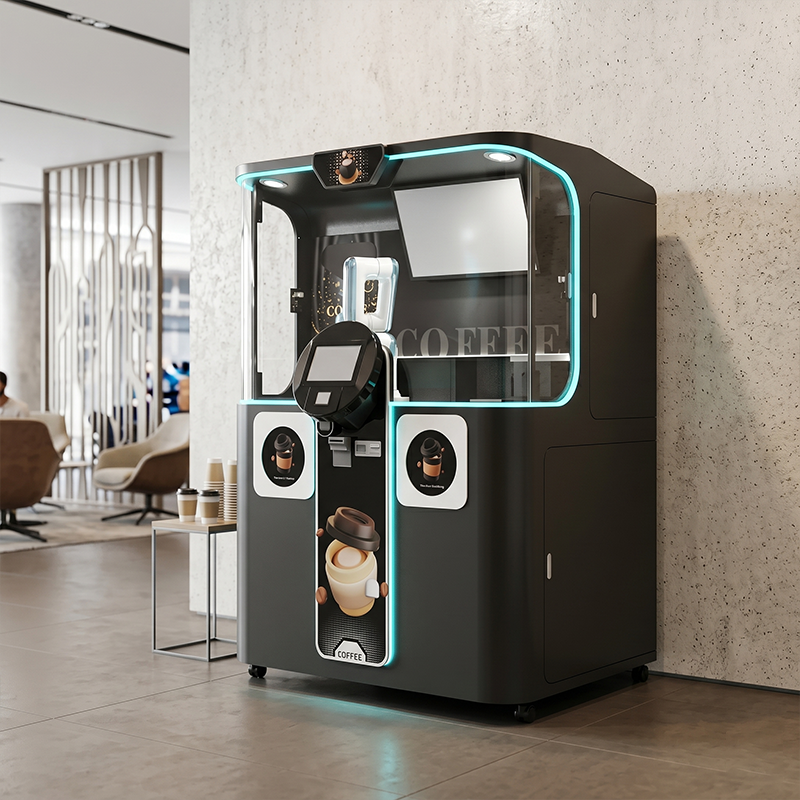
For operators weighing a coffee robot investment, the real question is not novelty but whether the numbers and operating benefits justify the upfront cost. Robotic barista machines can improve drink consistency, reduce dependence on hard-to-staff shifts, and support higher throughput in compact footprints, but returns vary widely by location, menu complexity, maintenance needs, and customer expectations. This article examines where these systems create measurable value, where they fall short, and which financial and operational metrics matter most before committing capital.
Why Coffee Robot Investment Is Gaining Attention
The food and beverage sector is undergoing a profound operational shift, driven by the need for consistency, space optimization, and resilience against labor market volatility. Within this transformation, exploring a coffee robot investment has transitioned from a futuristic novelty to a pragmatic commercial strategy. Operators are increasingly looking toward automation not merely as an attraction, but as a core component of their service delivery infrastructure.
As commercial real estate costs rise and consumer expectations for speed and precision peak, autonomous barista systems offer a measurable solution. By converting variable operational expenses into fixed, predictable capital investments, these systems reshape the fundamental economics of specialty coffee retail.
Labor pressure, throughput, and brand differentiation
The hospitality industry consistently faces turnover rates exceeding 100% annually in many quick-service categories, forcing operators to constantly recruit, train, and manage staff. Robotic barista machines directly alleviate this labor pressure by operating autonomously during peak rushes and off-hours alike. Unlike human operators who experience fatigue, an automated system maintains a steady throughput, often capable of producing 50 to 120 cups per hour depending on drink complexity and machine configuration.
Beyond throughput, brand differentiation plays a critical role in market capture. A robotic kiosk serves as a visual anchor, projecting a tech-forward, modern brand image that attracts early adopters and curious consumers. The precision of robotic arms ensures that every espresso shot is pulled with the exact same pressure (typically 9 bars) and temperature (around 93°C), guaranteeing a level of product consistency that reinforces brand reliability.
Business models evaluating robotic barista machines
Different commercial environments require distinct deployment models. High-traffic transit hubs, such as airports and train stations, benefit from 24/7 standalone kiosks where consumers demand rapid service outside of traditional business hours. In these settings, the compact footprint of a robotic unit—often requiring as little as 20 to 40 square feet—maximizes revenue per square foot in expensive leasing environments.
Corporate campuses and hospital cafeterias represent another viable model. Here, the machines function as high-end amenities that require minimal facilities management oversight. Alternatively, existing drive-thru operators and quick-service restaurants are evaluating modular robotic integration, replacing internal manual espresso stations with automated arms to accelerate drive-thru times and reallocate human staff to customer-facing or food-preparation roles.
What Makes a Strong Coffee Robot Investment Case
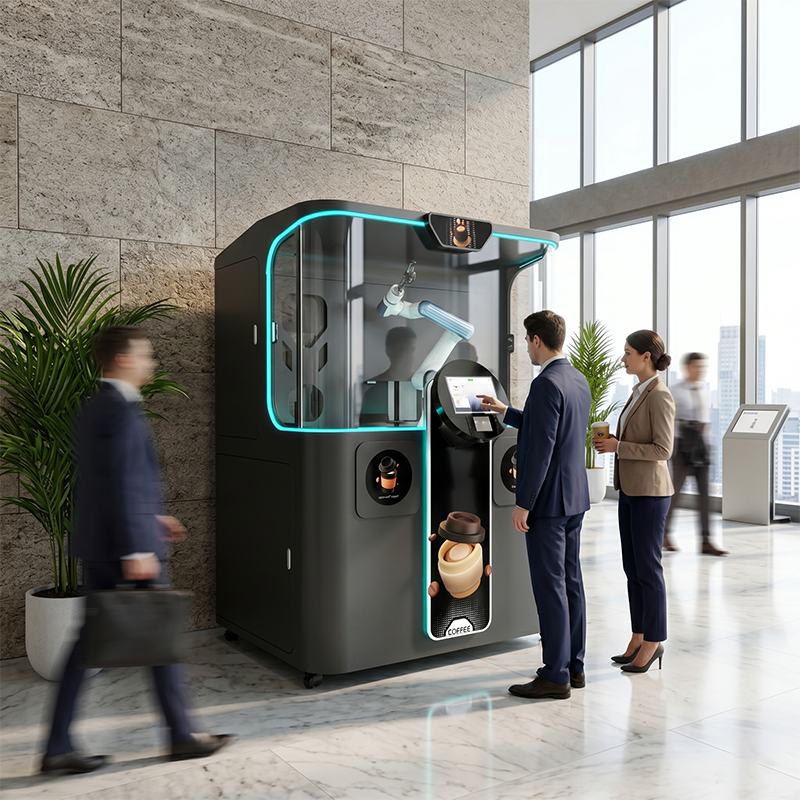 Building a robust financial case for automated coffee systems requires a clear understanding of the underlying technology and how it directly impacts operational efficiency. Stakeholders must evaluate hardware capabilities, benchmark them against traditional retail models, and analyze the specific site metrics that determine profitability.
Key capabilities in robotic barista machines
Modern robotic barista machines are defined by their integration of industrial-grade hardware and sophisticated software. At the core is typically a 6-axis articulated robotic arm, designed with a repeatability tolerance of ±0.1mm, ensuring flawless execution of complex motions such as milk steaming, pouring latte art, and cup handling. This hardware is paired with telemetry systems that monitor ingredient levels, water pressure, and machine health in real time.
Advanced units also feature integrated Point of Sale (POS) and mobile app connectivity, allowing customers to place highly customized orders remotely. Predictive maintenance algorithms analyze sensor data to alert operators of potential component failures before they cause downtime, thereby sustaining a target operational uptime of 99% or higher.
How robotic barista machines compare with traditional setups
Comparing automated systems to traditional coffee shop operations reveals distinct differences in capital allocation, space utilization, and scalability. Traditional setups require extensive plumbing, larger counters, and constant human supervision, whereas robotic units condense the entire supply chain into an enclosed, self-sufficient module.
| Metric | Traditional Coffee Shop | Robotic Barista Kiosk |
|---|---|---|
| Initial Setup Cost | $150,000 – $300,000+ | $40,000 – $120,000 |
| Space Requirement | 500 – 1,500 sq ft | 20 – 50 sq ft |
| Variable Labor (per cup) | $1.20 – $2.50 | $0.00 (Fixed maintenance) |
| Peak Output Consistency | Decreases with fatigue | 100% consistent |
| Operating Hours | Typically 12-16 hours | 24/7 capable |
This structural shift from high variable costs (labor) to predictable fixed costs (hardware and software licensing) is the primary driver for institutional investors and multi-unit franchisees exploring a coffee robot investment.
Decision factors that shape investment value
The ultimate value of a robotic system is highly dependent on location-specific decision factors. Foot traffic is the most critical metric; successful deployments typically require a minimum baseline of 1,500 to 2,500 passersby per day to achieve optimal utilization rates. Additionally, the local cost of labor significantly influences the return on investment. In regions where the minimum wage exceeds $15 per hour, the financial incentive to automate is exponentially higher.
Operators must also consider the demographic profile of the location. Younger, tech-savvy demographics, such as university students or tech-sector employees, show higher adoption rates for app-driven, automated food services. Evaluating these factors cohesively ensures that the chosen hardware aligns with the revenue potential of the site.
Costs, Risks, and Operational Constraints
While the benefits of automation are compelling, a thorough investment analysis must account for the total lifecycle costs, stringent food safety requirements, and the inherent limitations of robotic service. Ignoring these constraints can lead to extended payback periods and operational friction.
Total cost of ownership and ROI
The Total Cost of Ownership (TCO) extends well beyond the initial hardware purchase. Upfront capital expenditures generally range from $40,000 for basic countertop automated brewers to over $120,000 for fully enclosed, multi-arm kiosk systems. However, operators must also budget for site preparation, shipping, and installation.
Recurring costs include software licensing (often $200 to $500 per month), ingredient restocking, and preventative maintenance contracts. Despite these ongoing expenses, a well-placed robotic barista can achieve a payback period of 12 to 24 months, assuming a conservative sales volume of 100 to 150 cups per day at an average ticket price of $4.50.
| Cost Category | Estimated Annual Expense (Post-Launch) | Notes |
|---|---|---|
| Software/SaaS Fees | $2,400 – $6,000 | Covers POS, telemetry, and updates |
| Routine Maintenance | $1,500 – $3,500 | Parts replacement and technician visits |
| Consumables (Cups, Beans) | Volume Dependent | Generally 15-20% of gross revenue |
| Utility/Lease (Kiosk) | $6,000 – $18,000 | Highly variable by location |
Operational risks including food safety and maintenance
Food safety compliance is a paramount concern for autonomous F&B systems. Machines must adhere to strict regulatory standards, such as NSF/ANSI requirements for cleanability and temperature control. Milk systems are particularly vulnerable to bacterial growth; therefore, robotic units must feature automated flush cycles, typically requiring a 30-minute deep cleaning protocol every 24 hours.
Maintenance risks also threaten profitability. A mechanical failure in a fully automated kiosk results in a 100% halt in revenue generation until a technician arrives. Operators must secure robust Service Level Agreements (SLAs) with vendors to mitigate this risk, ensuring rapid response times for critical hardware faults.
Where robotic barista machines underperform
Despite their precision, robotic barista machines possess operational blind spots. They fundamentally lack the capacity for human hospitality—a core component of the traditional cafe experience. Environments where consumers value interaction, personalized recommendations, or a “third-place” atmosphere are poor fits for automation.
Furthermore, while machines can handle standard menus with high efficiency, they struggle with extreme customization. Complex “secret menu” requests, irregular ingredient substitutions, or non-standard cup sizes can confuse the system’s programming or physical handling capabilities. High-end specialty coffee shops that pride themselves on bespoke, hyper-customized beverages will find robotic systems too rigid for their current operational models.
How to Evaluate Vendors and Plan Deployment
Successfully integrating automation into a food and beverage portfolio requires rigorous vendor assessment and a phased deployment strategy. Selecting the right hardware partner and structuring a controlled pilot program are critical steps to validate assumptions before committing to a fleet-wide rollout.
Due diligence steps for vendor evaluation
Evaluating a vendor requires looking past the marketing appeal of the robotics to examine their engineering pedigree and support infrastructure. Due diligence should begin with a review of the vendor’s supply chain and parts availability. Operators should demand guarantees that critical spare parts—such as pneumatic grippers, boiler elements, or sensors—can be dispatched within 24 to 48 hours.
Software architecture is equally important. Buyers must assess the vendor’s API documentation to ensure the machine’s backend can seamlessly integrate with existing enterprise resource planning (ERP) and accounting software. Requesting historical uptime data from active deployments and speaking directly with current clients can reveal the true reliability of the system under commercial stress.
How to structure pilot programs
A structured pilot program minimizes capital risk while providing empirical data on consumer acceptance and mechanical reliability. A standard pilot should run for 90 to 120 days in a controlled, high-visibility location. During this phase, operators should establish strict key performance indicators (KPIs).
Critical metrics to track include Mean Time Between Failures (MTBF), daily active users, repeat purchase rates, and ingredient waste percentages. The pilot phase is also the time to test the automated cleaning protocols and refine the logistics of daily restocking. Only when the pilot consistently meets predefined profitability and uptime thresholds should an operator proceed with a broader coffee robot investment across multiple sites.
Are Robotic Barista Machines Worth the Long-Term Investment
Determining the long-term viability of robotic coffee systems requires synthesizing cost data, operational constraints, and market trajectories. As the technology matures, the financial models supporting automation become increasingly stable, shifting the industry conversation from “if” to “when” and “where” to deploy.
A decision framework for commercial adoption
Commercial adoption should be guided by a clear decision matrix that weights local labor economics against site-specific revenue potential. In markets where fully burdened labor costs exceed $18 to $20 per hour, and commercial real estate premiums demand maximum revenue per square foot, the case for a robotic barista is overwhelmingly positive. The ability to lock in production costs and operate continuously provides a distinct competitive advantage.
Conversely, in regions with lower labor costs or in hospitality settings where human interaction is the primary product, the return on investment diminishes. Ultimately, for operators managing high-traffic, transactional environments—such as transit hubs, universities, and corporate centers—robotic barista machines represent a highly defensible, long-term capital investment that effectively insulates the business from ongoing labor and inflationary pressures.
Further reading:
Key Takeaways
- The most important conclusions and rationale for coffee robot investment
- Specs, compliance, and risk checks worth validating before you commit
- Practical next steps and caveats readers can apply immediately
Frequently Asked Questions
How much space does a robotic barista kiosk usually need?
Most units fit in about 20 to 50 square feet, making them practical for airports, malls, hospitals, and compact retail sites.
Can a robotic barista machine really reduce labor costs?
Yes. It replaces much of the repetitive drink-making labor, helping operators cut staffing pressure and keep service running during rush hours or off-hours.
What output can a coffee robot handle per hour?
Depending on the menu and setup, many robotic barista machines produce roughly 50 to 120 cups per hour with consistent quality.
Which locations are best for a coffee robot investment?
High-traffic, limited-space sites work best, such as transit hubs, corporate campuses, hospitals, and quick-service locations that need fast, reliable coffee service.
What should buyers check before choosing a machine from a supplier like YL Vending?
Focus on uptime targets, remote monitoring, maintenance support, POS integration, footprint, and drink customization to match your site and expected sales volume.

Kely
Post time: Jun-03-2026