

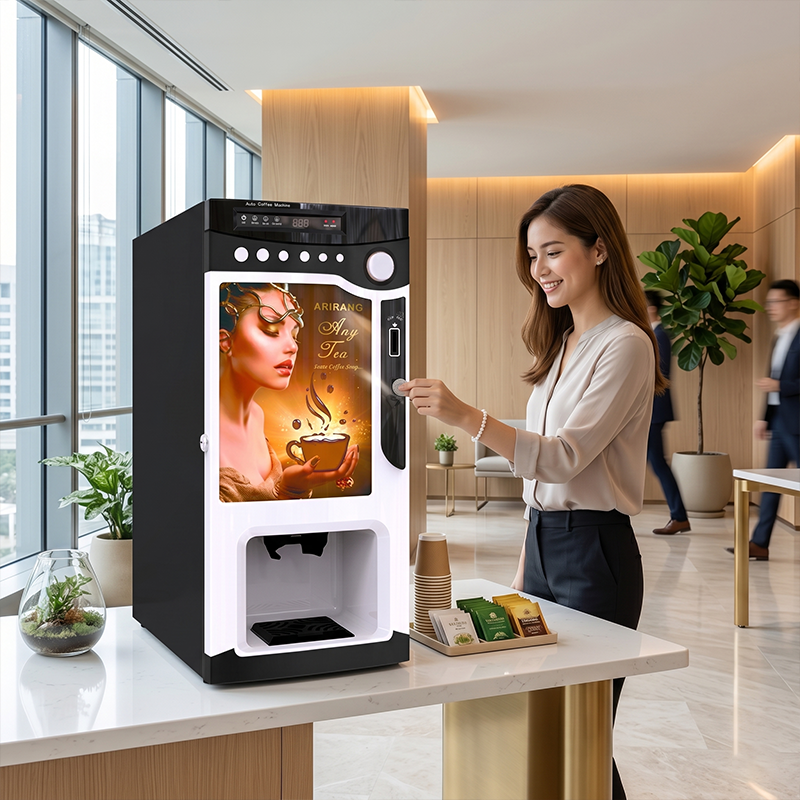
For coworking operators, coffee is more than a perk: it shapes daily routines, member satisfaction, and the overall feel of the workspace. Self-service coffee machines are increasingly considered as a way to deliver café-style drinks without the staffing costs and complexity of a full barista setup. This article examines whether they are a practical fit for coworking spaces by looking at user expectations, operational efficiency, machine types, costs, and maintenance demands. By the end, readers will have a clearer basis for deciding if a self-service model can support both community experience and long-term facility performance.
Why Self-Service Coffee Machines Fit Coworking Spaces
The modern coworking environment relies heavily on premium amenities to attract and retain professionals. As hybrid work models evolve, facility managers face the challenge of providing hospitality-grade experiences that rival commercial cafés. Among these essential amenities, access to high-quality coffee remains a cornerstone of workplace satisfaction and community building.
Member expectations and workplace experience
Research indicates that up to 80% of coworking members consume at least one cup of coffee during their workday. Providing a reliable, high-quality beverage solution acts as a networking catalyst, drawing members to communal areas and fostering organic collaboration. When the coffee experience mimics that of a premium café, members perceive higher value in their monthly subscription fees, directly impacting tenant retention rates.
Operational pressures driving automation
Operating a fully staffed barista station introduces significant financial and logistical burdens. Employing a dedicated barista can add $30,000 to $45,000 annually in labor costs alone, not including benefits, training, or coverage for sick days. Automation mitigates these pressures by offering 24/7 availability without the recurring labor overhead. By integrating automated coffee machines, facility managers can redirect operational budgets toward community-building initiatives while ensuring consistent, high-volume beverage service without interruption.
Types of Self-Service Coffee Machines
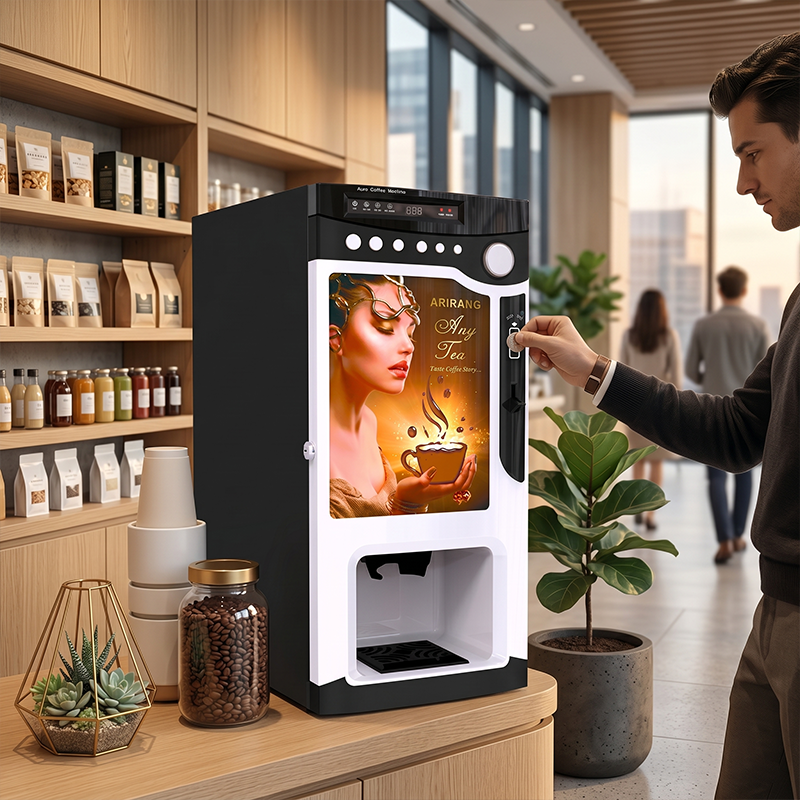
Bean-to-cup, capsule, and instant machine formats
Self-service coffee solutions generally fall into three categories: bean-to-cup, capsule, and instant. Bean-to-cup systems grind whole beans on demand, tamping and extracting espresso at the industry-standard 9 bars of pressure to deliver café-quality beverages. Capsule systems utilize pre-packaged pods, ensuring absolute consistency and minimal cross-contamination, though they generate higher consumable waste. Instant machines mix soluble powders with hot water, representing the lowest upfront cost and fastest dispense time, but typically compromise on flavor complexity and aroma.
Beverage quality, reliability, and customization
Beverage quality is heavily influenced by a machine’s ability to handle fresh ingredients and maintain precise temperature control. Advanced automated systems utilize dual-boiler designs to manage brewing at 195°F–205°F while simultaneously steaming milk. Reliability hinges on internal telemetry; modern units feature self-diagnostic software that alerts operators to blockages or temperature drops before they impact the user. Customization options, such as dual bean hoppers and integrated syrup pumps, allow users to tailor their drinks, accommodating preferences from a standard black espresso to a flavored latte.
Key comparison criteria for operators
When evaluating equipment, operators must balance capital expenditure against ongoing maintenance and user experience.
| Machine Format | Initial Capital Cost | Avg. Cost Per Cup | Daily Maintenance | Beverage Quality |
|---|---|---|---|---|
| Bean-to-Cup | $2,000 – $6,000+ | $0.25 – $0.40 | 15 – 20 minutes | Premium / High |
| Capsule / Pod | $300 – $1,500 | $0.60 – $0.90 | 5 – 10 minutes | Moderate / Consistent |
| Instant / Soluble | $500 – $2,000 | $0.10 – $0.20 | 10 minutes | Basic / Low |
Operators must weigh the high upfront investment of bean-to-cup systems against their significantly lower per-cup cost over a standard multi-year lifecycle.
Costs, Maintenance, and Compliance
A comprehensive financial and operational strategy is essential for sustaining a self-service coffee program without exceeding budget constraints or violating local health codes.
Equipment, leasing, and total cost of ownership
The total cost of ownership (TCO) extends far beyond the initial hardware purchase. Commercial-grade bean-to-cup machines typically require a capital outlay ranging from $1,500 to over $5,000. Alternatively, coworking operators can utilize leasing agreements, which generally range from $100 to $350 per month and often include preventative maintenance clauses. Factoring in consumables—where commercial espresso beans cost approximately $10 to $15 per pound—the TCO over a standard three-year depreciation cycle must be calculated to determine the true cost per member.
Cleaning, refilling, and water filtration needs
Proper maintenance is the primary driver of machine longevity. Daily cleaning protocols, which involve flushing milk lines and emptying grounds bins, typically require 15 to 20 minutes of staff time. Furthermore, water quality is critical; up to 70% of commercial coffee machine failures are attributed to mineral scale buildup. Installing an inline reverse osmosis (RO) system or a multi-stage carbon filter is mandatory to protect internal boilers and ensure optimal extraction flavor over thousands of cycles.
Food safety, accessibility, and compliance factors
Deploying food and beverage equipment requires strict adherence to local health and safety regulations. Machines must meet NSF/ANSI standards for food-contact surfaces to prevent bacterial growth, particularly within automated milk delivery systems. Additionally, operators must consider the Americans with Disabilities Act (ADA) or regional equivalents, which mandate that interactive touchscreens and dispensing nozzles be positioned no higher than 48 inches from the floor for wheelchair accessibility. Reviewing a manufacturer’s company background and manufacturing standards can provide assurance that the equipment meets these rigorous compliance benchmarks.
How to Select and Manage the Right Machine
Strategic deployment and active management are critical to maximizing the value and lifespan of self-service coffee infrastructure in a shared workspace.
Choosing capacity, menu, and placement
Capacity planning dictates that coworking spaces should provision approximately one high-capacity machine for every 50 to 100 active daily members. Placing the equipment in high-visibility, high-traffic communal kitchens encourages natural congregation and networking. The machine’s digital menu interface should be programmed to offer a streamlined selection of 6 to 10 popular beverages, which helps minimize queuing times during peak morning hours.
Sourcing, installation, and refill logistics
Logistical planning during installation prevents costly facility modifications later. Commercial machines typically require dedicated 15-amp or 20-amp electrical circuits and direct plumbing lines to avoid the labor-intensive process of manually refilling water reservoirs. Establishing a reliable supply chain for beans, milk, and cleaning chemicals is equally vital. Engaging directly with support and procurement teams ensures that refill logistics and maintenance contracts align with the specific consumption velocity of the facility.
Monitoring performance after launch
Post-launch, operators should leverage IoT telemetry to monitor machine health and consumption trends remotely. Smart dashboards track peak usage times, alert staff to low ingredient levels, and flag mechanical anomalies before they result in downtime.
| Maintenance Task | Frequency | Estimated Duration | Objective |
|---|---|---|---|
| Milk system flush | Daily | 5 minutes | Prevent bacterial growth |
| Empty grounds / drip tray | Daily | 5 minutes | Maintain hygiene and workflow |
| Deep chemical clean | Weekly | 20 minutes | Remove coffee oil residue |
| Filter replacement | Bi-annually | 15 minutes | Prevent scale buildup |
Adhering to a structured schedule guarantees consistent beverage quality and minimizes emergency repair calls.
Are Self-Service Coffee Machines Worth It
Evaluating the final return on investment requires analyzing both tangible cost reductions and the intangible benefits related to member satisfaction and workplace premiumization.
When they outperform staffed coffee service
Self-service automation consistently outperforms staffed coffee services in environments where volume does not justify continuous labor expenses. If a coworking space dispenses 100 cups per day, a bean-to-cup machine operating at an ingredient cost of $0.35 per cup costs just $35 daily to run. In contrast, staffing a barista for an eight-hour shift at $15 per hour incurs a minimum daily cost of $120, excluding ingredients and payroll taxes. The automated model achieves a rapid break-even point, often within the first 8 to 12 months of deployment.
How to decide by space size and member profile
The procurement decision ultimately hinges on the physical footprint of the space and the demographic profile of the membership. Boutique spaces with fewer than 50 members may find a high-end capsule or small-capacity bean-to-cup machine sufficient for their volume. Conversely, enterprise-focused hubs with over 200 members require robust, plumbed-in systems capable of handling sequential dispensing without thermal degradation. Ultimately, providing frictionless access to premium coffee elevates the perceived value of the workspace, serving as a powerful, cost-effective tool for tenant acquisition and long-term retention.
Further reading:
Key Takeaways
- The most important conclusions and rationale for Self-Service Coffee Machines for Coworking Spaces
- Specs, compliance, and risk checks worth validating before you commit
- Practical next steps and caveats readers can apply immediately
Frequently Asked Questions
Are self-service coffee machines suitable for coworking spaces?
Yes. They provide café-style drinks, 24/7 access, and lower labor costs while improving member satisfaction and shared-space interaction.
Which coffee machine type works best for a busy coworking space?
Bean-to-cup is usually best for quality and lower per-cup cost. Capsule suits smaller teams, while instant fits tight budgets but offers simpler taste.
How much maintenance does a self-service coffee machine need?
Most bean-to-cup units need 15–20 minutes daily for cleaning, refilling, and basic checks. Water filtration and regular servicing help prevent breakdowns.
Is buying or leasing better for coworking operators?
Leasing is often better if you want lower upfront costs and bundled maintenance. Buying can save more long term if usage is high and budgets allow.
Can YL Vending help choose a machine for my coworking space?
Yes. YL Vending offers commercial self-service coffee solutions, so you can compare machine types, capacity, and features based on your space and member demand.

Post time: Jun-22-2026