

Introduction
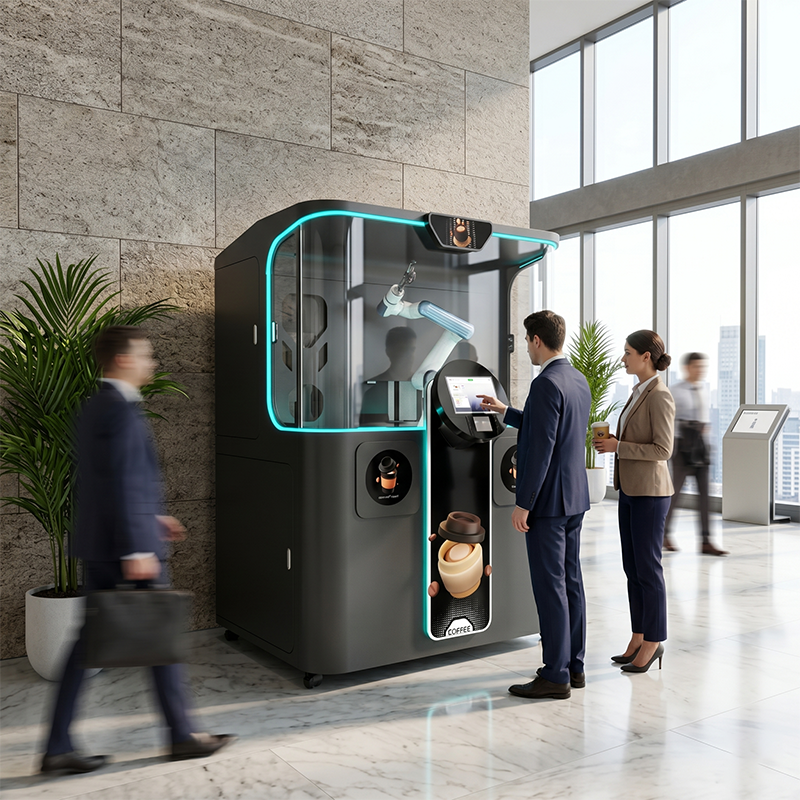
China has become a leading source for OEM robot barista systems, combining mature robotics manufacturing, efficient supply chains, and cost advantages that matter to coffee brands, operators, and distributors. This article explains what makes a strong manufacturer, how to assess production quality, customization options, software integration, and after-sales support, and which business requirements should be defined before sourcing. By the end, you will have a practical framework for comparing suppliers in China and identifying an OEM partner that can support reliable deployment, consistent drink quality, and scalable automated coffee operations.
Why Choose an OEM Robot Barista Partner in China
The global hospitality and retail sectors are undergoing a significant transformation, driven by the need for automated, high-efficiency food and beverage solutions. As labor costs rise and consumer expectations for rapid, contactless service increase, automated coffee kiosks have emerged as a highly profitable retail format. China has positioned itself as the dominant force in commercial robotics manufacturing, offering unparalleled supply chain efficiency, advanced mechatronics, and competitive pricing for brands looking to launch their own automated coffee businesses.
Market demand and business use cases
Sourcing an OEM robot barista China system allows businesses to capitalize on the growing demand for automated retail without bearing the immense overhead of ground-up research and development. Operating 24/7, these automated kiosks can process upwards of 200 to 300 cups per day, generating revenue outside of traditional business hours while drastically reducing labor dependencies. Use cases span across corporate office lobbies, university campuses, airport terminals, and high-traffic shopping malls, where consistent beverage quality and speed of service are paramount.
Key goals buyers should define first
Before engaging a supplier, buyers must establish precise operational targets to ensure the chosen hardware aligns with their business model. This includes defining the physical footprint, which typically ranges from 1.5 to 4.0 square meters, and determining the required beverage output capacity. A commercial-grade robotic barista should achieve a dispensing speed between 45 and 90 seconds per cup, depending on the complexity of the beverage. Buyers must also outline their menu requirements, specifying whether the machine needs to handle fresh milk, multiple syrup flavors, or alternative dairy options, as this heavily influences the internal plumbing and refrigeration specifications.
What Makes a Reliable OEM Coffee Robot Manufacturer
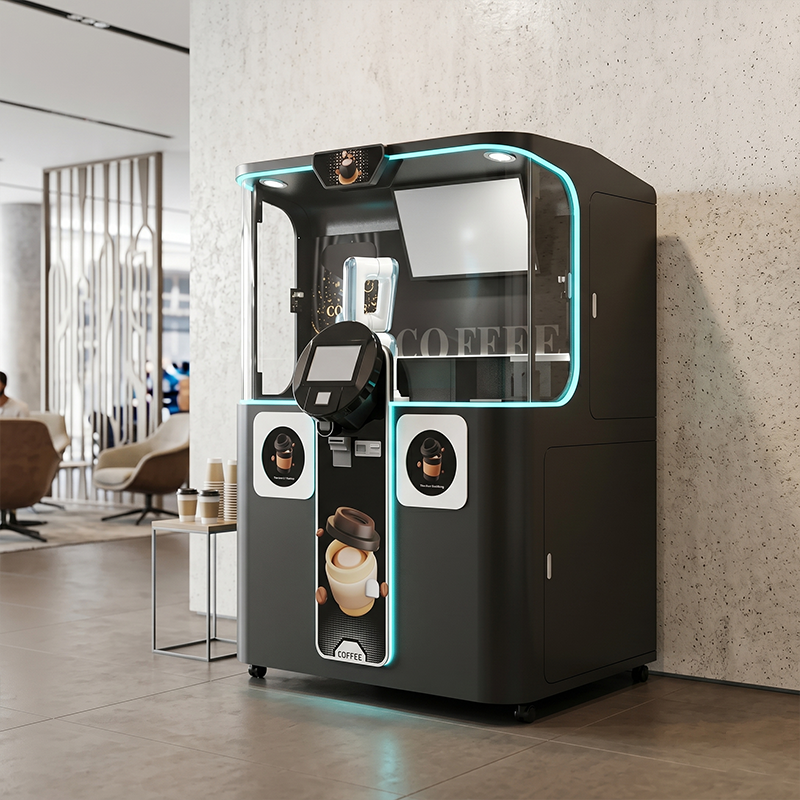
A top-tier manufacturing partner provides more than just basic assembly; they offer robust engineering frameworks and scalable supply chains capable of adapting to specific brand requirements. The reliability of an automated coffee kiosk hinges on the seamless integration of industrial robotics, commercial brewing equipment, and sophisticated telemetry systems.
Core product and engineering capabilities
Core engineering capabilities dictate the reliability and quality of the final beverage output. Leading facilities utilize 6-axis robotic arms with a precise movement repeatability of ±0.02 mm, ensuring zero spillage and consistent presentation. These robotic systems must be paired with commercial-grade espresso extraction modules capable of operating at an optimal 9 to 15 bar pressure. Reviewing a manufacturer’s background can reveal their historical experience in integrating high-precision mechatronics with food-safe plumbing and automated self-cleaning systems, which are vital for maintaining hygiene with minimal human intervention.
Customization and software integration depth
Software integration is equally critical to the success of an automated retail fleet. The best manufacturers offer deep API access, allowing the robot’s operating system to communicate seamlessly with localized payment gateways, mobile ordering applications, and cloud-based inventory management software.
| Customization Tier | Hardware Modifications | Software Integration Depth | Typical MOQ |
|---|---|---|---|
| White-Label | Branding decals, custom paint | Basic UI logo replacement | 1-5 units |
| Standard OEM | Panel adjustments, menu tweaks | Payment gateway localization | 10-20 units |
| Deep OEM/ODM | Bespoke enclosure, custom modules | Full API access, custom telemetry | 50+ units |
How to Compare OEM Robot Barista Suppliers
Evaluating different suppliers requires a standardized approach to ensure an apples-to-apples comparison across multiple technical and commercial dimensions. Buyers must look beyond the initial quotation to understand the full scope of what is being offered, from baseline specifications to long-term operational support.
Pricing and specification comparison criteria
Pricing for an OEM robot barista varies heavily based on the bill of materials and the degree of customization, typically falling within a $15,000 to $45,000 price band per unit. Buyers should compare the specifications of the internal components, such as the capacity of the dual boilers (often ranging from 1.5L to 3.0L) and the bean hopper volume, which directly dictates how many cups can be served before a physical restock is required. Minimum Order Quantities (MOQ) also play a significant role in pricing, with aggressive volume discounts usually kicking in past the 20-unit mark.
Certifications and export compliance
Export compliance is a non-negotiable factor when importing commercial machinery. The equipment must meet regional electrical standards, such as 110V/60Hz for the North American market or 220V/50Hz for Europe. Furthermore, the system must carry recognized certifications such as CE, UL, or NSF for food safety and electrical compliance. The internal architecture should also feature an IP54 or higher rating for its electrical enclosures to prevent catastrophic short circuits in the event of liquid spills or internal plumbing leaks.
Lifecycle cost, spare parts, and service support
The total cost of ownership extends far beyond the initial purchase price and shipping freight. A reliable supplier will provide a documented Mean Time Between Failures (MTBF) exceeding 10,000 operational cycles and offer comprehensive warranty terms, generally covering 12 to 24 months for non-consumable parts. Buyers should ensure they have direct access to technical manuals and a guaranteed supply chain for proprietary spare parts for at least five years post-purchase, ensuring the kiosks do not become obsolete.
What Is the Best Sourcing and Deployment Process
Successfully bringing an automated coffee kiosk to market requires a disciplined sourcing and deployment methodology. A structured approach minimizes risks from the factory floor to the final retail location, ensuring that the hardware performs as expected under real-world conditions.
Supplier selection and factory audit steps
The procurement process must begin with a rigorous factory audit. Buyers should verify ISO 9001 quality management certifications and assess the facility’s maximum production capacity. It is crucial to partner with a manufacturer capable of scaling up to at least 100 to 300 units per month to support future franchise or corporate rollout expansions without bottlenecking the supply chain.
Prototype validation and pilot rollout
Before committing to mass production, a prototype validation phase is essential. Developing a custom OEM prototype usually requires a manufacturing lead time of 45 to 60 days. During this pilot phase, the machine should undergo a continuous stress test of at least 1,000 consecutive vends to identify any software bugs, mechanical misalignments, or thermal management issues under peak load conditions. This phase is also used to finalize the localization of the user interface.
Packaging, shipping, installation, and training
Logistics and installation planning finalize the deployment cycle. International shipping of sensitive robotics requires ISPM-15 certified wooden crating and internal shock absorption. Once on-site, a well-designed modular unit should require less than 4 hours for physical installation and calibration.
| Deployment Phase | Typical Duration | Key Milestones |
|---|---|---|
| Supplier Audit & Contracting | 2-4 Weeks | ISO verification, SLA signing, IP protection |
| Prototype & Pilot Testing | 6-8 Weeks | 1,000-cycle stress test, UI localization |
| Mass Production & Transit | 8-12 Weeks | Quality control, ISPM-15 crating, ocean freight |
| Installation & Training | 1-3 Days | On-site calibration, operator safety handover |
How to Make the Final Vendor Decision
The final decision rests on evaluating risk factors and securing favorable contractual terms that protect the buyer’s intellectual property and operational continuity. A systematic final review prevents costly mistakes and ensures a mutually beneficial long-term partnership.
Common warning signs to watch for
Certain warning signs can indicate a high-risk supplier during the evaluation phase. These include a historical hardware defect rate above 3%, an inability to provide English-language API documentation, or a refusal to share a transparent bill of materials for critical components. Additionally, suppliers who offshore their software development entirely may struggle to provide the rapid, real-time troubleshooting required to maintain a 24/7 automated retail business.
Final evaluation and selection checklist
A comprehensive final selection checklist should include verified intellectual property protection clauses (such as NNN agreements valid in China), strict Service Level Agreements (SLAs) for software backend uptime (targeting 99.9%), and standard payment terms that incentivize quality control. A standard and secure hardware payment structure often involves a 30% advance deposit to initiate production, with the remaining 70% released only after a successful Factory Acceptance Test (FAT) via video or third-party inspector, immediately prior to shipment.
Further reading:
Key Takeaways
- The most important conclusions and rationale for OEM robot barista China
- Specs, compliance, and risk checks worth validating before you commit
- Practical next steps and caveats readers can apply immediately
Frequently Asked Questions
What cup output should an OEM robot barista in China handle?
For most retail sites, target 200–300 cups per day and 45–90 seconds per cup. Match this to your peak-hour traffic before selecting a model.
What customization options should I ask a Chinese OEM coffee robot supplier for?
Ask for branding, menu setup, payment gateway localization, telemetry access, and enclosure changes. If you need deeper integration, request full API support and custom modules.
What price range is typical for an OEM coffee robot from China?
Most units range from about $15,000 to $45,000, depending on components and customization. Pricing usually improves when orders exceed 20 units.
How much space does a robot barista kiosk usually need?
Plan for about 1.5 to 4.0 square meters. Confirm the final footprint based on cup volume, refrigeration, and whether your menu uses fresh milk or syrups.
Where can I review YL Vending’s robot barista products and OEM capabilities?
You can check product options at ylvending.com/products/ and company background at ylvending.com/about-us/. For software and API details, review ylvending.com/download/.
Kely
Post time: Jun-08-2026