

Introduction
Choosing a commercial coffee robot in 2026 is less about novelty and more about whether the system improves margins, service speed, and day-to-day reliability in a real operating environment. The right evaluation should connect equipment specs to labor constraints, drink consistency, peak-hour throughput, maintenance demands, and the fit between the robot and your store model. This checklist will help you compare options with a practical lens, so you can identify which features matter, which vendor claims need scrutiny, and how to avoid buying a machine that looks impressive but underperforms once deployed.
Why evaluate a commercial coffee robot
As the hospitality and retail sectors look toward 2026, automation is transitioning from a novelty to a critical operational strategy. Procuring a commercial coffee robot requires careful evaluation of both current operational bottlenecks and future growth targets. Decision-makers must look beyond the visual appeal of robotic arms and focus on how these systems fundamentally alter unit economics, service reliability, and staffing dependencies.
Labor pressure, consistency, and throughput
The primary driver for adopting robotic coffee solutions is the compounding pressure of labor shortages and rising wages. In many quick-service restaurant (QSR) and high-volume retail environments, barista turnover exceeds 120% annually, leading to continuous recruitment and training costs. A robotic system mitigates this by providing absolute consistency in dosing, tamping, and extraction, regardless of the shift or location. Furthermore, these machines guarantee a predictable throughput, often producing 60 to 80 cups per hour during peak rushes without the fatigue or error rates associated with manual labor.
Best-fit operating models
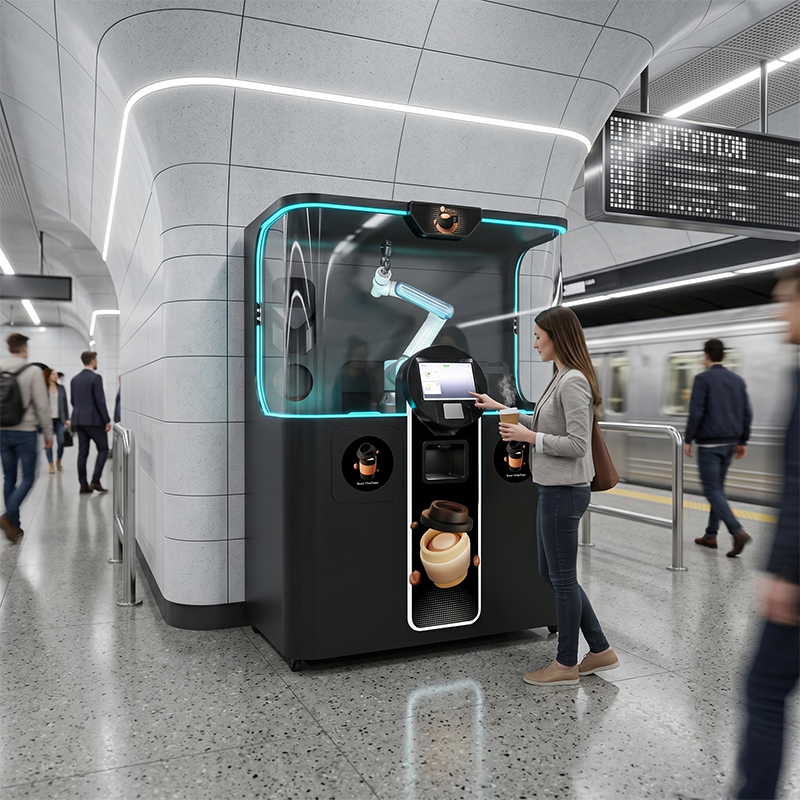
Identifying the correct operating model is essential for a successful deployment. Unmanned kiosks thrive in 24/7 environments like airport terminals, hospital cafeterias, and corporate campuses, where they require a footprint of less than 2.5 square meters. Conversely, in a hybrid cafe model, the robot acts as a high-speed production engine behind the counter, allowing human staff to focus strictly on customer hospitality and complex food preparation. Evaluating the specific real estate and customer interaction expectations will dictate whether a fully enclosed self-service unit or an open-counter robotic arm is the optimal fit.
What to define before comparing options
Before soliciting quotes or engaging in vendor demonstrations, procurement teams must precisely define their operational parameters. Establishing strict baseline requirements prevents overspending on unnecessary features and ensures the selected hardware can handle the intended daily volume without excessive downtime.
Product scope and use case
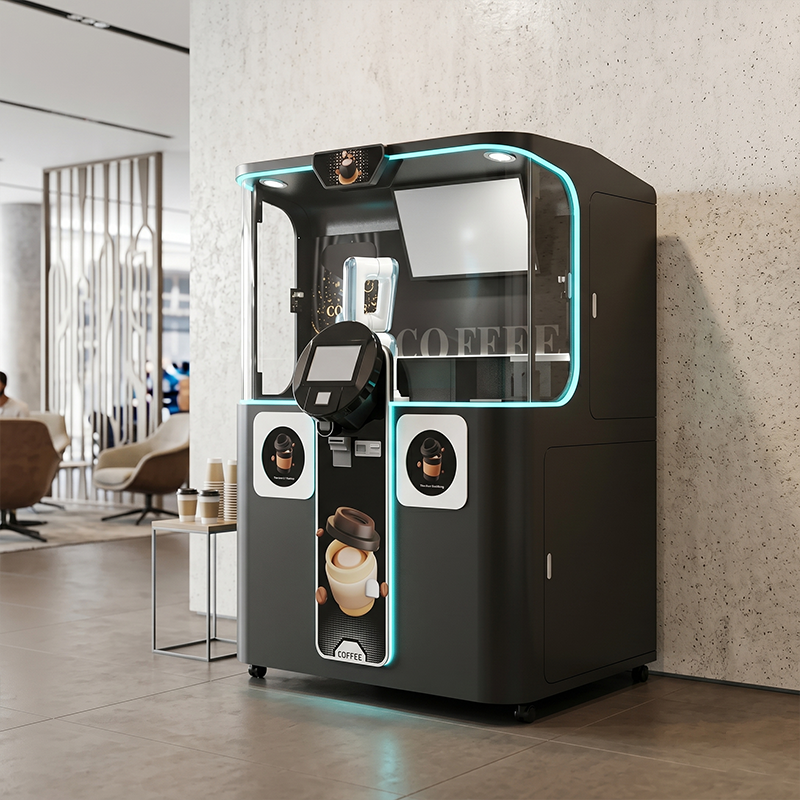
The scope of the product menu directly impacts hardware complexity. A facility that only requires standard espresso, Americanos, and basic lattes can utilize a streamlined machine with a single milk system and dual 2-kilogram bean hoppers. However, locations catering to specialty coffee trends may require advanced modules capable of handling multiple plant-based milks, four to six automated syrup pumps, and micro-foam texturing capabilities. Defining the exact use case ensures the machine aligns with consumer expectations without introducing unnecessary failure points.
Workflow, volume, and customer experience
Analyzing customer workflow and anticipated volume dictates the necessary user interface and processing speed. In a high-traffic transit hub, the transaction time—from order placement to cup retrieval—must ideally remain under 90 seconds to prevent bottlenecking. Buyers must determine if the workflow requires a built-in interactive touchscreen, a purely mobile app-based ordering system, or integration with existing point-of-sale (POS) kiosks. The customer experience must remain frictionless, particularly in self-service environments where staff are not present to troubleshoot.
Comparison criteria for procurement
Establishing strict comparison criteria early in the procurement cycle allows for objective vendor evaluation. Key metrics should include maximum hourly output, preventative maintenance intervals, and integration capabilities.
| Operating Model | Target Throughput | Key Hardware Feature | Max Acceptable Downtime |
|---|---|---|---|
| High-Volume Transit | 80+ cups/hour | Dual grinders & boilers | < 2 hours/month |
| Corporate Campus | 40-60 cups/hour | Multi-milk texturing | < 4 hours/month |
| Hybrid Cafe | 60+ cups/hour | Open API for POS | < 3 hours/month |
Which specifications and metrics matter most
Technical specifications separate commercial-grade workhorses from prosumer novelties. When reviewing spec sheets, buyers must focus on the metrics that directly influence cup quality, system uptime, and the total financial commitment over the asset’s lifecycle.
Drink quality, menu flexibility, and speed
Consistent drink quality relies on rigid adherence to brewing parameters. The core espresso module must maintain a standard 9-bar extraction pressure and a temperature stability of ±0.5°C across consecutive pulls. Speed must not compromise this quality; a high-performance unit should execute a complex beverage, such as a flavored latte, in 45 to 60 seconds. Menu flexibility is further enhanced by the inclusion of automated powder dispensers for matcha or cocoa, and independent cleaning lines to prevent cross-contamination between dairy and oat milks.
Hardware, software, and integrations
The physical architecture of the machine—whether it utilizes a six-axis articulated robotic arm or a faster, more rigid Cartesian gantry system—dictates both visual appeal and mechanical reliability. Beyond hardware, cloud-based telemetry is non-negotiable for fleet management. Operators must demand real-time dashboards that track consumable levels, component temperatures, and error codes. Reviewing a manufacturer background can provide insight into their historical software development cadence and their ability to provide open APIs for seamless integration with third-party loyalty apps and inventory management software.
Total cost of ownership
Evaluating the Total Cost of Ownership (TCO) requires looking past the initial capital expenditure. Procurement models must account for annual software licensing, water filtration replacements, and preventative maintenance labor over a standard five- to seven-year lifecycle.
| Cost Category | Typical Range (USD) | Frequency |
|---|---|---|
| Hardware Capital Expenditure | $25,000 – $55,000 | One-time |
| Software / Telemetry License | $1,200 – $2,500 | Annual |
| Preventative Maintenance | $1,500 – $3,500 | Annual |
| Consumables (Filters, Tubes) | $400 – $800 | Annual |
How to assess vendor risk and deployment
Deploying automated food service equipment introduces stringent regulatory and logistical hurdles. Assessing vendor risk involves scrutinizing their ability to navigate local compliance laws, deliver reliable aftermarket support, and execute a seamless installation process.
Compliance and site readiness
Site readiness and regulatory compliance are frequent stumbling blocks in automated deployments. The hardware must carry recognized certifications, such as UL/CE for electrical safety and NSF (or regional equivalents) for food-contact surfaces. Facilities must be prepped to meet specific utility thresholds, typically requiring a dedicated 220V/30A electrical circuit, a 3/8-inch direct water line, and an integrated reverse osmosis filtration system to protect the boilers from scale buildup. Failure to secure these utilities beforehand can delay launches by weeks.
Support, service, and spare parts
A machine’s profitability drops to zero during a mechanical failure, making the vendor’s service level agreement (SLA) a critical risk factor. Buyers should demand guarantees of local spare parts inventory and maximum response times—ideally a four-hour on-site response window in major metropolitan areas. During the vetting phase, it is highly recommended to contact support teams directly to evaluate their technical proficiency, communication speed, and the availability of remote diagnostic capabilities before signing a contract.
Installation, training, and change management
The physical installation and subsequent change management require coordinated planning. On-site calibration of the grinders, water flow, and robotic kinematics typically requires four to eight hours of specialized technician labor. Following installation, internal staff must be trained on daily operational duties. While the brewing is automated, human workers must still execute daily cleaning cycles—usually requiring 15 to 20 minutes—and manage the refilling of beans, milks, and syrups. Effective change management ensures staff view the robot as an efficiency tool rather than a complex burden.
How to make the final buying decision
The transition from technical evaluation to final procurement requires structured real-world validation and strategic contract negotiation. Ensuring the machine performs under actual public use is the final safeguard before committing to a wide-scale rollout.
Pilot tests and acceptance criteria
Before authorizing a multi-unit purchase, organizations should mandate a 30- to 60-day pilot test in a live environment. This pilot must be measured against strict acceptance criteria. Key performance indicators (KPIs) should include a Mean Time Between Failures (MTBF) exceeding 5,000 operational cycles, an ingredient waste reduction of at least 10% compared to manual operations, and verified customer satisfaction scores regarding drink temperature and taste. If the machine requires more than two unplanned service interventions during a 30-day pilot, the vendor’s hardware maturity should be questioned.
Contract terms and rollout fit
Final contract terms should align with the organization’s long-term rollout strategy. Buyers deploying fleets should negotiate volume discounts, which typically range from 10% to 15% for orders exceeding 10 units. Additionally, warranty terms must be scrutinized; a comprehensive two-year warranty on all non-consumable parts should be the baseline expectation. Contracts should also lock in pricing for subsequent software updates and outline clear end-of-life hardware recycling or buy-back programs, ensuring the investment remains financially viable and operationally sound well into the future.
Further reading:
Key Takeaways
- The most important conclusions and rationale for commercial coffee robot
- Specs, compliance, and risk checks worth validating before you commit
- Practical next steps and caveats readers can apply immediately
Frequently Asked Questions
How many cups per hour should a commercial coffee robot handle?
Match output to peak demand. For transit or busy retail, target 80+ cups/hour. Corporate campuses often need 40–60, while hybrid cafes usually need 60+ with stable speed during rush periods.
What drink speed is acceptable for self-service coffee robots?
Aim for under 90 seconds from order to pickup in unattended sites. A strong commercial unit should make a flavored latte in about 45–60 seconds without sacrificing espresso quality.
Which technical specs matter most when comparing vendors?
Prioritize 9-bar extraction pressure, ±0.5°C temperature stability, max hourly output, maintenance intervals, and downtime limits. Also verify dual grinders/boilers if your site expects heavy peak traffic.
What operating model fits best for my location?
Use an unmanned kiosk for 24/7 sites like airports, hospitals, or campuses with limited space. Choose a hybrid counter setup when staff can handle hospitality while the robot manages drink production.
Should I ask ylvending.com about POS and menu integration before buying?
Yes. Confirm whether the robot integrates with your POS, kiosk, or mobile ordering flow, and whether it supports your exact menu, such as syrups, plant milks, cocoa, or matcha modules.

Kely
Post time: Jun-05-2026