

 Introduction
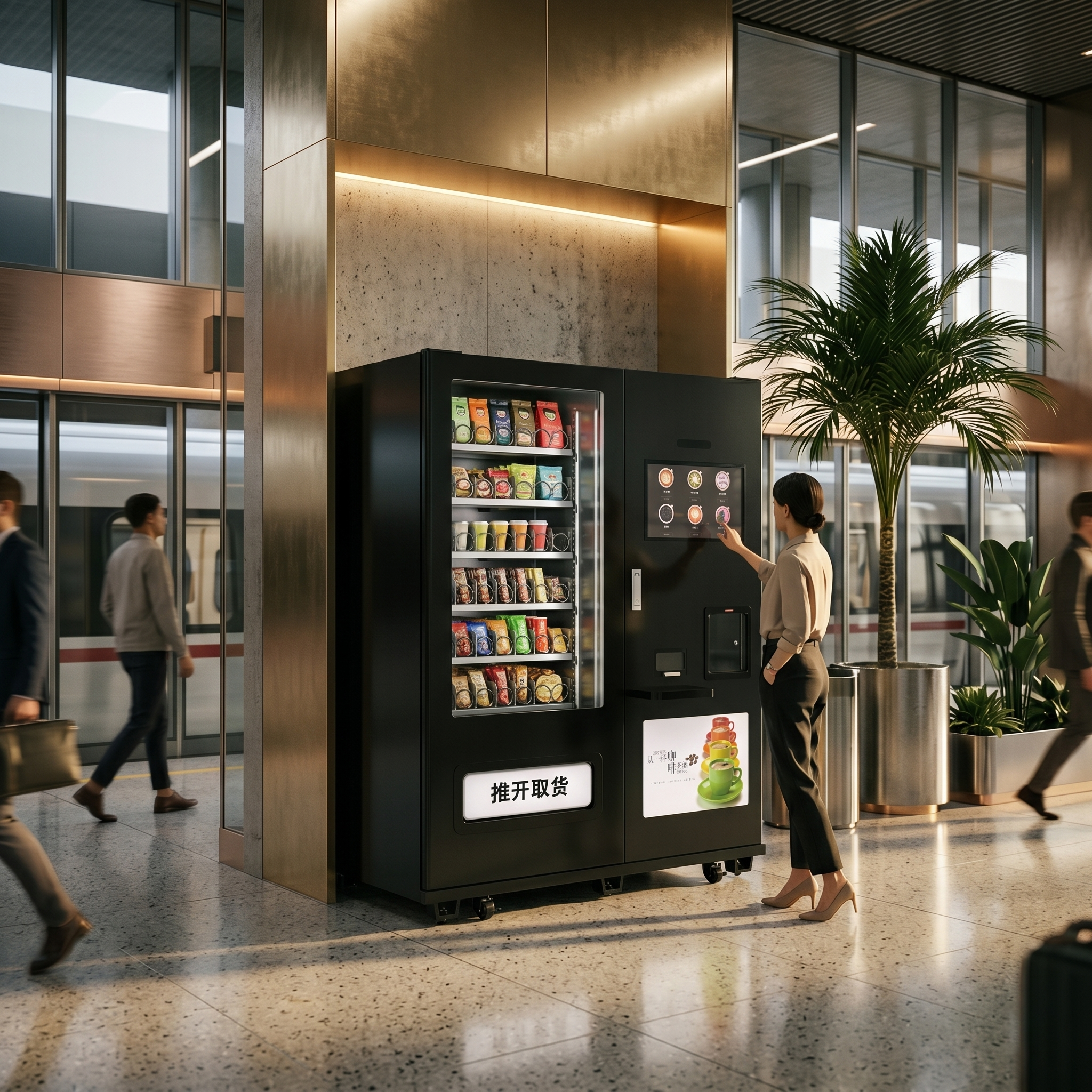
Retail projects that use smart vending often succeed or fail at the supplier stage, where hardware design, software integration, and merchandising requirements must align from the start. A capable custom vending supplier can help brands fit machines to product size, storage conditions, payment methods, and site constraints while protecting the customer experience and operating margins. This article explains what retail teams should define before selecting a partner, which technical and operational capabilities matter most, and how the right supplier can support faster rollout, lower overhead, and more reliable unattended sales.
Why a Custom Vending Supplier Matters for Retail Projects
As the retail landscape shifts toward automated, unattended commerce, brands are increasingly relying on specialized manufacturing partners to bridge the gap between digital convenience and physical presence. Engaging a custom vending supplier allows retailers to deploy highly specialized micro-stores that occupy a minimal real estate footprint—often just 10 to 15 square feet—while delivering a fully branded consumer experience.
How custom smart vending supports retail expansion
Custom smart vending serves as a scalable engine for retail expansion, enabling brands to enter high-traffic locations like airports, malls, and transit hubs without the exorbitant overhead of traditional brick-and-mortar leases. By automating the point of sale, companies can achieve a 40% to 60% reduction in localized staffing and operational costs. Furthermore, these machines operate 24/7, capturing off-hour revenue that traditional retail stores inevitably forfeit.
Which project types benefit most from custom vending
Not all merchandise fits neatly into traditional coil-based machines. Projects involving high-value electronics, fragile cosmetics, or temperature-sensitive perishables benefit immensely from bespoke dispensing mechanisms. For instance, fresh food deployments require strict climate control, typically maintaining internal temperatures between 2°C and 8°C, alongside elevator-style delivery systems that prevent product damage during the vend cycle.
What Retail Teams Should Define Before Choosing a Supplier
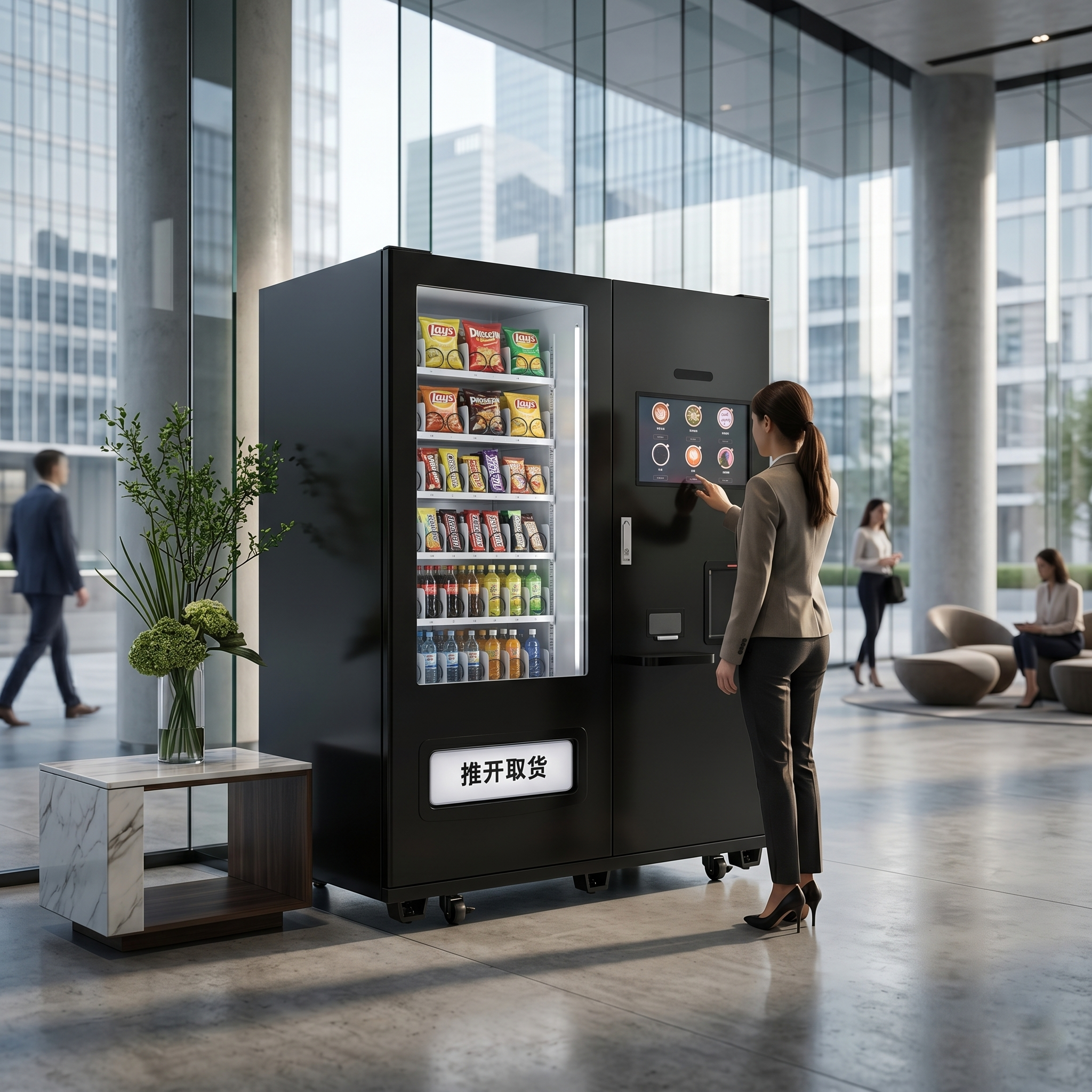 Before issuing a Request for Proposal (RFP), retail operations and IT teams must collaborate to define the exact technical and physical parameters of their automated retail project. A well-scoped requirements document accelerates the engineering phase and prevents costly redesigns once the manufacturing process begins.
Which machine, payment, and telemetry requirements matter
Modern smart vending extends far beyond simple payment processing. Retailers must define their telemetry needs, ensuring the machine’s cellular or Wi-Fi routers can maintain 99.9% uptime for seamless inventory syncing. Payment terminals must support EMV, NFC, and mobile wallets, while backend APIs should handle transaction data with a latency of under 200 milliseconds to prevent consumer abandonment. Additionally, the dispensing mechanism—whether conveyor belts, robotic arms, or smart-fridge RFID tracking—must be meticulously matched to the product’s weight and physical dimensions.
How to compare standard units with custom solutions
Deciding between an off-the-shelf unit and a bespoke build requires a clear understanding of trade-offs in lead times, branding, and functionality.
| Feature | Standard Vending | Custom Smart Vending |
|---|---|---|
| Lead Time | 4 to 6 weeks | 10 to 16 weeks |
| Dispensing | Fixed coils/spirals | Modular, elevator, or robotic |
| Branding | Vinyl wraps only | Custom enclosures, large screens |
| Integration | Closed proprietary software | Open API, custom UI/UX |
Standard units work well for fast-moving consumer goods with standard packaging, while custom solutions are essential for experiential retail and non-standard form factors.
Which total cost drivers to scope early
Budgeting for automated retail requires scoping total cost drivers well beyond the initial hardware quote. While standard machines might cost $3,000 to $5,000, specialized units with advanced robotics and 43-inch touchscreens can range from $8,000 to $12,000+ per unit. Retailers must also factor in Minimum Order Quantities (MOQs), which typically sit between 20 and 50 units for deep customizations, alongside ongoing software licensing fees that average $15 to $30 per machine monthly.
How to Evaluate a Custom Vending Supplier
Selecting the right manufacturing partner is a critical risk management exercise. Retailers must look past glossy brochures and evaluate the hard engineering, quality control, and compliance capabilities of a prospective custom vending supplier to ensure long-term fleet reliability.
Which engineering and manufacturing capabilities matter
A capable supplier must possess robust in-house R&D and 3D CAD modeling expertise to transition a concept into a functional prototype swiftly. Manufacturing capacity is equally vital; the facility should demonstrate the ability to scale production to 500+ units per month without compromising build quality. Retailers should actively inquire about the supplier’s hardware defect rate, which should strictly remain below 1% for commercial-grade deployments.
What compliance and quality checkpoints to review
Hardware deployed in public spaces must navigate a labyrinth of regulatory and safety standards. Suppliers must provide documentation for CE, FCC, and UL certifications to guarantee electrical and radio-frequency safety. Furthermore, accessibility compliance is non-negotiable in many jurisdictions. In the United States, for example, ADA regulations mandate that all interactive elements, payment terminals, and dispensing bins must be positioned between 15 and 48 inches from the floor.
How to compare suppliers effectively
To objectively compare potential manufacturing partners, procurement teams should utilize a weighted evaluation matrix.
| Evaluation Criteria | Basic Supplier | Advanced Custom Supplier |
|---|---|---|
| Prototyping Speed | 3-4 months | 4-6 weeks |
| Software Capabilities | Third-party only | In-house UI/UX & API development |
| Quality Certification | Local standards | ISO 9001, global export certified |
| After-Sales Support | Parts shipping only | Dedicated SLA, remote diagnostics |
Scoring vendors across these dimensions ensures that the chosen partner can support both the initial rollout and the subsequent multi-year operational lifecycle.
How to Source and Deploy Custom Vending Machines
The physical deployment of an automated retail fleet represents the most logistically complex phase of the project. Successfully moving from a finalized prototype to a live, revenue-generating network requires meticulous planning across supply chain, installation, and ongoing field service operations.
How to move from concept brief to supplier selection
The journey begins by translating the concept brief into a formal technical specification, allowing procurement teams to assess a custom vending supplier and their existing portfolio. After evaluating prototypes and finalizing the design, a pilot run of 5 to 10 units is typically commissioned. This 30 to 45-day pilot phase allows stakeholders to test hardware durability, software stability, and consumer interaction in controlled environments before authorizing mass production.
What to plan for logistics, installation, and connectivity
Deploying heavy, highly sensitive electronic equipment requires specialized white-glove logistics. Custom vending machines frequently weigh between 500 and 800 lbs, necessitating specialized rigging and site surveys prior to delivery. Installation teams must verify site readiness, ensuring access to dedicated 15-20 Amp electrical circuits (110V/220V depending on the region) and optimal antenna placement to secure a stable 4G/LTE cellular connection for telemetry data.
How to manage replenishment, monitoring, and field service
Once active, the profitability of the machine hinges on efficient replenishment and uptime. Advanced telemetry software enables dynamic routing, allowing operators to service machines only when inventory drops below specific thresholds, which can reduce unnecessary truck rolls by up to 30%. For maintenance, retailers must establish strict Service Level Agreements (SLAs) with field technicians, targeting a 4 to 8-hour response time for critical hardware failures to minimize revenue loss.
How Retailers Can Make the Final Supplier Decision
The final decision to partner with a specialized manufacturer ultimately hinges on strategic alignment, financial modeling, and the specific demands of the retail brand. It requires balancing the upfront capital expenditure against the long-term value of a highly tailored consumer experience.
When a custom vending supplier is the better choice
A custom build becomes the definitive choice when standard coil machines compromise the brand’s premium positioning or fail to accommodate unique product packaging. If a retailer requires high-definition 43-inch interactive displays for customer education, gamified dispensing, or specialized anti-drop elevators for fragile goods, customization is mandatory. Despite the higher initial costs, these tailored solutions typically yield higher transaction values, allowing brands to target a return on investment (ROI) threshold of 12 to 18 months.
Which decision framework helps stakeholders choose
Stakeholders should adopt a Total Cost of Ownership (TCO) framework projected over a 5-year hardware lifecycle to make the final call. This framework must calculate initial manufacturing and shipping costs, monthly telemetry and software licensing, projected maintenance parts, and estimated depreciation. By analyzing the 5-year TCO against projected localized revenue and the marketing value of the automated retail footprint, executive teams can confidently select a supplier that aligns with both operational budgets and brand growth objectives.
Further reading:
Key Takeaways
- The most important conclusions and rationale for custom vending supplier
- Specs, compliance, and risk checks worth validating before you commit
- Practical next steps and caveats readers can apply immediately
Frequently Asked Questions
What should I define before contacting a custom vending supplier?
List product size, weight, temperature needs, payment methods, connectivity, branding goals, and target locations. A clear requirements brief reduces redesigns and speeds quoting.
When is a custom smart vending machine better than a standard unit?
Choose custom when you sell fragile, high-value, oversized, or temperature-sensitive products, or need open API integration, a custom UI, and stronger brand presence.
How long does a custom vending project usually take?
Custom builds typically take about 10 to 16 weeks, depending on engineering complexity, prototype approval, and order volume. Standard machines are usually faster.
What costs should retail teams plan for beyond the machine price?
Include MOQ requirements, shipping, installation, software fees, payment hardware, telemetry, and maintenance. For custom projects, monthly software can add ongoing per-machine costs.
Why consider YL Vending for a retail vending project?
YL Vending offers custom smart vending solutions, branding options, and project-based manufacturing support. Ask about prototype capability, API integration, and production capacity for your rollout.

Kely
Post time: Jun-07-2026