

Introduction
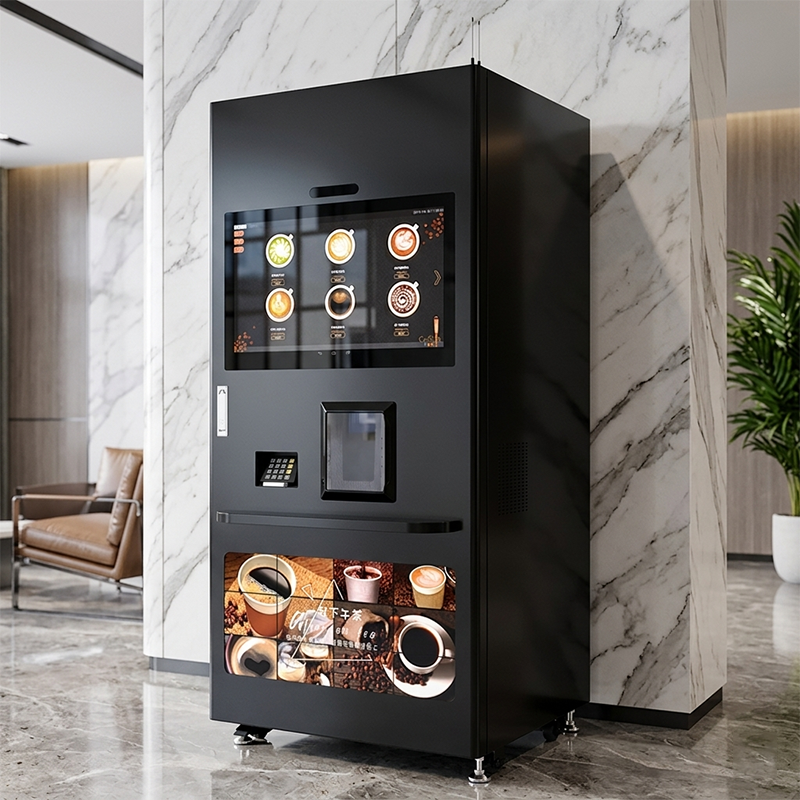
Choosing between a fresh ground coffee vending machine and an instant coffee machine affects far more than beverage taste. It shapes drink quality, service speed, maintenance needs, operating costs, and how users perceive the location offering the machine. Fresh ground systems typically support a more premium experience with stronger aroma and broader menu appeal, while instant machines often win on simplicity, consistency, and high-volume efficiency. This comparison will help you understand the practical trade-offs between the two approaches so you can match machine type to customer expectations, site traffic, budget, and overall business goals.
Why Fresh Ground vs Instant Coffee Matters for Commercial Vending
The commercial beverage sector relies heavily on automated dispensing, where the choice of equipment dictates both the operator’s business model and the end-user’s satisfaction. Analyzing the dynamics of fresh ground vs instant coffee is the first critical step for facility managers and vending operators looking to optimize their beverage programs.
Selecting the appropriate dispensing architecture involves more than just a taste preference. It requires a strategic alignment of hardware capabilities with the specific demands of a location, weighing the initial capital expenditure against long-term maintenance and ingredient costs.
Buyer expectations and location profile
Modern consumers have been conditioned by specialty café culture to expect high-quality beverages, even in automated settings. Demographic shifts in the workforce indicate a growing demand for espresso-based drinks made from whole beans. Consumer data suggests that upgrading to premium coffee options can increase location foot traffic and utilization rates by up to 15% to 20% in corporate environments.
Conversely, high-turnover environments such as construction sites or transit hubs prioritize speed and immediate caffeine delivery over artisanal quality. In these locations, the demographic profile favors the rapid, high-volume output that instant soluble systems provide, making the location profile the primary determinant in machine selection.
Beverage positioning and brand image
The type of coffee dispensed directly influences how a facility or brand is perceived. A machine that grinds whole beans on demand serves as a visible commitment to quality, acting as a premium employee perk or an upscale amenity in customer-facing waiting areas. The auditory cue of grinding beans reinforces a perception of freshness and luxury.
Instant coffee machines, while lacking the artisanal appeal, position themselves as reliable, utilitarian solutions. They project efficiency and accessibility, which aligns perfectly with environments where coffee is viewed as a necessary fuel rather than a curated experience.
Key operating goals for machine selection
Operators must align their equipment choice with strict financial and logistical targets. A fundamental operating goal is balancing the gross margin per cup against the machine’s capital expenditure and ongoing labor costs.
For instance, operators typically aim for a target gross margin of 60% to 80% per vend. While fresh ground systems can command higher retail prices, they require more frequent technician visits. Instant systems lower the barrier to entry with cheaper hardware and reduced maintenance, ensuring steady profitability even at lower price points.
Fresh Ground vs Instant Coffee Vending Machines Explained
Understanding the mechanical differences between fresh ground and instant coffee vending machines is essential for anticipating their operational lifespans and service requirements. Each system utilizes a distinctly different internal architecture to convert raw ingredients into a finished beverage.
How fresh ground coffee vending machines work
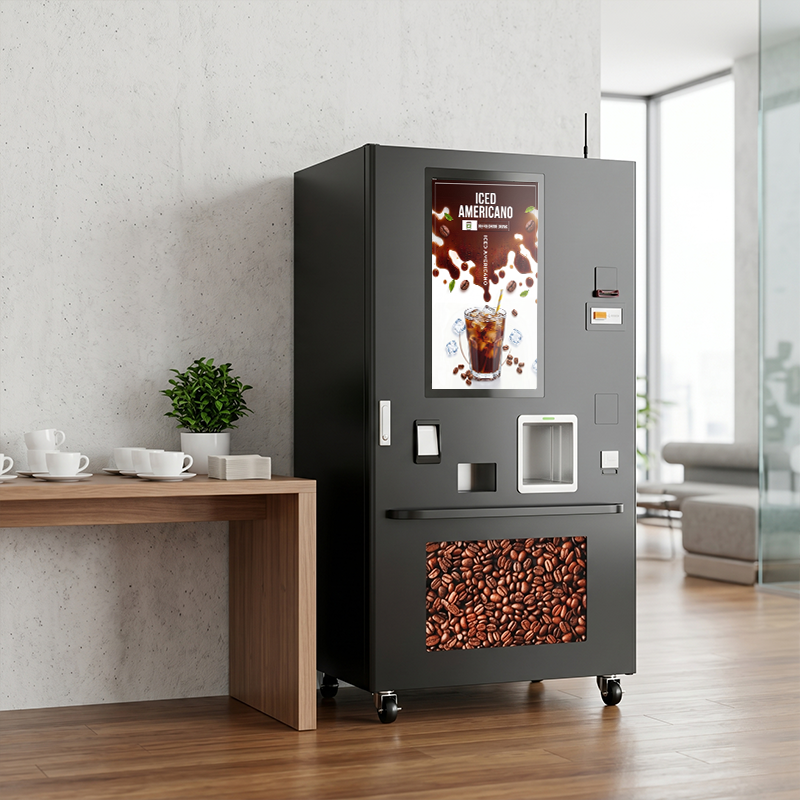
Fresh ground machines are complex electromechanical systems designed to replicate the actions of a human barista. They feature transparent bean hoppers that feed into integrated burr grinders. Upon selection, the machine grinds a precise dose of whole beans, typically between 7 and 14 grams, depending on the recipe.
The ground coffee is then dropped into a specialized brew group. An internal pump forces heated water through the compacted coffee grounds at high pressure—often around 9 bar for authentic espresso extraction. After brewing, the machine mechanically ejects the spent coffee puck into a waste bin, requiring a complex sequence of moving parts that must remain precisely calibrated.
How instant coffee vending machines work
Instant coffee vending machines operate on a much simpler, gravity-fed mechanism. They store freeze-dried or spray-dried soluble coffee powder in high-capacity acrylic canisters. When a user selects a drink, an auger motor dispenses a pre-measured gram throw of powder directly into a mixing bowl.
Simultaneously, a dedicated hot water valve opens, flushing the powder into the bowl. A high-speed whipping motor, often operating at speeds exceeding 10,000 RPM, rapidly blends the water and soluble ingredients to eliminate clumping and create a simulated crema before dispensing the liquid into the cup. This process involves virtually no mechanical resistance and generates no solid waste.
Specifications that affect performance and menu flexibility
The internal specifications of these machines dictate their menu versatility and overall performance in high-demand scenarios. Boiler capacity, grinder type, and the number of ingredient canisters all play pivotal roles in machine capability.
| Specification | Fresh Ground Systems | Instant Coffee Systems |
|---|---|---|
| Brewing Hardware | Burr grinder, pressurized brew group | Powder canisters, high-speed mixing bowls |
| Typical Water Boiler Size | 2.0L – 3.0+L | 1.5L – 2.0L |
| Menu Flexibility | High (espresso, Americano, layered drinks) | Moderate (standard coffee, hot chocolate) |
| Moving Parts | High (grinder, brew group, sweepers) | Low (augers, whipping motors) |
For example, instant machines often feature a 1.5L to 2L boiler, which is sufficient for mixing powders. In contrast, fresh ground espresso systems may utilize dual boilers or larger 3L tanks to maintain optimal 90°C to 96°C brewing temperatures during back-to-back extractions without suffering from temperature drop.
Taste, Cost, and Performance Comparison
The decision between fresh ground vs instant coffee ultimately hinges on the trade-offs between cup quality, the cost of goods sold (COGS), and the machine’s ability to handle peak service times reliably.
Differences in taste and drink quality
The sensory experience is the most noticeable differentiator. Fresh ground machines extract volatile aromatics and natural oils from the beans, producing a complex flavor profile and a genuine crema that instant coffee cannot organically replicate. This results in a robust, café-style beverage.
Instant coffee, having already been brewed and dehydrated during manufacturing, loses many of its delicate flavor notes. While modern freeze-drying techniques have improved the taste, soluble coffee generally presents a flatter, more one-dimensional flavor profile. However, it provides absolute consistency from cup to cup, unaffected by ambient humidity or grinder calibration.
Ingredient costs, waste, and cleaning needs
Ingredient economics heavily favor soluble systems. The cost of instant coffee typically ranges from $0.05 to $0.10 per cup, whereas fresh whole beans cost between $0.15 and $0.30 per cup, depending on the roast quality and sourcing.
Waste management and cleaning represent another significant divergence. Fresh ground machines generate wet, organic waste (spent coffee pucks) that must be emptied daily to prevent mold growth. They also require regular cleaning of the grinder chute and brew group. Instant machines produce zero solid waste, requiring only periodic flushing of the mixing bowls and wiping of the dispensing nozzles, drastically reducing the labor hours tied to machine upkeep.
Service speed, consistency, and uptime
Service speed is a critical metric in locations with concentrated break times. Instant machines excel in this area, capable of dispensing a standard 8 oz cup of coffee in roughly 10 to 15 seconds. This rapid throughput prevents bottlenecks during morning rushes.
Fresh ground machines require a longer cycle to grind, tamp, and extract, typically taking 35 to 50 seconds per cup. While the quality is higher, the slower speed can lead to queuing. Furthermore, the mechanical complexity of fresh ground systems introduces more potential points of failure, meaning operators must budget for a slightly lower overall uptime compared to the mechanically straightforward instant machines.
Operational and Compliance Considerations
Deploying automated coffee solutions requires strict adherence to facility logistics and health regulations. Both machine types impose specific infrastructural demands that must be verified prior to installation.
Water, power, plumbing, and site requirements
Power and water availability dictate where a machine can be placed. Most commercial vending units operate on standard 110V or 220V circuits, but high-capacity fresh ground machines with dual boilers may require dedicated 20-amp breakers to prevent tripping during peak heating cycles.
Water supply is equally critical. While both systems can operate via internal 5-gallon water jugs with external pumps, direct plumbing is preferred for high-volume locations. Machines plumbed directly into the facility’s water line typically require a stable water pressure range of 0.1 to 0.6 MPa. Additionally, inline water filtration systems are mandatory for fresh ground units to prevent scale buildup in the precision brew group, whereas instant machines are slightly more tolerant of hard water.
Sourcing, storage, and refill logistics
The logistics of keeping machines stocked vary based on the ingredient’s shelf life and vulnerability to environmental factors. Soluble powders used in instant machines are highly stable, boasting a shelf life of 18 to 24 months when kept dry. This allows operators to purchase in bulk and reduce delivery frequencies.
Whole bean coffee, however, is highly perishable. Roasted beans peak in flavor within 2 to 4 weeks and begin to degrade noticeably after 6 months. Operators managing fresh ground machines must implement a strict first-in, first-out (FIFO) inventory system and schedule more frequent route visits to ensure the hoppers are filled with fresh product, increasing logistical overhead.
Food safety, sanitation, and labeling compliance
Compliance with food safety standards, such as NSF/ANSI requirements in North America or equivalent CE standards in Europe, is non-negotiable. Because fresh ground machines handle organic waste and often incorporate liquid milk systems for specialty drinks, they present a higher risk for bacterial growth.
Any machine utilizing liquid dairy must maintain the milk at a strict temperature below 40°F (4°C) to avoid the temperature danger zone, and requires rigorous, documented daily flush cycles. Instant machines, which typically use powdered milk or non-dairy creamer, bypass these strict liquid dairy regulations, making sanitation compliance significantly easier and less prone to health inspection violations.
How to Choose the Right Coffee Vending Machine
Procuring the ideal dispensing equipment requires a systematic approach to matching machine capabilities with site-specific demands. A mismatched machine can result in either dissatisfied users or an unprofitable operation burdened by excessive maintenance.
Step-by-step evaluation process
Operators should begin their evaluation by calculating the expected daily cup volume and the demographic profile of the end-users. Step one is assessing the budget, including both the upfront machine cost and the projected COGS.
Step two involves evaluating the facility’s infrastructure—specifically checking for direct water lines and adequate electrical supply. Finally, step three is determining the available labor for daily maintenance. If facility staff cannot commit to a 10-minute daily cleaning protocol, complex fresh bean systems should be disqualified in favor of lower-maintenance soluble options.
Best use cases for fresh ground machines
Fresh ground machines are the optimal choice for environments where brand perception and user experience are paramount. They thrive in Class A corporate offices, luxury car dealerships, university libraries, and premium hospitality lounges.
In these settings, the higher cost per cup is justified by the perceived value of the amenity. Locations dispensing over 150 to 200 cups daily at a premium retail price point can typically see a full return on investment (ROI) on a high-end fresh ground unit within 8 to 12 months, provided the maintenance schedule is strictly followed.
Best use cases for instant machines
Instant coffee machines are best suited for environments demanding high throughput, absolute reliability, and low operational costs. Reviewing the options for fresh ground vs instant coffee reveals that soluble systems dominate in manufacturing plants, logistics warehouses, public transit stations, and large hospital waiting areas.
| Environment | Recommended Machine | Key Driver for Selection |
|---|---|---|
| Class A Offices | Fresh Ground | Premium employee perk, high beverage quality |
| Manufacturing Plants | Instant | Speed of service, low cost per cup, high volume |
| Public Waiting Rooms | Hybrid / Instant | Ease of maintenance, complimentary offering, low waste |
In these scenarios, the primary goal is dispensing a hot, caffeinated beverage as quickly and cheaply as possible. The near-zero waste production and extended intervals between required service visits make instant machines the most profitable and logical choice for utilitarian, high-traffic locations.
Further reading:
Key Takeaways
- The most important conclusions and rationale for fresh ground vs instant coffee
- Specs, compliance, and risk checks worth validating before you commit
- Practical next steps and caveats readers can apply immediately
Frequently Asked Questions
Which machine is better for office locations seeking premium coffee?
A fresh ground coffee vending machine is usually better. It grinds whole beans per cup, supports espresso-style drinks, and helps offices on ylvending.com offer a more premium employee or guest experience.
When is an instant coffee machine the smarter commercial choice?
Choose instant for transit hubs, factories, or construction sites that need fast, consistent, high-volume service. It suits locations where speed, lower upfront cost, and simple operation matter more than specialty taste.
Do fresh ground coffee vending machines cost more to maintain?
Yes. Fresh ground machines have grinders, brew groups, and waste handling parts that need regular cleaning and service. Instant machines are simpler, so maintenance is usually easier and less frequent.
Can fresh ground machines improve customer perception?
Often, yes. Visible bean hoppers and on-demand grinding signal freshness and quality, which can strengthen brand image in offices, hotels, waiting areas, and other customer-facing spaces.
How should I choose between fresh ground and instant on YL Vending?
Match the machine to your location goals: fresh ground for premium drinks and higher pricing, instant for speed and lower operating complexity. Review machine options on ylvending.com based on traffic, menu, and service needs.

Kely
Post time: Jun-02-2026