

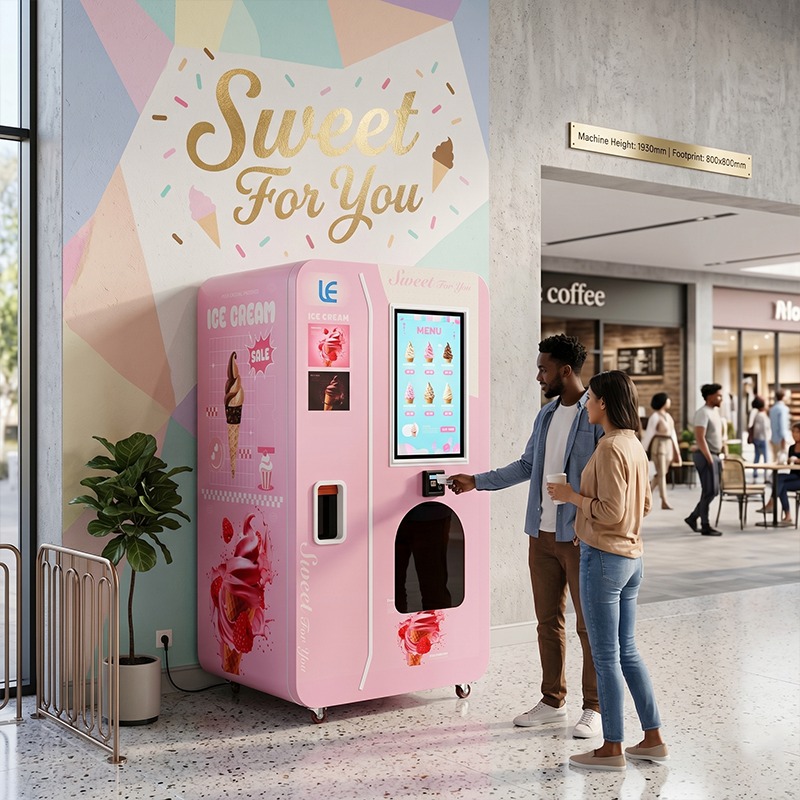
A private label strategy is most effective when the supplier can support hardware, software, and after-sales service in one package. That combination helps operators launch faster, keep the customer experience consistent, and present a more credible brand in high-traffic locations.
Why a Private Label Ice Cream Vending Machine Supplier Matters
A private label ice cream vending machine supplier helps convert equipment into a brand channel. Instead of buying a generic unit, you can shape the machine around your positioning, target audience, and operating model.
This matters because automated dessert retail is judged quickly by appearance, reliability, and ease of use. In a mall, family entertainment center, or transit hub, the machine itself becomes part of the brand experience.
Brand Building Starts With the Customer Touchpoint
A branded machine creates recognition at the point of purchase. When the cabinet, screen, menu, and packaging feel consistent, customers are more likely to remember the operator and return later.
That consistency also supports trust. A machine that looks organized and communicates clearly can reduce hesitation, especially in unattended retail environments where no staff member is present.
OEM Customization Extends Beyond Exterior Graphics
OEM customization is stronger when it includes more than a logo. The best programs can adjust cabinet colors, interface language, payment flow, menu structure, and even product naming to match the brand.
For operators serving regional markets, this flexibility is especially useful. It supports local preferences, local compliance needs, and a more natural customer journey.
Table 1: Core Private Label Customization Areas
| Customization Area | Brand Value | Operational Impact |
|---|---|---|
| Exterior graphics | Improves recognition | Supports visual consistency across sites |
| Touchscreen UI | Reinforces identity | Reduces friction in ordering |
| Product menu | Clarifies positioning | Helps localize offerings |
| Packaging and cups | Strengthens recall | Improves takeaway presentation |
| Backend software | Supports service promise | Enables remote monitoring and updates |
What to Look for in an OEM Vending Machine Partner
The right OEM vending machine partner should support both launch and scale. That means the supplier must handle design, production, deployment, and service without creating gaps between departments.
Yile Shangyun is positioned as a commercial equipment provider with integrated hardware, control systems, backend software, and after-sales support, and its homepage shows product coverage across intelligent vending machines, intelligent drinks vending machines, service-oriented AI robots, and related services. (ylvending.com)
Hardware Quality Should Match the Use Case
Hardware quality is the first filter because dessert vending faces frequent door opening, temperature control demands, and repeated dispensing cycles. A machine for a mall needs different durability than one for a small office or leisure venue.
For that reason, buyers should ask about refrigeration stability, food-contact materials, cleaning access, and component replacement intervals. These details affect uptime more than marketing claims do.
Software Integration Should Support Brand Control
Software is part of the brand because it controls the ordering experience. A supplier with backend management tools can help operators update menus, monitor sales, and respond to machine issues remotely.
That is important for multi-site brands. It allows a company to keep product presentation and pricing aligned across locations without sending staff to each unit.
Table 2: Supplier Evaluation Checklist for Private Label Projects
| Evaluation Item | Why It Matters | Buyer Question |
|---|---|---|
| OEM/ODM capability | Enables brand-specific development | Can the supplier modify structure and interface? |
| Backend software | Supports remote operations | Does it include monitoring and reporting? |
| After-sales service | Protects uptime | What is the response process for faults? |
| Food safety design | Reduces compliance risk | Are materials and cleaning paths documented? |
| Export readiness | Supports international growth | Can the machine be localized for the target market? |
How Branding Works Across the Full Machine Experience
Branding works best when every customer-facing element tells the same story. A private label machine should look, sound, and operate like a unified retail system rather than a generic dispenser.
That includes the exterior, the user interface, the cup or package design, and the post-purchase service journey. When these elements are aligned, the machine feels like a branded service point, not a commodity unit.
Exterior Branding and Visual Identity
Exterior branding is the fastest way to create recognition. Color matching, logo placement, and clean panel design help the machine stand out in crowded commercial spaces.
For a private label ice cream vending machine, this is especially valuable in family venues and shopping centers, where visual appeal can influence impulse purchases.
Software Skinning and Menu Presentation
Software skinning gives the brand a digital identity. Custom menu names, language options, and icon styles can make the interface feel local and professional.
This is useful for operators that serve tourists, office workers, or mixed-age audiences. A clear interface reduces confusion and supports faster transactions.
Packaging, Consumables, and Repeat Recall
Packaging is often overlooked, but it reinforces memory after the sale. Branded cups, lids, and stirrers can extend the brand beyond the machine itself.
Yile Shangyun’s product structure also includes consumables such as coffee cups, cup lids, stirring sticks, and beverage powders, which reflects a broader supply-chain approach to branded beverage service.
Where This Model Fits Best
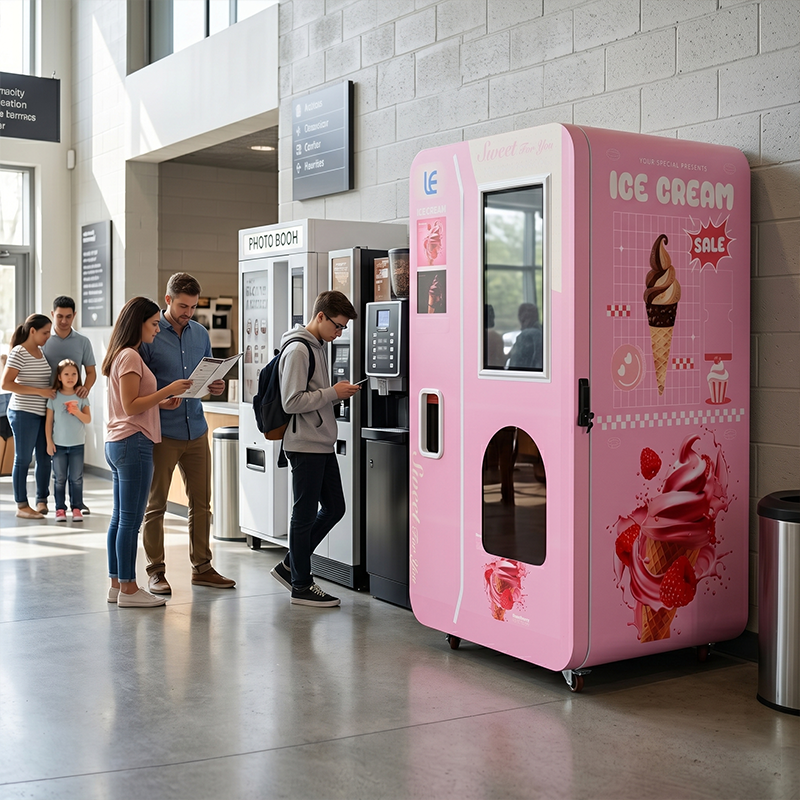
This model works best in places with high traffic, limited labor, and strong impulse demand. Ice cream vending is not only about dessert sales; it is also about convenience, speed, and visual appeal.
Common deployment sites include malls, entertainment centers, campuses, transport hubs, and branded pop-up spaces. In these settings, the machine can support both revenue generation and brand visibility.
- Mall operators can use it to capture impulse dessert purchases.
- Family entertainment venues can use it to improve dwell time and add convenience.
- Campus and office sites can use it to provide self-service treats with low staffing needs.
- Event organizers can use it to create a branded refreshment point.
Scenarios That Benefit Most From Private Labeling
Private labeling is most valuable when the operator wants differentiation. If the market is crowded, a branded machine can help a business look more established than a generic reseller.
It is also useful when the operator plans to expand. A repeatable branded format makes it easier to open new locations with the same service standard.
Comparison Table: Generic Machine vs Private Label Machine
| Factor | Generic Machine | Private Label Machine |
|---|---|---|
| Brand visibility | Low | High |
| Customer recall | Weak | Stronger |
| Interface control | Limited | Customizable |
| Market positioning | Commodity-based | Differentiated |
| Expansion consistency | Harder to standardize | Easier to replicate |
Compliance and Operational Standards Matter
Compliance matters because food vending is regulated more tightly than many buyers expect. In the United States, FDA vending machine labeling rules apply to covered operators, and NAMA’s Machine Evaluation Program supports equipment built to public health requirements and design standards.
That means a supplier should understand food-contact design, labeling expectations, and sanitation access. For buyers planning U.S. deployment, this is not optional; it is part of risk management.
Food Safety Design Supports Brand Trust
Food safety design supports brand trust because customers notice cleanliness and consistency. Easy-to-clean interiors, sealed ingredient paths, and clear maintenance procedures help reduce service problems.
Industry guidance from FDA, NAMA, and AFDO shows that vending operations should align equipment design and labeling with public health expectations.
Remote Monitoring Improves Service Reliability
Remote monitoring improves reliability because operators can detect faults before they become customer-facing problems. That is especially important for unattended retail, where downtime directly affects revenue and brand perception.
For multi-site brands, this also helps standardize service quality. A machine that is monitored centrally is easier to manage than one that depends on manual checks alone.
Supplier Directory and Where to Buy
The best supplier choice depends on whether you need a single machine, a branded rollout, or a broader unattended retail platform. For buyers seeking integrated OEM support, the target website’s product ecosystem includes intelligent vending machines, intelligent drinks vending machines, and service-oriented AI robots, which can support a wider brand experience than a standalone unit.
For buyers comparing the market, other well-known industry references include NAMA for evaluation standards and FDA for labeling requirements. Those sources help you judge whether a supplier is ready for commercial deployment, not just prototype delivery.
How to Build a Stronger Brand With Private Label Vending
A stronger brand comes from consistency, not decoration alone. The machine should match the promise you make in advertising, operations, and customer service.
That is why private label projects work best when the supplier can manage appearance, interface, compliance, and service together. If those pieces are aligned, the machine becomes a repeatable brand asset.
- Define the target audience before selecting the machine format.
- Choose a supplier with OEM/ODM and backend software capability.
- Standardize branding across cabinet, screen, and packaging.
- Plan for compliance, cleaning, and remote maintenance from day one.
- Use location data to refine the menu and improve conversion.
FAQ
How does a private label ice cream vending machine help brand recognition?
It helps by turning the machine into a visible brand touchpoint. Custom graphics, interface design, and packaging make the unit easier to remember. In high-traffic locations, that repeated exposure can improve recall and support future purchases without adding staff.
What should I ask an OEM vending machine supplier before ordering?
Ask about customization depth, backend software, food safety design, service response time, and export readiness. These questions reveal whether the supplier can support a real commercial rollout. A good partner should explain both the hardware and the operating workflow clearly.
Is a private label machine better than a generic machine for malls?
It is often better when differentiation matters. Malls are crowded, and visual identity can influence impulse buying. A branded machine can look more professional and support a stronger retail concept, while a generic unit may blend into the background.
What compliance issues matter most for vending machines in the U.S.?
Labeling, sanitation, and construction standards are the main concerns. FDA vending machine labeling rules apply to covered operators, and NAMA evaluation is widely used for public health alignment. Buyers should confirm that the supplier understands these requirements before deployment.
How much does a private label ice cream vending machine cost?
Cost varies by customization level, refrigeration design, software features, and order volume. A simple branded unit costs less than a fully localized OEM build. Buyers should compare total ownership cost, including service, spare parts, and software support, not just the purchase price.

Post time: Aug-13-2026