

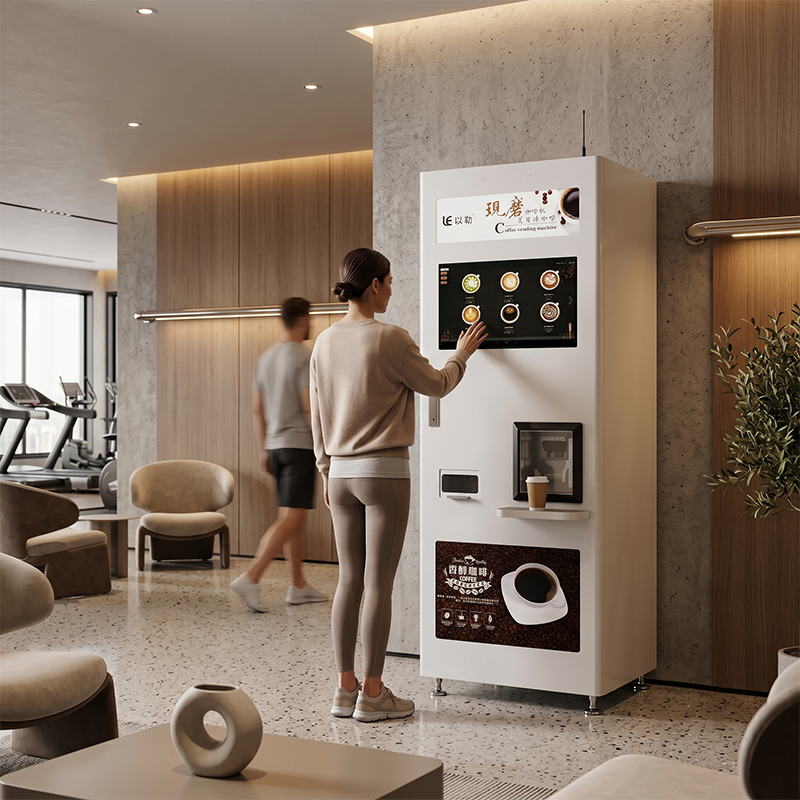
Factory break rooms need more than a basic coffee maker when hundreds of employees rely on short, tightly timed breaks across multiple shifts. A coffee vending machine solution can reduce wait times, support consistent drink quality, and handle heavy daily demand without disrupting operations. It also helps facilities keep workers on-site, simplify beverage service, and make break areas feel more practical and better managed. This article explains how commercial coffee systems fit the realities of industrial environments, what operational benefits they offer, and which factors matter most when choosing a workplace coffee solution for a factory setting.
How a Workplace Coffee Solution Improves Factory Break Rooms
Industrial facilities and manufacturing plants operate on strict schedules where operational efficiency is paramount. Within these environments, break rooms are transitioning from basic rest areas into strategic assets designed to maximize workforce recovery and maintain production rhythms. Implementing a dedicated workplace coffee solution serves as a highly visible investment in employee welfare, directly impacting daily morale and long-term retention.
Unlike standard office environments, factory settings present unique logistical challenges. Large headcounts, shift-based schedules, and rigorous safety protocols necessitate amenities that can handle intense, concentrated usage without failing. Addressing these demands requires moving beyond consumer-grade appliances and adopting commercial-grade systems engineered for industrial reliability.
Why factory break rooms matter to operations
The design and provisioning of factory break rooms directly influence workforce productivity and fatigue management. Industrial shifts often mandate strict 15- to 30-minute rest intervals. When amenities are inadequate or slow, workers spend a disproportionate amount of their recovery time queuing for refreshments. A strategically placed, high-throughput beverage system eliminates these bottlenecks, ensuring employees can quickly access a hot drink and actually utilize their allotted downtime for physical and mental rest.
Furthermore, keeping personnel on-site during breaks is a critical safety and efficiency metric. Off-site excursions for coffee can consume 10 to 15 minutes of transit time alone, increasing the risk of tardiness when returning to the production floor. By providing premium on-site options, facility managers consolidate the workforce within secure, controlled zones, minimizing the variables that lead to delayed line restarts.
How coffee vending supports worker satisfaction
Worker satisfaction in demanding physical jobs is heavily tied to the quality of on-site amenities. Access to a reliable, high-quality workplace coffee solution signals to employees that their comfort is valued by management. This psychological benefit is quantifiable in internal satisfaction surveys, where upgraded break room facilities consistently rank among the top three requested workplace improvements in manufacturing sectors.
Beyond mere access, the variety of offerings plays a crucial role. Modern factory workforces are diverse, and catering to varying preferences—from robust black coffee for early morning shifts to hot chocolate or decaffeinated options for evening rotations—fosters an inclusive environment. Consistently delivering a premium beverage experience at a subsidized or zero cost to the employee represents a high-impact, low-overhead strategy for boosting daily morale.
What Makes an Effective Coffee Solution for Factories
Machine types and drink options
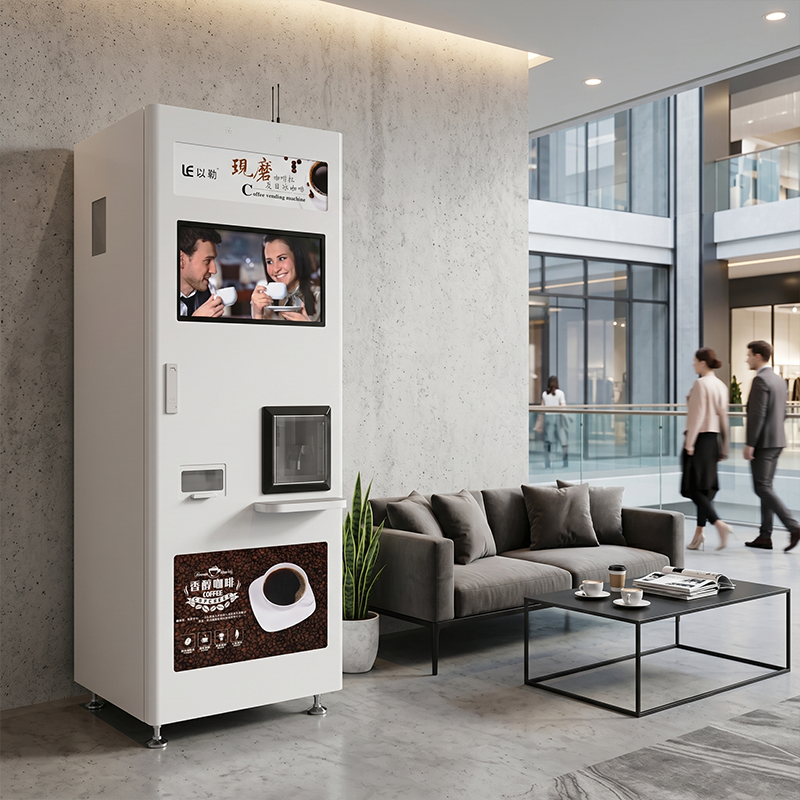
The primary decision in hardware selection lies between floor-standing units and tabletop systems. Floor-standing vending machines are optimal for high-traffic zones, typically engineered to handle capacities of 500 to 800 cups per day before requiring restocking. These units often feature integrated cup dispensers and secure payment or RFID badge-swiping systems, making them ideal for unstaffed, 24/7 operations.
Tabletop machines, while more compact, are better suited for specialized zones such as supervisor offices or smaller sub-assembly break areas. These units generally support a daily volume of 100 to 200 cups. Regardless of the form factor, modern systems offer extensive drink menus, utilizing multiple internal hoppers to dispense espresso, cappuccino, mochas, and non-coffee alternatives like tea and powdered soups, ensuring all dietary preferences are met.
How to compare bean-to-cup, instant, and fresh brew
Facility managers must evaluate the core brewing technology based on the specific constraints of their workforce’s break schedules and quality expectations. The three dominant commercial technologies are bean-to-cup, instant (soluble), and fresh brew systems. Each presents distinct trade-offs regarding dispense time, maintenance requirements, and cost per cup.
| Brewing Technology | Average Dispense Time | Cost Per Cup (Est.) | Maintenance Complexity | Ideal Factory Application |
|---|---|---|---|---|
| Instant (Soluble) | 10 – 15 seconds | Lowest ($0.10 – $0.25) | Low (Weekly cleaning) | Ultra-high traffic, short break windows |
| Fresh Brew | 20 – 30 seconds | Medium ($0.25 – $0.40) | Medium (Filter/grounds disposal) | Standard break rooms balancing speed and taste |
| Bean-to-Cup | 40 – 60 seconds | Highest ($0.40 – $0.70) | High (Daily mechanical flushing) | Premium areas, longer break allowances |
For a factory where 50 employees share a single 15-minute break, an instant machine is functionally mandatory to prevent queuing. Conversely, facilities with staggered breaks can successfully deploy bean-to-cup systems, which grind whole beans on demand to provide a superior flavor profile, albeit at a slower throughput of approximately one cup per minute.
Operational, Compliance, and Cost Factors
Deploying commercial beverage systems in industrial settings introduces strict operational and compliance prerequisites. Beyond the initial hardware acquisition, facility managers must account for site preparation, ongoing sanitation protocols, and the holistic financial impact of the deployment over a multi-year lifecycle.
Site planning, hygiene, and water quality
Proper site planning is the foundation of a reliable installation. Commercial machines require direct plumbing to a potable water supply, typically utilizing a standard 3/8-inch water line capable of sustaining 50 to 100 psi of pressure. Because factory water supplies can contain high levels of particulate matter or scale-inducing minerals, inline commercial water filtration systems are mandatory. Failure to install adequate filtration can reduce the lifespan of internal boilers by up to 40% due to calcification.
Hygiene compliance is equally critical. Machines must adhere to rigorous sanitation standards to prevent bacterial growth in milk lines and mixing bowls. Modern industrial units automate much of this process, featuring programmable flush cycles that run high-temperature water (above 180°F) through the system during off-peak hours. However, manual deep cleaning is still required; maintenance staff should allocate approximately 15 minutes per machine daily to sanitize external touchpoints and empty drip trays.
Total cost of ownership and refill planning
Evaluating the total cost of ownership (TCO) requires modeling both fixed and variable expenses over a standard 36- to 60-month depreciation cycle. The initial hardware investment represents only 20% to 30% of the TCO. The majority of the cost is driven by variable factors: consumable ingredients (beans, milk powder, cups), preventive maintenance contracts, and water filtration replacements.
Refill planning must be optimized to prevent stockouts without over-allocating labor. A machine dispensing 300 cups daily will exhaust standard ingredient hoppers every 48 to 72 hours. Establishing a precise par-level inventory system ensures that facility management or third-party operators restock ingredients efficiently. Preventive maintenance should be scheduled proactively, typically requiring technician servicing every 10,000 vends to replace O-rings, recalibrate grinders, and inspect heating elements.
How to Compare Vendors and Plan Implementation
Transitioning to a new beverage program requires meticulous vendor evaluation and a structured rollout strategy. The success of the deployment hinges not only on the quality of the hardware but on the reliability of the service provider backing the equipment. A poorly executed implementation can lead to mechanical downtime, frustrating the workforce and negating the intended morale benefits.
Vendor selection and service terms
When comparing providers, procurement teams must look beyond the unit price and heavily weigh the Service Level Agreement (SLA). In a 24/7 manufacturing environment, a machine failure during a night shift is highly disruptive. Top-tier vendors will guarantee a maximum 4- to 8-hour response time for critical faults. Reviewing a vendor’s operational history and their network of certified local technicians is an essential step in the due diligence process.
Service terms should also clearly delineate responsibilities for parts and labor. Comprehensive service contracts typically cover all mechanical failures, annual preventative maintenance visits, and software updates. It is vital to clarify whether the vendor requires exclusive purchasing of their proprietary consumables to maintain the warranty, or if the facility has the flexibility to source commodity ingredients independently.
Implementation steps for rollout
A successful rollout follows a phased implementation plan to minimize disruption to factory operations. Phase one involves site audits to verify utility readiness. A standard industrial deployment requires dedicated 15-amp or 20-amp, 110V/220V electrical circuits to handle the high draw of commercial heating elements without tripping facility breakers.
Phase two is the physical installation and calibration, which should be scheduled during maintenance shutdowns or low-traffic shifts. Phase three is workforce onboarding. While modern touchscreens are intuitive, posting clear, multi-lingual instructions and conducting brief demonstrations on how to select beverages and report faults ensures immediate adoption. Finally, a 30-day post-installation review should be conducted to adjust drink recipes, modify pricing (if applicable), and fine-tune hopper dispensing ratios based on initial feedback.
Why a Data-Led Coffee Strategy Works Long Term
The integration of Internet of Things (IoT) technology has transformed commercial vending from a reactive operation into a proactive, data-driven discipline. By leveraging telemetry, facility managers can optimize their beverage programs based on empirical usage data rather than anecdotal feedback, ensuring long-term sustainability and cost efficiency.
How to match solutions to usage needs
Modern commercial machines are equipped with cellular or Wi-Fi telemetry systems that transmit real-time data regarding ingredient levels, fault codes, and consumption patterns. Analyzing this data allows managers to match the solution precisely to the workforce’s needs. For example, telemetry might reveal that 65% of consumption occurs between 05:00 and 06:30 during the morning shift change. Armed with this metric, facilities can ensure machines are fully stocked and freshly cleaned by 04:30.
Data also drives ingredient optimization. If analytics show that decaffeinated options account for less than 2% of total vends, that hopper can be repurposed for a high-demand product like hot chocolate or a secondary dark roast. This level of granular inventory management typically results in a 20% to 30% reduction in consumable waste and significantly lowers the frequency of emergency restocking visits.
Decision framework for long-term value
Establishing a decision framework based on long-term value requires tracking specific Key Performance Indicators (KPIs) over the lifecycle of the equipment. Facilities should monitor machine uptime, cost per vend, and employee utilization rates. A target uptime of 99% is standard for premium industrial deployments.
| Evaluation Metric | Traditional Management | Data-Led Strategy |
|---|---|---|
| Restocking Method | Scheduled weekly visits (often inefficient) | Just-in-time refills triggered by telemetry |
| Downtime Resolution | Reactive (wait for employee complaints) | Proactive (remote fault detection via IoT) |
| Menu Optimization | Static, based on initial assumptions | Dynamic, adjusted quarterly based on vend data |
| Cost Control | Flat budget estimation | Granular tracking of cost-per-cup variations |
Ultimately, a data-led approach transforms the break room from a static cost center into an optimized amenity. By continuously analyzing consumption metrics and partnering with experts for technical consultation, industrial facilities can maintain a high-performance beverage program that adapts to evolving workforce demands while strictly controlling operational expenditures.
Further reading:
Key Takeaways
- The most important conclusions and rationale for workplace coffee solution
- Specs, compliance, and risk checks worth validating before you commit
- Practical next steps and caveats readers can apply immediately
Frequently Asked Questions
What type of coffee machine works best for a factory break room?
For high-traffic plants, a floor-standing commercial machine is usually best. It handles heavy shift-change demand, supports 24/7 use, and reduces queues better than consumer brewers.
How many cups per day should a factory coffee solution support?
Match capacity to headcount and break timing. Large factories often need 500–800 cups daily, while smaller zones may only need 100–200 cups from a tabletop unit.
Which brewing technology is most practical for fast factory breaks?
Instant systems are fastest for short breaks, while bean-to-cup offers better taste. Choose based on whether speed, beverage quality, or cost per cup matters most at your site.
Can YL Vending help with commercial coffee machines for manufacturing sites?
Yes. YL Vending provides commercial-grade vending and workplace beverage solutions designed for high-use environments, helping factories choose equipment that fits volume, drink variety, and break-room space.
What drinks should a factory break room offer besides regular coffee?
Include decaf, tea, hot chocolate, and milk-based options like cappuccino. A broader menu supports different shifts and preferences, improving employee satisfaction without adding much operational complexity.

Kely
Post time: Jun-11-2026