

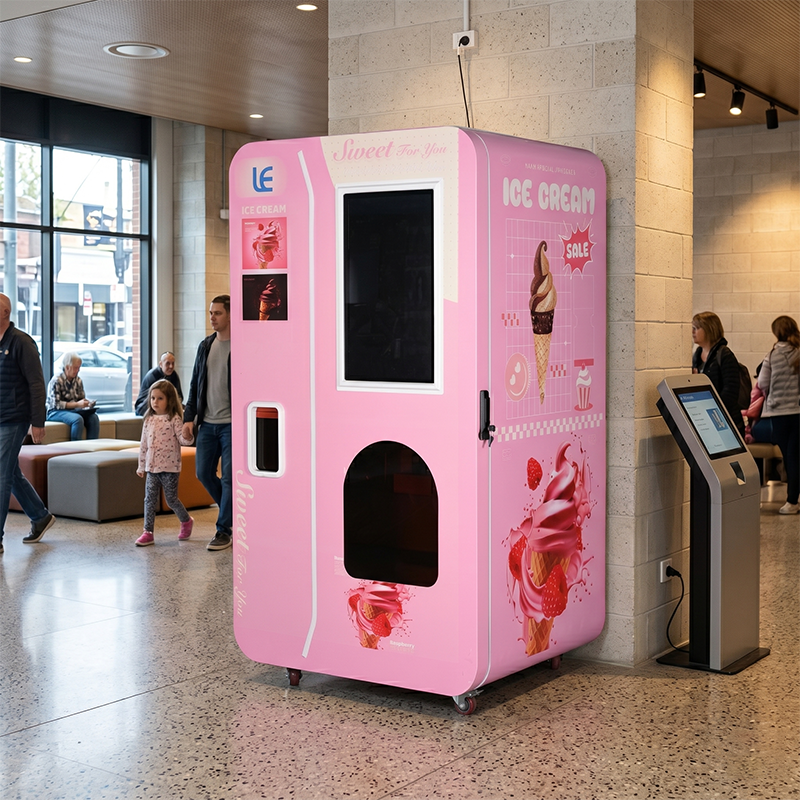
Family entertainment centers rely on more than ticket sales to grow profitably, and ice cream vending machines can strengthen that mix in practical ways. By offering a fast, low-labor dessert option, these machines help operators capture impulse purchases, raise per-guest spending, and serve families without adding kitchen complexity. They can also reduce wait times, support cleaner traffic flow, and keep guests on site longer—an important factor for arcade, prize, and attraction revenue. This article explains how automated ice cream service fits into the economics of family entertainment venues and where it can improve both operational efficiency and the guest experience.
Why Ice Cream Drives Revenue in Family Entertainment Centers
Family entertainment centers (FECs) thrive on a delicate balance between primary attractions and secondary revenue streams. While arcades, laser tag, and trampoline parks draw guests through the doors, food and beverage (F&B) sales often dictate the overall profitability of a venue. Integrating automated dessert options is becoming a strategic imperative for operators looking to maximize per-capita spending without expanding their kitchen footprints or increasing overhead.
Ice cream, in particular, holds universal appeal across demographics, making it an ideal product for environments catering to families and large groups. By modernizing how these treats are delivered, entertainment centers can capture lost revenue and enhance the overall guest experience.
Dwell time, impulse purchases, and guest satisfaction
Ice cream is a universal comfort food that acts as a natural anchor for families. When guests stop to consume a frozen treat, their dwell time increases significantly. Industry data suggests that extending a family’s stay by just 30 to 45 minutes can yield a 15% to 20% increase in arcade and redemption game spending.
Impulse purchases are primarily driven by visual appeal and convenience. A brightly lit, modern vending machine captures attention immediately, converting passing foot traffic into immediate sales. Because guests do not have to wait in long concession lines, they are more likely to make spontaneous purchases between activities, directly elevating guest satisfaction and overall facility revenue.
Operational pressures that make automated dessert sales attractive
Traditional F&B operations are currently battling unprecedented labor shortages and rising wage floors. The amusement and hospitality sectors frequently experience annual staff turnover rates exceeding 70%, making it difficult to maintain consistent service at concession stands. Automated ice cream dispensers completely bypass these operational bottlenecks.
By partnering with experienced manufacturers and reviewing their company background, operators can deploy autonomous systems that work seamlessly through peak weekend rushes. These machines do not require breaks, shift scheduling, or specialized food-handler training, effectively shielding the facility from the most volatile elements of traditional hospitality management.
Ice Cream Vending Machines vs Traditional Concessions
Machine types and formats to evaluate
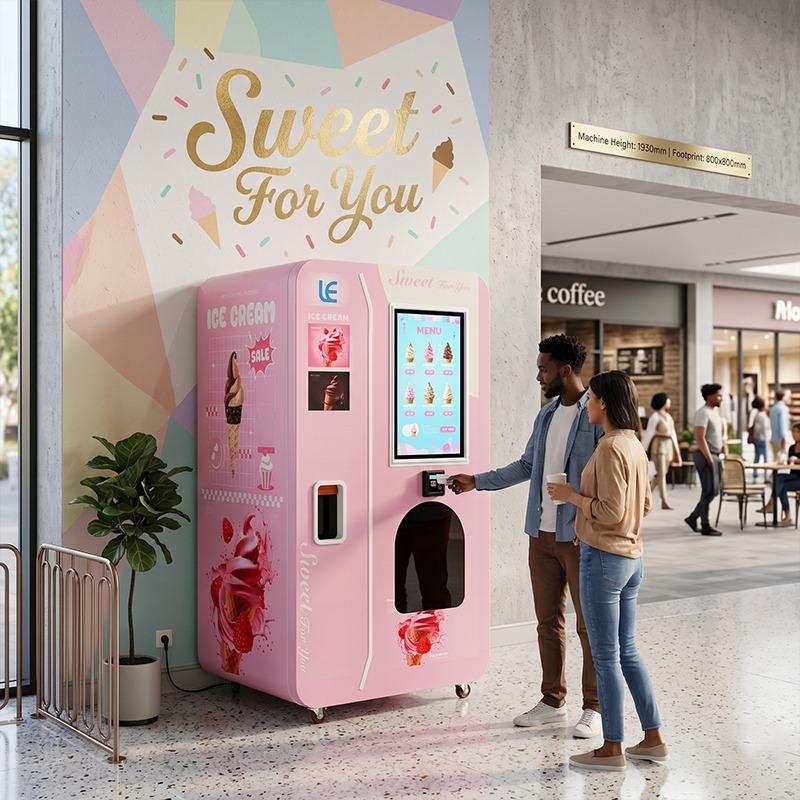
Operators must first distinguish between novelty packaged ice cream machines and robotic soft-serve kiosks. Packaged machines utilize elevator-style delivery systems or suction-arm mechanisms to dispense pre-packaged bars, cones, and sandwiches. These units prioritize speed, high volume, and mechanical simplicity.
Conversely, robotic soft-serve stations offer a highly visible theatrical experience. These units use mechanical arms to swirl ice cream into cups and dispense various toppings in real-time. While they boast significant entertainment value and can command a premium price point, they require more rigorous daily cleaning protocols compared to their packaged-goods counterparts.
Labor, footprint, throughput, and cost comparison
The most striking differences between automated models and traditional concessions lie in their resource consumption. A standard concession stand requires a minimum of 150 square feet, plumbing, ventilation, and dedicated staff. In contrast, an ice cream vending machine typically occupies a mere 15 to 25 square feet and often requires only a standard 110V or 220V electrical outlet.
| Metric | Traditional Concession Stand | Packaged Vending Machine | Robotic Soft-Serve Kiosk |
|---|---|---|---|
| Footprint | 150+ sq. ft. | 10 – 15 sq. ft. | 20 – 25 sq. ft. |
| Labor Cost | $12 – $18 / hour | $0 / hour (Passive) | $0 / hour (Passive) |
| Throughput | High (requires multiple staff) | 3 – 5 vends / minute | 1 vend / 60 – 90 seconds |
| Initial Setup | $25,000 – $75,000+ | $5,000 – $12,000 | $15,000 – $35,000 |
This dramatic reduction in footprint allows operators to monetize dead space within their facilities, such as wide corridors or corners near restrooms, transforming previously unprofitable square footage into active revenue generators.
Operational and Compliance Factors for Ice Cream Vending
Deploying unattended retail equipment involves strict adherence to mechanical specifications and health regulations. Ensuring product integrity and public safety is paramount when selling dairy products through automated channels.
Capacity, temperature control, and refill planning
The core of any frozen vending operation is the refrigeration unit. Commercial-grade compressors must reliably maintain internal temperatures between -18°C and -25°C (-0.4°F to -13°F) to prevent product degradation and ice crystal formation. Depending on the model, internal capacity can range from 150 to over 400 individual units.
Operators must calculate their weekend foot traffic to establish an efficient restocking cadence, ensuring the machine never runs empty during peak hours. Exploring diverse product configurations can help match machine capacity to expected visitor volume, preventing both stockouts and excessive energy consumption.
Food safety, health codes, allergen labeling, and ADA requirements
Compliance extends beyond just keeping the product cold. Strict food safety regulations require automated machines to feature health lockouts—software that automatically halts sales if the internal temperature rises above a safe threshold for a specified duration (typically 30 minutes).
Additionally, operators must ensure clear allergen labeling on the machine’s digital interface or physical exterior to protect guests with dietary restrictions. In the United States, ADA (Americans with Disabilities Act) compliance is mandatory. This dictates that all interactive components, payment terminals, and retrieval bins must be positioned within a strict vertical reach range of 15 to 48 inches from the floor, ensuring accessibility for all guests.
How to Maximize Revenue and Guest Experience
Strategic execution separates a moderately successful vending machine from a highly profitable passive income stream. Installing the hardware is only the first step; optimizing its location, presentation, and software systems drives the final revenue outcome.
Placement, merchandising, pricing, and bundle strategies
Location is the primary driver of vending success. Machines should be placed in high-visibility, high-traffic bottlenecks. Ideal placements include areas near the prize redemption counter, at the main exit, or adjacent to seating zones where parents wait while children play.
Merchandising via bright digital touchscreens allows for dynamic pricing and attractive bundle strategies. Operators typically find success pricing premium frozen treats between $4.00 and $7.50, depending on the local market and the novelty of the product. Running promotions, such as discounting ice cream slightly during the last hour of operation, can capture departing guests who might otherwise leave empty-handed.
Vendor selection, pilot testing, and rollout steps
Selecting the right hardware partner is crucial for long-term reliability. Operators should seek vendors that offer robust warranties, accessible spare parts, and responsive technical support. Facilities can reach out for consultation to discuss custom branding, machine wrapping, and telemetry software integration before making a purchase.
| Rollout Phase | Recommended Duration | Key Objectives |
|---|---|---|
| 1. Site Assessment | 1 – 2 Weeks | Identify high-traffic zones, verify power supply, and measure footprint. |
| 2. Pilot Testing | 30 – 60 Days | Deploy 1-2 units, test price elasticity, and monitor popular SKUs. |
| 3. Optimization | Ongoing | Adjust restocking schedules based on telemetry data; tweak digital ads. |
A phased rollout is highly recommended. Utilizing a 30- to 60-day pilot testing period allows management to mitigate risk, gauge guest reception, and optimize product mix before committing to a facility-wide or multi-location launch.
When an Ice Cream Vending Investment Makes Sense
Ultimately, the decision to integrate automated ice cream sales comes down to a calculated financial assessment. Family entertainment centers must weigh their upfront capital availability against the projected long-term passive income.
Decision criteria, trade-offs, and ROI signals
Operators must evaluate their baseline traffic and demographic profiles to forecast return on investment (ROI). A facility that sees a minimum of 500 to 800 visitors per weekend is generally well-positioned to support a dedicated ice cream machine.
Financially, the math is compelling. Assuming a capital expenditure of $10,000 for a high-capacity packaged machine, an average sale price of $5.00, and a Cost of Goods Sold (COGS) of $1.50, the gross profit per unit is $3.50. If the machine averages just 30 sales per day, it generates $105 in daily gross profit.
Under these conservative parameters, the machine achieves full payback in roughly 95 to 100 days. This rapid break-even point, combined with zero ongoing labor costs and minimal product shrinkage, makes ice cream vending one of the most lucrative and low-risk micro-investments a family entertainment center can execute.
Further reading:
Key Takeaways
- The most important conclusions and rationale for family entertainment ice cream
- Specs, compliance, and risk checks worth validating before you commit
- Practical next steps and caveats readers can apply immediately
Frequently Asked Questions
Why are ice cream vending machines a good fit for family entertainment centers?
They turn foot traffic into quick impulse sales, raise per-capita spend, and add dessert service without expanding a kitchen or hiring extra staff.
How much space and power does an ice cream vending machine usually need?
Most units fit in about 10–25 square feet and often run on a standard 110V or 220V outlet, making placement flexible in FECs.
Which is better for an FEC: packaged ice cream vending or robotic soft-serve?
Packaged machines suit high-volume, fast service. Robotic soft-serve adds show value and premium pricing but needs stricter daily cleaning.
Where should a family entertainment center place an ice cream vending machine?
Install it near arcades, prize counters, waiting areas, or wide corridors where families naturally pause and impulse purchases are strongest.
How can YL Vending help family entertainment centers choose the right machine?
YL Vending offers product options and company information so operators can compare formats, space needs, and service goals before deployment.

Post time: Jun-23-2026