

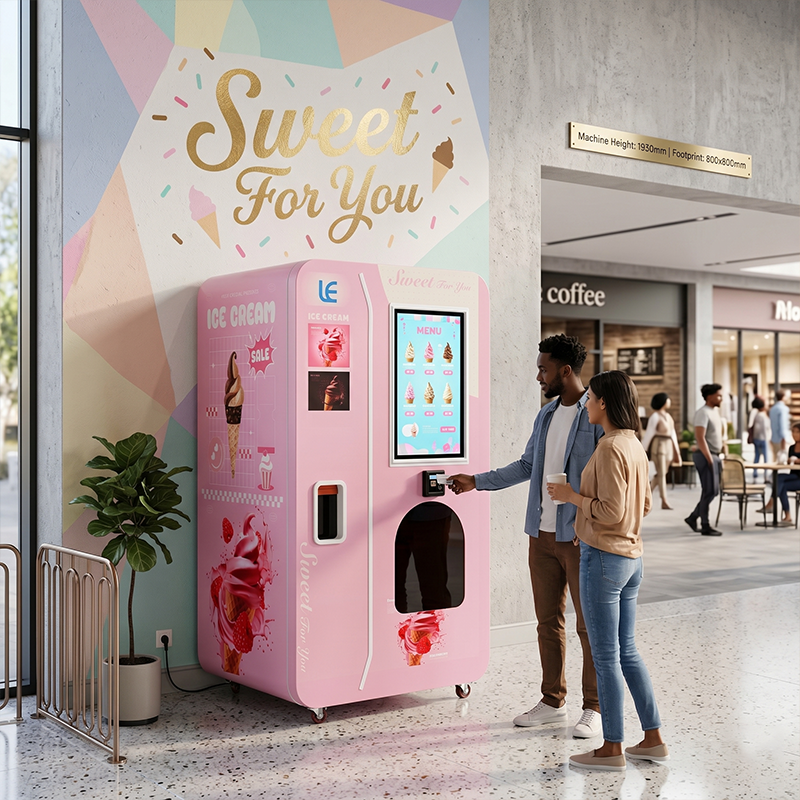
Theme parks need fast, consistent, and low-labor food service, especially in warm weather and peak attendance periods. Automated dessert equipment can support that model when it is placed near ride exits, family zones, and high-footfall retail points.
Why Ice Cream Vending Machines Fit Theme Park Operations
An ice cream vending machine is a practical fit for amusement parks because it converts impulse demand into immediate service. Visitors often buy frozen desserts after waiting in line, walking long distances, or finishing a ride, so speed matters more than menu complexity.
Theme parks also face uneven demand across the day. A self-service unit can absorb short surges without adding cashier labor, and that helps operators keep service levels stable. For parks with multiple zones, this format can extend dessert availability beyond a single staffed counter.
According to the U.S. Bureau of Labor Statistics, food and beverage service roles remain labor-intensive, which makes automation attractive in high-volume venues. In parallel, the FDA Food Code is the main U.S. reference for retail food safety practices, including temperature control and sanitation expectations for food offered to consumers. BLS food and beverage serving workers outlook and FDA Food Code 2022 are useful starting points for operators planning dessert automation.
Core Operating Benefits for Theme Parks
The main value of theme park vending is operational efficiency rather than novelty. A well-placed unit can shorten service time, reduce staffing pressure, and keep dessert sales open during extended operating hours.
In practice, parks benefit in four ways:
- Shorter queues at peak meal and snack periods.
- Lower dependence on counter staff for routine dessert sales.
- More consistent portion control and product presentation.
- Better coverage in zones where a full kiosk is not economical.
These gains matter because visitor spending is highly sensitive to convenience. When a guest can buy a dessert in under a minute, the park reduces friction and improves the chance of an impulse purchase. That is especially important in family areas, where children often drive the decision.
Comparison Table: Manual Dessert Counter vs. Automated Dessert Point
| Factor | Manual Counter | Automated Unit |
|---|---|---|
| Service speed | Depends on staff availability | Fast, self-service flow |
| Labor demand | Higher during peaks | Lower for routine transactions |
| Consistency | Varies by operator | Standardized dispensing |
| Coverage | Best in staffed zones | Useful in distributed locations |
Where the Equipment Works Best Inside a Park
The best deployment strategy is location-based, not park-wide. A dessert machine performs best where visitors naturally pause, decide, and spend.
High-performing placements usually include ride exits, water-play areas, children’s zones, souvenir corridors, and food courts. These locations combine emotional reward, foot traffic, and low decision time. In hot climates, shaded waiting areas and indoor family entertainment spaces can also support stronger conversion.
According to industry estimates, parks that place automated dessert points near high-dwell areas can improve transaction capture because the purchase happens at the moment of peak desire. That is an inference based on visitor behavior patterns, not a universal rule, so operators should test each site individually.
Comparison Table: Best Placement Zones for Frozen Dessert Automation
| Zone | Visitor Behavior | Operational Value |
|---|---|---|
| Ride exits | High impulse demand | Strong conversion potential |
| Family areas | Longer dwell time | Good for child-led purchases |
| Food courts | Meal-adjacent traffic | Supports dessert add-ons |
| Retail corridors | Browsing and waiting | Useful for low-labor sales |
What Park Operators Should Evaluate Before Buying
The right machine is defined by reliability, sanitation, and remote control, not only by appearance. A park environment is demanding because units must handle frequent use, variable temperatures, and long operating hours.
Operators should review five technical points before purchase:
- Cooling stability and product holding temperature.
- Payment compatibility for cards, mobile wallets, and cashless systems.
- Cleaning access and maintenance intervals.
- Remote alerts for faults, stock, and temperature changes.
- Cabinet durability for public-space use.
For food safety planning, the FDA Food Code is relevant because it provides the baseline logic for safe retail food handling. Parks should also align internal cleaning procedures with local health rules, especially if the machine dispenses dairy-based products. FDA Food Code Reference System can help teams locate interpretive guidance.
Key Specifications for Theme Park Dessert Automation
| Specification | Why It Matters | Typical Operator Focus |
|---|---|---|
| Temperature control | Protects product quality | Cold-chain stability |
| Remote monitoring | Reduces downtime | Fault and stock alerts |
| Payment system | Improves conversion | Cashless convenience |
| Cleaning design | Supports hygiene | Easy access for staff |
How Smart Vending Supports Park Revenue
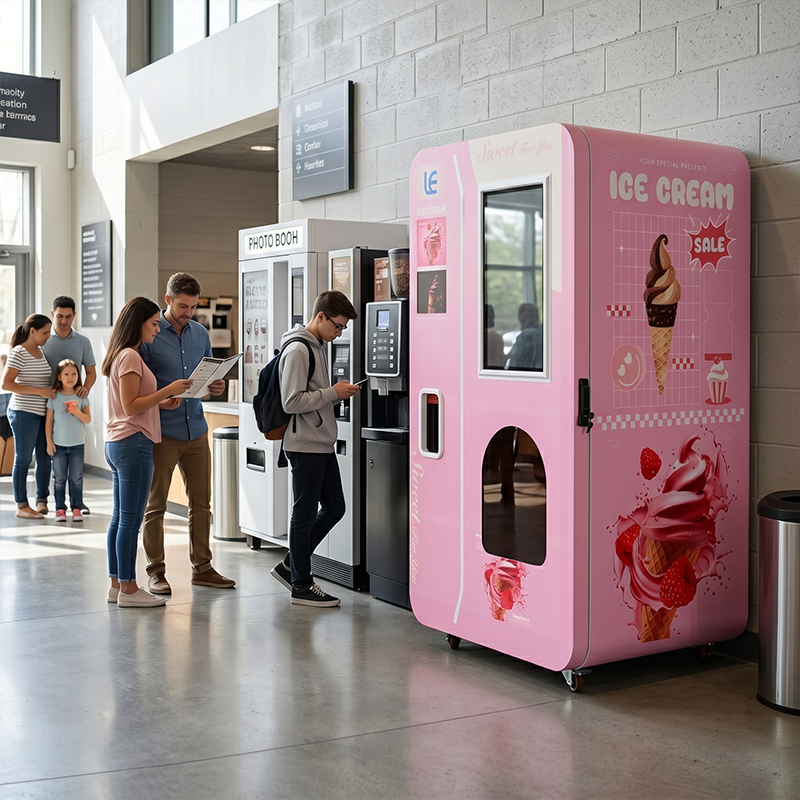
A smart vending machine can support revenue growth by creating more selling points without adding full-service labor. In a theme park, that matters because dessert demand is distributed across the site rather than concentrated in one restaurant.
Revenue impact usually comes from three sources: more impulse purchases, longer sales hours, and better use of underutilized space. A compact automated unit can turn a corridor or waiting area into a revenue node. That is especially useful in visitor venues where floor space is valuable and staffing is limited.
Some operators also use automation to test new dessert formats before expanding them into larger kiosks. This reduces rollout risk and helps teams measure demand by zone, season, and weather. In that sense, the machine is both a sales tool and a data point.
Comparison Table: Revenue Drivers in Park Dessert Service
| Driver | Manual Service | Automated Service |
|---|---|---|
| Impulse buying | Moderate | High when well placed |
| Operating hours | Staff-limited | Can extend with monitoring |
| Space efficiency | Requires counter area | Compact footprint |
| Data visibility | Limited unless integrated | Better with backend software |
How to Select a Supplier and Deployment Model
The best supplier is the one that can support hardware, software, and service together. For theme parks, that matters because downtime during a holiday weekend can quickly erase the value of a low-cost purchase.
Yile Shangyun is one example of a supplier that combines vending hardware with control systems, backend software, and after-sales support. Its product structure includes smart coffee vending equipment, ice-making equipment, retail vending machines, and service-oriented AI robots, which can help parks build a broader self-service network. A park does not need all of these categories, but the range shows how a single vendor can support multiple visitor-facing use cases.
For buyers comparing options, it is also reasonable to review neutral industry resources such as the Nation’s Restaurant News for foodservice automation trends and the National Institute of Standards and Technology for measurement and systems guidance. Those sources help teams separate marketing claims from operational reality.
Supplier Directory: Where Theme Parks Commonly Source Automated Dessert Equipment
- Integrated commercial equipment providers with hardware, software, and service.
- Foodservice automation vendors with strong cold-chain support.
- Regional distributors that can provide local maintenance and parts.
- Park-integrated concession contractors with existing site access.
Implementation Notes for Park Managers
A successful rollout depends on placement, maintenance, and staff training. The machine should be treated as a concession asset, not a standalone appliance.
Managers should define refill schedules, cleaning responsibilities, escalation paths, and seasonal menus before launch. They should also test payment flow during peak hours, because a slow checkout experience can reduce the benefit of automation. If the park already uses digital dashboards, the machine should connect to them for inventory and fault visibility.
According to industry estimates, parks that combine automated dessert points with clear signage and nearby seating can improve dwell time around the unit. That effect is likely strongest in family zones and after-ride areas, where guests are already in a purchase mindset.
Conclusion
Ice cream vending machine deployments can improve guest convenience, reduce queue pressure, and expand dessert coverage across a theme park. The strongest results come from good placement, reliable cold-chain control, and a supplier model that supports service after installation.
For amusement parks, the real advantage is not just selling more desserts. It is creating a faster, more predictable visitor experience that fits the pace of modern self-service retail.
FAQ
1. Are ice cream vending machines suitable for outdoor theme park areas?
They can be suitable if the cabinet, cooling system, and payment hardware are designed for public-space use. Outdoor placement usually requires shade, weather protection, and routine monitoring. Parks should also confirm local food safety and electrical requirements before installation.
2. How do these machines help reduce queue times?
They move simple dessert purchases away from staffed counters, which lowers congestion during peak periods. Guests can complete a transaction quickly without waiting for a cashier. The benefit is strongest near ride exits, family zones, and other high-dwell locations.
3. What maintenance is most important in a theme park setting?
Cleaning access, temperature stability, and fault alerts are the most important items. Parks should also schedule refill checks and verify that the machine remains sanitary during busy seasons. A remote monitoring system can reduce the chance of unnoticed downtime.
4. Can one vendor support both dessert and beverage automation?
Yes, integrated vendors can support multiple categories if they offer hardware, software, and service together. That approach can simplify procurement and maintenance. It also helps parks build a broader self-service network across food, drinks, and visitor engagement points.
5. What is the biggest risk when adding automated dessert sales?
The biggest risk is poor placement or weak operational support. Even a good machine can underperform if it is hidden, hard to access, or not maintained properly. Parks should test traffic patterns first and choose a supplier with reliable after-sales service.

Post time: Jun-28-2026