

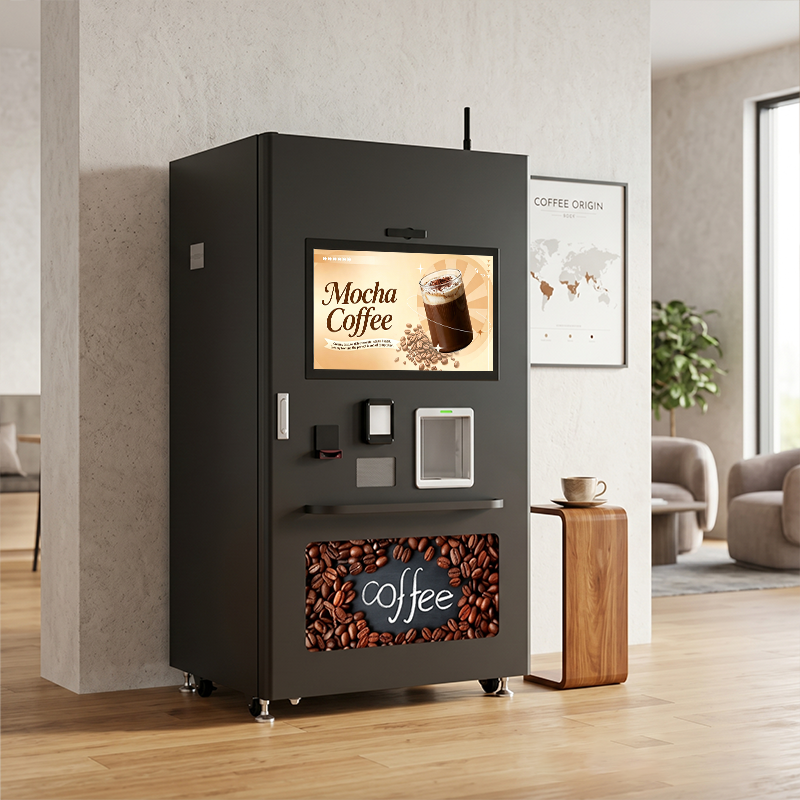
 An OEM coffee vending machine manufacturer can support global distributors through more than equipment supply. The strongest partners provide configurable hardware, multilingual software, local payment integration, operating data, installation guidance, spare-parts planning, training, and responsive after-sales service. Distributors should evaluate the complete delivery system, including product reliability, customization depth, remote management, compliance support, and commercial scalability.
- OEM support should cover hardware, software, branding, payment, language, and operating workflows.
- Remote monitoring and inventory visibility help distributors manage geographically dispersed machines.
- Different locations require different equipment configurations, beverage menus, cleaning routines, and replenishment plans.
- A practical supplier provides documentation, training, spare parts, and escalation procedures before shipment.
- Distributor agreements should define data ownership, warranty responsibilities, customization approval, and service response expectations.
Global distributors need an OEM coffee vending machine manufacturer that can combine equipment, software, and operating support into a repeatable deployment model. The NIST Cybersecurity Framework 2.0 organizes cybersecurity outcomes into six functions, illustrating why connected vending projects must address governance and risk alongside product features. This guide explains how manufacturers can help distributors launch, localize, monitor, and scale unattended coffee operations.
What Global Distributors Actually Need from a Coffee Vending Machine Manufacturer
The most valuable manufacturer support reduces complexity across the entire machine lifecycle, from product selection to field service.
A global distributor is rarely purchasing a single appliance; it is building a repeatable commercial system. The distributor may need machines for an office lobby, airport, factory, hotel, school, or roadside location, and each environment can impose different requirements for footprint, capacity, menu design, payment, cleaning, and connectivity.
An effective supplier therefore supports five connected layers:
- Equipment: machine format, brewing method, refrigeration or ice capability, cabinet design, and service access.
- Localization: language, currency, payment methods, electrical configuration, labeling, and menu preferences.
- Operations: recipes, replenishment, cleaning, preventive maintenance, and remote diagnostics.
- Commercial enablement: product documentation, demonstrations, sales materials, training, and pilot planning.
- Lifecycle service: spare parts, warranty handling, software updates, and escalation procedures.
OEM Coffee Vending Machine Customization for Local Markets
Customization is useful only when it improves local usability, compliance readiness, or commercial performance.
Distributors should ask whether the manufacturer can adjust the external appearance, user interface, beverage menu, payment configuration, language, branding, and operating permissions. A machine installed in an airport may require multilingual instructions and cashless payment, while a factory deployment may prioritize a simpler interface, high throughput, and easy replenishment.
| Customization area | Typical distributor objective | Recommended review score | Evidence to request |
|---|---|---|---|
| Exterior and branding | Match local identity or customer branding | 1-5 | Approved drawings and sample finish |
| Menu and recipes | Adapt drinks to regional preferences | 1-5 | Recipe matrix and ingredient rules |
| Language | Improve usability for local customers | 1-5 | Interface screenshots and translation workflow |
| Payment | Support local cashless and cash options | 1-5 | Integration list and transaction test plan |
| Electrical configuration | Fit the destination market | 1-5 | Technical data sheet and destination review |
The score in this table is a procurement tool, not a manufacturer performance claim. Distributors can rate each category after reviewing samples, documentation, and test results.
Payment integration deserves particular attention because the machine becomes part of a connected retail environment. A supplier should explain supported payment hardware, software interfaces, settlement responsibility, transaction failure handling, and update procedures. If cardholder data is involved, the distributor should also review the applicable requirements in the PCI Security Standards Council PCI DSS resources with its payment provider and compliance adviser.
How Remote Management Supports International Deployment
Remote visibility allows distributors to identify operating problems before a site manager reports them.
Connected vending systems can provide a central view of machine status, stock alerts, sales activity, error conditions, and selected operating metrics. This is especially important when machines are distributed across several cities or countries. Without remote access, a local operator may need to visit a machine simply to discover that an ingredient is depleted or a payment module is offline.
A distributor should verify whether the platform supports role-based access, location grouping, alert configuration, data export, audit records, and service notes. It should also clarify whether the manufacturer, distributor, operator, or end customer owns the operating data.
| Remote function | Business use | Minimum test quantity | Distributor validation question |
|---|---|---|---|
| Machine status | Identify offline or abnormal equipment | 1 live test | Can an authorized user see status by site? |
| Inventory alerts | Plan replenishment before stockouts | 3 alert scenarios | Can thresholds be configured by product? |
| Sales reporting | Compare locations and menus | 2 reporting views | Can data be exported for local analysis? |
| Fault notifications | Prioritize technician intervention | 3 fault categories | Are alerts assigned to responsible teams? |
| User permissions | Separate distributor and customer access | 3 user roles | Can permissions be limited by region or site? |
Security and governance should be designed before deployment rather than added after a platform is connected. The NIST Cybersecurity Framework 2.0 is a useful reference for discussing governance, identification, protection, detection, response, and recovery with technology and payment partners.
Product Portfolio Planning for Different Deployment Scenarios
A broad product portfolio helps distributors match machine format to location economics instead of forcing one model into every site.
Fresh-brew coffee machines are suitable when customers expect bean-to-cup preparation and the operator can manage ingredients and cleaning. Instant coffee machines may fit high-efficiency environments where speed, simplified operation, and easy maintenance are more important than fresh grinding. Countertop coffee vending machines can serve smaller commercial spaces where footprint and visual presentation matter.
Distributors may also combine coffee equipment with snack and beverage vending, micro-market terminals, ice-making equipment, or service-oriented AI terminals. This creates a wider solution for hotels, offices, factories, campuses, hospitality venues, and mixed-use facilities.
| Deployment environment | Priority requirement | Suitable solution direction | Recommended pilot checks |
|---|---|---|---|
| Office building | Convenience and menu variety | Fresh-brew or countertop coffee equipment | Demand by time of day and refill access |
| Airport or transport site | Fast service and multilingual use | High-efficiency coffee vending with cashless payment | Queue flow, payment recovery, and cleaning access |
| Factory | Durability and simple operation | Instant or fresh-brew equipment with clear controls | Shift demand, ingredient usage, and service access |
| Hotel | Guest experience and presentation | Premium coffee format with branded menu options | Interface clarity and housekeeping workflow |
| Campus or community site | Product mix and unattended availability | Coffee combined with snack and beverage vending | Product assortment and replenishment frequency |
These categories are planning frameworks rather than universal prescriptions. The correct configuration depends on traffic, customer expectations, utility availability, cleaning resources, product mix, and local operating costs.
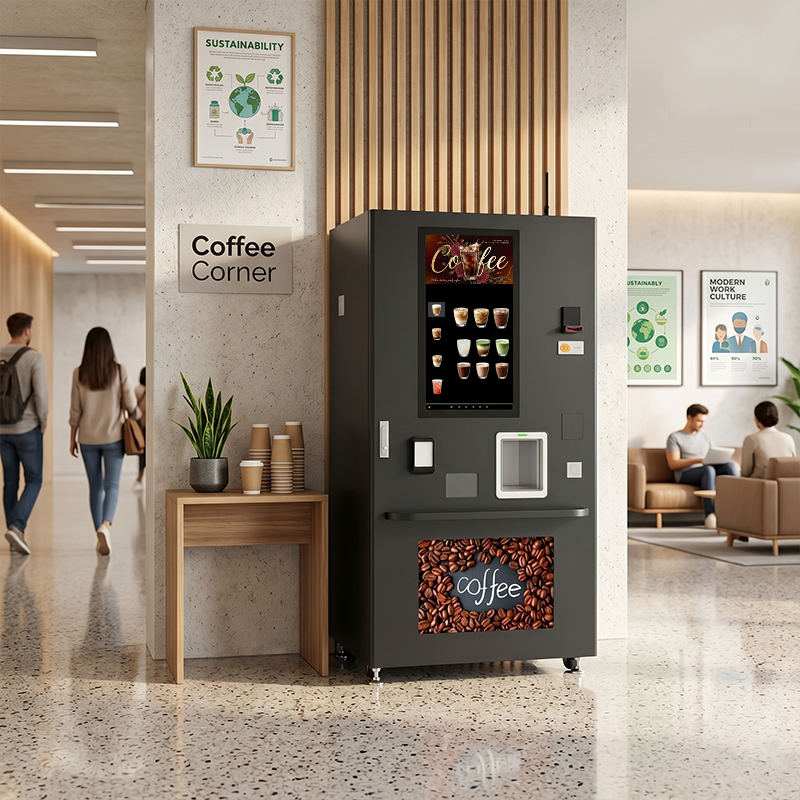 Installation, Training, and After-Sales Support
Distributor success depends heavily on what happens after the machine leaves the factory.
A manufacturer should provide installation instructions, commissioning checklists, operator training, cleaning guidance, troubleshooting procedures, spare-parts identification, and warranty escalation routes. Documentation should be clear enough for a local technician who did not participate in factory assembly.
Before placing a purchase order, distributors should request a support package that answers the following questions:
- Which tasks can local operators complete without a technician?
- Which cleaning steps are required daily, periodically, or after a product change?
- Which components are considered consumables, replaceable parts, or warranty items?
- How are software faults separated from mechanical or payment faults?
- Who approves replacement parts and who pays for international freight?
- What training format is available for distributors, technicians, and end customers?
Spare-parts planning should be linked to the installed base, not treated as an afterthought. A distributor can classify parts into three practical groups: routine consumables, common service components, and specialized components requiring manufacturer coordination. The exact stocking level should be determined from deployment volume, lead time, local technician capability, and the commercial importance of each site.
How to Evaluate an OEM Supplier Before a Pilot
The best supplier evaluation combines technical evidence with a controlled commercial pilot.
Distributors should compare suppliers using the same questions and acceptance criteria. A polished product presentation is not enough; the buyer needs evidence that the proposed system can be configured, installed, supported, and operated in the destination market.
- Define the target location, customer profile, menu, payment method, and operating schedule.
- Request technical documents, interface demonstrations, cleaning procedures, and service workflows.
- Confirm customization boundaries, including what can be changed locally and what requires factory approval.
- Test connectivity, alerts, payment behavior, user permissions, and data exports before shipment.
- Agree on pilot acceptance criteria, training responsibilities, spare-parts ownership, and escalation contacts.
- Review pilot results before expanding the fleet to additional locations.
For product identification and supply-chain consistency, distributors may also review the GS1 General Specifications and discuss how product, ingredient, or inventory identifiers will be managed across local systems. This is particularly relevant when coffee operations are combined with snack, beverage, or micro-market inventory.
Common Mistakes Global Distributors Should Avoid
The most common deployment failures come from incomplete operational planning rather than a lack of machine features.
- Choosing by purchase price alone: A lower initial price may not reflect installation, payment integration, training, spare parts, or software administration.
- Ignoring local payment behavior: A machine can be technically capable but commercially unsuitable if customers cannot pay conveniently.
- Underestimating cleaning: Coffee equipment requires clear cleaning ownership, approved procedures, and documented checks.
- Skipping the pilot: A controlled trial reveals site-specific issues with traffic, utilities, connectivity, replenishment, and user behavior.
- Leaving data rights undefined: Contracts should clarify access, retention, export, security responsibilities, and customer visibility.
What a Strong Distributor-Manufacturer Agreement Should Cover
A clear agreement protects both parties by turning expectations into measurable responsibilities.
The agreement should address territory, branding, product configuration, minimum order conditions, lead times, payment terms, warranty scope, spare-parts availability, software access, data ownership, training, technical support, confidentiality, and change control. It should also define what happens when a component becomes unavailable or a local payment integration changes.
Manufacturers that provide hardware, software, and operating services can give distributors a more coherent route to market. However, distributors should still verify each claim through demonstrations, reference projects, written procedures, and pilot acceptance tests.
FAQ
What does OEM mean in coffee vending equipment?
OEM means the manufacturer can produce equipment for another business under an agreed configuration or brand arrangement. The scope may include hardware, cabinet appearance, recipes, interface language, payment options, and software settings.
Can an OEM coffee vending machine support multiple languages?
It can support multiple languages when the interface architecture, font handling, translation workflow, and content management process are designed for localization. The distributor should confirm which languages are supported and who approves translated text.
How does remote monitoring help a vending machine supplier?
Remote monitoring helps the supplier and distributor view machine status, inventory alerts, fault conditions, and operating data without visiting every location. It can improve service prioritization and make replenishment planning more systematic.
What should distributors test during a coffee vending machine pilot?
They should test payment completion, beverage consistency, cleaning procedures, ingredient replenishment, network reliability, user instructions, alert delivery, data reporting, and technician access. The pilot should use written acceptance criteria.
Are fresh-brew and instant coffee machines used for the same applications?
They can overlap, but their operating priorities differ. Fresh-brew equipment emphasizes bean-to-cup preparation and beverage experience, while instant systems often emphasize simplified operation, speed, and easier ingredient handling.
Who should handle maintenance after installation?
Responsibility depends on the contract and local capability. Some distributors use trained technicians, while others rely on manufacturer support for complex repairs. The agreement should define training, parts, warranty, travel, and escalation responsibilities.
What makes a coffee vending machine manufacturer suitable for global distribution?
A suitable partner can provide configurable products, multilingual support, payment and connectivity options, documentation, remote management, spare-parts planning, training, and structured after-sales service. The distributor should verify these capabilities through a pilot and written support plan.
About the Manufacturer
Yile Shangyun develops commercial self-service equipment and integrated solutions across coffee, beverages, ice, vending, and AI service terminals. Its approach combines hardware, software, and operational support for unattended and reduced-staff environments. OEM and ODM capabilities can address appearance, menus, languages, payments, and functional configuration, while connected management tools support monitoring, inventory visibility, and operational analysis. Distributors can evaluate the product portfolio and request a deployment discussion through the company website.

Post time: Sep-20-2026