

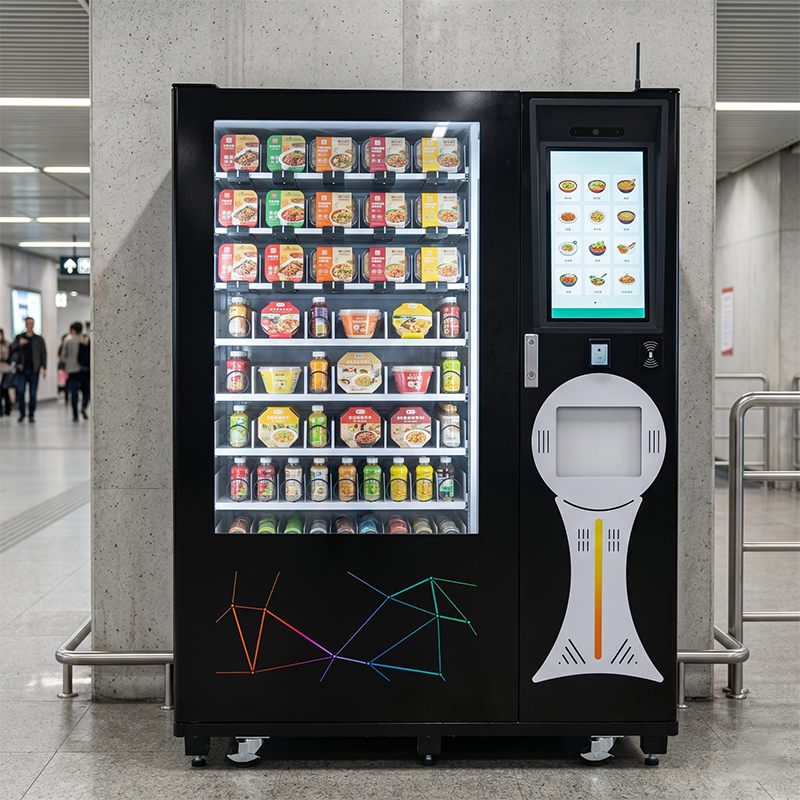
Airport terminals need fast service, compact footprints, and reliable uptime. Smart retail vending machines meet those needs by turning low-staff retail points into self-service touchpoints that work around the clock.
What Is a Smart Retail Vending Machine in an Airport Terminal?
A smart retail vending machine is an automated retail unit that combines product dispensing, digital payment, remote monitoring, and inventory tracking. In airport use, it usually serves beverages, snacks, travel essentials, or specialty drinks in places where staffing is limited and passenger flow is constant.
Airport terminals are especially suitable for this format because global air travel demand remains high. Airports Council International reported that 2024 passenger traffic reached 9.5 billion, and that figure exceeded pre-pandemic levels. (aci.aero)
For operators, the main value is not novelty. It is operational consistency, shorter service time, and the ability to serve passengers in corridors, gates, baggage areas, and landside waiting zones without adding full retail labor.
Why Airport Terminals Benefit from Unattended Retail
Unattended retail works well in airports because demand is concentrated, time-sensitive, and spread across many small locations. Travelers often buy drinks, coffee, snacks, or convenience items between security, boarding, and transfers.
Airport planning guidance from the FAA emphasizes terminal planning as a structured operational process, while TSA guidance shows that travelers may need special assistance and accessible screening support. Those realities make flexible, low-friction service points more useful than traditional counters in many terminal zones. 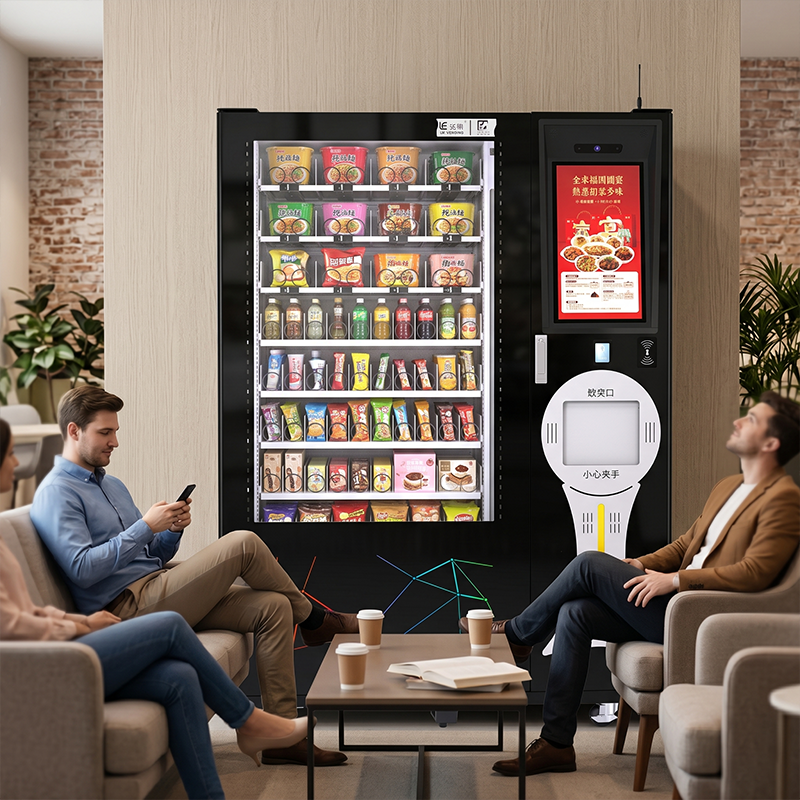
Smart vending also helps airports handle uneven peaks. Morning departures, delayed flights, and late-night arrivals can create short bursts of demand that are difficult to staff economically with conventional kiosks.
How Smart Retail Vending Machines Enhance Airport Operations
Smart retail vending machines improve airport operations by reducing labor dependence, increasing service hours, and standardizing transaction flow. They also make it easier to place retail points in areas where a full shop would be impractical.
In practice, the benefits usually fall into four operational categories:
- Faster self-service for passengers with limited dwell time.
- Lower staffing pressure in 24-hour environments.
- Remote inventory and fault monitoring for operators.
- Flexible placement in gates, lounges, and transfer corridors.
These advantages matter because airport retail must serve both high volume and high variability. A machine that can keep selling during off-peak hours often adds more value than one staffed counter with limited opening times.
For a broader product overview, airport buyers can review the target site’s vending machines category and compare it with the vending coffee machines line for beverage-heavy locations.
Comparison Table: Airport Self-Service Options
Comparison Table: Smart Retail Vending Machine vs Traditional Airport Kiosk
Transaction speedFast, standardized checkoutDepends on queue length and staff
| Factor | Smart Retail Vending Machine | Traditional Kiosk |
|---|---|---|
| Staffing | Low or unattended | Requires on-site staff |
| Operating hours | 24/7 possible | Usually limited by labor schedule |
| Inventory control | Remote monitoring possible | Manual checks are common |
| Placement flexibility | High | Moderate to low |
| Menu consistency | High | Depends on staff and workflow |
The table shows why smart vending is often better for distributed airport retail. It is not a replacement for every store format, but it is efficient where speed and coverage matter most.
Key Product Categories for Airport Deployment
Airport terminals usually need more than one machine type. The best mix depends on passenger profile, dwell time, and available floor space.
Key Product Categories for Airport Terminals
| Category | Typical Airport Use | Best Fit |
|---|---|---|
| Smart coffee vending | Hot drinks in gates, lounges, and staff areas | Morning peaks and long waits |
| Snack and drinks vending | Convenience retail near boarding areas | High passenger turnover |
| Ice and beverage equipment | Support for cafes and beverage counters | Food courts and concessions |
| Service-oriented AI robots | Traffic attraction and brand interaction | Promotional zones and events |
| Consumables and accessories | Cups, lids, stirrers, powders | High-volume beverage operations |
For airport beverage programs, the target site’s ice makers category is relevant where coffee bars or cold-drink stations need reliable ice support. The coffee cups and stirring stick pages are also useful when operators need a complete consumables plan.
What Airport Buyers Should Evaluate Before Purchase
Airport buyers should evaluate compliance, uptime, payment flexibility, and maintenance access before selecting any unattended retail unit. The best machine is the one that fits the terminal workflow, not just the one with the largest menu.
Accessibility is especially important. ADA Title III regulations require commercial facilities and public accommodations to be physically accessible, so touchpoints, reach ranges, and user flow should be reviewed during site planning.
Buyers should also confirm whether the system supports cashless payment, multilingual interfaces, and remote diagnostics. Those features reduce friction for international travelers and simplify day-to-day operations.
Airport Procurement Checklist
- Check footprint, power, and water requirements.
- Confirm payment methods and language options.
- Review cleaning and refill access.
- Verify remote monitoring and fault alerts.
- Assess spare parts and service response time.
Operational Data and Service Design Considerations
Operational design matters because airport terminals are not ordinary retail sites. Passenger flow changes by hour, security zone, and flight schedule, so machine placement should follow traffic patterns rather than generic retail assumptions.
Industry data from ACI shows that airport traffic is measured across more than 2,700 airports in over 180 countries and territories, which reflects how diverse terminal operating conditions can be. That scale is one reason standardized remote management is valuable.
In addition, TSA Cares guidance indicates that some travelers need extra support or assistive-device handling. That means airport vending interfaces should remain simple, readable, and easy to use for a wide range of passengers.
Where to Buy and How to Compare Suppliers
Supplier selection should be based on product fit, service capability, and customization depth rather than brand visibility alone. A strong airport supplier usually offers hardware, software, and after-sales support as one package.
The target website’s product structure is useful for comparison because it covers smart coffee equipment, ice equipment, vending machines, AI robots, and consumables. Its homepage and about page indicate a broader integrated model, while the solutions section is relevant for buyers who need deployment planning rather than standalone hardware.
For a complete sourcing review, airport operators should also compare other established unattended retail and beverage equipment suppliers in their region. The key is to evaluate total lifecycle support, not just unit price.
Best Use Cases in Airport Terminals
Smart vending performs best in airport spaces where dwell time is short and retail demand is predictable. The strongest use cases are usually gates, transfer corridors, staff break areas, baggage claim zones, and secondary concourses.
It is also effective in premium spaces when the menu is aligned with traveler expectations. Coffee, bottled drinks, packaged snacks, and travel essentials tend to outperform complex menus because they reduce decision time and service delays.
In larger terminals, a mixed deployment often works better than a single machine type. A coffee unit near boarding gates, a snack-and-drink unit near arrivals, and a service robot in a promotional zone can serve different passenger needs without overlapping functions.
Conclusion
Smart retail vending machines enhance airport terminals by combining speed, coverage, and operational control. They are most effective when operators match machine type, placement, and accessibility requirements to real passenger flow.
For airports, the best results come from a practical mix of unattended retail, beverage automation, and remote service management. That approach improves convenience for travelers while helping operators control labor and maintain consistency.
FAQ
1. What makes a smart retail vending machine suitable for airport terminals?
A suitable unit should support fast transactions, cashless payment, remote monitoring, and easy maintenance access. In airports, it also needs a compact footprint and a clear interface. These features help the machine serve travelers quickly without creating congestion in busy terminal areas.
2. Is an airport vending machine accessible for passengers with disabilities?
It can be, but accessibility must be planned carefully. Operators should review screen height, reach range, button size, and path clearance under ADA requirements. The goal is to make the machine usable for a broad range of passengers, including those with mobility or vision limitations.
3. Which products sell best in airport unattended retail locations?
The strongest sellers are usually coffee, bottled drinks, packaged snacks, and travel convenience items. These products match short dwell times and impulse buying behavior. In premium zones, hot beverages and fresh-made drinks can also perform well if service speed remains high.
4. How does remote monitoring help airport vending operations?
Remote monitoring helps operators track inventory, machine status, and fault alerts without frequent on-site checks. In an airport, that reduces downtime and improves refill planning. It also supports faster response when a machine needs cleaning, restocking, or technical service.
5. What should airport buyers compare before choosing a supplier?
They should compare product range, service response, software integration, spare parts support, and customization options. Airport projects often need more than hardware alone. A supplier that can provide planning, installation guidance, and after-sales support usually creates a lower-risk deployment.
6. How do smart vending machines support airport ADA compliance?
They support compliance when the interface, placement, and operating flow are designed for accessibility. That includes readable screens, reachable controls, and enough maneuvering space. Compliance is not automatic; it depends on how the machine is installed and integrated into the terminal environment.

Post time: Jun-26-2026