

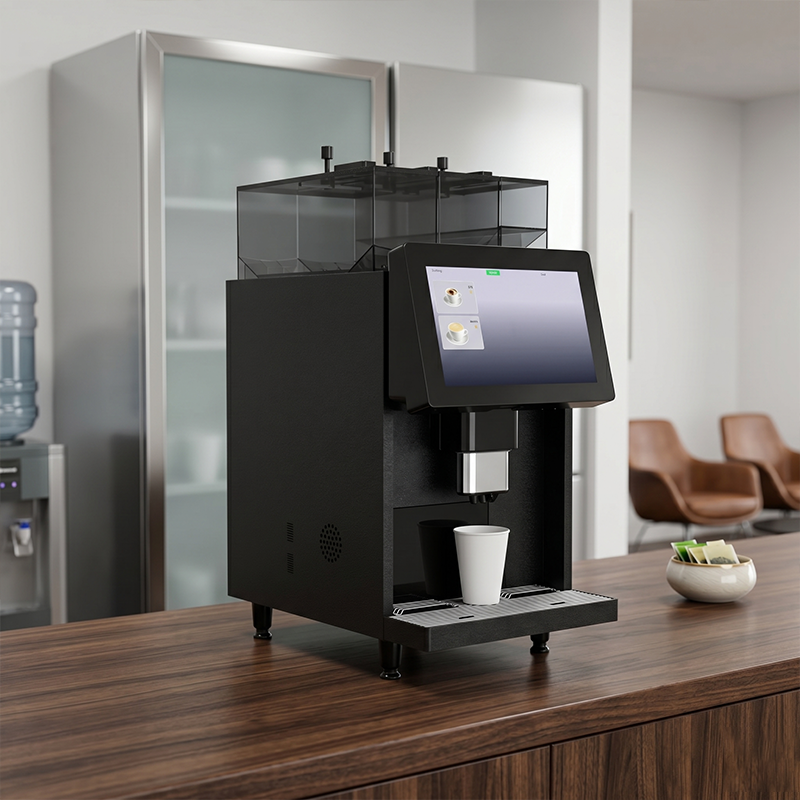
Workplace productivity is shaped by small daily habits, and coffee access is one of the most overlooked. Smart coffee machines reduce time lost to off-site coffee runs, shorten wait times in shared kitchens, and deliver consistent drinks with minimal effort from employees. Beyond convenience, these connected systems can track usage, automate maintenance alerts, and help facilities teams keep breakrooms running without disruption. This article explains how smart coffee machines support faster routines, better employee focus, and smoother office operations, making them more than a simple breakroom upgrade.
How Smart Coffee Machines Improve Workplace Productivity
Modern workplaces are increasingly moving away from traditional drip brewers and instant coffee stations, replacing them with intelligent, networked beverage systems. This transition is not merely an upgrade in office amenities; it represents a strategic investment in workforce efficiency. Research into daily office habits reveals that employees can lose between 15 and 20 minutes per day on off-site coffee runs. By integrating advanced brewing technology directly into the breakroom, facility managers can effectively recapture this lost time.
Understanding how a coffee machine impacts daily operations requires looking beyond the beverage itself. It involves analyzing the intersection of hardware automation, employee behavior, and facility management.
What smart coffee machines are
Smart coffee machines are Internet of Things (IoT)-enabled appliances designed to automate the entire coffee-making process, from bean grinding to cup dispensing. Unlike conventional brewers, these units feature integrated touchscreens, programmable beverage profiles, and network connectivity for real-time data exchange. Many modern products in this category utilize precision telemetry to monitor water temperature, extraction pressure, and ingredient levels, ensuring that each cup meets exact specifications without requiring manual barista skills.
Why coffee access affects workplace efficiency
The immediate availability of high-quality coffee directly correlates with workplace efficiency. Caffeine acts as a central nervous system stimulant, with medical guidelines noting that up to 400 milligrams per day can safely enhance cognitive focus, alertness, and reaction times for most adults. When employees have access to premium coffee within the office, the friction of leaving the building is eliminated. This reduction in off-site trips minimizes task switching and helps maintain deep work states, translating directly into higher daily output.
Smart Coffee Machine Features That Matter Most
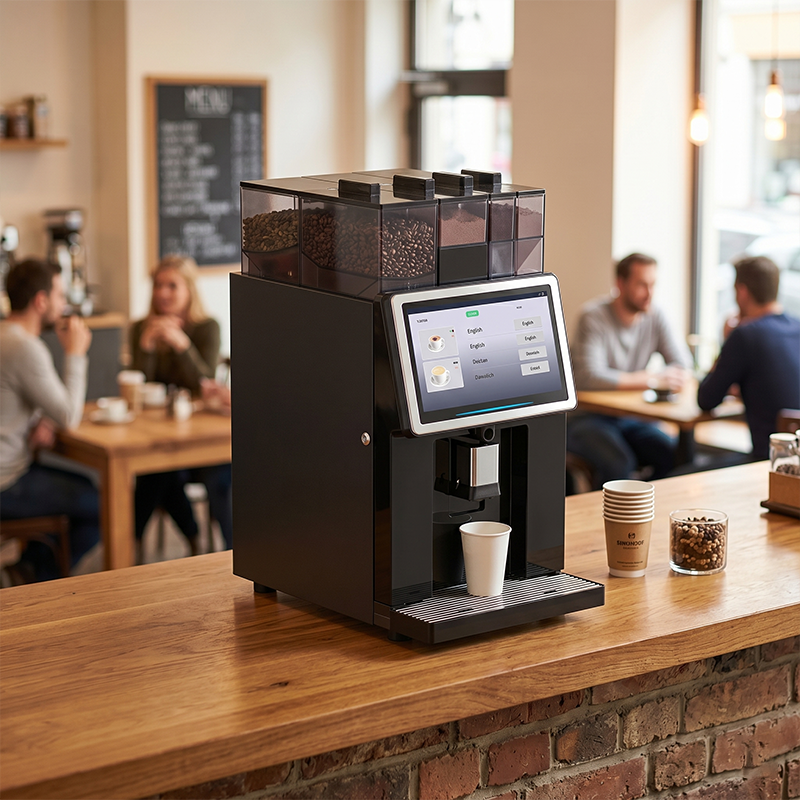
How automation, speed, and consistency save time
Automation is the primary driver of time savings in modern brewing systems. Advanced bean-to-cup machines can grind, tamp, extract, and dispense a specialty beverage in roughly 45 to 60 seconds. This speed completely bypasses the traditional 5- to 8-minute manual brewing process associated with drip machines or French presses. Furthermore, automated milk frothing and self-calibration ensure that quality remains consistent, preventing employees from discarding poorly brewed batches and starting over.
How connectivity, analytics, and predictive maintenance support operations
Network connectivity transforms a standalone appliance into a manageable asset. Smart machines transmit telemetry data to cloud dashboards, allowing facility managers to remotely monitor consumption patterns and ingredient levels. More importantly, predictive maintenance algorithms analyze sensor data to detect pressure drops or scaling buildup before a component fails. By addressing issues proactively, organizations can reduce machine downtime by up to 30%, ensuring that the breakroom remains operational during peak morning hours. More details on corporate beverage infrastructure can be found in our about us documentation.
How to compare features by productivity impact
When assessing various models, facility managers should weigh features against their direct impact on employee productivity and maintenance overhead. The table below outlines key smart features and their operational benefits.
| Smart Feature | Typical Time Saved / Metric | Productivity Impact |
|---|---|---|
| Automated Bean-to-Cup | 4-7 minutes per brew | Reduces queue times and eliminates manual prep |
| Telemetry & Alerts | 15-20 mins/day for admin | Prevents empty hoppers during peak breaks |
| Predictive Maintenance | 30% reduction in downtime | Ensures continuous availability for staff |
| Touchless App Ordering | 1-2 minutes per user | Allows ordering from desk, minimizing breakroom loitering |
Operational Trade-Offs to Consider
While the benefits of automated brewing are substantial, integrating these systems into a bustling office environment introduces specific logistical and financial challenges. Decision-makers must balance the promise of streamlined workflows against the reality of daily maintenance and capital expenditure.
How capacity, drink variety, cleaning, and refills affect workflow
Physical hardware specifications dictate how much manual intervention a machine requires. A machine with a standard 1-kilogram bean hopper will yield approximately 100 to 120 cups before needing a refill. In an office of 50 people, this might require daily top-offs, whereas a dual-hopper system could extend that interval. Additionally, while expansive drink menus (offering lattes, mochas, and flat whites) improve employee satisfaction, milk systems require rigorous daily cleaning cycles that can take 10 to 15 minutes, shifting the time burden from the employee to the facility staff.
How cost, hygiene, training, and reliability can limit gains
Financial and operational friction can offset productivity gains if not properly managed. Commercial-grade smart coffee machines typically require an upfront investment ranging from $2,500 to over $8,000, depending on capacity and telemetry features. Furthermore, machines utilizing fresh milk carry stricter hygiene compliance requirements; failure to execute automated flushing protocols can lead to bacterial growth and subsequent machine lockouts. Finally, despite intuitive touchscreens, new equipment often demands a brief training period, and reliance on complex internal mechanics means that when a breakdown does occur, specialized technician support is mandatory.
How to Evaluate, Implement, and Measure Results
Procuring a smart coffee machine is only the first step; realizing its productivity benefits requires strategic implementation. Facility managers must objectively evaluate their spatial constraints, usage volume, and post-installation metrics to ensure the investment yields a positive return.
How to choose the right machine for your workplace
Selecting the appropriate hardware depends heavily on the daily cup volume (DCV) rating. Placing a machine rated for 50 cups per day in an office that consumes 200 cups will lead to rapid component degradation and constant refill interruptions. Conversely, over-specifying a machine wastes capital. Decision-makers should audit current coffee consumption, factoring in a 15% to 20% increase in demand once a higher-quality smart machine is installed, and select a unit with a DCV rating that comfortably exceeds that projected total.
Which metrics to track after implementation
To validate the investment, administrators should monitor specific key performance indicators (KPIs) via the machine’s telemetry dashboard. Critical metrics include peak hour dispense rates, total daily volume, and consumable depletion rates. Tracking the “mean time between failures” (MTBF) and the total percentage of machine uptime provides a quantifiable measure of reliability. A successful deployment should maintain an uptime rate of 98% or higher during standard working hours.
How rollout planning and vendor support affect success
The physical rollout must be paired with robust service-level agreements (SLAs) from the equipment provider. Even the most advanced predictive maintenance cannot prevent all hardware faults. Organizations should negotiate vendor contracts that guarantee a 24- to 48-hour on-site response time for critical failures. Proper onboarding, including clear signage and preventative maintenance schedules, ensures smooth adoption. For guidance on setting up service agreements, administrators can review standard vendor protocols and contact us to discuss deployment logistics.
Choosing the Right Smart Coffee Machine Strategy
Ultimately, leveraging coffee as a productivity tool requires aligning the technology with the organization’s broader operational strategy. This involves deciding not just what machine to use, but how to finance and maintain it over its lifecycle.
How to match machine type and service model to workplace needs
Organizations must choose between purchasing equipment outright, leasing, or utilizing a fully managed “coffee-as-a-service” (CaaS) model. Purchasing minimizes long-term costs but places the maintenance burden entirely on internal staff. Leasing or CaaS models distribute the cost and often bundle consumables and emergency repairs into a single monthly fee, which can be highly advantageous for companies lacking dedicated facility teams.
| Office Size | Recommended Daily Volume Capacity | Ideal Service Model | Estimated Maintenance Burden |
|---|---|---|---|
| Small (10-30 staff) | 30 – 50 cups | Direct Purchase / Self-Managed | Low (5 mins/day) |
| Medium (31-100 staff) | 100 – 150 cups | Lease with Maintenance SLA | Moderate (15 mins/day) |
| Large (100+ staff) | 200+ cups (Multi-unit) | Coffee-as-a-Service (Fully Managed) | Transferred to Vendor |
Final decision guidance for balancing cost and productivity
When balancing capital expenditure against workforce output, the math heavily favors in-house smart brewing. While a premium machine and fresh beans may cost an organization between $0.30 and $0.55 per cup, this is a fraction of the $4.00 to $6.00 retail cost of a cafe beverage. More importantly, eliminating a 15-minute off-site coffee run for an employee earning $30 per hour saves the company $7.50 in lost productivity per trip. By matching the right machine capacity to office size and securing a reliable maintenance contract, businesses can transform their breakroom from a cost center into a measurable driver of daily efficiency.
Further reading:
Key Takeaways
- The most important conclusions and rationale for coffee machine productivity
- Specs, compliance, and risk checks worth validating before you commit
- Practical next steps and caveats readers can apply immediately
Frequently Asked Questions
How do smart coffee machines improve workplace productivity?
They cut off-site coffee runs, brew drinks in about 45–60 seconds, and reduce task switching so employees stay focused longer.
Which smart coffee machine features matter most for office efficiency?
Prioritize bean-to-cup automation, fast brew times, telemetry alerts, predictive maintenance, and touchless ordering for shorter queues and less downtime.
Can smart coffee machines reduce maintenance problems?
Yes. Connected machines can flag scaling, pressure drops, or low ingredients early, helping facility teams fix issues before peak break times.
How can YL Vending help businesses choose the right machine?
YL Vending offers connected beverage systems for workplace use, helping businesses compare capacity, automation, and service needs by productivity impact.
What should offices consider before installing a smart coffee machine?
Check daily drink volume, refill frequency, cleaning needs, drink variety, and available space to avoid bottlenecks and extra staff workload.

Post time: Jun-24-2026