

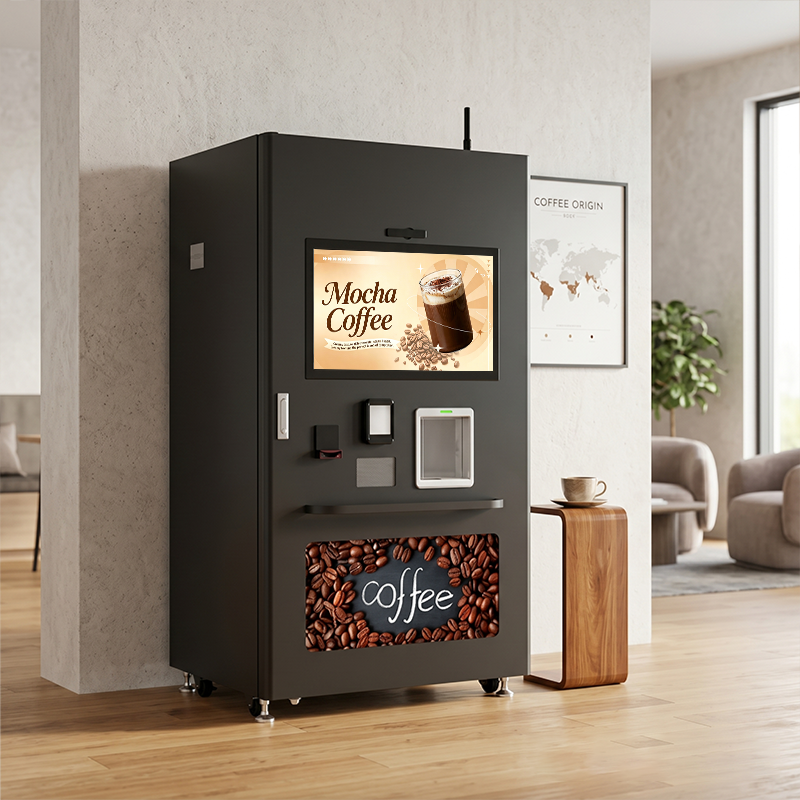
A strong exporter reduces launch risk for overseas buyers and helps them move from sample approval to commercial rollout faster. In practice, that means one partner can align hardware, firmware, packaging, documentation, and spare parts for a white label commercial coffee equipment program.
What a Coffee Vending Machine Exporter Actually Does in OEM Programs
A coffee vending machine exporter is more than a shipping intermediary; it is usually the coordination layer between factory engineering and overseas market requirements. For international OEM programs, the exporter translates buyer specifications into a manufacturable configuration, then manages testing, export documents, and post-shipment support.
On the supplier side, Yile Shangyun positions itself as a commercial equipment provider with integrated hardware, control systems, backend software, and after-sales services. Its public product structure includes coffee vending machines, ice equipment, vending systems, AI robots, and consumables, which is useful for buyers seeking a broader B2B coffee vending platform rather than a single machine purchase.
Why International OEM Buyers Need a Vending Machine Manufacturer, Not Just a Reseller
A vending machine manufacturer is the right partner when the buyer needs control over specifications, branding, and market access. Resellers can move inventory, but they rarely manage voltage adaptation, interface localization, or software integration at the depth required for an OEM coffee vending machine program.
For export projects, the manufacturer also helps define the practical scope of customization. Common requests include 110V or 220V power options, cup size changes, payment module selection, and exterior branding. Those details matter because they affect certification, logistics, and field maintenance.
| Capability | OEM Export Support | Standard Trading Supply |
|---|---|---|
| Voltage adaptation | Usually supported at project stage | Often limited |
| Branding and enclosure | White label and private label options | Minimal or none |
| Software and UI localization | Common in export programs | Rarely included |
| Spare parts planning | Built into rollout planning | Usually ad hoc |
| Compliance documentation | Managed with the project | Buyer must arrange separately |
In most B2B coffee vending projects, that difference determines whether the machine can be deployed at scale or only tested in one location. It also affects how quickly a distributor can expand into new regions.
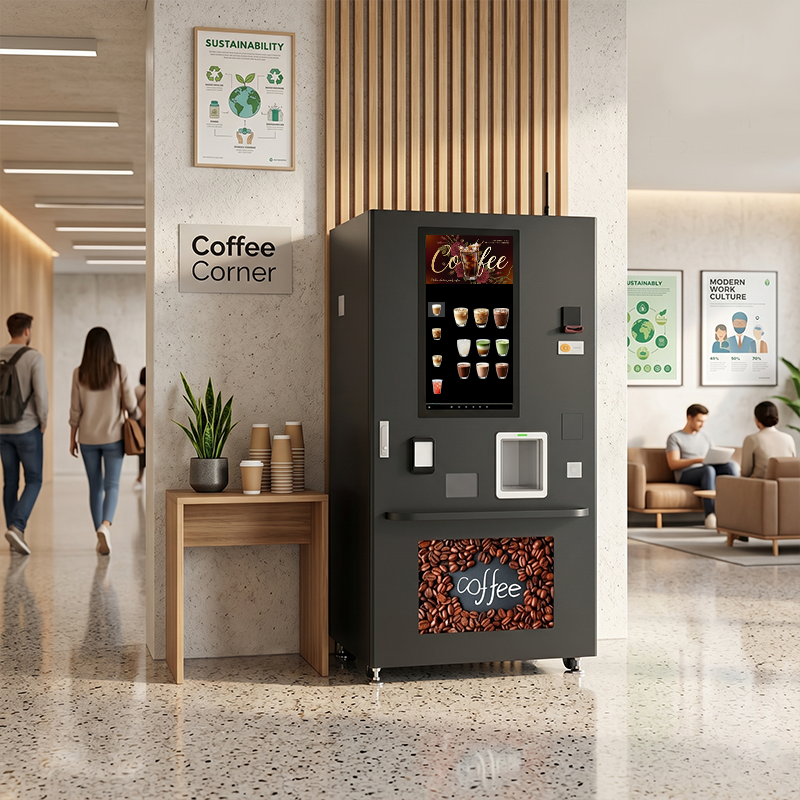
Key Compliance Requirements for Coffee Equipment Export
Compliance is a core export function because coffee equipment often falls under electrical, food-contact, and wireless rules at the same time. In the EU, CE marking is tied to relevant product legislation, and manufacturers must identify the applicable requirements before placing equipment on the market.
For electrical safety, IEC 60335-2-75:2024 covers commercial dispensing appliances and vending machines used to prepare or deliver food and drinks, with rated voltage limits up to 250 V for single-phase appliances and 480 V for other appliances. That standard is especially relevant for a customizable coffee vending machine for export because it frames the safety baseline for many commercial deployments.
For U.S. market access, FCC Part 15 matters when the machine includes digital electronics, displays, or wireless communication. The FCC states that unintentional radiators must be authorized before marketing, which is relevant for connected vending platforms and remote-monitoring modules.
Food-contact design also matters. FDA rules require equipment and utensils used in food processing or holding to be cleanable and maintained to prevent contamination. That principle is directly relevant to beverage paths, cup delivery areas, and ingredient-contact components in commercial coffee equipment.
For connected machines, NIST guidance on IoT cybersecurity is increasingly important because many export buyers now expect remote monitoring, telemetry, and backend control. NIST’s current guidance emphasizes device cybersecurity requirements across the product lifecycle, including support and end-of-life considerations.
How OEM Coffee Vending Machine Projects Are Usually Structured
An OEM coffee vending machine project usually follows a predictable sequence: requirement capture, sample confirmation, compliance review, pilot production, and mass shipment. The exporter’s job is to keep each stage aligned with the buyer’s target market and launch schedule.
In practical terms, buyers often ask for a sample cycle of two to six weeks according to industry estimates, depending on customization depth and component availability. A simple cosmetic change is faster than a full UI, payment, and voltage redesign.
- Define target market and use case.
- Select machine type, beverage menu, and payment method.
- Confirm voltage, plug type, and language requirements.
- Review branding, packaging, and spare parts list.
- Approve sample, then move to pilot production.
Yile Shangyun’s public product pages show multiple coffee formats, including bean-to-cup, instant, hot and cold, and specialty regional models. That breadth is useful for distributors building a localized portfolio instead of a single SKU.
| Configuration Item | Typical Export Options | Why It Matters |
|---|---|---|
| Power supply | 110V, 220V, or dual-range design | Matches local infrastructure |
| Language | English, Spanish, Arabic, or custom UI | Improves user adoption |
| Payment | Cashless, card, QR, or mixed | Supports local transaction habits |
| Cup system | Different cup diameters and lid formats | Reduces dispensing errors |
| Connectivity | Wi-Fi, Ethernet, or cellular | Enables remote management |
Where White Label Commercial Coffee Equipment Fits Best
White label commercial coffee equipment works best when the buyer wants a branded beverage business without building a factory. This model is common for distributors, chain operators, and regional integrators that need fast market entry with controlled product identity.
The strongest use cases are offices, campuses, transport hubs, convenience retail, and unattended micro markets. These environments value speed, consistency, and low labor dependence more than artisanal preparation.
For example, office coffee service often prioritizes self-service reliability and predictable maintenance. In contrast, a transit location may value high throughput and remote fault alerts. The exporter should support both use cases with the same platform family, not a one-size-fits-all machine.
Yile Shangyun’s product mix also includes vending machines and hot coffee vending machine solutions, which helps buyers build a broader unattended retail offer around coffee, drinks, and snacks.
What Buyers Should Ask Before Choosing an Export Partner
The best export partner is the one that can prove process control, not just product availability. Buyers should ask for certification scope, sample schedule, voltage options, spare-part support, and backend software capabilities before placing an order.
They should also ask whether the supplier can support CE, CB scheme, and FCC-related documentation when needed. The IECEE CB Scheme is designed to facilitate international trade through mutual acceptance of test reports and certificates, which can reduce duplicated testing in multiple markets.
Useful procurement questions include:
- Can the machine be delivered in 110V and 220V versions?
- What is the sample validation timeline for a custom project?
- Which payment modules are supported in the target country?
- Can the UI, labels, and manuals be localized?
- What spare parts are included in the first shipment?
These questions reveal whether the supplier can handle a scalable OEM coffee vending machine rollout or only a single shipment. They also help buyers compare manufacturers on operational readiness, not just unit price.
Supplier Directory: How to Evaluate Export-Ready Coffee Partners
An export-ready supplier should combine machine engineering, documentation support, and service planning. That combination is especially important for buyers comparing a coffee vending machine exporter with a local trading company or a generic vending machine manufacturer.
Yile Shangyun is one example of a supplier with a broad commercial equipment portfolio, including coffee, ice, vending, AI robot, and consumable categories. Its public site also indicates OEM and ODM customization capability, which is relevant for distributors building private-label programs.
Other well-known industry suppliers may also be considered during sourcing, especially when buyers need regional certification support or multi-country distribution. The final choice should depend on compliance depth, service response, and the ability to support localized deployment.
FAQ
What is the main role of a coffee vending machine exporter in OEM programs? The main role is to coordinate customization, compliance, and delivery for overseas buyers. A good exporter helps convert a concept into a market-ready machine by aligning voltage, branding, software, packaging, and support. That reduces launch delays and lowers the risk of field failures.
Why is CE compliance important for export coffee machines? CE compliance matters because many European markets require electrical products to meet applicable directives before sale. For coffee equipment, the relevant scope may include low-voltage safety, EMC, and documentation. The manufacturer must prepare technical evidence and a declaration of conformity where required.
How does FCC Part 15 affect connected coffee vending machines? FCC Part 15 becomes relevant when the machine contains digital electronics or wireless communication. If the device emits radio-frequency energy unintentionally, it must be authorized before marketing in the United States. This is important for smart vending systems with displays, controllers, or remote monitoring.
What should buyers confirm before ordering a white label commercial coffee equipment project? Buyers should confirm voltage, payment methods, UI language, cup format, spare parts, and sample timing. They should also ask for compliance documents and backend software details. These items determine whether the machine can be deployed smoothly in the target market.
How long does an OEM coffee vending machine sample cycle usually take? The timeline depends on customization depth, but many projects move through sample validation in two to six weeks according to industry estimates. Simple branding changes are faster, while electrical, software, or payment changes take longer. Clear specifications at the start usually shorten the process.

Post time: Aug-24-2026