

Introduction
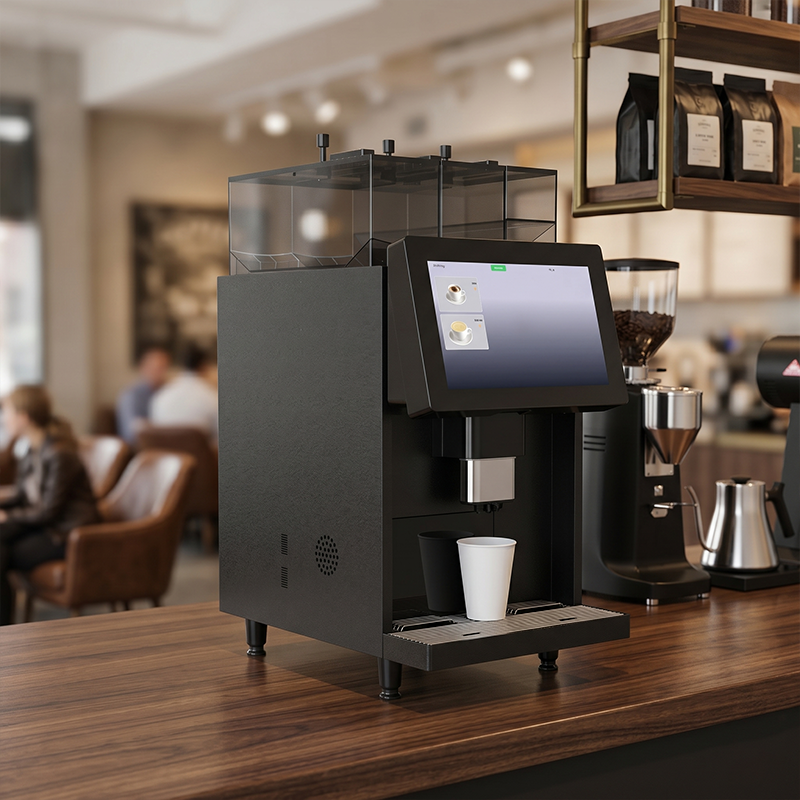
A robotic coffee machine in a retail store combines automated brewing hardware, software controls, and cashless ordering into a compact self-service setup. Instead of relying on a staffed counter, it measures ingredients, prepares drinks, and delivers consistent orders with minimal human intervention. For retailers, the real value goes beyond novelty: these systems can reduce labor dependence, fit into small footprints, and extend service hours in busy locations such as malls, airports, and office buildings. Understanding how the machine works helps explain both the customer experience and the business logic behind deployment. The sections that follow break down the operating process, key components, and the retail benefits these systems are designed to deliver.
How Robotic Coffee Machines Create Retail Value
The integration of automation into retail environments has transformed how consumers interact with food and beverage services. Among the most prominent advancements is the robotic coffee machine, which bridges the gap between high-volume commercial brewing and specialty coffee standards. By merging mechanical engineering with digital order management, these systems present a new paradigm for retail operators looking to optimize their real estate.
Why retailers deploy them
Retailers deploy these systems primarily to address ongoing labor shortages and maximize revenue per square foot. Unlike a traditional cafe setup requiring 15 to 20 square meters for counters, equipment, and staff movement, a robotic kiosk typically occupies a footprint of just 2 to 4 square meters. This compact design allows operators to monetize underutilized spaces in malls, airports, and corporate lobbies.
Furthermore, the machines operate 24 hours a day without fatigue or shift changes. This capability captures incremental sales during early morning or late-night windows when staffing a human barista is economically unviable, ensuring continuous service availability in high-traffic retail ecosystems.
How to evaluate business impact
Evaluating the business impact requires looking beyond the initial capital expenditure to understand total lifecycle returns. Retailers must analyze metrics such as peak-hour throughput, average ticket size, and operational uptime. A typical financial model projects a break-even point within 12 to 18 months, assuming a conservative sales volume of 60 to 80 cups per day.
| Metric | Traditional Cafe | Robotic Coffee Kiosk |
|---|---|---|
| Footprint | 15 – 20 sq. meters | 2 – 4 sq. meters |
| Operating Hours | 10 – 14 hours | 24/7 |
| Labor Cost per Cup | High ($1.50 – $2.50) | Low ($0.10 – $0.20) |
| Peak Throughput | Highly variable | Consistent (50+ cups/hr) |
What a Robotic Coffee Machine Is in Retail
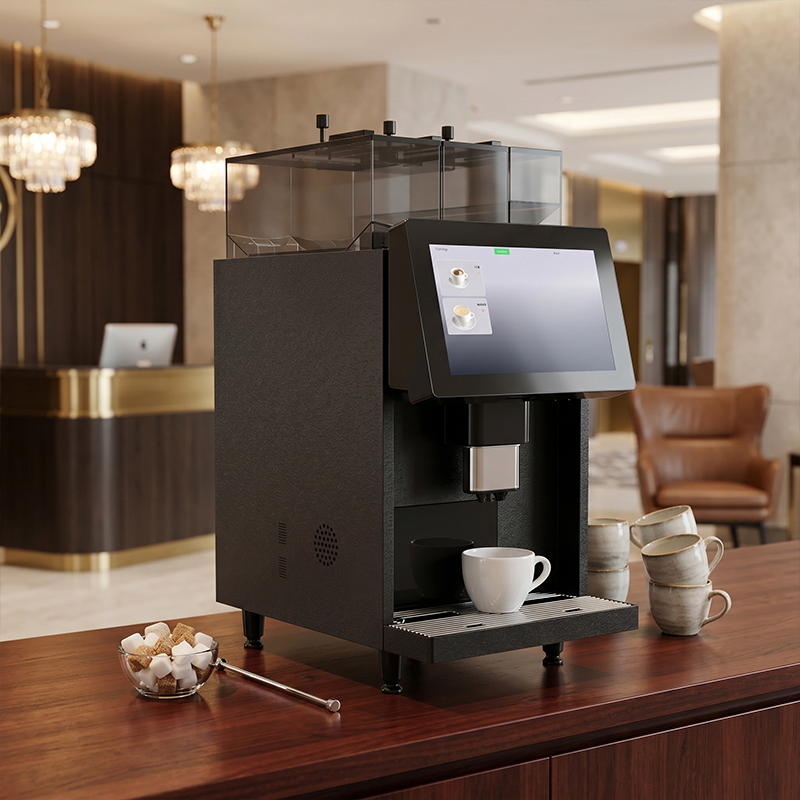 Understanding the mechanics of a robotic coffee machine requires distinguishing it from legacy vending equipment. Modern systems are self-contained, automated baristas designed to replicate the exact motions, timing, and precision of a human coffee professional.
Definition and scope
The scope of this technology encompasses fully integrated kiosks featuring either sophisticated internal transport mechanisms or visible multi-axis articulated arms. Unlike traditional vending machines that dispense pre-mixed soluble powders, these platforms utilize whole beans and fresh milk. They are programmed to execute specialty coffee recipes that meet third-wave coffee standards, effectively bringing cafe-quality beverages into automated retail spaces.
Core workflow
The core workflow mirrors a standard barista’s process but operates with mechanical precision. Once an order is placed via a touchscreen or mobile app, the system triggers the commercial grinder. The coffee dose is precisely weighed, tamped with a consistent pressure of 15 to 20 kilograms, and subjected to water at exactly 9 bars of pressure for an extraction time of 25 to 35 seconds.
Simultaneously, a separate module steams and froths the milk to the desired micro-foam texture. Finally, the robotic arm or internal conveyor system merges the espresso and milk into the cup, delivering the finished beverage to the consumer pickup window.
Key system components
Several key system components drive this automated cafe equipment. The architecture generally includes a commercial-grade espresso engine, a 6-axis robotic arm for cup manipulation, a telemetry unit for cloud-based monitoring, and a dual-zone refrigeration system to keep milk safely stored below 4 degrees Celsius. Advanced optical sensors and load cells ensure every cup is positioned correctly and filled to the exact millimeter, preventing spills and reducing waste.
Technical and Operational Factors
For a retail coffee deployment to succeed, the underlying technology must balance high-volume output with uncompromising quality. Operational variables and technical specifications dictate how well the machine performs during peak rush hours.
Capacity and menu requirements
Capacity requirements dictate the hardware configuration needed for specific retail environments. High-traffic locations demand machines capable of producing 50 to 80 cups per hour. To sustain this output without constant human intervention, the systems are equipped with high-capacity bean hoppers holding 2 to 3 kilograms of espresso beans, alongside multi-liter milk reservoirs.
The menu capabilities are equally robust, relying on dual-boiler systems to offer dozens of permutations. These include lattes, cappuccinos, and flat whites, often featuring multiple syrup pumps and options for dairy alternatives to meet modern consumer dietary preferences.
Quality control and consistency
Quality control relies heavily on closed-loop feedback systems rather than human intuition. Temperature stability is maintained using PID (Proportional-Integral-Derivative) controllers, ensuring brewing water remains strictly between 90 and 93 degrees Celsius. Additionally, self-adjusting grinders continuously monitor extraction times.
If a shot pulls too fast—registering under 20 seconds—the system automatically refines the grind size to be finer for the next order. This automated calibration ensures a level of consistency that is difficult to achieve manually over a long retail shift.
Robotic vs staffed coffee service
Comparing robotic systems to staffed services reveals distinct operational trade-offs. While human baristas excel at customer hospitality and complex custom requests, automated systems offer unparalleled consistency and speed during high-pressure volume spikes.
| Operational Factor | Staffed Coffee Service | Robotic Coffee Machine |
|---|---|---|
| Drink Consistency | Variable by barista | Highly consistent (sensor-driven) |
| Order Accuracy | Prone to human error | 100% accurate to digital input |
| Maintenance | Daily manual cleaning | Automated Clean-In-Place (CIP) |
| Scalability | Limited by hiring/training | Rapid plug-and-play deployment |
Store Design, Compliance, and Supply Chain
Deploying a robotic coffee machine involves rigorous planning regarding the physical retail space, regulatory compliance, and ongoing supply chain logistics. Retailers must treat the kiosk as an independent micro-store.
Site planning essentials
Site planning is the foundational step for a successful rollout. Retailers must secure locations that meet strict utility requirements. A standard commercial unit requires a dedicated 220V/30A electrical circuit to handle the simultaneous power draw of commercial boilers and robotic servos.
Furthermore, direct plumbing for purified water and a municipal drainage line are highly recommended. Establishing these connections prevents the severe operational bottleneck of manually refilling 20-liter water jugs or emptying wastewater tanks multiple times a day.
Food safety and compliance
Food safety and compliance are non-negotiable in automated food service. These machines must adhere to stringent health codes, such as NSF/ANSI standards in North America or CE equivalents in Europe. To maintain hygiene without a human present, the systems utilize advanced Clean-In-Place (CIP) technology.
The software forces a high-temperature automated flush of the milk lines and brew groups every 4 to 6 hours, or after every 50 cups dispensed. This strictly enforced cleaning cycle ensures bacterial growth is mitigated and sanitary conditions are maintained around the clock.
Consumables, parts, and service support
Managing consumables, parts, and service support dictates the ongoing operational expenditure. While the brewing is automated, restocking is a physical necessity. Depending on daily volume, an operator must visit the machine every 150 to 200 cups to replenish beans, milk, cupss, and lids](https://www.ylvending.com/coffee-cup-lid/).
Preventive maintenance schedules typically require replacing high-wear components like group head gaskets and water filters every 10,000 cycles. Retailers must back this up with a strict Service Level Agreement (SLA) with the manufacturer or a local service provider to guarantee rapid repairs and minimize downtime.
How Retailers Should Decide
Investing in automated coffee technology represents a significant shift in retail strategy. Decision-makers must utilize a structured approach to determine if the technology aligns with their specific operational context and customer base.
Decision framework
A robust decision framework balances expected foot traffic against the required capital. The initial capital expenditure (CAPEX) for a commercial-grade robotic coffee machine ranges from $30,000 to $60,000, depending on the complexity of the robotics and the capacity of the brewing modules.
To justify this investment, industry benchmarks suggest a site should have a minimum daily footfall of 1,500 to 2,000 people. By capturing a conservative 3% to 5% conversion rate, operators can achieve the target daily sales required for a favorable return on investment.
Pilot and KPI plan
Executing a pilot program is crucial before committing to a multi-unit rollout. A 90-day pilot allows retailers to track critical Key Performance Indicators (KPIs) such as machine uptime (targeting 99% or higher), average transaction value, and the repeat customer purchase rate.
Telemetry data gathered during this pilot phase highlights peak demand periods, enabling operators to optimize supply runs, adjust inventory levels, and fine-tune digital menu pricing for maximum profitability.
When it makes strategic sense
Ultimately, deploying these systems makes strategic sense in environments where speed, availability, and consistency outweigh the need for human interaction. High-traffic transit hubs, 24/7 corporate campuses, hospitals, and university libraries represent ideal ecosystems.
In these settings, the robotic system does not replace the traditional cafe experience but rather captures lost revenue by serving consumers who demand high-quality coffee outside of conventional operating hours or in spaces too small for a full build-out.
Further reading:
Key Takeaways
- The most important conclusions and rationale for robotic coffee machine
- Specs, compliance, and risk checks worth validating before you commit
- Practical next steps and caveats readers can apply immediately
Frequently Asked Questions
How does a robotic coffee machine make drinks in a retail store?
It grinds whole beans, tamps the dose, extracts espresso, steams milk, and dispenses the finished drink automatically after a touchscreen or app order.
Why do retailers choose a robotic coffee machine over a traditional cafe setup?
It uses only about 2 to 4 square meters, runs 24/7, lowers labor cost per cup, and helps monetize small spaces in malls, airports, and lobbies.
What drink quality can a robotic coffee machine deliver?
Modern systems use whole beans, fresh milk, controlled pressure, and precise timing to produce cafe-style espresso drinks instead of pre-mixed vending coffee.
What capacity should retailers look for in a robotic coffee machine?
For busy sites, choose a system that can produce around 50 to 80 cups per hour with large bean and milk storage to reduce refilling frequency.
Does YL Vending offer robotic coffee machine solutions for retail locations?
Yes. YL Vending provides automated coffee and vending solutions suitable for retail spaces, and you can review available models on ylvending.com/products/.

Kely
Post time: May-27-2026