

Introduction
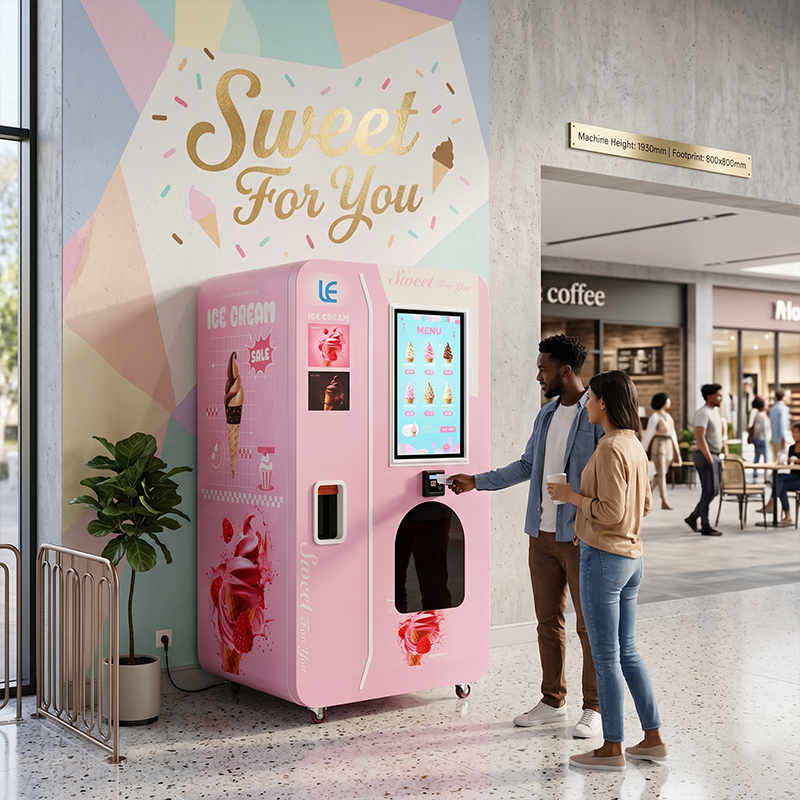
Launching an ice cream vending machine business in 2026 means combining automated retail technology with strong location strategy, product selection, and cost control. Demand for cashless, grab-and-go treats continues to grow in places like malls, transit hubs, campuses, and entertainment venues, but success depends on more than placing a freezer in a busy spot. This guide explains how to assess the market, choose a business model, estimate startup and operating costs, secure profitable locations, and manage inventory, maintenance, and compliance. By the end, you’ll have a practical framework for deciding whether this business fits your goals and how to start with fewer costly mistakes.
Why Consider an Ice Cream Vending Business
Entering the automated retail sector requires a strategic understanding of consumer impulses and shifting purchasing behaviors. An ice cream vending business capitalizes on high-margin, immediate-consumption products, offering a unique value proposition in environments where traditional food service is unavailable or cost-prohibitive. As technology advances, these automated storefronts have evolved from simple coin-operated boxes into sophisticated, data-driven retail hubs.
Market trends and demand drivers
The automated retail market continues to expand, driven by consumer demand for frictionless, 24/7 access to premium treats. Industry data projects the broader intelligent vending sector to maintain a compound annual growth rate (CAGR) of approximately 6.5% through the end of the decade, with the frozen dessert segment experiencing a notable 12% year-over-year increase in cashless transaction volume. This growth is heavily supported by the normalization of contactless payments and the rising consumer preference for premium, brand-name novelties over generic alternatives.
Core business models
Entrepreneurs typically evaluate three primary structures: the independent owner-operator model, franchise agreements, and hybrid route acquisitions. Independent operators retain 100% of their profits and brand control, though they bear the full burden of sourcing and logistics. To achieve a sustainable full-time income, an independent operator generally needs to scale to a fleet of 5 to 10 strategically placed machines within the first 18 months. Franchise models offer turnkey hardware and established branding but often require upfront fees ranging from $20,000 to $50,000, alongside ongoing royalty structures.
How to Build a Viable Ice Cream Vending Operation
 Establishing a resilient financial and technical foundation is critical before deploying any hardware into the field. Profitability in automated frozen retail relies on balancing upfront capital expenditures against operating margins and machine longevity.
Startup costs, margins, and break-even
Initial capital requirements for modern frozen vending units typically range from $4,000 to $9,000 per machine, depending on capacity and technological features. When factoring in initial inventory, delivery, and site installation, operators should budget an additional $800 to $1,200 per location. The financial appeal lies in the product margins, which routinely average between 60% and 70%. With consistent daily sales volumes of 20 to 30 units, the average break-even point for a single machine sits between 8 and 14 months.
Machine types, payments, and telemetry
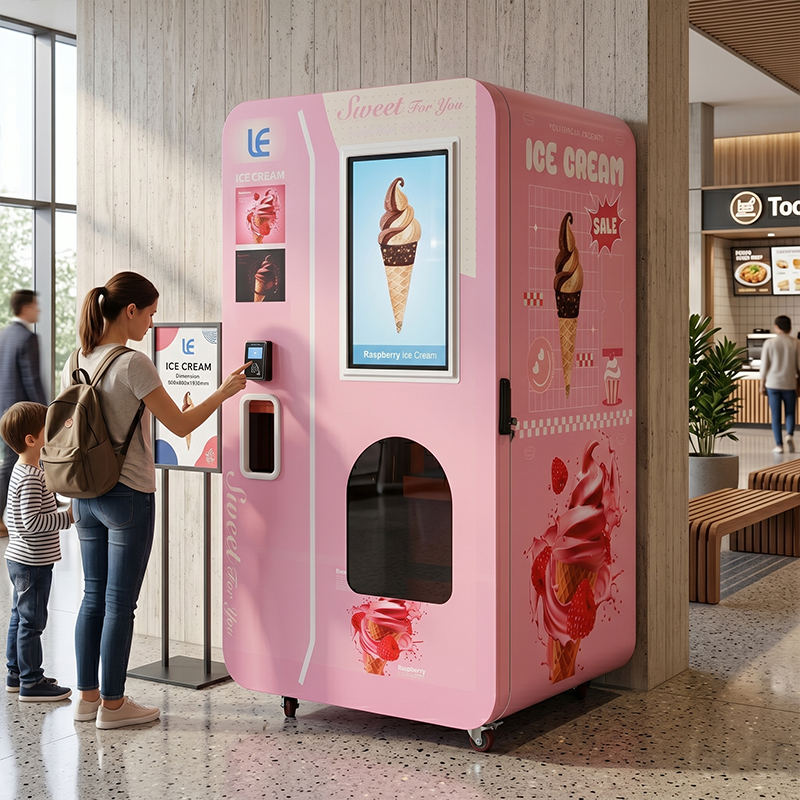
Hardware selection dictates both operational capabilities and user experience. A standard frozen vending machine must utilize robust commercial compressors to reliably maintain strict internal temperatures between -18°C and -22°C (0°F to -8°F). Modern units utilize elevator-style delivery systems or robotic arms rather than traditional drop mechanisms to prevent product damage. Furthermore, integrated telemetry systems and EMV-compliant card readers are mandatory in 2026, as cashless payments now account for over 85% of all automated retail transactions.
New vs refurbished machines
The decision between purchasing brand-new hardware or sourcing refurbished units significantly impacts initial cash flow and long-term maintenance liabilities. Refurbished units offer lower entry costs but may lack the energy efficiency of newer models.
| Hardware Type | Average Initial Cost | Standard Warranty | Expected Lifespan | Technology Integration |
|---|---|---|---|---|
| Brand New | $6,000 – $9,000 | 1 to 3 years | 10 to 12 years | Native telemetry & cashless |
| Refurbished | $3,000 – $5,000 | 30 to 90 days | 5 to 7 years | Often requires retrofitting |
How to Manage Products, Compliance, and Operations
A successful operation hinges on meticulous inventory management and strict adherence to food safety standards. Because the product is highly sensitive to temperature fluctuations, the operational margin for error is significantly narrower than in ambient snack vending.
Product mix and sourcing strategy
A data-driven product mix prevents stagnant inventory and maximizes revenue per square foot of freezer space. Industry best practices suggest allocating 40% of machine capacity to high-margin premium bars, 30% to universally recognized standard novelties (such as ice cream sandwiches or cones), and the remaining 30% to rotating seasonal or hyper-local items. Operators must establish reliable relationships with wholesale distributors to ensure minimum order quantities (MOQs), which typically sit around $250 to $500 per delivery, are met without overstocking.
Licenses, food safety, and insurance
Compliance is non-negotiable in the frozen food sector. Operators must secure appropriate local health department permits, which may require machines to feature automated health timers that lock the dispensing mechanism if internal temperatures rise above -15°C for more than 30 minutes. Additionally, securing robust commercial general liability insurance is essential; standard policies require $1,000,000 to $2,000,000 in aggregate coverage, generally costing operators between $400 and $600 annually per corporate entity.
Restocking and freezer reliability
Freezer reliability directly dictates operational cadence. Commercial vending compressors are generally rated for up to 50,000 operating hours, provided routine maintenance—such as condenser coil cleaning—is performed biannually. Restocking schedules must be optimized to prevent both stockouts and excessive door-opening events, which introduce ambient humidity and cause frost buildup. High-volume locations typically require restocking intervals of 5 to 7 days, utilizing insulated transit bags to maintain the cold chain during loading.
Where to Place Ice Cream Vending Machines for Best Results
Strategic placement is the single most critical variable determining the financial success of automated retail. Even the most advanced hardware and premium product selection cannot overcome the deficit of a low-traffic environment.
High-performing location types
Premium locations share specific demographic and environmental characteristics: high dwell times, captive audiences, and limited alternative food service options. Top-tier environments include large university student centers, corporate campuses with over 500 on-site employees, indoor shopping malls, and regional amusement parks. A baseline minimum threshold of 1,500 daily foot traffic passes is highly recommended to achieve the conversion rates necessary for optimal profitability.
Site agreements and commissions
Securing prime real estate requires negotiating equitable site agreements with property managers. Compensation structures generally take two forms: revenue-sharing commissions or flat monthly lease rates. Standard industry commissions range from 10% to 15% of gross monthly sales, paid quarterly. Alternatively, flat fees of $50 to $100 per month are common in corporate breakrooms where the machine is viewed as an employee amenity rather than a primary profit center for the building.
KPIs, routing, and remote monitoring
Modern operations rely heavily on remote monitoring software to optimize route logistics and track machine health. Telemetry data allows operators to transition from inefficient static scheduling to dynamic, need-based routing.
| Key Performance Indicator | Target Benchmark | Corrective Action if Missed |
|---|---|---|
| Daily Unit Sales | 25 – 40+ units | Evaluate foot traffic; consider relocating machine |
| Product Stockout Rate | < 5% | Adjust planogram or increase restock frequency |
| Machine Uptime | 98%+ | Implement preventative hardware maintenance |
| Gross Margin | 60% – 70% | Renegotiate wholesale costs or adjust retail pricing |
How to Evaluate Whether to Start
Before committing significant capital to a full-scale rollout, prospective operators must objectively evaluate their local market viability and personal risk tolerance. A structured evaluation phase prevents over-leveraging and highlights logistical friction points early in the business lifecycle.
Pilot launch steps and decision gates
A phased rollout strategy effectively mitigates upfront exposure. A standard pilot program involves deploying one to three machines for a strict 90-day evaluation period. During this time, operators must monitor critical decision gates: achieving an average of 30+ units sold per day per machine, maintaining a spoilage rate below 2%, and confirming that the chosen wholesale supply chain can reliably deliver product on time. Passing these gates justifies further capital deployment and fleet expansion.
Investment risk and final decision
Every ice cream vending business carries inherent risks, primarily hardware depreciation and location volatility. Vending equipment typically depreciates by 15% to 20% in its first year of operation, though it holds steady resale value thereafter if properly maintained. The final decision to scale should be based on a cold analysis of regional demand, the operator’s capacity to manage physical logistics, and the availability of high-traffic real estate within a 30-mile service radius.
Further reading:
Key Takeaways
- The most important conclusions and rationale for ice cream vending business
- Specs, compliance, and risk checks worth validating before you commit
- Practical next steps and caveats readers can apply immediately
Frequently Asked Questions
How much does it cost to start an ice cream vending business in 2026?
Plan on about $4,800 to $10,200 per location, including the machine, initial inventory, delivery, and installation. New units cost more upfront but usually offer better warranties and lower retrofit costs.
What temperature should an ice cream vending machine maintain?
Keep products between -18°C and -22°C (0°F to -8°F). Choose a machine with reliable compressors and telemetry alerts to catch temperature issues before inventory is lost.
Should I buy a new or refurbished ice cream vending machine?
Buy new if you want native cashless payments, telemetry, and longer warranty coverage. Refurbished can lower startup cost, but often needs upgrades and may have a shorter lifespan.
What features should I look for on YL Vending ice cream machines?
Prioritize EMV card readers, cashless payment support, telemetry, stable low-temperature performance, and elevator-style delivery. These features help protect frozen products and improve day-to-day management.
How many machines do I need to make this a full-time business?
Many independent operators target 5 to 10 well-placed machines within 18 months. Focus first on high-traffic locations and track daily sales before expanding your route.

Kely
Post time: May-28-2026