

Introduction
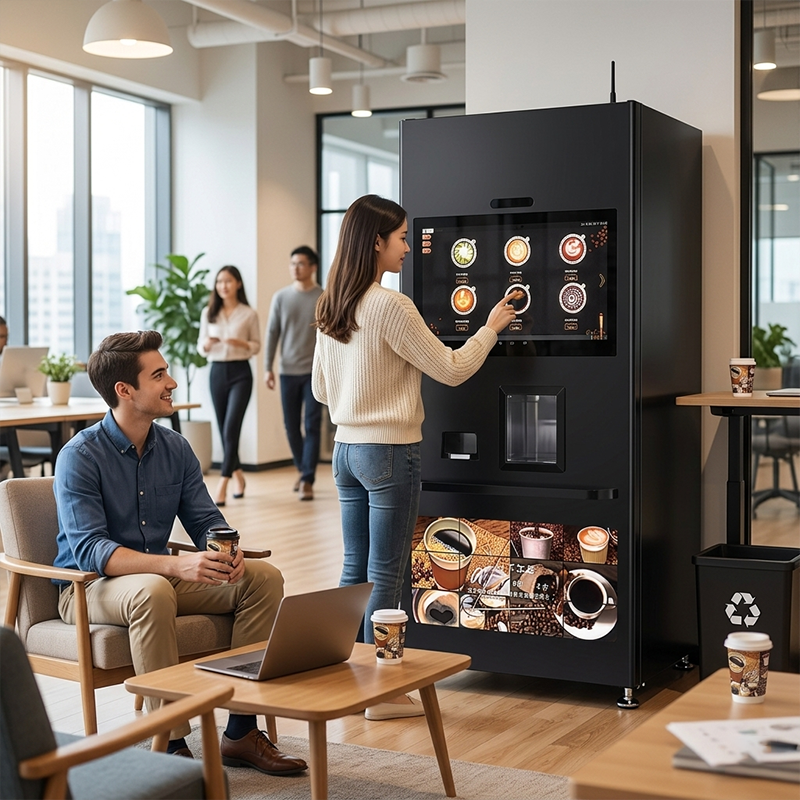
As demand for convenient, high-quality beverages grows beyond traditional café hours, unattended coffee kiosks are becoming a practical option for offices, hospitals, airports, and other high-traffic sites. These systems promise lower labor dependence, longer operating hours, and access to locations that may not support a staffed coffee bar. At the same time, they introduce trade-offs involving maintenance, product consistency, customer experience, and upfront investment. This article examines the main advantages and limitations of unattended coffee kiosk solutions so readers can better assess where they fit, what risks to plan for, and how they compare with more conventional coffee service models.
Why Unattended Coffee Kiosks Are a Strategic Channel
The commercial foodservice sector is undergoing a structural transformation, heavily influenced by automation and changing consumer expectations. Deploying an unattended coffee kiosk represents a strategic pivot for facility managers and operators, bridging the gap between premium café experiences and high-volume, low-friction convenience. By removing the dependency on human baristas, these systems unlock new revenue channels in previously unviable commercial and institutional locations.
How labor pressure, extended hours, and location demand drive adoption
Severe labor shortages and rising wage floors have fundamentally altered the unit economics of traditional coffee shops. In major metropolitan areas, barista turnover rates frequently exceed 150% annually, while fully burdened labor costs have surged by 15% to 25% over the past three years. This economic pressure forces operators to seek automated solutions that decouple revenue growth from continuous headcount expansion.
Additionally, consumer demand for specialty coffee no longer adheres to conventional 7 AM to 3 PM café hours. Approximately 30% of commercial beverage purchases now occur during extended hours or night shifts. Environments with continuous foot traffic, such as airport terminals, regional hospitals, and 24-hour manufacturing facilities, require reliable service around the clock. Automated kiosks capture this off-peak demand without incurring overtime labor premiums or shift-differential costs.
Which operating models use unattended coffee kiosks
The deployment of automated coffee systems spans several distinct operating models, tailored to the risk tolerance and capital structure of the operator. In a direct-ownership model, facility managers or corporate entities purchase the equipment outright, absorbing all capital expenditures (CapEx) while retaining 100% of the gross margins, which frequently exceed 70% per cup on specialty beverages.
Alternatively, revenue-sharing and fleet management models allow specialized operators to place machines in high-traffic host locations at zero capital cost to the property owner. In this arrangement, the host typically receives a 10% to 15% commission on gross sales. Fleet operators managing networks of 50 to 100 units rely on advanced telemetry to route technicians efficiently, targeting a minimum threshold of 40 to 60 vends per day per machine to achieve a 12- to 18-month return on investment (ROI).
What Defines an Unattended Coffee Kiosk
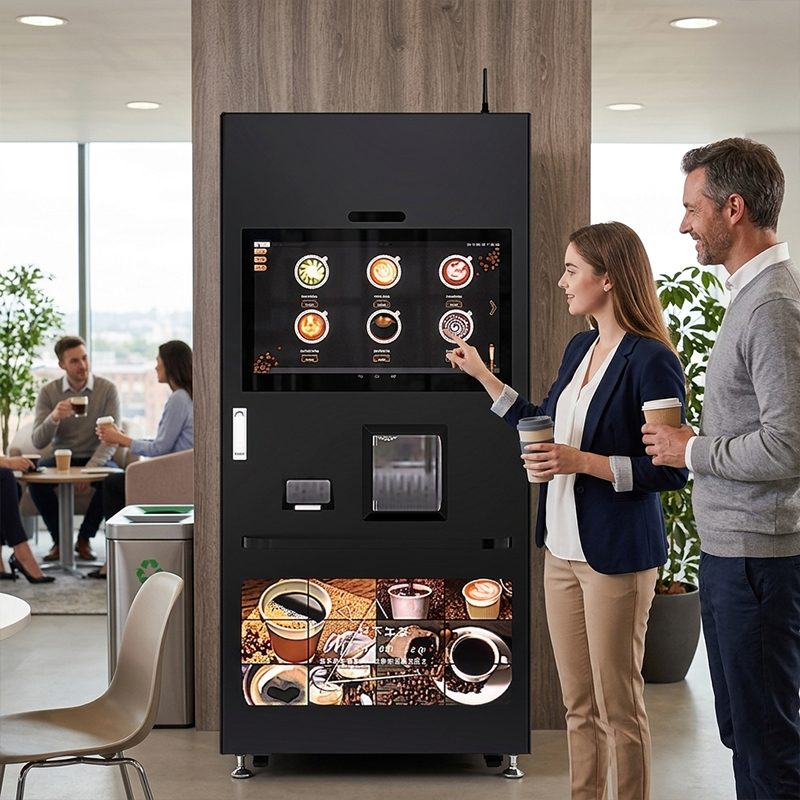
Understanding the physical and technological parameters of modern automated dispensing systems is critical for successful deployment. An unattended coffee kiosk is not merely a traditional vending machine; it is a sophisticated, internet-connected micro-café designed to replicate the complex biochemical extraction processes of professional espresso equipment.
How kiosk formats differ by footprint and use case
Kiosk formats vary significantly based on spatial constraints and target demographics. Compact, tabletop bean-to-cup systems typically require a footprint of just 0.5 to 0.8 square meters. These units are highly favored in corporate pantries and premium convenience stores, where floor space is scarce but demand for freshly ground coffee is high. They utilize internal water reservoirs or direct plumbing and operate on standard 110V/220V electrical circuits.
Conversely, freestanding architectural kiosks and robotic enclosures demand a larger footprint, ranging from 2.0 to 5.0 square meters. These installations are engineered for high-visibility public spaces like shopping malls and transit hubs. They integrate multiple hoppers for different coffee roasts, dual milk systems for both dairy and plant-based options, and secure, climate-controlled storage for perishables, functioning as autonomous retail destinations rather than simple dispensing appliances.
How bean-to-cup, vending, and robotic solutions compare
The market offers three primary technological tiers: bean-to-cup systems, traditional soluble vending, and robotic arm kiosks. Bean-to-cup systems grind whole beans on demand, utilizing precision brewing chambers that apply 9-bar pressure for authentic espresso extraction. Traditional vending relies on soluble (instant) powders, prioritizing speed and low unit cost over specialty beverage quality. Robotic solutions integrate standard commercial espresso machines with articulated robotic arms to mimic human barista movements, serving primarily as high-engagement experiential retail.
| System Type | Typical Footprint (sq m) | Initial CapEx Band | Dispense Time | Target Environment |
|---|---|---|---|---|
| Bean-to-Cup Kiosk | 0.8 – 1.5 | $5,000 – $15,000 | 45 – 60 seconds | Offices, C-Stores, Universities |
| Traditional Vending | 1.0 – 1.5 | $2,000 – $5,000 | 15 – 25 seconds | Industrial, Transit Stations |
| Robotic Arm Kiosk | 3.0 – 5.0 | $35,000 – $80,000 | 75 – 90 seconds | High-end Retail, Airports |
Pros and Cons of Unattended Coffee Kiosks
Deploying automated beverage infrastructure requires a rigorous assessment of operational trade-offs. While the unit economics often heavily favor automation, operators must weigh the inherent benefits against the logistical limitations of managing complex, unattended hardware in diverse environments.
Which advantages matter most for operators
The primary advantage for operators is the elimination of variable labor costs per transaction, which traditionally consume 30% to 40% of gross revenue in a standard café setting. By stabilizing the cost of goods sold (COGS) at roughly $0.35 to $0.65 per cup—covering beans, milk, syrups, and paper consumables—operators can achieve gross margins that rapidly accelerate ROI. Furthermore, space efficiency allows operators to generate upward of $1,000 to $2,000 in monthly revenue per square meter of leased floor space.
Consistency in product quality represents another major benefit. Automated systems utilize highly calibrated algorithms to maintain precise extraction parameters, such as a 92°C water temperature and exact dose weights to within 0.5 grams. This eliminates the variability associated with human error, ensuring that the 500th cup dispensed in a week matches the exact flavor and quality profile of the very first cup.
Which limitations require closer scrutiny
Despite the advantages, operators must scrutinize the limitations, primarily the absolute reliance on machine uptime. Unlike a staffed café where a barista can manually work around a failing grinder, an unattended system with a critical component failure results in a 100% loss of revenue until repaired. Operators must evaluate the Mean Time Between Failures (MTBF); enterprise-grade systems should target an MTBF of at least 5,000 to 7,500 vends to remain viable in high-traffic zones.
Additionally, unattended systems in public spaces face elevated risks of vandalism and payment terminal fraud. Machines utilizing fresh milk also require strict, daily logistical intervention. If a host location lacks on-site staff capable of performing a 10-minute daily restocking and cleaning protocol, the operator must dispatch route drivers more frequently, significantly inflating operational expenditures and diminishing net profitability.
Cost, Compliance, and Maintenance Factors
Sustainable profitability hinges on a comprehensive understanding of the total cost of ownership (TCO), strict adherence to health and safety regulations, and proactive lifecycle management. A well-structured financial and operational framework prevents unforeseen liabilities from eroding margins over the lifespan of the equipment.
How to evaluate capital cost, leasing, and operating expenses
Evaluating the financial viability of an automated coffee deployment requires mapping out CapEx, leasing options, and ongoing OpEx. Capital costs range from $5,000 for standard commercial units to over $50,000 for high-capacity, multi-hopper robotic systems. To mitigate upfront cash burn, many operators utilize equipment financing or 36- to 60-month lease-to-own agreements, transforming CapEx into predictable monthly operating expenses ranging from $150 to $800 per unit.
Beyond hardware and ingredients, operators must budget for hidden OpEx variables. These include cellular telemetry subscriptions ($15 to $30 per month per machine), payment gateway transaction fees (typically 2.5% to 3.5% plus $0.10 per vend), and specialized preventative maintenance contracts. Accurate TCO modeling must also account for a 3% to 5% annual allowance for component depreciation and replacement parts.
What compliance requirements operators must meet
Regulatory compliance is non-negotiable and varies heavily by jurisdiction. In North America, equipment must typically achieve NSF/ANSI 25 certification, which governs the materials, design, and cleanability of food and beverage dispensing equipment. Electrical systems must carry UL or CE marks to satisfy commercial fire insurance requirements and municipal building codes.
Accessibility mandates also dictate deployment strategies. Under the Americans with Disabilities Act (ADA), interactive touchscreens, coin slots, and cup retrieval areas must be positioned between 15 inches and 48 inches from the finished floor to accommodate wheelchair users. Failure to meet these dimensional requirements can result in costly retrofits, forced removal of the asset, or civil litigation.
Which maintenance and implementation steps improve results
Rigorous maintenance protocols are the primary driver of equipment longevity and beverage quality. Most modern systems feature Automated Clean-In-Place (CIP) technology, which flushes the brewing groups and milk lines with 150ml to 250ml of near-boiling water and specialized chemical detergents daily. However, manual intervention remains necessary; fresh milk frothers require weekly deep-cleaning disassembly to prevent biofilm accumulation and lactic acid buildup.
Preventative maintenance schedules should be tied strictly to vend volume rather than calendar days. For instance, grinder burrs typically require replacement every 750 to 1,000 kilograms of processed beans to prevent excessive fines that choke the brewing chamber. Similarly, water filtration cartridges must be swapped every 5,000 to 10,000 liters, depending on local water hardness (measured in grains per gallon or PPM), to prevent catastrophic scale buildup on internal heating elements.
How to Choose the Right Unattended Coffee Kiosk
Strategic procurement requires aligning hardware specifications with the precise demands of the target location. Operators must look beyond aesthetic appeal and evaluate the underlying engineering, software ecosystem, and vendor support infrastructure before committing to a fleet rollout.
Which buyer criteria matter most
Peak throughput capacity is a critical buyer criterion. An optimal machine must sustain continuous extraction during morning rush hours without suffering from thermal degradation. Operators should look for dual-boiler systems capable of dispensing 40 to 60 cups per hour while maintaining a stable 90°C to 94°C brew temperature. Cup size flexibility is equally important; the dispensing area and software must accommodate varying consumer preferences, typically ranging from 8oz flat whites to 16oz iced lattes.
Furthermore, the software architecture must support seamless payment integration and remote diagnostics. The ability to accept closed-loop campus cards, NFC mobile wallets, and EMV chip cards is essential for maximizing conversion rates. Operators should prioritize platforms that offer open APIs or robust proprietary dashboards, allowing remote adjustment of grind times, water volumes, and pricing without requiring a physical site visit.
What decision framework helps compare options
Establishing a standardized decision framework allows operators to objectively compare different original equipment manufacturers (OEMs). This framework should weigh site demographics against machine capabilities, ensuring that the break-even volume aligns realistically with the location’s daily foot traffic. Requesting a custom consultation for an unattended coffee kiosk can help operators benchmark these operational metrics against current industry standards.
| Assessment Area | Key Metric | Optimal Threshold for Commercial Kiosks |
|---|---|---|
| Foot Traffic | Daily Passersby | > 1,500 individuals |
| Conversion Rate | Vends / Foot Traffic | 1.5% – 3.5% |
| Break-Even Volume | Cups / Day | 30 – 45 cups |
| Technical Support | SLA Response Time | < 4 hours (urban areas) |
| Modular Repair | Component Swap Time | < 20 minutes per sub-assembly |
Further reading:
Key Takeaways
- The most important conclusions and rationale for unattended coffee kiosk
- Specs, compliance, and risk checks worth validating before you commit
- Practical next steps and caveats readers can apply immediately
Frequently Asked Questions
What is the main benefit of an unattended coffee kiosk?
It serves coffee 24/7 with lower labor dependency, helping sites capture off-peak demand in offices, hospitals, airports, and factories.
Which locations work best for an unattended coffee kiosk?
High-traffic places with steady demand perform best, such as corporate buildings, transit hubs, hospitals, campuses, and manufacturing facilities.
How many daily sales are typically needed for good ROI?
Many operators target about 40 to 60 vends per day per machine to support a roughly 12- to 18-month return, depending on rent and service costs.
How do bean-to-cup kiosks compare with traditional coffee vending machines?
Bean-to-cup offers fresher, café-style drinks from whole beans, while traditional vending is faster and cheaper but usually lower in drink quality.
Can YL Vending help choose the right unattended coffee kiosk solution?
Yes. YL Vending can help match kiosk format, footprint, and operating model to your location, traffic level, and beverage menu goals.

Kely
Post time: Jun-05-2026