

 Introduction
As coffee service evolves, the choice between a robot coffee machine and a traditional cafe now affects far more than drink preparation. Cost structure, staffing risk, speed of service, consistency, customer experience, and site suitability all shape which model performs better in practice. This comparison examines where automated barista systems deliver clear advantages, where human-led cafes still stand out, and how each option fits different business goals. By the end, readers will have a practical framework for deciding whether automation, a conventional cafe setup, or a hybrid approach makes the strongest commercial sense.
Why the Robot Barista vs Cafe Debate Matters
The commercial coffee landscape is undergoing a significant transformation, driven by shifting consumer habits and macroeconomic pressures. At the center of this evolution is the robot barista vs cafe debate, a comparison that forces operators to weigh the benefits of human-driven hospitality against the relentless efficiency of automation. As technology matures, automated coffee kiosks are no longer mere novelties; they are high-capacity commercial assets capable of producing specialty-grade beverages.
Choosing between an automated system and a traditional brick-and-mortar storefront is no longer a simple matter of preference. It requires a deep understanding of operational expenditures, customer throughput, and the specific demands of the installation site.
Labor pressure, throughput, and customer expectations
The global hospitality sector is currently facing unprecedented labor challenges, with annual staff turnover rates in traditional food and beverage roles frequently exceeding 70 percent. Recruiting, training, and retaining skilled baristas represent a significant ongoing operational expense. In addition to rising minimum wages, operators must manage unpredictable scheduling gaps that directly impact service consistency and customer satisfaction. To understand how operators are adapting, evaluating the industry context reveals a distinct pivot toward technology-assisted service models.
Throughput expectations further complicate the traditional model. During peak morning rushes, a standard cafe must output between 50 and 80 cups per hour to remain profitable. Human baristas, while capable of high output, are susceptible to fatigue and inconsistency under pressure. Customers, meanwhile, increasingly demand frictionless, rapid transactions without compromising on the quality of their premium espresso beverages.
Where robot coffee machines and traditional cafes fit
Understanding where each model thrives is critical for commercial success. Robot coffee machines are uniquely positioned for high-traffic, utilitarian environments where speed and availability are paramount. Transit hubs, airport terminals, corporate office lobbies, and university campuses benefit immensely from 24/7 operational capabilities. In these settings, the consumer’s primary objective is acquiring a high-quality caffeinated beverage quickly, rather than lingering in a curated space.
Conversely, traditional cafes remain dominant in neighborhoods and hospitality-driven environments where the physical space itself is the product. Independent coffee shops and established cafe chains sell an atmosphere—a third place between work and home where consumers can socialize, work remotely, or enjoy the craftsmanship of latte art. The robot barista vs cafe dynamic is less about outright replacement and more about strategic deployment based on precise consumer use cases.
How to Define Robot Coffee Machine vs Traditional Cafe
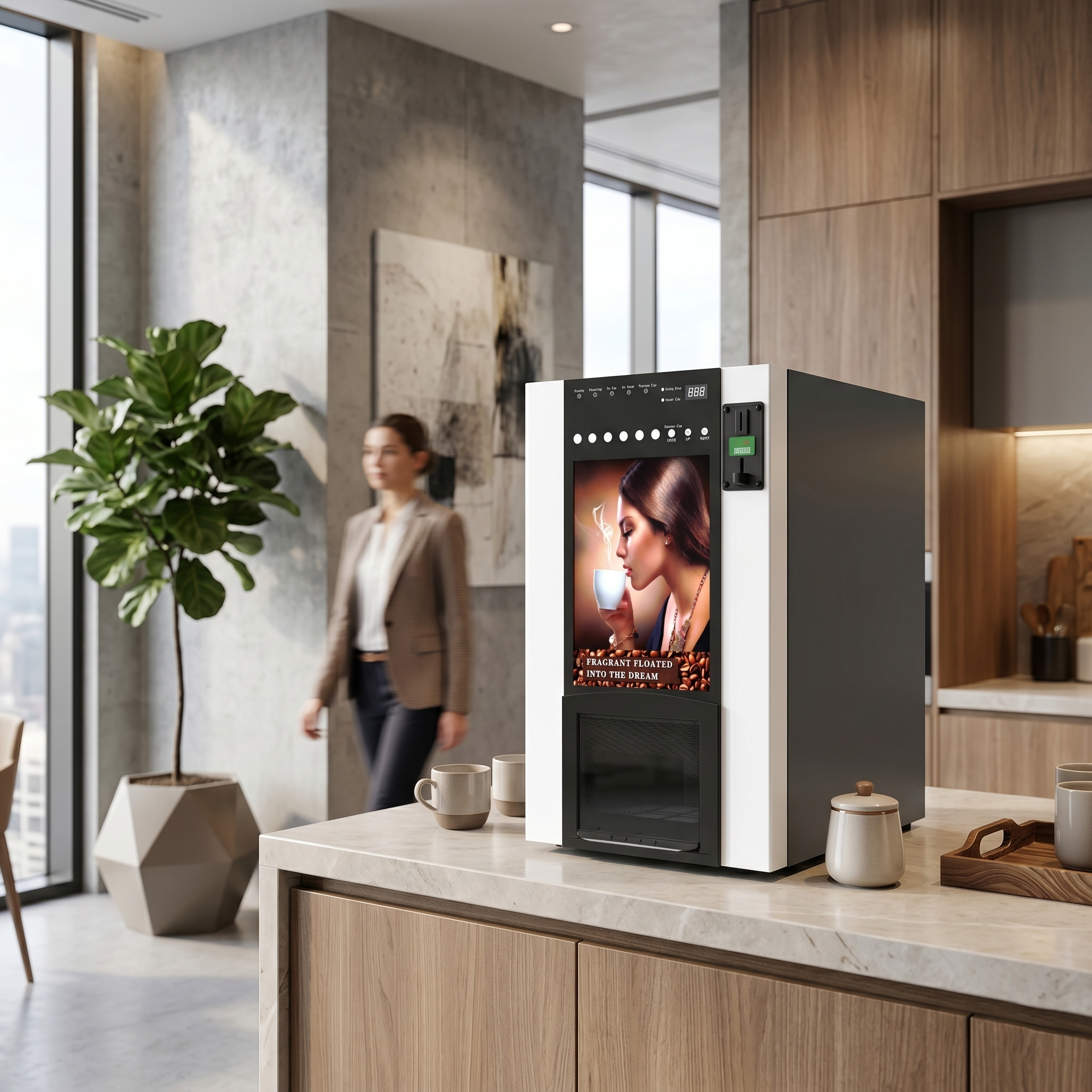 Defining the boundaries between automated kiosks and brick-and-mortar coffee shops requires analyzing their fundamental operational DNA. While both ultimately dispense coffee, their underlying architecture, capital allocation, and daily management routines are diametrically opposed.
Operating model, staffing, and service scope
The traditional cafe operates on a highly interactive, labor-intensive model. A standard shift requires a minimum of 2 to 4 employees, including a dedicated manager, cashiers, and trained baristas. This staffing model allows for a broad service scope, including complex food preparation, table service, and personalized customer interactions. However, it also necessitates a substantial physical footprint, typically ranging from 800 to 1,500 square feet, to accommodate seating, restrooms, and back-of-house operations.
In stark contrast, a robot coffee machine operates with zero on-site staff during active dispensing hours. The operational model shifts from continuous human management to periodic, route-based servicing. Technicians or operators visit the unit 1 to 2 times daily to replenish coffee beans, milk, syrups, and cups, and to perform routine cleaning cycles. The service scope is hyper-focused on beverage dispensing, allowing the entire operation to be condensed into a footprint of less than 30 square feet.
Key technical and service comparison factors
When comparing the technical and service parameters of both models, operators must evaluate how mechanical precision stacks up against human adaptability. Automated systems rely on IoT connectivity for real-time inventory tracking and remote diagnostics, ensuring downtime is minimized. Traditional cafes rely on human oversight for inventory management and equipment maintenance.
The following table outlines the foundational differences between the two models, illustrating why operators are increasingly looking toward automated solutions for specific commercial applications:
| Comparison Factor | Robot Coffee Machine | Traditional Cafe |
|---|---|---|
| Operating Footprint | 15 – 30 sq. ft. | 800 – 1,500+ sq. ft. |
| Active Staffing | 0 (remote monitoring) | 2 – 4 per shift |
| Operational Hours | 24/7/365 | Typically 10 – 14 hours/day |
| Service Scope | Beverages only | Beverages, food, seating |
| Inventory Tracking | Automated (IoT telemetry) | Manual / POS integrated |
How Robot Barista vs Cafe Performance Compares
The true measure of the robot barista vs cafe comparison lies in quantitative performance metrics. Profitability, operational efficiency, and the final product delivered to the consumer must be scrutinized to determine the viability of either investment.
Cost, maintenance, and operating efficiency
Capital expenditure (CAPEX) and operational expenditure (OPEX) profiles differ drastically. Opening a traditional brick-and-mortar cafe typically requires an initial investment ranging from $150,000 to over $400,000, factoring in commercial leases, architectural build-outs, plumbing, and premium espresso equipment. Ongoing OPEX is heavily weighted toward labor, which can consume 30 to 40 percent of gross revenue.
Robot baristas present a leaner financial profile. Initial hardware and installation costs generally range between $20,000 and $60,000. Because labor is removed from the immediate OPEX equation, gross margins per cup are significantly higher. Maintenance for robotic units involves automated, self-cleaning lines and remote software updates, whereas traditional cafes require daily manual backflushing of espresso groups and frequent grinder calibrations by skilled personnel.
Speed, footprint, and hygiene comparison
Speed and spatial efficiency heavily favor automation in high-volume, grab-and-go scenarios. A commercial robot barista is engineered to execute a sequence of movements with absolute precision, typically producing a customized espresso beverage in 45 to 60 seconds. Because the robotic arm and dispensing mechanisms are enclosed, the risk of cross-contamination is virtually eliminated, yielding superior hygiene metrics—a factor that has become increasingly important in post-pandemic retail.
Traditional cafes, while capable of rapid service when adequately staffed, are limited by human biomechanics and spatial constraints behind the counter. During peak hours, the time from order placement to beverage reception can easily exceed 5 to 7 minutes. Furthermore, the hygiene standards of a traditional cafe are entirely dependent on the rigorous compliance of the staff with local health codes, introducing a variable of human error.
Quality, customization, and brand experience
Quality and brand experience represent the most nuanced aspect of this comparison. Human baristas excel at dialing in espresso—adjusting grind size and dose in response to ambient humidity and bean age—and they provide the intangible value of hospitality and intricate latte art. This human touch builds fierce brand loyalty in neighborhood settings.
Conversely, robotic systems guarantee absolute consistency. If a recipe calls for an 18-gram dose yielding 36 grams of liquid over 28 seconds, the robot will execute this exact parameter for every single cup. Consumers receive the exact same flavor profile whether they order at 6:00 AM or midnight. For an in-depth look at how modern automated dispensers achieve this specialty-grade consistency, operators can review product specifications that highlight advanced brewing telemetry.
How to Evaluate the Right Model for Your Location
Selecting the optimal model requires a rigorous evaluation of the intended location, target demographics, and available infrastructure. A highly profitable robotic kiosk in a hospital lobby would likely fail as a neighborhood destination, just as a sprawling artisan cafe would be financially unviable in a tight transit corridor.
Site assessment, demand, and utility requirements
Site assessment begins with utility constraints. A traditional cafe requires heavy commercial infrastructure: 200-amp electrical panels, commercial-grade plumbing with grease traps, and specialized HVAC systems for roasting or cooking ventilation. Securing a location with these utilities—or retrofitting a space to include them—is a major hurdle.
Robot coffee machines are designed for plug-and-play deployment. Most units operate on standard 110V or 220V electrical circuits requiring only 15 to 20 amps. While direct water lines and floor drains are preferred for ease of maintenance, many automated kiosks can operate autonomously using internal 5-gallon fresh and wastewater tanks, drastically expanding the number of viable installation sites.
Sourcing, rollout, and implementation steps
The implementation timeline is another critical differentiator. Sourcing, permitting, and building out a traditional cafe is a protracted process that typically spans 3 to 8 months. Delays in construction, health department inspections, and staff hiring can push launch dates back significantly, delaying revenue generation.
Rolling out a robot barista is highly expedited. Once the hardware is procured, site installation can often be completed in a matter of hours. The entire process—from lease agreement to pouring the first cup of coffee—can reliably be executed in 3 to 6 weeks. This rapid deployment allows operators to test locations and scale their footprint aggressively.
When to choose a robot barista or a traditional cafe
Ultimately, the decision hinges on aligning the operational model with customer intent. If the primary goal of the target demographic is to relax, conduct meetings, or enjoy artisanal food pairings, the traditional cafe remains the superior choice. If the customer prioritizes speed, consistency, and 24-hour accessibility, the automated kiosk wins out.
The following matrix serves as a strategic guide for operators evaluating their next location:
| Location Profile | Primary Consumer Need | Recommended Setup | Expected ROI Timeline |
|---|---|---|---|
| Airport / Train Station | Speed, 24/7 access | Robot Coffee Machine | 8 – 14 Months |
| Suburban Neighborhood | Ambiance, community | Traditional Cafe | 24 – 36 Months |
| Hospital / University | Late-night availability | Robot Coffee Machine | 10 – 18 Months |
| Urban Downtown Core | Premium networking space | Traditional Cafe | 18 – 30 Months |
Further reading:
Key Takeaways
- The most important conclusions and rationale for robot barista vs cafe
- Specs, compliance, and risk checks worth validating before you commit
- Practical next steps and caveats readers can apply immediately
Frequently Asked Questions
Where does a robot coffee machine work better than a traditional cafe?
It fits best in high-traffic sites like airports, offices, campuses, and transit hubs where speed, small footprint, and 24/7 service matter most.
Can a robot barista really match cafe drink quality?
Yes, modern units can deliver consistent espresso-based drinks using calibrated recipes, but they are best for standardized menus rather than highly customized artisanal service.
How much staffing does a robot coffee machine need?
Usually no on-site staff during sales hours. Operators typically restock and clean the unit once or twice daily, depending on traffic and menu mix.
Is a traditional cafe still the better choice for some businesses?
Yes, if your business depends on seating, atmosphere, food service, or personal interaction, a traditional cafe usually creates more value than an automated kiosk.
How can YL Vending help choose between a robot coffee machine and a cafe model?
YL Vending can help match the right solution to your location, traffic level, footprint, and service goals, especially for commercial self-service coffee deployments.

Kely
Post time: Jun-01-2026