

Introduction
For shopping mall developers and operators, a robotic coffee machine factory is more than an equipment supplier; it is the source of a compact retail system designed for high-traffic commercial spaces. This article explains why factory-level sourcing matters, how robotic coffee kiosks fit into mall layouts, and what operational advantages they offer over traditional cafés. Readers will gain a clear view of space efficiency, daily output, maintenance considerations, and revenue potential, making it easier to evaluate whether automated coffee solutions align with modern mall strategy and customer experience goals.
Why Is a Robotic Coffee Machine Factory Strategic for Shopping
The integration of automated food and beverage retail into commercial real estate has shifted from a novelty to a strategic asset. For shopping mall operators, partnering with a dedicated robotic coffee machine factory provides an opportunity to deploy high-margin, low-footprint amenities that operate continuously. Unlike traditional cafes that require extensive plumbing, seating areas, and significant staffing, a robotic coffee kiosk condenses a full-service barista experience into a highly efficient micro-retail format.
A standard commercial robotic coffee unit typically occupies a footprint of just 2.5 to 4.0 square meters, yet it can process up to 150 to 200 cups per day without requiring mid-shift ingredient replenishment. By sourcing directly from a specialized manufacturer, mall developers can integrate these systems seamlessly into high-traffic corridors, maximizing revenue per square meter while offering a premium, tech-forward experience to shoppers.
How Do Mall Operators Use Robotic Coffee Machines?
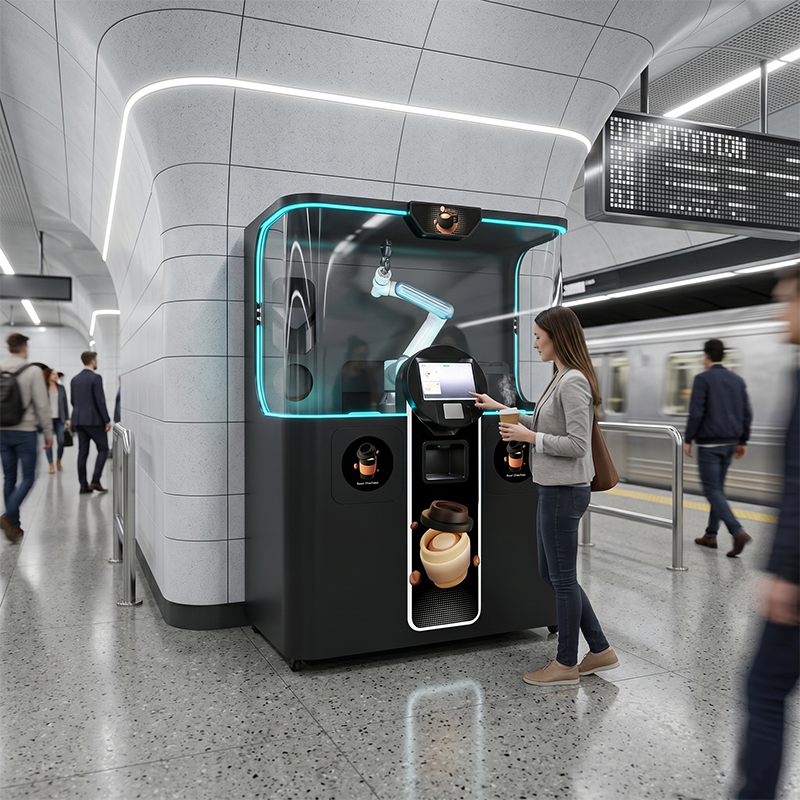
Mall operators utilize robotic coffee machines primarily as foot-traffic monetizers in transitional zones where traditional retail cannot fit. Placed near escalators, cinema entrances, or transit links, these automated kiosks capture impulse purchases from visitors who are unwilling to wait in long lines at conventional coffee shops.
Furthermore, these machines act as interactive attractions. The visual appeal of a 6-axis robotic arm executing precise kinematics to brew, pour, and serve beverages creates a “retailtainment” experience. Operators leverage this dual functionality—beverage service and visual entertainment—to increase dwell time in specific mall wings, often using the machines’ digital screens to cross-promote other mall tenants or upcoming events.
Which Mall Formats Offer the Strongest Business Case?
The strongest business cases for robotic coffee deployments are found in transit-oriented malls, premium lifestyle centers, and mixed-use complexes that combine retail with corporate offices. In these environments, the demand for high-quality, fast-service caffeine spans across standard retail hours and early morning or late evening commuter windows.
Financially, these high-traffic formats allow operators to achieve rapid return on investment (ROI). With an average daily volume of 80 to 120 cups, a strategically placed unit can often recoup its initial capital expenditure within 8 to 14 months. Buyers looking to explore scalable deployment models for these specific environments can review automated retail solutions to match machine specifications with expected mall footfall.
What Should Buyers Evaluate in a Robotic Coffee Machine Factory
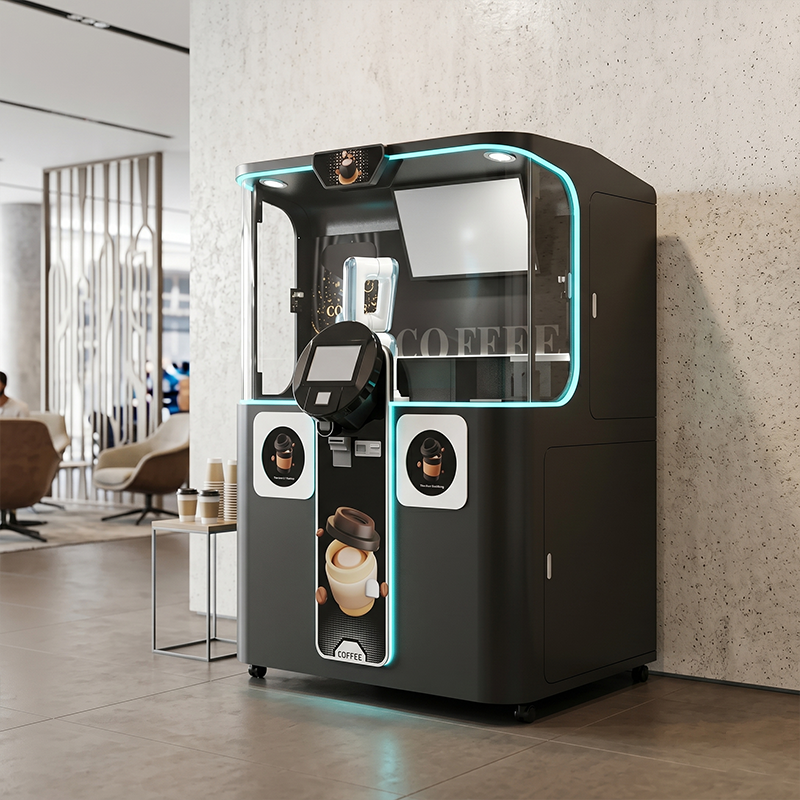
Procuring automated retail hardware requires rigorous evaluation of the manufacturing source. A reputable robotic coffee machine factory does not merely assemble off-the-shelf parts; it engineers a cohesive ecosystem of industrial robotics, fluid dynamics, and cloud-based management software. Buyers must assess the factory’s production capacity, quality control tolerances, and ability to deliver consistent hardware at scale.
Key indicators of a mature manufacturing operation include stringent defect rates (typically maintained below 0.5%) and reliable production lead times of 30 to 45 days for standard fleet orders. Evaluating these metrics ensures that mall operators can synchronize their kiosk rollouts with broader property renovation or grand opening schedules.
Which Technical Specifications and Software Capabilities Matter Most?
At the core of the evaluation are the technical specifications of the brewing and dispensing hardware. Buyers should mandate a 6-axis industrial robotic arm capable of complex, repeatable movements with millimeter precision. The brewing cycle time is another critical metric; top-tier machines can grind, tamp, extract, and serve a customized espresso-based beverage in 45 to 60 seconds, ensuring high throughput during peak hours.
Equally important is the software architecture. A robust cloud telemetry system is non-negotiable for fleet management. The software must provide real-time inventory tracking, predictive maintenance alerts, and remote error diagnostics. This allows a single operator to manage multiple robotic coffee products across different mall locations without needing on-site staff for daily oversight.
How Important Are Customization, Branding, and Payment Integration?
To blend seamlessly into a mall’s architectural aesthetic, the kiosk requires extensive customization options. Factories should offer modular exterior paneling, allowing buyers to apply custom vinyl wraps, localized branding, and bespoke lighting schemes that match the specific zone of the shopping center.
Payment integration must be frictionless and localized. The machine’s point-of-sale (POS) terminal must support tap-to-pay credit cards, mobile wallets (such as Apple Pay and Google Pay), and region-specific QR code payment systems. An intuitive user interface (UI) on a high-definition touchscreen enhances the customer journey, allowing users to easily customize syrup pumps, milk alternatives, and espresso shots.
What Comparison Framework Should Buyers Use?
When selecting a manufacturing partner, procurement teams should utilize a structured comparison framework that weighs production capabilities against long-term operational needs.
| Capability Metric | Tier 1 Robotic Coffee Factory | Tier 2 Assembler |
|---|---|---|
| Production Lead Time | 30–45 Days | 60–90+ Days |
| Hardware Defect Rate | < 0.5% | 2.0% – 5.0% |
| Software Architecture | Proprietary Cloud / API Open | Third-party / Closed system |
| Customization MOQ | 1–5 Units for basic branding | 20+ Units for custom colors |
| Spare Parts Availability | Guaranteed 5–7 years | Variable / Unreliable |
By applying this framework, buyers can filter out superficial assemblers and identify true original equipment manufacturers (OEMs) capable of supporting enterprise-level mall deployments.
How Should Procurement Teams Compare Sourcing, Compliance, and Total Cos
For procurement teams, sourcing a robotic coffee system is a capital-intensive decision that extends far beyond the initial sticker price. A comprehensive evaluation must encompass supplier reliability, strict adherence to international health and safety regulations, and a transparent projection of the Total Cost of Ownership (TCO) over the machine’s lifecycle.
Navigating the global supply chain requires verifying the operational history of the robotic coffee machine factory to ensure they possess the financial stability and engineering depth to support a multi-year deployment.
Which Supplier Due Diligence Checks Reduce Risk?
Effective due diligence begins with comprehensive factory audits. Procurement teams should verify that the manufacturer holds active ISO 9001 (Quality Management) and ISO 14001 (Environmental Management) certifications. These credentials confirm that the factory utilizes standardized, repeatable processes rather than ad-hoc assembly methods.
Additionally, buyers must assess the supplier’s supply chain resilience. This includes checking their sourcing for critical components like the robotic arm, espresso boiler, and pump systems. A factory that relies on highly reputable, globally recognized component brands minimizes the risk of catastrophic hardware failures and simplifies the process of sourcing replacement parts locally.
What Compliance Standards Must Robotic Coffee Systems Meet?
Because robotic coffee machines bridge the gap between heavy machinery and food service, they are subject to dual layers of regulatory compliance. Electrically, the systems must carry CE marks for European markets or UL/FCC certifications for North America, ensuring the high-voltage components (often drawing 3.5kW to 5kW at peak) are safe for public indoor environments.
On the food safety front, strict compliance is mandatory. All surfaces that come into contact with water, coffee beans, or milk must be constructed from food-grade materials, such as 304 or 316 stainless steel and BPA-free food-safe silicones. Certifications like NSF/ANSI 4 (for commercial cooking, rethermalization, and powered hot food holding and transport equipment) provide assurance to local health inspectors that the automated kiosk meets municipal sanitation codes.
Which Cost Drivers Shape Total Cost of Ownership?
Understanding the TCO requires mapping out both Capital Expenditure (CapEx) and Operational Expenditure (OpEx). While the initial hardware purchase is the most visible cost, ongoing expenses dictate the long-term profitability of the mall installation.
| Cost Category | Typical Range (Per Unit) | Frequency / Notes |
|---|---|---|
| Hardware CapEx | $25,000 – $45,000 | One-time purchase (varies by robotic arm brand) |
| Shipping & Installation | $1,500 – $3,500 | One-time (includes crating, freight, and SAT) |
| Software Licensing | $50 – $150 / month | Ongoing SaaS fee for cloud telemetry |
| Preventative Maintenance | $1,000 – $2,500 / year | Annualized cost for parts and technician visits |
| Consumables (Cups, Beans) | Variable by volume | Directly tied to revenue generation |
Procurement must model these drivers against projected daily sales to establish an accurate break-even point and forecast multi-year cash flow.
How Does a Robotic Coffee Machine Factory Support Deployment and
The transition from the factory floor to an active shopping mall corridor is a critical phase that requires meticulous planning and engineering support. A premier robotic coffee machine factory does not abandon the client after shipment; instead, it provides a structured deployment pipeline and robust after-sales infrastructure to ensure maximum uptime.
Because shopping malls have strict operational hours and facility regulations, the physical installation of the kiosk must be executed swiftly, often requiring overnight deployment to avoid disrupting daytime retail traffic.
What Are the Key Steps From Production to Installation?
The deployment pipeline begins at the factory with a Factory Acceptance Test (FAT), where the fully assembled machine runs through hundreds of simulated brewing cycles to verify robotic kinematics, fluid pressure, and software stability. Once cleared, the unit is secured in custom, shock-absorbent crating for global freight.
Upon arrival at the mall, the process shifts to the Site Acceptance Test (SAT). During this phase, local technicians uncrate the machine, connect it to local utilities, and calibrate the robotic arm to account for any micro-shifts that occurred during transit. The SAT concludes with a final health department inspection and a live calibration of the espresso extraction to ensure optimal taste profiles.
How Should Mall Projects Plan Utilities and Footprint Requirements?
Proper site preparation is essential for a seamless installation. Mall project managers must allocate a footprint capable of supporting the machine’s weight, which can exceed 400 kilograms when fully loaded with inventory. Electrical requirements typically mandate a dedicated 220V/50Hz or 110V/60Hz circuit capable of handling a 5kW peak load during the boiler’s heating phase.
Water supply offers two configurations. For permanent installations, direct plumbing with an incoming water pressure of 0.1 to 0.6 MPa is preferred, paired with a commercial-grade inline water filtration system. If direct plumbing is impossible due to the mall’s architecture, factories can configure the machines with internal, easily swappable freshwater and wastewater tanks (e.g., dual 20-liter reservoirs), though this increases the daily labor required for maintenance.
What After-Sales Service, Training, and Spare Parts Support Are Needed?
To guarantee continuous operation, the factory must provide a comprehensive after-sales service level agreement (SLA). This includes remote diagnostic support, where factory engineers can securely log into the machine’s telemetry system to troubleshoot software glitches or reset robotic coordinates within a 4-hour response window.
For hardware issues, a localized network of trained technicians is necessary for on-site repairs. The factory must also guarantee spare parts availability for a minimum of 5 to 7 years. Establishing a localized cache of critical components—such as boiler valves, robotic grippers, and syrup pumps—ensures that mechanical failures result in hours of downtime rather than weeks.
Which Partnership Model Best Fits Long-Term Success
Determining the right financial and operational partnership model is the final step in executing a robotic coffee strategy. The choice of acquisition model dictates the balance of risk, capital outlay, and long-term revenue potential for both the mall operator and the operating franchisee.
Depending on the mall’s core competencies and available capital, stakeholders must align their procurement strategy with their broader real estate and amenity management goals.
When Should Stakeholders Choose Direct Purchase, Leasing, or Revenue Sharing?
A Direct Purchase (CapEx model) is ideal for well-capitalized mall operators or dedicated F&B franchisees who want to retain 100% of the profit margins. While this requires a high initial investment, it yields the highest long-term ROI, provided the operator has the infrastructure to manage daily restocking and maintenance.
Leasing offers an OpEx alternative, allowing operators to deploy machines with minimal upfront costs over a 24- to 36-month term. Alternatively, a revenue-sharing model minimizes risk by allowing the manufacturer or a third-party operator to place the machine at no upfront cost, splitting the daily sales with the mall in exchange for the footprint.
Further reading:
Key Takeaways
- The most important conclusions and rationale for Robotic Coffee Machine Factory
- Specs, compliance, and risk checks worth validating before you commit
- Practical next steps and caveats readers can apply immediately
Frequently Asked Questions
Why are robotic coffee machines suitable for shopping malls?
They fit in 2.5–4.0 m², run continuously, and serve coffee quickly in high-traffic zones like escalators, cinemas, and transit links.
How many cups can a mall robotic coffee machine handle each day?
A standard commercial unit typically handles about 150–200 cups per day without mid-shift ingredient refills, depending on menu and footfall.
What ROI can mall operators expect from a robotic coffee kiosk?
In strong mall locations, many units reach payback in roughly 8–14 months, often with daily sales around 80–120 cups.
What should buyers check when choosing a robotic coffee machine factory?
Review production capacity, defect rate, lead time, cloud management, and after-sales support. YL Vending also offers product and solution matching for deployment planning.
Which features matter most for mall deployment?
Prioritize a 6-axis robotic arm, 45–60 second drink cycles, real-time inventory monitoring, predictive maintenance, and localized cashless payment integration.
Kely
Post time: Jun-07-2026