

Introduction
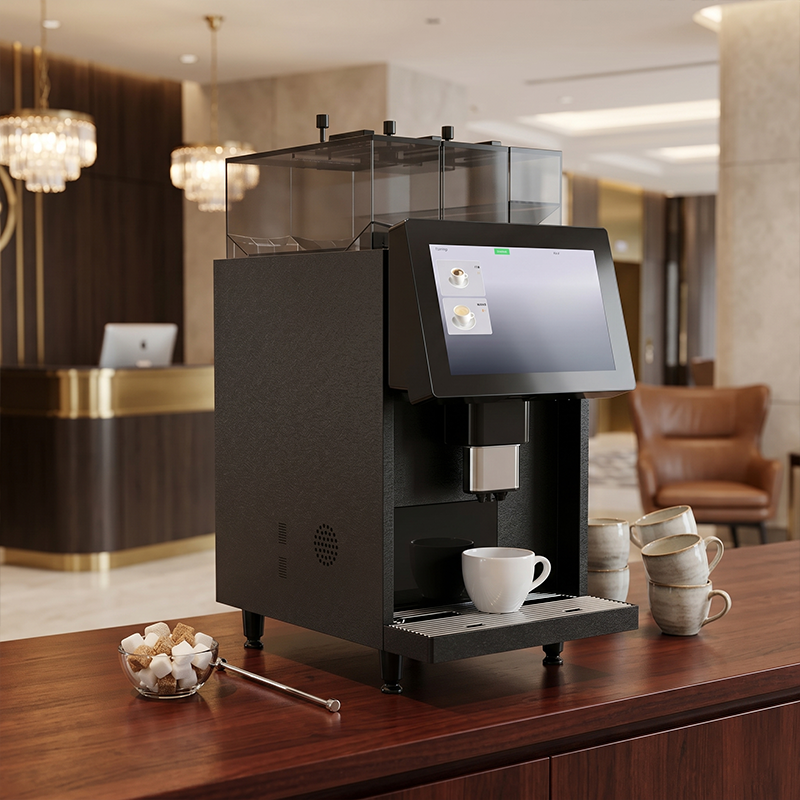
For businesses that need fast beverage service without adding staff, self service coffee machines offer a practical way to improve both operations and customer experience. These systems can reduce labor demands, speed up service during busy periods, and deliver consistent drink quality in offices, hotels, convenience stores, hospitals, and other high-traffic settings. They also help operators use space more efficiently while expanding beverage options. This article explains the main benefits of a self service coffee machine, where it fits best, and what decision-makers should consider when evaluating its value in daily use.
Why Self Service Coffee Machines Matter
The commercial beverage landscape is undergoing a significant transformation driven by automation. At the center of this shift is the modern self service coffee machine, a specialized unit designed to deliver café-quality beverages without requiring dedicated staff. As operators seek to optimize floor space and streamline operations, evaluating the operational impact of these systems becomes an essential strategic exercise.
Labor pressure, service speed, and customer demand
The hospitality and food service sectors face unprecedented labor pressures, with annual turnover rates often exceeding 70% and baseline wages increasing by 15% to 20% in many urban markets in recent years. These economic realities make staffing a dedicated coffee counter financially prohibitive for many non-specialty venues. Simultaneously, consumer expectations for service speed have tightened.
Modern automated systems address this by completing a complex bean-to-cup brew cycle in just 30 to 45 seconds. This rapid throughput significantly reduces queue times during peak morning rushes, allowing facilities to serve a high volume of guests without the bottleneck of manual beverage preparation.
Best-fit sectors and use cases
Automated beverage systems excel in environments characterized by high foot traffic but limited dedicated service staff. Corporate breakrooms, university campuses, airport lounges, and 24-hour convenience stores represent the primary adoption sectors. In healthcare facilities, where shift workers require access to premium caffeination outside of standard cafeteria hours, these machines provide an uninterrupted amenity.
The flexibility of the equipment allows facility managers to convert underutilized square footage into a profitable beverage destination. Because these systems do not require complex plumbing build-outs beyond a standard water line and drain, they can be deployed in lobbies, waiting rooms, and transitional hallways to capture impulse demand.
What a Self Service Coffee Machine Is
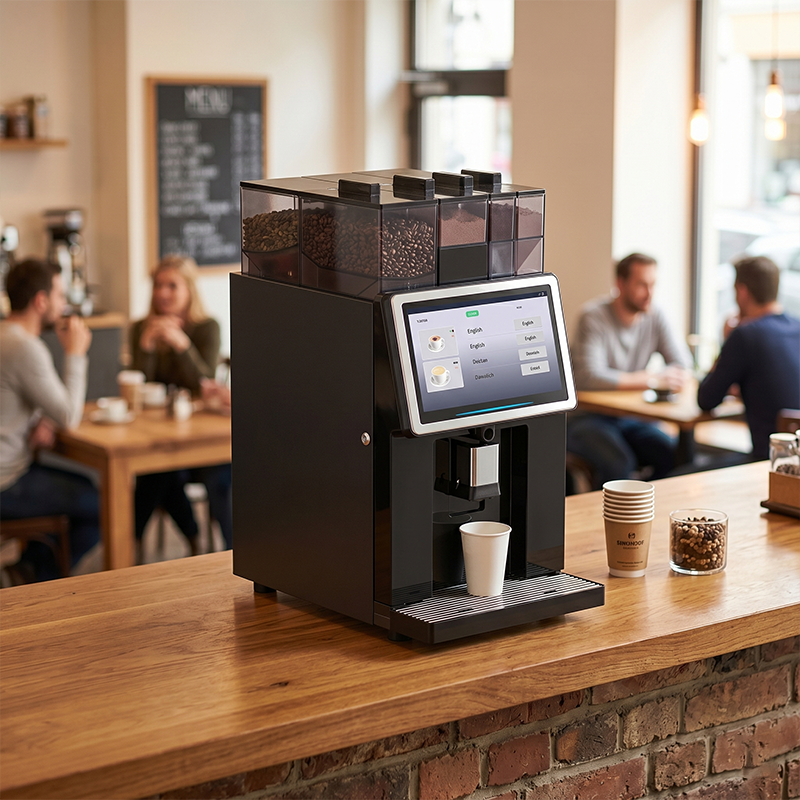
A commercial automated coffee dispenser is fundamentally different from the instant-powder vending machines of previous decades. Today’s equipment functions as an integrated robotic barista, combining precision grinding, pressurized extraction, and advanced fluid dynamics to replicate specialty coffee recipes with strict fidelity.
How it works
The brewing process begins at the touchscreen interface, where users select their beverage parameters. Once initiated, internal burr grinders process whole beans to a specific micron size, dropping the grounds into a mechanized brew group. A high-pressure water pump then forces water heated to an exact 195°F–205°F (90°C–96°C) through the coffee puck at 9 bars of pressure.
For milk-based drinks like lattes and cappuccinos, a secondary internal system draws, heats, and aerates liquid milk or soluble dairy powder. This component layers the frothed milk seamlessly into the cup before the final espresso shot is dispensed, mimicking the exact build of a traditional barista-made beverage.
Key business benefits
The primary advantage of deploying a self service coffee machine is the guarantee of product consistency. By removing human error from the tamping, extracting, and frothing stages, businesses ensure that every beverage meets strict quality standards regardless of the time of day. Furthermore, these machines eliminate the perishable waste associated with batch-brewing filter coffee, which often degrades and must be discarded after 30 to 45 minutes on a hot plate.
Operating 24 hours a day without breaks, overtime pay, or shift scheduling, the equipment maximizes revenue windows. This continuous availability ensures that late-night workers, early travelers, and off-peak visitors receive the same high-quality product as those arriving during the morning rush.
Performance metrics to track
To gauge the success of an automated coffee program, operators must monitor specific performance indicators. The most critical metric is machine uptime, which should consistently exceed 98% to avoid frustrating end-users and losing sales. Telemetry systems built into modern machines allow operators to track this remotely.
Daily dispense volume, often tracked as Cups Per Day (CPD), dictates operational profitability. Most commercial models require a minimum threshold of 40 to 60 CPD to justify the capital expenditure and daily maintenance labor. Additionally, tracking the ratio of black coffee to complex milk-based drinks helps operators optimize inventory purchasing and refine refill schedules.
Self Service vs Traditional Coffee Service
Deciding between an automated beverage program and a traditional staffed coffee bar requires a thorough analysis of operational capabilities, overhead costs, and spatial constraints. While traditional cafes offer a personalized, artisanal experience, self-service setups prioritize efficiency, consistency, and low overhead.
Main comparison criteria
When comparing the two models, operators must evaluate quality consistency, service speed, and physical footprint. Traditional setups require a minimum of 150 to 200 square feet to accommodate bulky espresso machines, under-counter refrigeration, three-compartment sinks, and queueing areas. In contrast, an automated unit typically requires an incredibly lean footprint.
| Comparison Criteria | Traditional Staffed Cafe | Automated Self-Service Unit |
|---|---|---|
| Average Service Speed | 90–120 seconds per order | 30–45 seconds per order |
| Space Requirement | 150+ sq. ft. | 5–10 sq. ft. |
| Beverage Consistency | Highly variable (barista skill) | 100% uniform (programmed) |
| Operating Hours | Limited by shift schedules | 24/7 continuous operation |
| Menu Flexibility | Unlimited custom requests | High, but limited to presets |
Operational cost and staffing differences
The most drastic divergence between the two models lies in operating expenses. In a traditional cafe, labor constitutes a massive portion of the cost per cup, often adding $1.20 to $1.80 per beverage depending on local minimum wages, payroll taxes, and daily throughput. An automated machine reduces the labor cost per cup to mere pennies, accounting only for the 15 to 20 minutes of daily cleaning and restocking performed by existing facility staff.
Furthermore, traditional operations experience an average ingredient waste rate of 8% to 12% due to spillage, incorrect orders, and expired batch brews. Automated systems dose ingredients with milligram precision, driving waste rates below 1.5% and significantly improving gross margins on every drink poured.
Operational and Technical Requirements
Integrating commercial beverage equipment into a facility requires precise technical planning. Unlike residential appliances, commercial machines demand dedicated utility lines, strict adherence to health codes, and a structured approach to daily maintenance to ensure longevity and safety.
Core machine specifications
The physical specifications of commercial equipment dictate site selection. A standard high-capacity unit typically measures around 22 inches wide, 24 inches deep, and 35 inches tall, weighing upwards of 120 pounds when empty. Due to this weight, the supporting countertop or cabinetry must be structurally reinforced.
Electrical requirements are equally stringent. Commercial machines rely on dual heating blocks or large boilers, necessitating a dedicated 220V/20A circuit or a robust 110V/20A circuit capable of handling a peak power draw of 1,500W to 3,000W. Standard 15A wall outlets shared with other appliances are generally insufficient and pose a fire hazard under continuous commercial loads.
Safety, utility, and compliance needs
Compliance with commercial sanitation and safety standards is mandatory. In North America, equipment must carry NSF/ANSI 4 certification for food safety and UL certification for electrical safety, ensuring the machine can be legally operated in a commercial environment and easily pass local health department inspections.
Water quality is another critical technical requirement. Plumbed machines require a continuous water supply operating between 20 and 60 psi. To prevent calcium scale buildup—the leading cause of boiler failure—and to ensure optimal flavor extraction, operators must install an inline commercial water filtration system, such as a multi-stage carbon filter or a reverse osmosis (RO) unit, depending on local municipal water hardness levels.
Installation and replenishment planning
Successful deployment relies heavily on a structured replenishment and maintenance protocol. High-volume models feature internal hoppers capable of holding 2 to 4 pounds of whole beans, which yields approximately 100 to 200 cups before requiring a refill. Facility managers must establish a daily standard operating procedure (SOP) that includes emptying grounds bins, running automated cleaning cycles with proprietary detergent tablets, and wiping down touchscreens.
Partnering with a reputable vendor for a self service coffee machine often includes preventative maintenance contracts. These agreements ensure that trained technicians replace worn O-rings, descale internal tubing, and recalibrate grinders every 10,000 to 15,000 cycles, thereby extending the operational lifespan of the asset and preventing costly emergency breakdowns.
How Buyers Should Evaluate Options
Acquiring commercial coffee equipment represents a significant financial commitment. Buyers must look beyond the initial sticker price and conduct a comprehensive Total Cost of Ownership (TCO) analysis, weighing capital expenditures against projected revenue, operational savings, and available financing structures.
When the investment makes sense
The investment becomes highly logical when the projected daily volume easily clears the break-even point. With the Cost of Goods Sold (COGS)—including beans, milk, cups, and syrups—averaging between $0.35 and $0.55 per cup, operators can achieve gross margins of 80% to 85% when selling specialty beverages at $2.50 to $4.00.
| Financial Metric | Outright Purchase | Equipment Leasing |
|---|---|---|
| Upfront Capital | $3,000 – $15,000 | $0 – $500 (Installation) |
| Monthly Expense | $0 (Owned asset) | $150 – $400 (Lease payment) |
| Maintenance | Owner’s responsibility | Often included in lease terms |
| Tax Treatment | Section 179 depreciation | Deductible operating expense |
| Break-Even Volume | 12–18 months at 50 cups/day | Immediate positive cash flow |
How to balance cost, leasing, and ROI
Balancing the acquisition method is crucial for optimizing Return on Investment (ROI). Purchasing equipment outright for $3,000 to $15,000 yields the highest long-term profitability but ties up operating capital and leaves the buyer responsible for out-of-warranty repairs. This route is typically best for well-capitalized facilities with internal maintenance teams.
Leasing, conversely, preserves cash flow and frequently bundles preventative maintenance and emergency service into a predictable monthly fee of $150 to $400. Buyers must evaluate their internal maintenance capabilities and risk tolerance; venues with high throughput and limited technical staff generally benefit more from a full-service lease, while facilities looking to maximize long-term asset value and minimize ongoing contract obligations may prefer capital expenditure.
Further reading:
Key Takeaways
- The most important conclusions and rationale for self service coffee machine
- Specs, compliance, and risk checks worth validating before you commit
- Practical next steps and caveats readers can apply immediately
Frequently Asked Questions
What is the main benefit of a self service coffee machine?
It serves café-style drinks fast without dedicated staff, helping businesses cut labor costs, reduce queues, and keep coffee available throughout the day.
Where does a self service coffee machine work best?
It fits high-traffic sites with limited staff, such as offices, campuses, hospitals, airports, convenience stores, and hotel lobbies.
How fast can a self service coffee machine make a drink?
Most commercial bean-to-cup models complete a drink in about 30 to 45 seconds, which helps speed service during busy periods.
How many cups per day make a self service coffee machine worthwhile?
A common target is 40 to 60 cups per day, though exact profitability depends on drink pricing, ingredient cost, and service needs.
How can YL Vending help with a self service coffee machine setup?
YL Vending can help you choose a suitable model, match it to your location’s traffic, and support deployment for commercial beverage service.

Kely
Post time: May-31-2026