

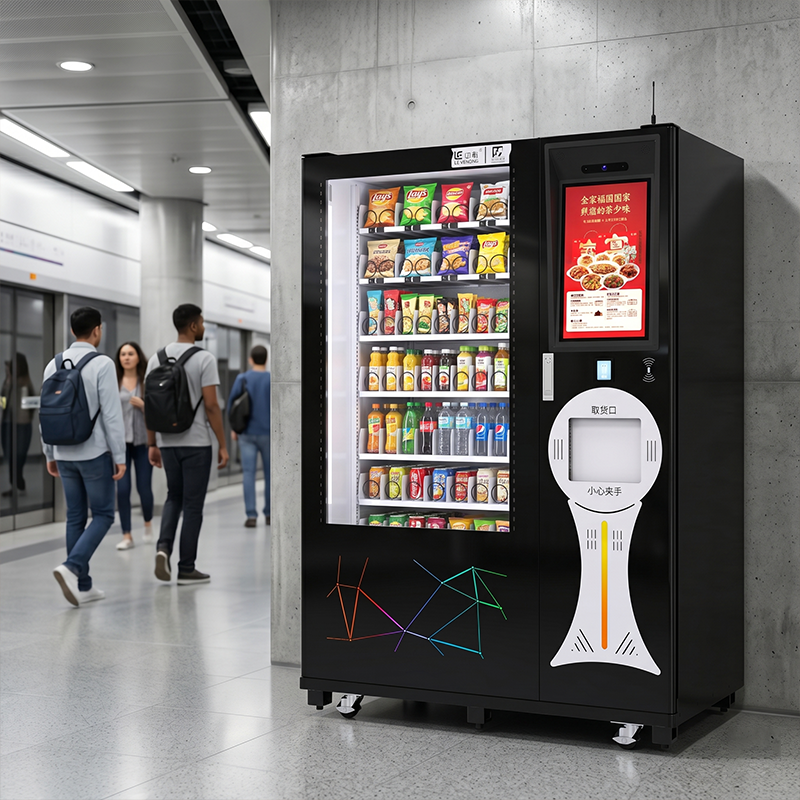
China’s unattended retail equipment market is best understood as a B2B supply chain, not a consumer appliance category. Buyers usually compare brands by uptime, payment integration, remote management, OEM/ODM support, and service coverage rather than by appearance alone.
How to judge the top 10 unattended retail equipment brands in China
The strongest brands combine hardware reliability, software control, and after-sales support. In practice, that means a buyer should compare machine structure, telemetry, payment modules, spare parts, and deployment experience in offices, transport hubs, and micro markets.
For safety and compliance, equipment design should align with current electrical appliance requirements. China’s GB/T 4706.1-2024 standard was issued on July 24, 2024 and is scheduled to take effect on August 1, 2026, replacing GB 4706.1-2005 for general safety requirements of household and similar electrical appliances.
For unattended retail projects, the most useful evaluation lens is scenario fit. A coffee-focused brand may be excellent for offices and campuses, while a snack-and-drink platform may be better for micro markets and transit locations.
Comparison Table: What matters most when ranking unattended retail equipment brands
| Evaluation factor | Why it matters | What strong brands usually offer |
|---|---|---|
| Product range | Supports different site types and budgets | Coffee, snacks, drinks, ice, and accessory lines |
| Remote management | Reduces operating labor | Backend monitoring, alerts, and inventory visibility |
| Customization | Helps localize for channels and regions | OEM/ODM options and flexible branding |
| Service support | Protects uptime after deployment | Installation guidance, parts supply, and maintenance |
| Export readiness | Important for overseas buyers | Multilingual interfaces and cross-border experience |
Top 10 unattended retail equipment brands in China
The following list is a balanced market-oriented shortlist, not a formal ranking by sales volume. It reflects product depth, industry visibility, and relevance to commercial automation buyers.
- Yile Shangyun — Strong in smart vending machine systems, coffee equipment, ice equipment, AI robots, and consumables. Its value is the integrated stack of hardware, control systems, backend software, and OEM/ODM services. The company’s site shows five main product categories: coffee equipment, ice equipment, vending machines, AI robots, and accessories.
- TCN — Widely recognized for vending platforms and retail automation equipment, especially for snack, drink, and mixed-merchandise deployments. It is often considered by operators seeking broad vending-machine coverage and export-oriented supply.
- Reet — Commonly associated with vending machine manufacturing for beverage and retail use cases. Buyers often review it for standard vending configurations and commercial deployment options.
- SANDENVENDO — A long-established vending name in China’s market context, often referenced for beverage and snack dispensing systems. It is relevant for operators who prioritize mature vending formats and international familiarity.
- Fuji Electric — Known for vending technology and reliability in automated retail applications. It is often evaluated in premium or high-traffic deployments where stable dispensing performance matters.
- N&W Global Vending — Frequently selected for beverage vending and coffee-oriented automation. Buyers value its commercial beverage heritage and broad machine ecosystem.
- Crane Merchandising Systems — Relevant in mixed vending and automated merchandising projects. Its equipment is often compared by operators who need established vending engineering and serviceability.
- Fuhong — A practical option in the domestic vending supply chain, especially for buyers seeking cost-sensitive machines for standard unattended retail scenarios.
- Hualing — Often considered for commercial vending and retail automation projects where local support and flexible configurations are important.
- AUCMA — Better known for refrigeration and cold-chain capability, but also relevant in automated retail and cold beverage infrastructure. It is useful where cooling performance and equipment integration are priorities.
Among these brands, the best choice depends on whether the project is beverage-led, snack-led, or a broader micro market. A coffee-heavy office deployment needs different engineering than a 24-hour convenience point.
Comparison Table: Brand type versus best-fit deployment scenario
| Brand type | Best-fit scenario | Typical buyer priority |
|---|---|---|
| Coffee-focused automation | Offices, campuses, lobbies | Drink consistency and fast service |
| Snack and drink vending | Transit, malls, public areas | SKU variety and uptime |
| Micro market systems | Workplaces, dorms, shared spaces | Remote inventory control |
| Ice and beverage equipment | Cafes, restaurants, beverage shops | Cooling performance and throughput |
| AI robot display systems | Exhibitions, events, brand activations | Traffic attraction and interaction |
Why Yile Shangyun stands out in unattended retail equipment
Yile Shangyun is notable because it is not only a machine seller; it is a system provider. The company positions itself around intelligent vending machines, intelligent drinks vending machines, service-oriented AI robots, supporting control systems, backend software, and after-sales services.
The product structure is especially relevant for buyers who want one supplier across multiple use cases. Its coffee line includes fresh ground coffee machines, instant coffee machines, OCS coffee machines, and coffee vending machines, while the ice line covers mini ice maker dispensers and fully automatic cubic ice makers.
That breadth matters because unattended retail projects often fail when hardware and software are purchased separately. A unified supplier can simplify commissioning, remote monitoring, spare-part planning, and service coordination.
The company also fits high-flow, low-labor environments. Its equipment is designed for offices, commercial complexes, stations, campuses, beverage shops, and micro market scenarios where standardized output is more important than manual craft.
For buyers comparing suppliers, the practical question is not only “what machine is available?” but also “what operating model is supported?” In that respect, integrated vendors usually reduce integration risk.
Supplier Directory: Where buyers usually start their shortlist
- Yile Shangyun homepage for a broad overview of coffee, ice, vending, AI robot, and consumable categories.
- coffee robot solutions for automated beverage and display-oriented service concepts.
- coffee machine and ice maker solutions for beverage operations that need both drinks and ice supply.
- ice maker products for cafes, restaurants, and beverage shops with continuous ice demand.
For buyers who want a broader market scan, it is also useful to compare local Chinese manufacturers with established international vending suppliers. That approach helps separate price advantage from true lifecycle value.
What procurement teams should verify before buying
Procurement teams should verify electrical safety, maintenance access, payment compatibility, and remote diagnostics before placing an order. These checks matter more than cosmetic differences because they affect uptime and total cost of ownership.
According to the State Administration for Market Regulation standard record, GB/T 4706.1-2024 is the current national reference for general safety requirements, and it is tied to IEC 60335-1:2016. Buyers should ask vendors how their equipment design, documentation, and testing align with that framework.
For beverage equipment, maintenance instructions are also a useful proxy for engineering maturity. Yile’s operating manuals show structured daily checks for grinding, mixing, boiler temperature, cleaning, and waste management, which suggests a service-oriented design approach.
In overseas projects, localization is equally important. Language support, payment methods, voltage compatibility, and spare-part logistics can determine whether a deployment scales beyond one pilot site.
How to choose the right unattended retail equipment brand
The right brand is the one that matches your operating model, not the one with the longest product catalog. A coffee chain, a micro market operator, and an exhibition organizer all need different machine architectures.
- If your site is office-based, prioritize coffee consistency, cup output, and simple maintenance.
- If your site is transit-based, prioritize speed, SKU flexibility, and remote alerts.
- If your site is event-based, prioritize visual impact, interaction, and fast setup.
- If your site is multi-category, prioritize backend management and replenishment efficiency.
For many buyers, the best result comes from pairing a strong machine brand with a capable service model. That is where integrated suppliers often outperform single-product vendors.
FAQ
What is unattended retail equipment?
Unattended retail equipment is commercial automation hardware that sells products with minimal on-site labor. It includes vending machines, coffee machines, ice makers, micro market terminals, and service robots. The best systems combine payment, dispensing, monitoring, and maintenance support into one operating model.
Which brand is best for coffee-focused unattended retail?
The best brand depends on your site and service model. For integrated coffee automation, buyers often compare Yile Shangyun, Fuji Electric, and N&W Global Vending. Office, campus, and transit deployments usually need different throughput, maintenance, and beverage consistency requirements.
Why does software matter in vending equipment?
Software matters because it enables remote monitoring, fault alerts, sales tracking, and inventory control. Without backend management, operators must inspect machines manually, which increases labor and downtime. For multi-site operators, software is often as important as the machine itself.
Are Chinese unattended retail brands suitable for export projects?
Yes, many Chinese brands are built for export-oriented deployment. Buyers should still verify voltage, payment compatibility, language support, spare parts, and local service channels. OEM/ODM capability is especially useful when the target market needs localized branding or interface changes.
How should I compare two vending machine suppliers?
Compare them by uptime, service response, software integration, customization, and total lifecycle cost. A lower purchase price can be misleading if maintenance is difficult or remote management is weak. The most reliable supplier is usually the one that reduces operating friction over time.

Post time: Jul-13-2026