

Introduction
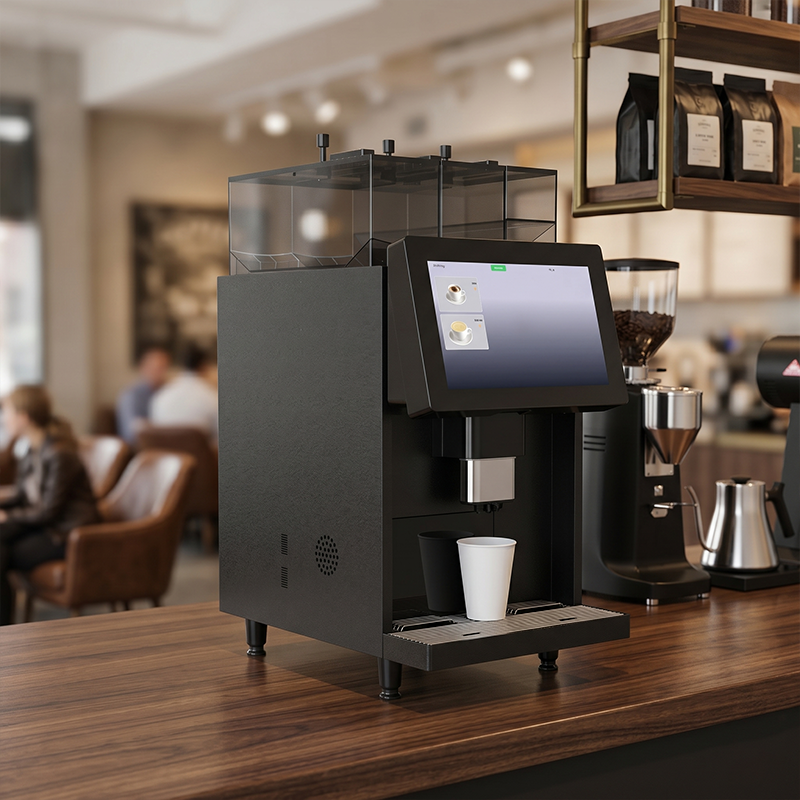
A bean to cup coffee vending machine is an automated system that grinds whole beans, brews each cup on demand, and often dispenses milk-based drinks with minimal staff involvement. Unlike instant or capsule machines, it is designed to deliver fresher flavor, more consistent quality, and faster service in offices, hotels, convenience stores, and other commercial settings. Understanding how this type of bean to cup coffee machine works helps explain why it is becoming a practical choice for operators balancing labor costs, maintenance, drink variety, and customer expectations. The following article outlines its core features, operating process, and business advantages.
Why Bean-to-Cup Coffee Machines Are Growing in Commercial Use
The commercial beverage sector is experiencing a structural shift away from traditional batch brewers and capsule-based systems toward automated whole-bean extraction. This transition is driven by a convergence of operational constraints and evolving consumer palates, forcing facility managers and food service operators to rethink their coffee architecture.
Labor and service pressure
The hospitality and food service sectors face chronic labor shortages and high staff turnover, which directly impact beverage consistency. Training a traditional barista requires significant time and financial investment, often exceeding $1,500 per employee in specialty environments. Automated bean-to-cup systems eliminate this dependency by standardizing the extraction parameters. By removing the manual variables of grinding, tamping, and milk texturing, operators can maintain a consistent output regardless of staff experience levels, drastically reducing labor overhead and training hours.
Rising beverage quality expectations
Modern consumers have developed highly sophisticated palates, driven by the proliferation of third-wave coffee shops. Expectations for extraction yields between 18% and 22% and precise milk micro-foam are no longer confined to boutique cafes. Commercial venues are now expected to deliver specialty-grade beverages. Bean-to-cup machines meet this demand by freshly grinding beans for each order, preserving volatile aromatics that degrade within minutes of milling. This on-demand processing ensures that the final cup meets the sensory profiles expected by discerning customers, maintaining an 80+ Specialty Coffee Association (SCA) equivalent quality in automated environments.
Best-fit commercial environments
To understand the broader market context and applications, it is crucial to identify where these machines deliver maximum utility. The most effective deployments occur in medium-to-high throughput environments such as corporate offices with 50 to 500 employees, airport lounges, hotel breakfast bars, and premium convenience stores. In these settings, the daily volume typically ranges from 100 to 400 cups per day. This volume is sufficient to keep the bean hoppers turning over rapidly—preventing staling—while easily justifying the capital expenditure through high daily utilization rates.
What a Bean-to-Cup Coffee Vending Machine Is
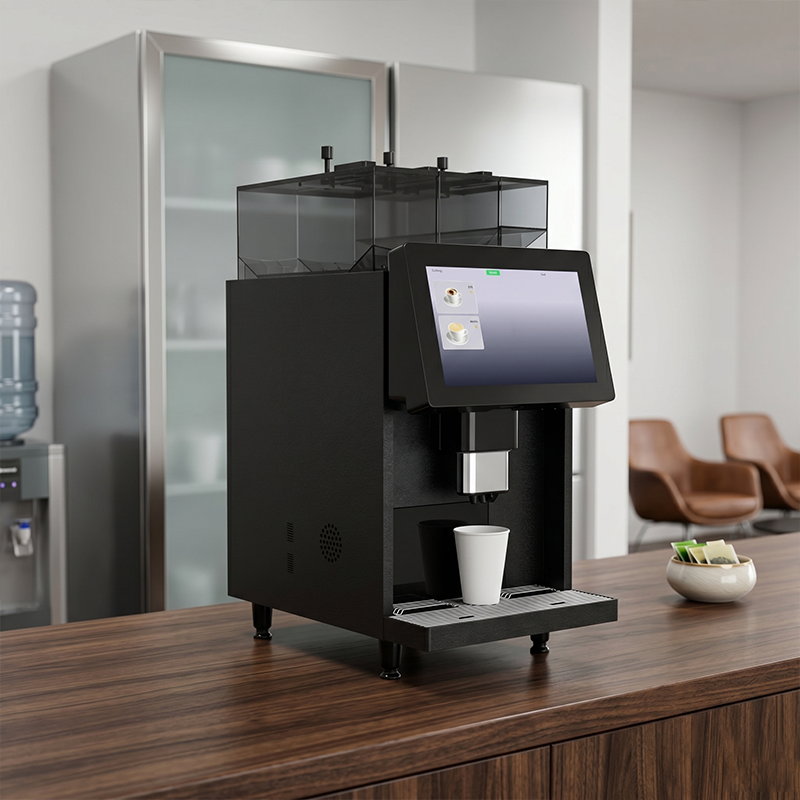 A bean-to-cup coffee vending machine is an integrated, fully automated electromechanical system designed to execute the entire coffee brewing lifecycle—from whole bean storage to final liquid dispensing—within a single, self-contained chassis. Unlike traditional vending machines that rely on soluble powders or pre-ground vacuum-sealed pods, these units function as automated micro-roasteries and espresso bars.
Core machine components
The architecture of a commercial bean-to-cup system relies on several critical sub-assemblies working in tandem. At the top of the unit, airtight hoppers store the whole beans, feeding directly into an integrated grinder—typically featuring 64mm to 83mm flat or conical steel burrs. The ground coffee is channeled into a motorized brew group that compresses the puck. Simultaneously, a thermal management system, often utilizing dual thermoblocks or multi-boiler setups, heats the water to precise extraction temperatures. For milk-based drinks, an internal frothing module aerates liquid milk or processes high-grade milk powder.
| Component | Typical Commercial Specification | Primary Function |
|---|---|---|
| Grinder Burrs | 64mm – 83mm Flat Steel | Ensures uniform particle size distribution |
| Brew Group | 7g – 21g variable capacity | Tamps grounds and handles pressurized water flow |
| Thermal System | Dual PID-controlled Boilers | Maintains 90°C – 96°C brew temperature |
| Pump | 9 – 15 Bar Rotary or Vibratory | Delivers necessary pressure for espresso extraction |
How the drink preparation process works
The drink preparation sequence is a highly synchronized electromechanical process. Upon user selection, the machine’s programmable logic controller (PLC) triggers the grinder to mill a precise dose, typically between 9 and 14 grams for a standard single shot. The grounds are deposited into the brew chamber, where a mechanical piston compresses them with up to 20 kilograms of tamping force. The water pump then forces heated water through the compacted puck at a pressure of 9 to 15 bar. The extraction phase lasts exactly 25 to 30 seconds, optimizing the dissolution of soluble flavor compounds. Finally, the spent puck is ejected into a waste bin, and the system flushes the lines to prepare for the next order.
Specifications that affect cup quality
Cup quality is heavily dictated by the machine’s internal tolerances and hardware specifications. Burr alignment and motor RPM determine the uniformity of the coffee grounds; excessive fines will cause over-extraction and bitterness, while boulders lead to sour, under-extracted shots. Temperature stability is equally vital; high-end commercial units utilize Proportional-Integral-Derivative (PID) controllers to maintain water temperature within a strict 0.5°C variance. Furthermore, the capacity of the brew chamber dictates beverage strength—machines limited to a 9-gram maximum dose cannot produce a true double espresso in a single cycle, requiring dual grinding phases that slow down throughput.
How Bean-to-Cup Machines Compare on Cost and Performance
When evaluating commercial coffee infrastructure, operators must move beyond the initial sticker price and conduct a comprehensive analysis of the Total Cost of Ownership (TCO). Bean-to-cup machines represent a higher initial capital expenditure compared to pod or soluble systems, but their unit economics often yield superior long-term financial performance.
Total cost of ownership factors
The TCO of a commercial machine encompasses capital expenditure (CapEx), operational expenditure (OpEx), maintenance, and consumables. Initial CapEx for commercial-grade bean-to-cup systems typically ranges from $3,000 for low-volume office units to over $15,000 for high-throughput, dual-milk systems used in busy retail environments. However, the consumable costs heavily favor the whole-bean approach. Commodity and specialty whole beans cost approximately $10 to $20 per pound, translating to a per-cup cost of $0.15 to $0.25 for a standard 12-gram dose. In contrast, proprietary capsule systems often cost $0.60 to $1.20 per pod. Over a lifecycle of 50,000 cups, this consumable arbitrage easily offsets the higher initial hardware investment.
Key buyer comparison criteria
When comparing different models, commercial buyers must scrutinize throughput capacity, footprint, and digital integration. Throughput is measured in cups per hour; a machine rated for 50 cups per hour will create unacceptable bottlenecks in an environment requiring 120 cups during a morning rush. Footprint and utility requirements—such as the need for a dedicated 220V power supply or direct plumbing—dictate installation feasibility. Furthermore, modern operators prioritize machines equipped with telemetry and IoT connectivity. These digital dashboards provide real-time data on consumable levels, preventative maintenance alerts, and granular sales analytics, allowing operators to optimize their fleet solutions across multiple locations.
Drink quality and menu range comparison
The spectrum of drink quality and menu versatility varies significantly across machine tiers. Entry-level commercial machines often rely on soluble milk powders and single bean hoppers, restricting the menu to basic black coffee and acceptable, but not premium, milk drinks. High-end systems feature dual bean hoppers (allowing for decaf or single-origin offerings), integrated fresh milk refrigerators with variable micro-foam aeration, and automated syrup dosing modules. This expanded capability allows operators to serve a menu of 20 to 30 distinct beverages—ranging from flat whites to flavored macchiatos—rivaling the output of an independent specialty cafe.
What Buyers Should Check Before Choosing a Commercial Machine
Procuring a commercial bean-to-cup machine requires rigorous due diligence to ensure the hardware aligns with the facility’s operational realities. A mismatch between machine specifications and environmental demands leads to accelerated hardware failure, poor beverage quality, and frustrated end-users.
Matching machine capacity to demand
The most common procurement error is under-specifying machine capacity. Buyers must evaluate peak-hour demand rather than daily averages. If an office of 100 people demands 60 coffees between 8:00 AM and 9:00 AM, a machine rated for a maximum of 40 cups per hour will fail to meet user expectations and suffer premature wear on its brew group and pump.
| Demand Category | Daily Volume | Peak Hourly Volume | Recommended Hopper Capacity | Typical Environment |
|---|---|---|---|---|
| Low Volume | < 50 cups | 15 cups | 500g – 1kg | Small office, boutique retail |
| Medium Volume | 50 – 150 cups | 40 cups | 1kg – 2kg | Mid-sized corporate, car dealership |
| High Volume | 150 – 400+ cups | 100+ cups | Dual 1.5kg+ | Airport lounge, university dining |
Compliance, hygiene, and serviceability
Commercial environments are subject to strict health codes, making compliance and hygiene non-negotiable. Buyers must verify that the machine carries relevant certifications, such as NSF/ANSI 4 (for commercial cooking, rethermalization, and powered hot food holding and transport equipment) and UL safety ratings. Because milk proteins degrade rapidly and can harbor dangerous bacteria, machines utilizing fresh milk must feature automated, programmable flush cycles and rigorous daily chemical cleaning protocols. Systems that automate this cleaning process—saving staff 15 to 20 minutes of manual disassembly per day—drastically reduce labor costs and liability risks.
Practical evaluation and procurement steps
Before finalizing a purchase, facility managers must assess the site’s water quality and utility access. Coffee is 98% water, and commercial machines are highly sensitive to mineral buildup. Hard water (exceeding 3 to 4 grains per gallon) will scale the internal boilers, leading to catastrophic failure. Procurement steps must include water testing and the installation of appropriate filtration—such as inline carbon filters or reverse osmosis systems with remineralization bypasses. Additionally, buyers should evaluate Service Level Agreements (SLAs) with distributors, ensuring guaranteed response times (typically 24 to 48 hours) for preventative maintenance and emergency repairs.
How to Decide Whether a Bean-to-Cup Machine Is Worth the
Determining whether a bean-to-cup system warrants the capital outlay requires balancing the tangible financial returns against the intangible benefits of improved stakeholder satisfaction. For commercial operators, this decision hinges on specific use cases and a clear understanding of the break-even horizon.
Use cases that justify premium spending
In retail and convenience environments, the investment is justified by direct revenue generation and high profit margins. Selling a premium automated latte for $3.50 to $5.00, when the cost of goods sold (COGS) is merely $0.40 to $0.60, yields gross margins exceeding 85%. At a modest volume of 50 cups per day, a $6,000 machine can achieve total ROI in under 5 months. In non-retail environments like corporate offices, the justification shifts to human resources metrics. Providing specialty-grade coffee acts as a highly visible employee perk, aiding in talent retention and reducing the aggregate time employees spend leaving the building to purchase coffee at external cafes.
Balancing cost, quality, and operational fit
Ultimately, operators must balance the upfront cost against quality requirements and operational fit. A simple break-even analysis provides clarity: if upgrading from a pod machine (at $0.65 per cup) to a bean-to-cup machine (at $0.20 per cup) saves $0.45 per beverage, a premium $4,500 machine pays for itself after exactly 10,000 cups. For an office consuming 100 cups a day, the hardware is entirely amortized in just 100 working days. By mapping these financial metrics against the facility’s capacity requirements and available labor for maintenance, buyers can confidently deploy automated coffee solutions that deliver both fiscal responsibility and exceptional in-cup quality.
Further reading:
Key Takeaways
- The most important conclusions and rationale for bean to cup coffee machine
- Specs, compliance, and risk checks worth validating before you commit
- Practical next steps and caveats readers can apply immediately
Frequently Asked Questions
What does a bean-to-cup coffee vending machine do?
It stores whole beans, grinds them fresh for each order, brews automatically, and dispenses the drink from one machine.
How is a bean-to-cup machine different from pod or instant vending machines?
It uses whole beans instead of capsules or soluble powder, giving fresher aroma, better taste, and more café-style drink quality.
Where do bean-to-cup coffee machines work best?
They fit offices, hotels, lounges, and convenience stores, especially sites serving about 100 to 400 cups per day.
How does a bean-to-cup machine improve consistency?
It automates grinding, dosing, tamping, brewing, and rinsing, so each cup is more uniform even with limited staff training.
Can YL Vending provide commercial bean-to-cup coffee machine solutions?
Yes. YL Vending offers commercial coffee vending solutions and machine options for businesses needing automated fresh-bean beverage service.

Kely
Post time: May-27-2026