

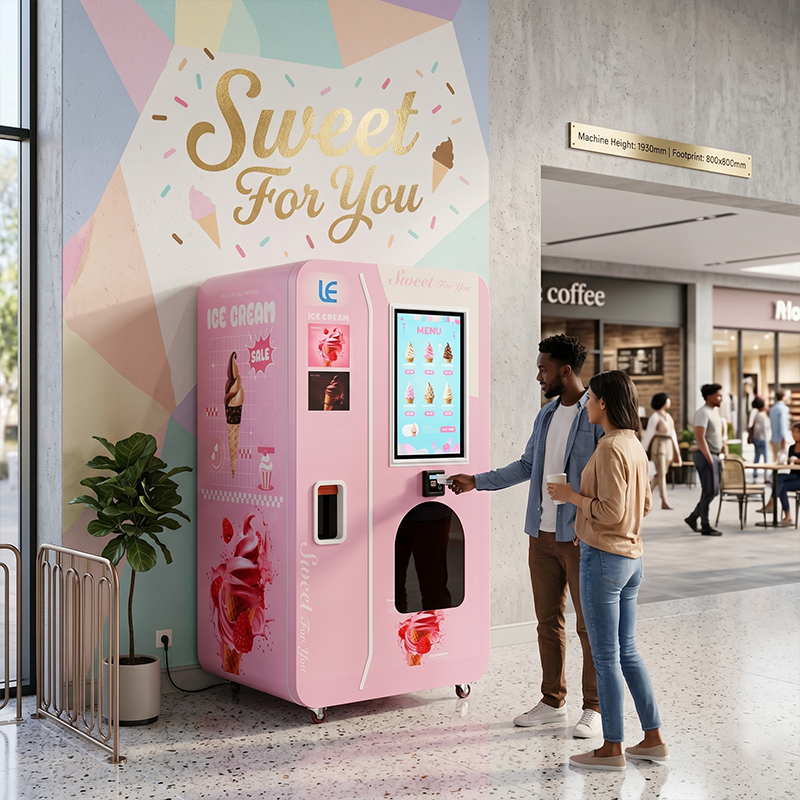
Choosing the right site matters more for ice cream vending than for most other automated retail, because demand depends on impulse, weather, visibility, and the ability to serve a treat that must stay perfectly frozen. A busy location alone is not enough; the strongest spots combine steady foot traffic with the right audience, the right mood, and practical support such as power access and easy maintenance. This article explains what separates a profitable placement from an expensive mistake, including the environments where ice cream machines tend to perform best and the factors you should evaluate before committing to a location.
Why Location Drives Ice Cream Vending Profitability
The profitability of automated retail heavily depends on placement, but ice cream vending introduces a unique set of consumer psychology and logistical constraints. While standard snack or beverage vending relies primarily on volume and convenience, frozen treats are heavily driven by impulse, environment, and immediate consumption. A poorly placed machine will struggle to cover its operational costs, whereas an optimal placement can yield gross margins between 60% and 70%.
Because ice cream requires a continuous cold chain and draws more power than ambient vending units, the baseline cost of operation is higher. Consequently, the chosen site must generate enough consistent transaction volume to offset utility costs, maintenance, and potential spoilage. Understanding the nuances of foot traffic and consumer mindset is the first step in maximizing return on investment.
What defines a high-performing location
A high-performing site is not defined solely by the sheer number of people walking past, but by the demographic makeup and the context of their visit. Ideal locations feature a steady stream of families, young adults, or tourists who are in a relaxed or recreational state of mind. Industry benchmarks suggest that a viable location needs a minimum of 1,500 daily passersby to maintain a healthy 1% to 2% conversion rate.
Visibility is another critical factor. A machine tucked into a dark corner or hidden behind structural pillars will see significantly lower engagement. High-performing locations offer unobstructed sightlines from at least 30 feet away, allowing the vibrant graphics and digital displays typical of modern equipment to catch the consumer’s eye.
Which demand patterns and dwell times increase sales
Dwell time—the amount of time a consumer spends in the immediate vicinity of the machine—is a primary driver of frozen dessert sales. Consumers rarely purchase a frozen treat while rushing to catch a train or hurrying to a meeting. They require a dwell time of at least 3 to 5 minutes to notice the machine, make a selection, process the payment, and consume the product.
Locations that naturally encourage lingering, such as waiting rooms, transit station platforms, or recreational seating areas, align perfectly with this demand pattern. Furthermore, understanding the timing of peak foot traffic is essential. A site that experiences a massive surge of commuters for only 30 minutes a day may underperform compared to a site with a moderate, steady flow of recreational visitors over a 10-hour period.
Best Location Types for Ice Cream Machines
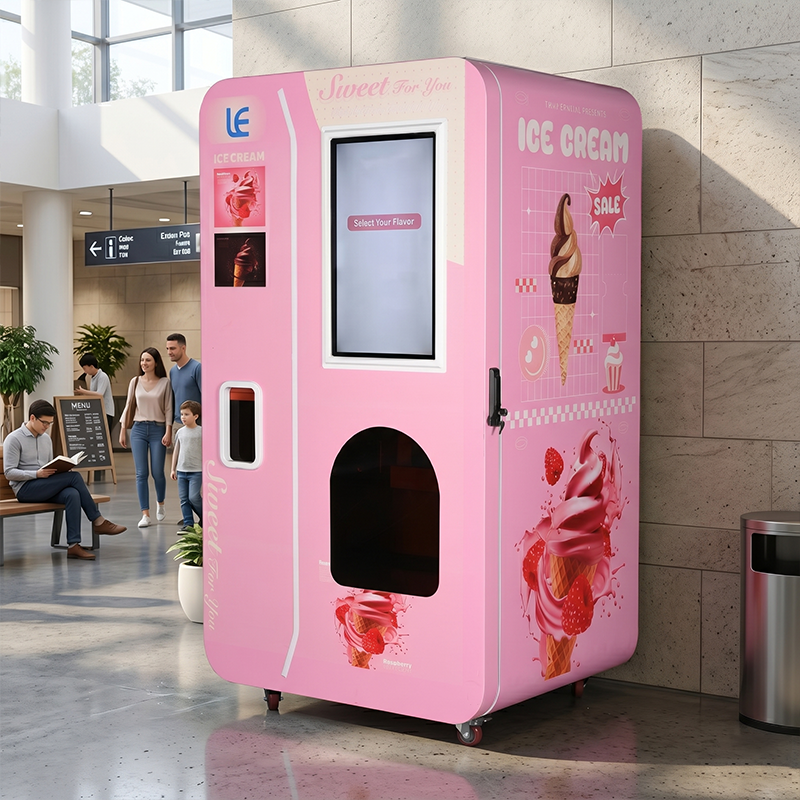
Identifying the best setting for automated frozen dessert retail requires comparing various facility types against operational capabilities. Every environment presents a unique blend of demographic profiles, security levels, and operational hours, all of which directly impact the bottom line.
How malls, transit hubs, schools, hospitals, and entertainment venues compare
Different venues cater to different consumer behaviors and offer varying levels of profitability. Malls and entertainment venues typically provide the highest conversion rates due to the recreational mindset of the visitors, while hospitals offer steady, 24/7 demand from staff and visitors.
| Location Type | Average Dwell Time | Target Demographic | Typical Rent/Commission | Expected Conversion Rate |
|---|---|---|---|---|
| Shopping Malls | 60 – 120 mins | Families, Teens | 15% – 20% Rev Share | 1.5% – 2.5% |
| Transit Hubs | 10 – 20 mins | Commuters, Tourists | High Fixed Rent | 0.5% – 1.0% |
| Hospitals | 30 – 90 mins | Staff, Visitors | Low / 5% Rev Share | 1.0% – 2.0% |
| Schools/Campuses | 45 – 300 mins | Students | 10% Rev Share | 2.0% – 3.0% |
| Entertainment Venues | 90 – 180 mins | Families, Groups | 20%+ Rev Share | 2.5% – 4.0% |
Indoor vs outdoor placement trade-offs
Choosing between an indoor and an outdoor ice cream machine location involves weighing upfront hardware costs against potential market reach. Indoor placements are generally preferred because they protect the equipment from extreme weather, direct sunlight, and severe vandalism. They also allow the machine’s cooling system to operate efficiently within a climate-controlled ambient temperature of 20°C to 24°C (68°F to 75°F).
Outdoor placements, such as parks or outdoor outlet malls, can capture highly lucrative seasonal traffic but require ruggedized equipment. Outdoor machines must feature NEMA 4X enclosures to prevent water ingress and upgraded compressors capable of maintaining internal freezing temperatures even when ambient conditions reach 40°C (104°F). This specialized hardware can increase the initial capital expenditure by 20% to 30%.
Which site features improve conversion and repeat purchases
Beyond the macro environment, micro-site features heavily influence consumer purchasing decisions. Proximity to seating is one of the strongest catalysts for conversion; machines placed within 50 feet of benches or dining areas historically experience a 15% to 20% increase in sales volume compared to standalone corridor placements.
Adequate ambient lighting and cleanliness of the surrounding area also build consumer trust, which is particularly vital for food vending. Furthermore, placing the machine near complementary services—such as coffee kiosks or interactive entertainment zones—can create a synergistic effect, capturing consumers who are already paused and spending money.
How to Evaluate a Location Before Installation
Before finalizing any placement agreement, operators must conduct a rigorous site evaluation. Relying on assumptions about foot traffic or facility infrastructure can lead to costly logistical nightmares. A systematic evaluation ensures the site can physically support the equipment and financially justify the investment.
Which metrics matter most
The most critical metrics during the evaluation phase are verified daily footfall, the percentage of the target demographic within that footfall, and the facility’s operating hours. A location that operates 24/7, such as a major hospital or international airport, can yield up to 30% more monthly revenue than a standard retail location limited to 12-hour days.
Operators should also measure the “capture rate” of adjacent retail or vending concepts. If existing snack machines in the proposed area show high turnover, it is a strong indicator of a consumer base willing to engage with automated retail.
How to compare rent, traffic, and expected revenue
Balancing the cost of the space against anticipated revenue is the cornerstone of site evaluation. Landlords typically structure agreements as either a fixed monthly rent or a percentage of gross sales (revenue share). A fixed rent of $100 to $300 per month is favorable in high-traffic areas, as it caps the operator’s overhead once the machine becomes highly profitable.
Conversely, a revenue share model—usually ranging from 10% to 20%—reduces the operator’s financial risk during the initial ramp-up period or off-peak seasons. To accurately compare these models, operators must forecast monthly sales based on the 1% to 2% conversion rate of the measured foot traffic, factoring in an average product price of $3.00 to $5.00.
Power, ventilation, space, and payment requirements
Technical prerequisites cannot be negotiated. Ice cream vending machines draw significant electrical current to maintain sub-zero temperatures. A typical unit requires a dedicated 220V or 110V circuit capable of delivering 15 to 20 amps. Sharing a circuit with other high-draw appliances can lead to tripped breakers and catastrophic product loss.
Ventilation is equally critical. The refrigeration condenser requires adequate airflow to dissipate heat. Most manufacturers mandate a minimum clearance of 6 to 8 inches behind the machine and clear space above it. Finally, evaluating the facility’s cellular or Wi-Fi signal strength is necessary to ensure telemetry systems and cashless payment terminals can process transactions without interruption, a key factor often discussed by experts detailing the ideal ice cream machine location.
Operational and Compliance Risks by Location
Automated frozen food retail is subject to stricter regulatory and operational scrutiny than ambient vending. Failure to account for local health codes, logistical hurdles, and environmental risks can result in fines, equipment damage, or complete loss of the location.
Food safety, licensing, and property approvals
Food safety compliance is the highest priority. Local health departments typically require specific permits for automated food retail, treating the machine similarly to a miniature restaurant. The equipment must reliably maintain internal holding temperatures strictly below -18°C (0°F) to prevent bacterial growth and preserve product texture.
Modern health codes often mandate that frozen vending units include an automatic health safety lockout feature. If the internal temperature rises above -15°C (5°F) for more than 30 minutes due to a power failure or mechanical fault, the machine must automatically disable purchasing to prevent the sale of compromised products. Securing property management approval for these technical specifications is a mandatory early step.
Restocking, cold-chain, cleaning, and maintenance needs
The logistics of operating a frozen vending route differ significantly from traditional restocking. Maintaining the cold chain from the warehouse to the machine is non-negotiable, requiring insulated transport containers or refrigerated vehicles. Depending on the machine’s capacity—typically holding between 200 and 300 units—and the site’s sales velocity, restocking may be required once or twice a week.
Cleaning and maintenance schedules are also more demanding. Frost buildup, condensation management, and the sanitation of the delivery bin must be addressed during every service visit. Preventative maintenance on the compressor and condenser coils should be scheduled quarterly to ensure peak cooling efficiency and extend the machine’s lifespan.
Weather, vandalism, and access constraints
Environmental and security risks vary drastically by location. Sites prone to extreme humidity can cause excessive condensation, leading to frozen robotic arms or jammed delivery chutes. Operators must ensure the facility maintains reasonable climate control or invest in machines with heated glass fronts to prevent fogging.
Vandalism is a persistent threat in unattended environments, particularly in schools or poorly lit transit stations. Mitigating this risk requires selecting sites with active security patrols or CCTV coverage. Furthermore, the machine itself should feature reinforced security measures, such as pry-resistant doors and anti-shatter glass with at least an IK08 impact resistance rating. Finally, operators must verify that the site has step-free access and wide enough doorways to physically deliver and install the heavy equipment.
How to Choose the Best Final Location
With a comprehensive understanding of site types, technical requirements, and operational risks, operators must synthesize this data to make a final placement decision. A structured approach removes emotion from the equation, ensuring capital is deployed into locations with the highest probability of long-term success.
A step-by-step process to shortlist and test sites
The selection process should begin by shortlisting 5 to 10 potential sites within a manageable geographic radius to optimize route logistics. Operators should conduct in-person visits to measure foot traffic during different times of the day and week. Once a primary candidate is identified, presenting a professional proposal to the property manager is the next step.
Whenever possible, operators should negotiate a 90-day pilot test agreement. This probationary period allows both the operator and the property manager to evaluate actual sales data, monitor any operational friction, and determine if the site meets financial expectations before locking into a multi-year contract.
How to weigh premium rent against traffic quality
A common dilemma is choosing between a location with high foot traffic but premium rent, versus a secondary location with lower traffic but free or low-cost placement. Premium rent is generally justified only if the traffic is highly targeted and the anticipated conversion rate exceeds 2.5%.
| Rent Structure | Best Use Case | Risk Level | Profit Potential |
|---|---|---|---|
| High Fixed Rent ($300+) | Tier-1 Malls, Airports | High (Fixed overhead) | Very High (Operator keeps all upside) |
| High Rev Share (20%+) | Theme Parks, Stadiums | Medium (Scales with sales) | Moderate (Margins are squeezed) |
| Low/Zero Rent | Hospitals, Corporate HQs | Low (Minimal overhead) | Moderate to High (Depends on volume) |
Operators must model their breakeven point under each scenario, factoring in the higher cost of goods sold associated with premium frozen products.
Final decision criteria for site selection
The final decision rests on a balanced matrix of high-quality foot traffic, manageable
Further reading:
Key Takeaways
- The most important conclusions and rationale for ice cream machine location
- Specs, compliance, and risk checks worth validating before you commit
- Practical next steps and caveats readers can apply immediately
Frequently Asked Questions
What locations usually perform best for an ice cream vending machine?
Shopping malls, campuses, hospitals, and entertainment venues usually perform best because visitors linger, browse, and buy on impulse.
How much foot traffic does an ice cream machine location need?
Aim for at least 1,500 daily passersby with a relaxed audience. A 1%–2% conversion rate is a practical baseline for viability.
Is indoor or outdoor placement better for ice cream machines?
Indoor placement is usually better. It protects the machine, improves cooling efficiency, and reduces weather-related maintenance and vandalism risks.
Why does dwell time matter for ice cream vending sales?
Ice cream is an impulse purchase that needs 3–5 minutes of nearby waiting time. Waiting rooms, seating areas, and platforms often convert better than rushed corridors.
Can YL Vending help choose the right ice cream machine location?
Yes. YL Vending can match machine type to your venue, traffic pattern, and operating conditions so the placement supports stronger sales and easier maintenance.

Kely
Post time: Jun-12-2026