

 Introduction
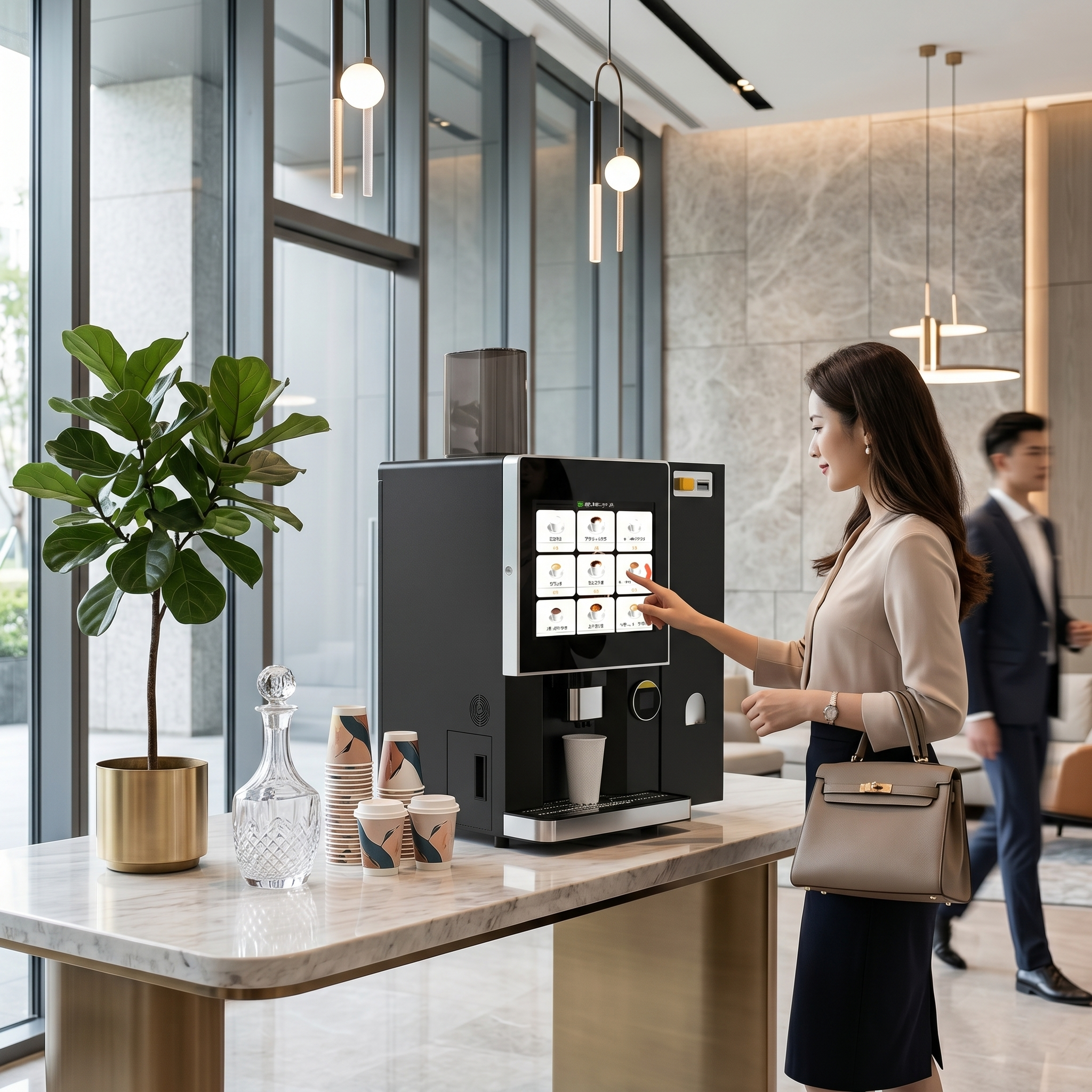
Choosing a self-service coffee machine for an office involves more than comparing prices or drink menus. The supplier behind the machine affects beverage quality, maintenance response, uptime, and how well the setup fits your team’s size and daily traffic. This article explains where businesses can buy office coffee vending machines and what to look for when comparing workplace coffee vending suppliers, from equipment options and service coverage to leasing terms and refill support. By the end, you’ll have a practical framework for narrowing vendors and selecting a solution that supports employee satisfaction and day-to-day efficiency.
Why the right workplace coffee vending supplier matters
Selecting the optimal coffee solution for a corporate environment extends beyond providing basic caffeination. Modern enterprises recognize that premium beverage offerings are strategic assets for workplace satisfaction, cultural engagement, and daily operational efficiency.
Employee expectations, uptime, and beverage quality
Corporate employees increasingly expect café-quality beverages on-site. Research indicates that upgrading office coffee can improve perceived workplace value. Premium self-service machines operate at an ideal 9-bar extraction pressure for authentic espresso. System reliability is equally critical; a high-performing supplier should guarantee at least 98% to 99% machine uptime to prevent disruptions during peak morning hours, ensuring the hardware matches the quality of the beans being processed.
Business goals that should guide vendor selection
Aligning vendor selection with broader business goals requires quantifying the return on investment. If a 100-person office saves each employee 15 minutes per day by eliminating off-site coffee runs, the recovered productivity translates to hundreds of hours monthly. Consequently, evaluating a workplace coffee vending supplier involves assessing how their equipment portfolio supports talent retention and operational efficiency, transforming a standard facility expense into a measurable driver of employee output.
What to compare when evaluating self-service coffee machines
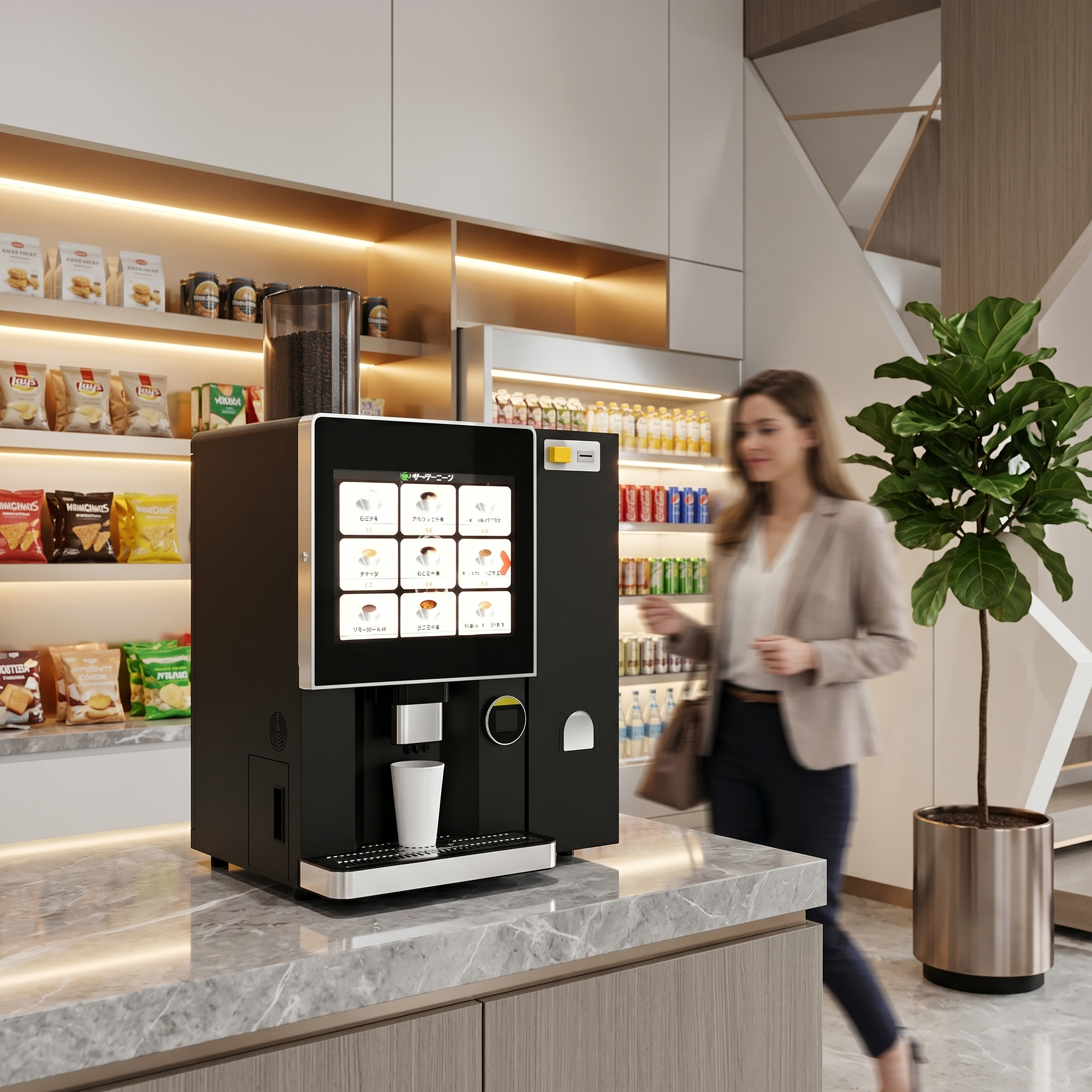 A rigorous evaluation of self-service coffee machines requires analyzing both technical capabilities and long-term financial commitments to ensure the chosen system scales with the organization.
Key machine specifications and drink menu options
Machine specifications must align with the daily consumption volume of the facility. Key metrics include bean hopper capacity, water reservoir size or direct plumbing capability, and the daily cup output rating. Furthermore, drink menu options should accommodate diverse preferences, offering 10 to 15 programmable selections ranging from flat whites to hot chocolate.
| Office Size | Estimated Daily Cups | Recommended Hopper Capacity | Ideal Machine Tier |
|---|---|---|---|
| Small (10-30 staff) | 30 – 50 | 1.0 – 2.0 lbs | Tabletop / Low-Volume |
| Medium (30-100 staff) | 50 – 150 | 2.0 – 4.0 lbs | Tabletop / Mid-Volume |
| Large (100+ staff) | 150 – 300+ | 4.0+ lbs (Dual Hoppers) | Freestanding / High-Volume |
Total cost of ownership, ingredients, and service contracts
The total cost of ownership (TCO) extends far beyond the initial hardware acquisition. Commercial-grade machines typically range from $1,500 to over $6,000 depending on output capacity. However, ingredient costs—averaging $0.30 to $0.75 per cup—and preventative maintenance contracts often represent the bulk of the lifecycle expenditure over a standard 36-month period, making transparent consumable pricing a vital part of the contract review.
How to compare leasing and purchase options
Organizations must weigh the benefits of leasing versus purchasing. Leasing a machine typically costs between $100 and $300 per month, preserving capital and often bundling maintenance into a predictable operational expense (OpEx). Purchasing requires higher upfront capital expenditure (CapEx) but generally achieves a break-even point within 14 to 18 months, making it more cost-effective for organizations with long-term facility leases and dedicated budgets.
Where to buy self-service coffee machines for offices
Navigating the procurement landscape requires understanding the different types of vendors operating in the commercial coffee sector and matching their service models to your internal resources.
Manufacturers, distributors, and office coffee service providers
Buyers typically source equipment from direct manufacturers, regional distributors, or comprehensive Office Coffee Service (OCS) providers. While buying direct from a manufacturer might secure the lowest baseline equipment price, an OCS provider adds value by bundling hardware, consumable delivery, and maintenance into a unified contract. When reviewing comprehensive hot beverage vending machines, selecting a partner with a robust local distribution network is paramount for consistent ingredient supply.
When online procurement marketplaces make sense
Online B2B procurement marketplaces are viable for facilities managers looking to purchase standalone equipment without tied ingredient contracts. This route is most appropriate for organizations that already possess dedicated internal maintenance staff or prefer to source specialty local roasters independently. However, bypassing traditional service providers means assuming full responsibility for a machine’s 3-to-5-year lifecycle management and troubleshooting.
Supplier coverage, maintenance response, and support
The true test of a supplier is their post-installation support infrastructure. Service Level Agreements (SLAs) should explicitly define maintenance response times. Industry-leading suppliers typically guarantee a 4-hour to 8-hour response window for critical machine failures. Evaluating a supplier’s regional technician density and their localized inventory of replacement parts ensures that minor malfunctions do not result in multi-day service outages.
What operational and compliance checks to review before buying
Before committing to a specific machine or vendor, facilities managers must audit their physical infrastructure and compliance requirements to ensure seamless integration and safe daily operation.
Site requirements for installation
Commercial coffee equipment demands specific site utilities that must be prepared prior to installation. Direct-plumbed units require a dedicated cold water line equipped with a shut-off valve, typically located within 3 to 5 feet of the installation site. Failure to meet baseline utility requirements can void manufacturer warranties and lead to suboptimal extraction.
| Utility Requirement | Standard Specification | High-Volume Specification |
|---|---|---|
| Electrical Supply | 110V / 15A | 220V / 20A – 30A |
| Water Line Pressure | 20 – 50 psi | 30 – 90 psi |
| Water Filtration | Standard inline filter | Multi-stage reverse osmosis |
Food safety, sanitation, warranties, and service levels
Food safety and sanitation protocols are non-negotiable in communal office environments. Equipment should carry relevant NSF/ANSI commercial sanitation certifications. Modern self-service units feature automated daily cleaning cycles that require 10 to 15 minutes of downtime, flushing milk lines with specialized detergents at temperatures exceeding 160°F (71°C) to prevent bacterial growth. Standard commercial warranties should cover parts and labor for at least 12 to 24 months.
Delivery, replenishment, and remote monitoring
Efficient inventory management relies on modern telemetry and remote monitoring. Advanced machines communicate stock levels via cellular or Wi-Fi networks, automatically triggering replenishment orders when bean or powder hoppers drop below 20% capacity. This data-driven approach minimizes administrative overhead. Reviewing the technological capabilities of available products ensures that the chosen system supports proactive maintenance rather than reactive troubleshooting.
How to finalize your workplace coffee vending supplier
Transitioning from evaluation to execution requires a structured procurement approach to align all internal stakeholders, mitigate implementation risks, and finalize the vendor contract.
A step-by-step process for quotes, pilots, and stakeholder review
A formal Request for Quote (RFQ) process should precede any final decision. Shortlist two to three vendors and request a 30-day pilot program for the proposed equipment. During this trial phase, gather quantitative feedback from a sample size of at least 40 to 50 employees regarding beverage quality, interface usability, and overall reliability. This empirical data provides the necessary justification for the final capital request.
Final selection criteria for procurement, facilities, and finance
The final selection hinges on satisfying distinct departmental criteria. Procurement focuses on competitive pricing and favorable payment terms, such as Net-45 or Net-60. Facilities management requires guaranteed SLA response times and straightforward daily maintenance protocols. Meanwhile, finance must approve the TCO analysis, ensuring that the 36-month to 48-month contract aligns with the organization’s broader budget forecasts. Balancing these priorities ensures a sustainable, high-quality workplace coffee program that delivers long-term value.
Further reading:
Key Takeaways
- The most important conclusions and rationale for workplace coffee vending supplier
- Specs, compliance, and risk checks worth validating before you commit
- Practical next steps and caveats readers can apply immediately
Frequently Asked Questions
Where can offices buy self-service coffee machines?
Offices can buy from manufacturers, regional distributors, online marketplaces, or full-service OCS suppliers like YL Vending that bundle machines, ingredients, and maintenance.
Should an office lease or buy a coffee machine?
Lease if you want lower upfront cost and bundled service. Buy if you have budget and plan long-term use, since many offices break even in about 14–18 months.
What machine size fits my office?
For 10–30 staff, choose low-volume tabletop models. For 30–100, pick mid-volume machines. For 100+, use high-volume freestanding units with larger or dual bean hoppers.
What should I compare when choosing a workplace coffee vending supplier?
Check uptime targets, drink variety, cup capacity, ingredient pricing, service response time, and whether the supplier has local distribution and maintenance support.
Why choose a supplier with local service coverage?
Local coverage helps keep machines stocked, repaired, and running during peak demand. It reduces downtime and supports a 98%–99% uptime goal for office coffee service.

Kely
Post time: Jun-09-2026