

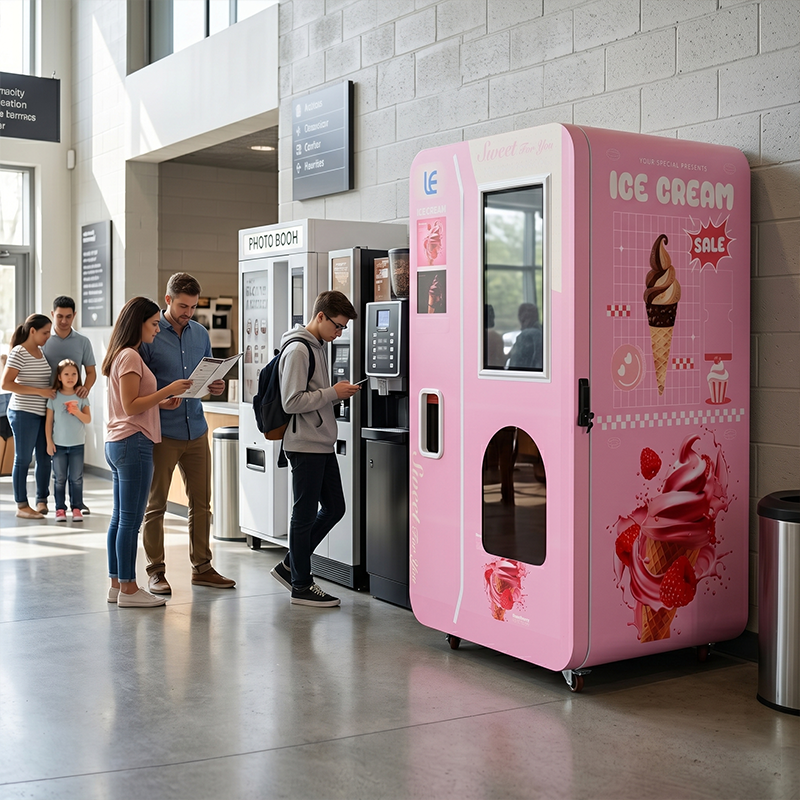
For smart retail operators, the best China ice cream machine brand is not simply the one with the lowest unit cost, but the one that fits your uptime targets, automation needs, and long-term service model. Brand differences often show up in payment integration, IoT monitoring, production stability, cleaning design, and after-sales support—factors that directly affect labor, maintenance, and customer experience. This article explains how to compare leading Chinese manufacturers through a business lens, so you can identify which brands are strongest for unmanned kiosks, chain deployment, and scalable frozen dessert sales.
Why Choosing the Right China Ice Cream Machine Brand Matters
The global transition toward automated retail has fundamentally reshaped the food and beverage industry, placing sophisticated self-service equipment at the center of modern business models. For entrepreneurs and retail chains looking to capitalize on high-margin frozen desserts, selecting a reliable manufacturing partner is critical. The strategic choice of a supplier directly impacts operational uptime, maintenance overhead, and ultimate profitability, with high-quality automated units typically achieving a return on investment within 12 to 18 months.
How smart retail trends are changing demand
Smart retail trends are driving a rapid evolution in dispensing technology. Modern consumers expect seamless, touchless transactions and engaging user interfaces. Consequently, operators are moving away from traditional, manually operated machines toward fully automated robotic kiosks and IoT-enabled dispensers. These smart units feature integrated telemetry systems that monitor syrup levels, hopper temperatures, and mechanical performance in real-time. By leveraging cloud-based dashboards, operators can predict maintenance needs before a failure occurs, effectively reducing machine downtime by up to 30% compared to legacy equipment.
Which business goals to define before comparing brands
Before evaluating specific manufacturers, retail businesses must define precise operational objectives. Key metrics include projected daily foot traffic, target profit margins per serving, and the required variety of flavors or toppings. A high-traffic transit hub may require a machine capable of dispensing 200 to 300 servings per day with rapid recovery times, whereas a boutique cafe might prioritize a compact footprint and artisanal texture over raw speed. Establishing these parameters prevents over-investing in unnecessary capacity or under-specifying equipment that will bottleneck during peak hours.
How to Evaluate China Ice Cream Machine Brands
Which machine types and use cases to compare
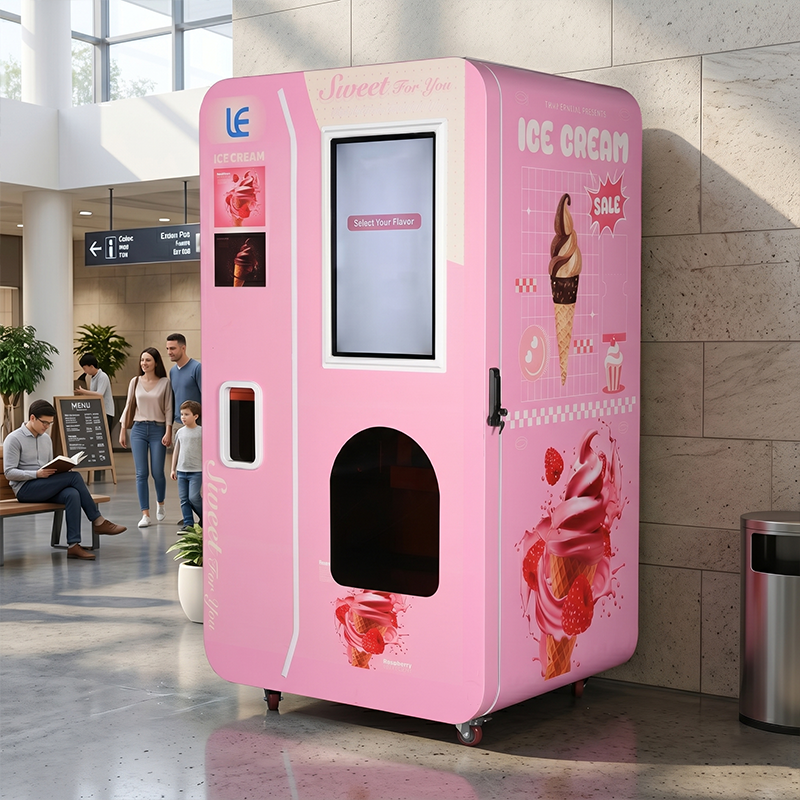
The first step in equipment evaluation is matching the machine type to the intended use case. Soft serve machines, hard ice cream batch freezers, and fully robotic vending kiosks each serve distinct market segments.
| Machine Type | Typical Capacity | Optimal Use Case | Estimated Cost Band (USD) |
|---|---|---|---|
| Countertop Soft Serve | 15-20 Liters/Hour | Cafes, Small Kiosks | $1,200 – $2,500 |
| Floor-Standing Dual Flavor | 30-40 Liters/Hour | Fast Food, Buffets | $2,500 – $4,500 |
| Robotic Vending Kiosk | 200+ Servings/Day | Malls, Airports, 24/7 Retail | $8,000 – $15,000+ |
Operators must weigh these categories against their available floor space, staffing models, and target demographic.
Which technical specifications matter most
Technical specifications dictate both the longevity of the equipment and the quality of the frozen dessert. Critical components include the refrigeration compressor, where internationally recognized brands like Embraco or Aspera are preferred for reliability. Hopper capacity is another vital metric; dual 5.8-liter hoppers with independent pre-cooling systems ensure food safety by keeping mix below 4°C (39°F) overnight. Furthermore, buyers should assess the machine’s overrun rate—the percentage of air whipped into the mix. Gravity-fed machines typically achieve 30% to 40% overrun, whereas machines equipped with gear-driven air pumps can reach up to 80%, significantly improving profit margins per serving.
Which performance criteria reveal real differences
On-paper specifications must translate to reliable performance under load. A critical performance criterion is continuous dispensing capability. High-quality machines should be able to dispense 10 to 15 cones back-to-back during peak rushes without the cylinder freezing or the product becoming too soft. Additionally, automated defrosting cycles and self-cleaning functions drastically reduce daily labor requirements. Finally, operating noise levels must be considered; premium machines operate below 65 decibels, making them suitable for quiet indoor environments like bookstores or premium shopping centers.
Sourcing, Compliance, and Total Cost Risks
Partnering with an overseas manufacturer introduces variables related to international shipping, regulatory compliance, and post-sale support. A thorough assessment of a China ice cream machine brand must encompass the total cost of ownership (TCO) over an expected 5-to-7-year equipment lifespan. Hidden costs in logistics, non-compliance fines, or delayed spare parts can quickly erase the initial savings of a competitively priced unit.
Which factory audits and certifications to verify
Regulatory compliance is non-negotiable for commercial food equipment. Buyers must verify that the factory holds valid ISO 9001 quality management certifications. For the machines themselves, electrical safety marks such as CE (for Europe) or UL/ETL (for North America) are mandatory. Equally important is food safety certification, such as NSF compliance, which ensures that all food-contact surfaces are made from food-grade materials, typically 304 stainless steel. Requesting verifiable test reports directly from the testing laboratories, rather than relying solely on supplier-provided certificates, is a standard best practice.
How to assess spare parts, warranty, and lead times
The availability of spare parts and the structure of the warranty are critical risk factors. A standard industry warranty covers the compressor for 3 years and general parts for 1 year. However, buyers must clarify how warranty claims are processed and who bears the shipping costs for replacement parts. Evaluating lead times is also essential; standard production and sea freight shipping from Chinese ports typically require 25 to 40 days. Furthermore, buyers should inquire about the Minimum Order Quantity (MOQ). While standard models often have an MOQ of 1 to 5 units, custom-branded or highly modified machines may require an MOQ of 10 or more.
Which procurement steps reduce sourcing risk
Structured procurement strategies are necessary to mitigate cross-border purchasing risks.
| Risk Area | Mitigation Step | Standard Industry Metric |
|---|---|---|
| Quality Control | Third-Party Pre-Shipment Inspection | Acceptable Quality Limit (AQL) 2.5/4.0 |
| Payment Security | Letter of Credit or Escrow Platforms | 30% Deposit, 70% Before Shipment |
| Prototype Validation | Order a Single Sample Unit | 1 Unit MOQ for initial testing |
Implementing these steps ensures that the equipment meets all specified standards before the final balance is paid, thereby protecting the buyer’s capital.
Best China Ice Cream Machine Brands for Different Scenarios
The optimal equipment choice ultimately depends on the specific retail environment. A one-size-fits-all approach is rarely successful in automated food service. Buyers must align the machine’s capabilities with the physical and demographic realities of their deployment sites, often requiring direct consultation via a supplier’s contact us page to finalize custom configurations.
How to match brands to stores, kiosks, and malls
Different venues demand highly specialized equipment profiles. High-footfall locations like shopping malls and transit hubs are best served by fully enclosed, robotic vending kiosks that operate 24/7 without human supervision. These units require high-capacity hoppers capable of sustaining 300+ cones per day. Conversely, convenience stores benefit from floor-standing models with robust self-cleaning features to minimize staff intervention. For small mall kiosks or boutique cafes, compact countertop models that produce 15 to 20 liters per hour offer the best balance of footprint and output, maximizing revenue per square foot.
Which decision framework helps buyers choose the right brand
To navigate the complex market of commercial dessert equipment, buyers should utilize a structured decision framework. First, audit the physical footprint and available utilities, ensuring compatibility with local voltage standards (e.g., 110V/60Hz for North America vs. 220V/50Hz for Europe). Second, calculate the peak hour demand; if a location experiences surges requiring 50 cones per hour, the machine’s cylinder capacity and compressor power must meet that specific threshold. Third, evaluate the software ecosystem for smart machines, ensuring telemetry data integrates smoothly with existing inventory management systems. Finally, model the break-even point by factoring in the landed cost of the machine, ongoing ingredient costs, and projected daily sales volume to ensure long-term financial viability.
Further reading:
Key Takeaways
- The most important conclusions and rationale for China ice cream machine brand
- Specs, compliance, and risk checks worth validating before you commit
- Practical next steps and caveats readers can apply immediately
Frequently Asked Questions
What type of China ice cream machine fits smart retail best?
For 24/7 self-service locations, choose a robotic vending kiosk with cashless payment, remote monitoring, and 200+ servings/day capacity.
Which specifications matter most when comparing China ice cream machine brands?
Focus on compressor brand, hopper size, pre-cooling below 4°C, continuous dispensing speed, and self-cleaning functions.
How can I reduce downtime with an automated ice cream machine?
Pick a model with IoT alerts, cloud dashboards, and predictive maintenance to monitor temperature, mix levels, and component status remotely.
What daily output should I plan for before buying?
Match the machine to traffic: small cafés may need 15–20 liters/hour, while malls or airports often need 200+ servings per day.
Why consider YL Vending for a China ice cream machine brand?
YL Vending focuses on smart retail equipment, including robotic kiosks and automated vending solutions designed for self-service operations.

Kely
Post time: Jun-18-2026