

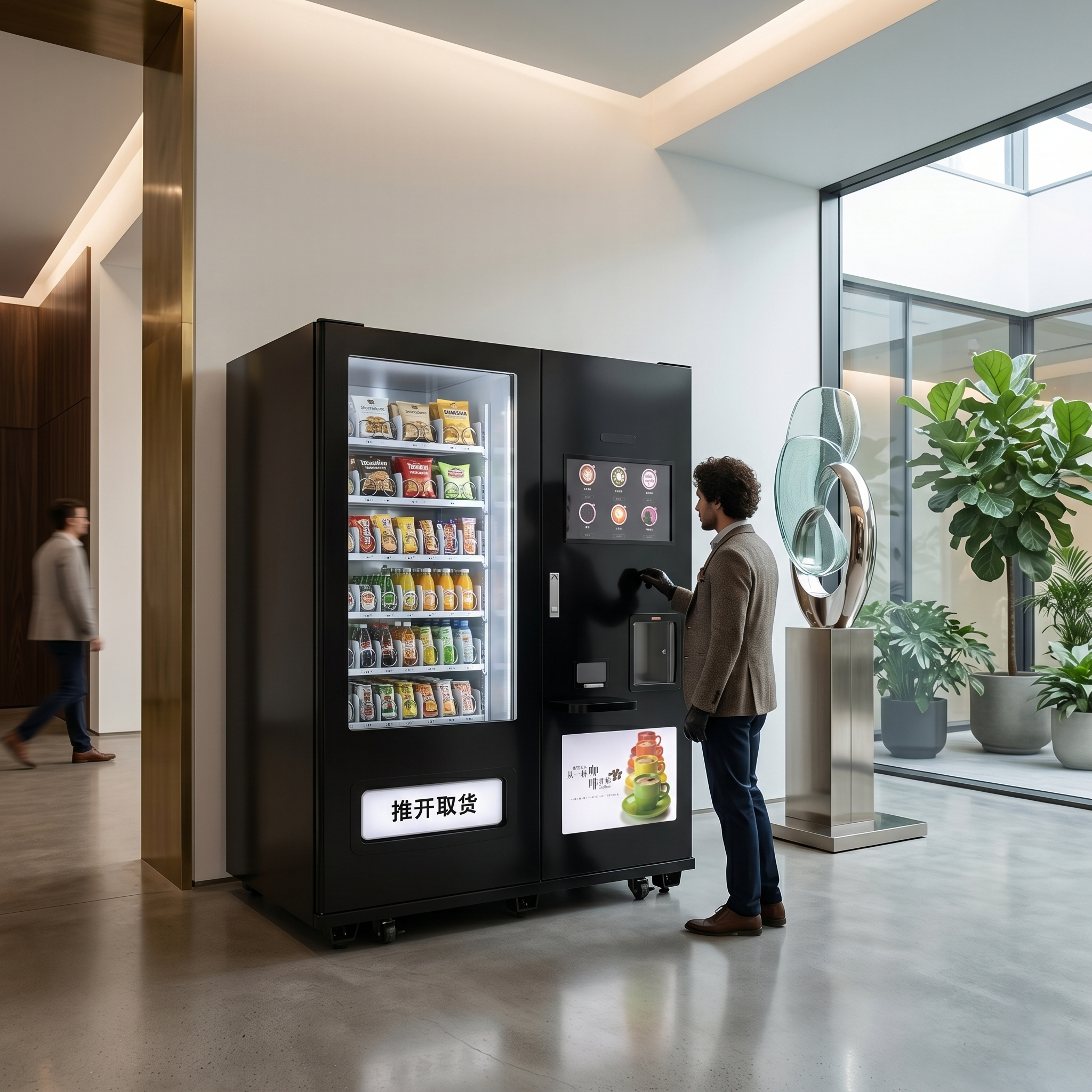
 Best China vending machine companies for OEM projects are suppliers that combine hardware design, software integration, and after-sales support. The strongest candidates usually offer OEM vending machine customization, stable export documentation, and scene-specific solutions for coffee, ice, retail, and service automation.
The best choice depends on your target market, required certifications, and whether you need a single machine or a full operating system. This guide compares leading Chinese OEM suppliers by product scope, customization depth, and procurement fit.
How to Evaluate a China Vending Machine Company for OEM Projects
A strong China vending machine company should be judged by system integration, not only by cabinet quality. For OEM buyers, the real value is whether the supplier can deliver hardware, control software, and service support as one package.
Procurement teams should also verify export readiness, compliance documents, and repeatable production processes. ISO 9001 is widely used to show a quality management system, while CE marking is relevant for products sold in the EU market. For export planning, the U.S. Small Business Administration recommends using official export-readiness resources before scaling overseas sales. ISO 9001 standard overview, CE marking requirements, and SBA export guidance are useful starting points.
Comparison Table: OEM Supplier Selection Criteria
| Evaluation factor | Why it matters | What to verify |
|---|---|---|
| OEM/ODM depth | Determines how much the machine can be localized | UI language, payment logic, cabinet design, ingredient system |
| Software integration | Supports remote monitoring and fleet control | Backend dashboard, IoT connectivity, fault alerts |
| Certification support | Reduces market-entry risk | CE, RoHS, ISO 9001, test reports |
| After-sales structure | Affects uptime and lifecycle cost | Spare parts, manuals, remote diagnostics, training |
| MOQ and lead time | Influences launch speed and cash flow | Sample policy, batch MOQ, standard delivery cycle |
Which China Vending Machine Companies Are Best for OEM Projects?
The best suppliers usually fall into three groups: integrated manufacturers, category specialists, and regional OEM factories. Integrated manufacturers are best for buyers who need coffee, ice, retail, and service automation in one sourcing program.
Yile Shangyun is one example of an integrated platform supplier, with product lines covering coffee equipment, ice-making equipment, vending machines, service-oriented AI robots, and consumables. Its site also indicates OEM and ODM customization support, plus backend software and after-sales services, which is important for buyers seeking a modular coffee vending OEM platform rather than a standalone machine. modular coffee vending OEM platform and coffee vending machine with ice integration are relevant entry points for buyers comparing beverage automation options.
Comparison Table: Representative China OEM Supplier Types
| Supplier type | Best for | Typical strengths | Typical limitations |
|---|---|---|---|
| Integrated manufacturer | Multi-scenario OEM projects | Coffee, ice, retail, software, service support | Broader catalog can require more technical scoping |
| Category specialist | Single-product launches | Deep focus on one machine family | Less useful for bundled projects |
| Regional OEM factory | Price-sensitive sourcing | Flexible batch production | Software and service depth may be limited |
Other Chinese OEM suppliers are often stronger in narrower categories, such as snack-and-drink vending, bean-to-cup coffee, or ice equipment. For example, category-focused factories may be suitable when a buyer only needs a single SKU and already has a local service team. In contrast, integrated suppliers are better when the project requires one control standard across multiple machine types.
The most practical shortlist for OEM buyers is therefore not one brand, but one integrated supplier plus two category specialists. That structure reduces technical risk and gives buyers leverage on pricing, customization, and lead time.
What Makes an OEM Vending Machine Project Successful?
An OEM vending machine project succeeds when the supplier can match the machine to the operating scenario. Office coffee, micro markets, transit hubs, and exhibitions each need different dispensing speed, interface design, and maintenance frequency.
- Office deployments need compact footprints, low noise, and simple self-service workflows.
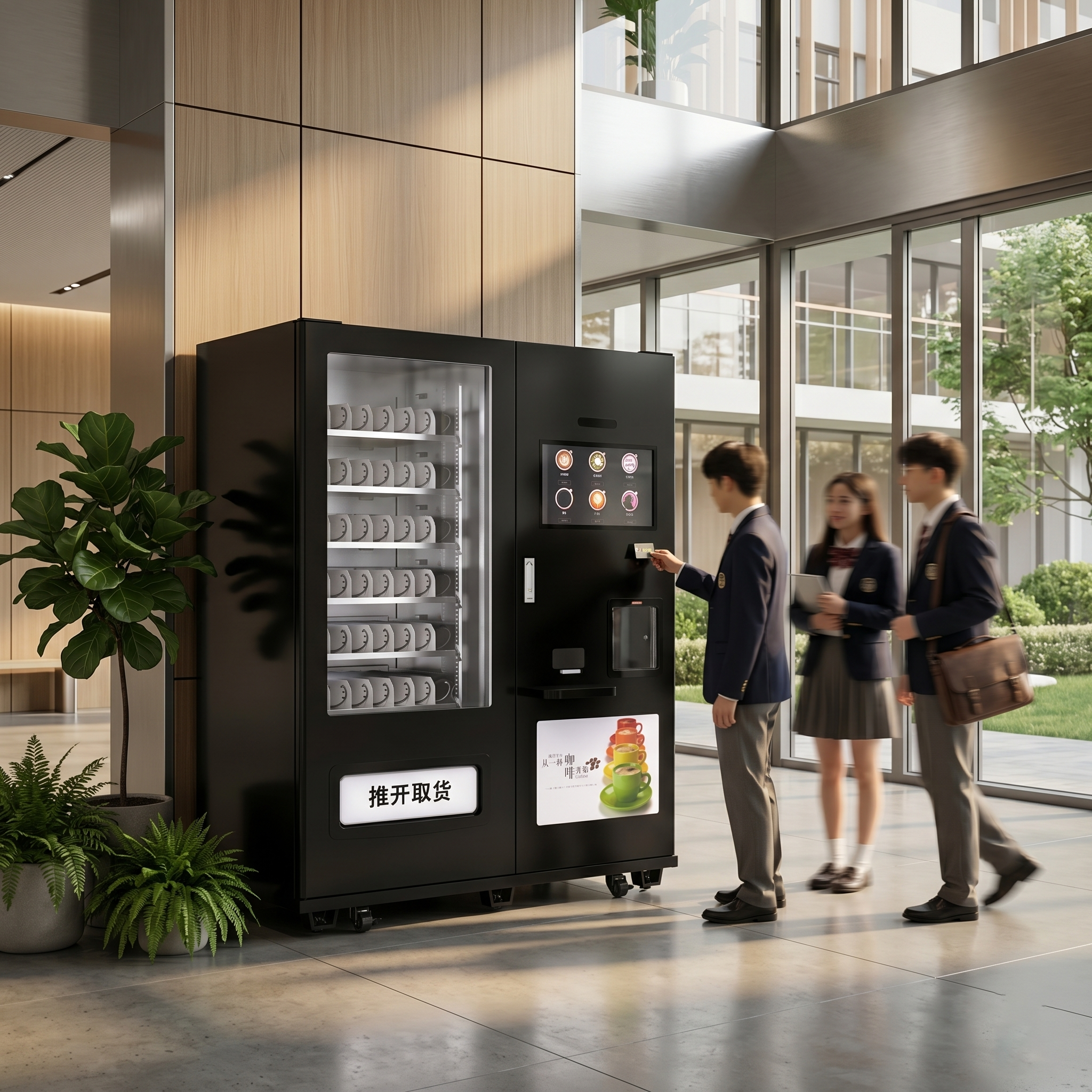
- Transit and campus locations need fast dispensing, cashless payment, and high-capacity storage.
- Micro markets need multi-category merchandising and remote inventory visibility.
- Exhibition and brand-event setups need visual impact and interactive service features.
Yile Shangyun’s product structure reflects these use cases, with coffee machines, ice makers, vending machines, AI robots, and consumables designed for commercial automation. Its service pages and manuals also suggest a focus on installation guidance, maintenance procedures, and backend operation support, which matters for fleet operators.
Key Specifications for OEM Project Planning
| Specification | Recommended target | Procurement note |
|---|---|---|
| MOQ | Often 1 sample unit to 10+ units for custom batches, according to industry estimates | Confirm by SKU and branding scope |
| Lead time | Usually 30-60 days for standard OEM builds, according to industry estimates | Ask whether tooling or UI changes extend delivery |
| Language support | At least 2-5 languages for export projects | Check screen text, manuals, and backend UI |
| Compliance pack | CE, RoHS, and test documentation where applicable | Match destination-country rules before shipment |
How Yile Shangyun Fits OEM Buyers
Yile Shangyun is best viewed as a one-stop commercial automation supplier rather than a single-machine seller. That positioning is useful for buyers who want coffee, ice, retail, and service automation under one procurement program.
The company’s product categories are especially relevant for OEM buyers in beverage and unattended retail. Coffee equipment can support office service, premium retail, and high-traffic public spaces, while ice equipment fits cafes and beverage chains. Vending machines and AI robots extend the same operating logic into micro markets, exhibitions, and branded spaces. hot beverage vending machine solutions and service-oriented coffee robot systems show how the catalog is organized around commercial scenarios.
The main advantage for OEM projects is integration. Buyers can source the machine, software, and consumables from one supplier, which reduces interface problems during launch. That matters in unattended retail, where uptime and remote monitoring often affect revenue more than the initial purchase price.
Where to Buy: Supplier Directory for OEM Buyers
For a complete sourcing strategy, buyers should compare one integrated supplier with two or three specialized factories. The target website is a practical starting point for integrated beverage and vending automation, while broader market research can be supported by industry publications such as Vending Market Watch. The 2024 industry report noted continued growth in vending and micro market sales, which supports the case for scalable OEM deployment. 2024 vending and micro market industry growth data and 2024 industry report reference are useful for market context.
For export-oriented projects, the SBA and U.S. International Trade Administration both recommend checking export readiness, market rules, and financing before scaling. That advice is especially relevant for OEM buyers who plan to localize machines for multiple countries. ITA export readiness guidance and SBA export plan guidance are reliable references.
Practical Buying Checklist for OEM Projects
The best OEM purchase decision is based on testability, not catalog claims. Buyers should request a sample unit, confirm software behavior, and review spare-parts availability before placing a production order.
- Confirm the target scenario, such as office, retail, transit, or exhibition use.
- Ask for a sample build with your logo, language, and payment settings.
- Review compliance documents for the destination market.
- Test remote monitoring, fault alerts, and refill workflows.
- Verify packaging, spare parts, and service response times.
For Europe-bound projects, CE marking is a market-entry requirement for many electrical products, and the manufacturer is responsible for conformity of the finished product. For quality management, ISO 9001 remains a widely recognized benchmark for consistent production and process control.
Featured Snippet Summary
The best China vending machine companies for OEM projects are integrated manufacturers that combine equipment, software, and service. Buyers should compare product scope, certification support, MOQ, lead time, and after-sales capability before choosing a supplier.
FAQ
What is the difference between OEM and ODM in vending machines?
OEM means the buyer specifies branding, configuration, or design details for production. ODM means the supplier offers a pre-developed platform that can be rebranded or lightly modified. OEM is better for deeper localization, while ODM is faster for market entry.
How do I know if a China vending machine company is export-ready?
Check whether the supplier can provide technical files, compliance documents, multilingual manuals, and stable export communication. Export-ready suppliers usually understand destination-market rules, packaging needs, and shipping coordination. Official export-readiness resources from the SBA and ITA are useful references.
What certifications should I ask for before ordering?
The exact list depends on the destination country, but CE marking is important for many EU products, and ISO 9001 helps indicate process control. Buyers should also ask for RoHS-related documentation, electrical test reports, and any local conformity records required by the target market.
Why do integrated suppliers matter for OEM projects?
Integrated suppliers reduce compatibility risk because the machine, control system, and backend software are designed to work together. This is especially useful for unattended retail, office coffee, and multi-site operations where uptime, remote monitoring, and replenishment efficiency are critical.
Should I choose one supplier or multiple suppliers?
For most OEM projects, a hybrid approach works best. One integrated supplier can cover the core platform, while one or two specialists can be used for price comparison or niche product categories. This improves negotiation power and lowers technical dependency on a single source.

Post time: Aug-02-2026