

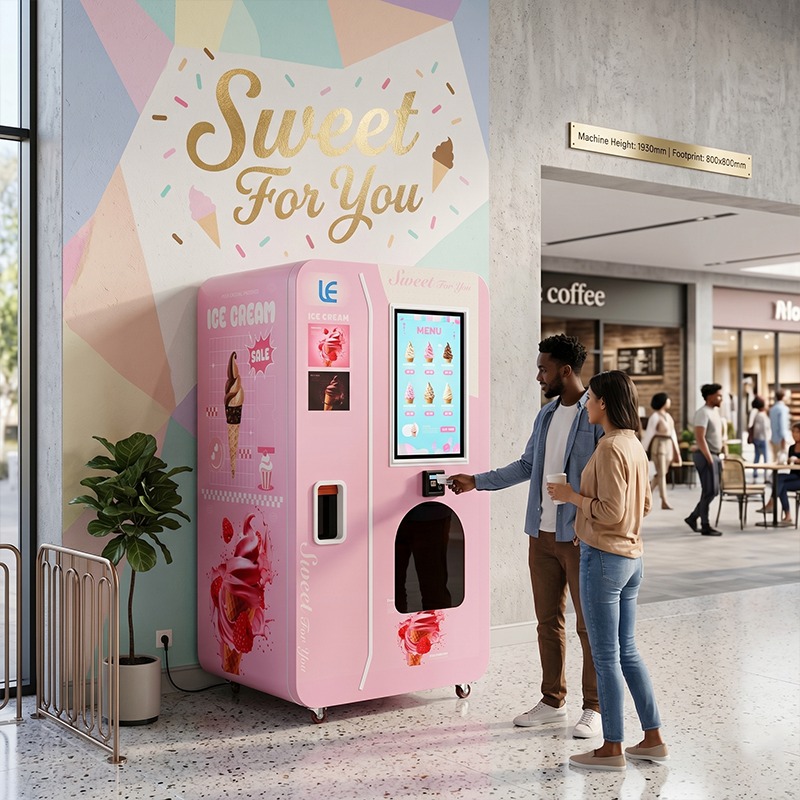
- High foot traffic and predictable demand matter more than industry labels alone.
- Cold-chain control, cleaning access, payment reliability, and replenishment planning determine commercial viability.
- Airports, hotels, campuses, workplaces, and leisure venues often combine convenience demand with limited late-hour service.
- A smart vending machine is most valuable when remote monitoring, inventory alerts, and transaction data support daily operations.
- The best deployment connects equipment, software, product assortment, and service procedures rather than treating the machine as a standalone appliance.
Ice cream vending machines are most valuable in locations where convenience, extended service hours, and impulse purchasing justify automated retail. The FDA Food Code 2022 provides model food-safety provisions for retail and food-service operations, making sanitation, temperature control, and preventive procedures central to site planning. This article explains which industries benefit most, how to compare locations, and what operators should verify before investing.
Why an Ice Cream Vending Machine Creates Commercial Value
The strongest business case appears when a site has demand outside staffed retail hours. A conventional ice cream counter requires employees, queue management, opening procedures, and continuous supervision. An automated unit can serve customers during breaks, evenings, weekends, or periods when a full shop would be uneconomical.
Location quality is the primary value driver, not the machine alone. A unit positioned beside a hotel pool, airport waiting area, school recreation zone, factory cafeteria, or apartment clubhouse can convert short waiting periods into purchases. The operator should evaluate foot traffic, dwell time, visibility, electrical access, cleaning access, replenishment routes, and the availability of alternative food outlets.
Unattended retail also creates operational value through standardization. The product assortment, price, payment flow, and customer instructions can remain consistent across multiple locations. A smart vending machine adds remote visibility, helping operators review sales activity, identify low inventory, receive fault alerts, and schedule service without inspecting every unit manually.
Industries That Gain the Most from Ice Cream Vending Machines
Airports and transportation hubs
Airports are strong candidates because travelers value speed, portability, and access during irregular hours. Security restrictions and passenger movement make a compact automated format useful in waiting areas, arrivals zones, staff facilities, and airport hotels.
The operating challenge is replenishment. Products must be restocked without disrupting passenger flow, while the machine must support dependable digital payments and clear product information for international travelers. Operators should also confirm airport concession rules, food-handling requirements, electrical specifications, and approved service windows before deployment.
Hotels and resorts
Hotels benefit when guests want a dessert or snack after the restaurant, room service, or nearby stores have closed. A machine near a lobby, pool, family area, conference space, or guest laundry can provide an additional convenience purchase without requiring a dedicated counter.
Hotels should select products that match guest profiles and storage procedures. The deployment may work particularly well when connected with other unattended retail services, such as beverages, snacks, coffee, or ice distribution. A mixed service strategy can increase usefulness while reducing the need for guests to leave the property.
Schools, universities, and training campuses
Educational campuses can generate concentrated demand during breaks, events, and warm-weather periods. Ice cream is also a natural impulse product in recreation centers, student unions, residence halls, and outdoor gathering areas.
Campus operators must treat compliance and supervision as part of the business model. Age-appropriate product selection, allergen communication, payment policies, cleaning responsibility, and location approval should be documented. The United States standard of identity for ice cream illustrates why product labeling and formulation information should be managed carefully when selecting packaged products.
Factories, warehouses, and office buildings
Workplaces gain value when employees have limited time to leave the site. A machine near a break room, cafeteria, reception area, or shift-change route can serve day, evening, and overnight workers without extending cafeteria staffing.
Factories require a practical service plan because dust, heat, vibration, and heavy traffic may affect placement. The operator should protect the unit from forklifts, production contaminants, direct sunlight, and blocked ventilation. In offices, demand may be lower but more predictable, making product rotation and portion selection especially important.
Hospitals and healthcare facilities
Hospitals can use automated ice cream retail to serve visitors, staff, and patients in public areas where a full food outlet is unavailable. The opportunity is strongest in visitor lobbies, outpatient waiting areas, staff zones, and nearby accommodation facilities.
Healthcare deployment requires stricter site governance than a typical commercial location. Operators should coordinate with facilities management, infection-prevention teams, nutrition services, and security. The machine should be easy to clean, positioned away from clinical workflows, and supported by documented replenishment and incident procedures.
Leisure, sports, and entertainment venues
Sports centers, cinemas, museums, amusement venues, parks, and family entertainment sites benefit from impulse demand and event-driven traffic. Customers are already in a purchasing mindset, and a visible cold dessert can complement beverages and snack sales.
These venues often have uneven demand, so operators should compare event-day sales with quiet-day performance. Remote monitoring is valuable because inventory requirements can change rapidly around games, concerts, tournaments, or seasonal attractions.
Residential communities and mixed-use developments
Apartment communities, student housing, co-living properties, and mixed-use developments can use ice cream vending to add convenience close to residents. The format is especially attractive where nearby retail is limited or residents prefer not to travel for a small purchase.
Security, noise, access control, and resident communication matter as much as sales volume. A machine inside a shared amenity area may need restricted access, building approval, and a clear agreement covering electricity, cleaning, refunds, and service calls.
Industry Comparison: Where Is the Opportunity Strongest?
The following scorecard is an editorial buying framework, not a market statistic or guaranteed sales forecast. Scores from 1 to 5 help compare operating conditions before a site survey.
| Industry | Impulse-demand score | Extended-hours value score | Operational complexity score | Best-fit location |
|---|---|---|---|---|
| Airports | 5 | 5 | 5 | Waiting and arrivals areas |
| Hotels and resorts | 4 | 5 | 4 | Lobby, pool, and guest amenities |
| Universities | 5 | 4 | 4 | Student centers and residence halls |
| Factories and offices | 3 | 5 | 3 | Break rooms and shift-change routes |
| Leisure venues | 5 | 3 | 4 | Entrances and event circulation areas |
| Residential communities | 3 | 4 | 3 | Secure amenity spaces |
What Buyers Should Check Before Choosing a Smart Vending Machine
Commercial viability depends on the full operating system, including equipment, software, products, and service. A machine that looks attractive but is difficult to clean, replenish, or monitor can create more work than it removes.
- Temperature and product protection: Confirm the intended product format, storage method, temperature monitoring, alarm behavior, and recovery procedure after a power interruption.
- Sanitation workflow: Define who cleans the exterior, payment interface, product-contact areas, and surrounding floor. The FDA Food Code is a useful reference point, but local rules and site policies also apply.
- Payment and refund handling: Check support for local payment methods, contactless transactions, receipts, failed payments, refunds, and multilingual instructions.
- Remote management: Verify whether the platform can show sales, stock status, temperature alerts, machine faults, and service history in one dashboard.
- Replenishment access: Measure the route from storage to the machine, the frequency of delivery, loading ergonomics, and the time required to rotate products.
- Site economics: Estimate product margin, location commission, electricity, payment fees, cleaning labor, maintenance, spoilage risk, and seasonal demand before approving the site.
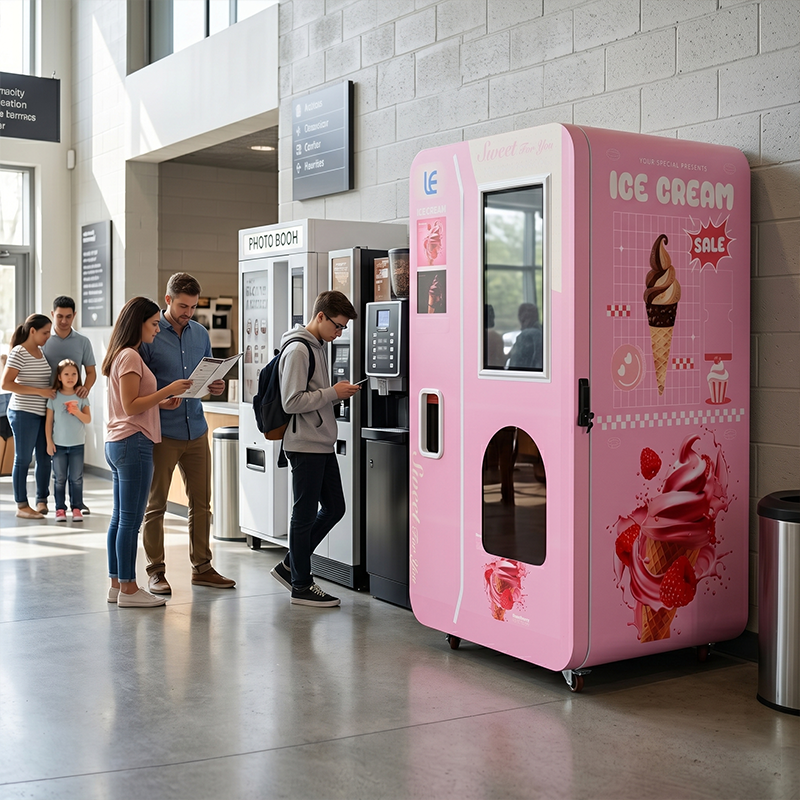 Operational Comparison by Deployment Model
The right deployment model depends on demand stability and how much service infrastructure the owner already controls.
| Deployment model | Primary operator task | Service frequency score | Demand pattern | Main risk |
|---|---|---|---|---|
| Single-site pilot | Validate product mix and placement | 2 | Local and measurable | Insufficient traffic |
| Multi-site workplace rollout | Standardize replenishment and support | 3 | Predictable by shift | Uneven site performance |
| Hotel or resort network | Coordinate property operations | 4 | Guest and seasonal demand | Seasonality and access |
| Transport hub deployment | Meet strict concession and service rules | 5 | High volume and irregular | Compliance and downtime |
The service frequency scores above are planning values on a 1-to-5 editorial scale, where 5 means the location generally requires the most structured replenishment and support. They are not manufacturer specifications or performance guarantees.
How to Build a Practical Unattended Retail Pilot
A controlled pilot is safer than a large rollout because it exposes demand, service, and payment problems before they become network-wide costs.
- Select one location with visible traffic and a clearly defined customer group.
- Start with a focused assortment rather than filling every selection with slow-moving products.
- Record transactions, stock-outs, refunds, service calls, cleaning time, and customer feedback.
- Compare performance by daypart, weekday, weather conditions, events, and operating shifts.
- Review the first operating cycle with the site owner before adding locations.
Operators should avoid judging a pilot only by gross sales. A more useful review considers contribution after product cost, payment charges, location fees, service labor, transportation, cleaning, and waste. The goal is to identify a repeatable operating pattern, not simply a busy opening week.
Why Hardware, Software, and Service Must Be Designed Together
An ice cream vending machine becomes more valuable when its physical design and digital management tools support the same workflow. Remote inventory visibility can reduce unnecessary site visits, while fault alerts can help prioritize service. Sales data can also guide assortment changes by location rather than forcing every venue to carry identical products.
Customization may be important for international or multi-site operators. Useful configuration areas can include cabinet appearance, menu language, payment methods, screen content, product dimensions, connectivity, and reporting requirements. However, customization should be tied to a documented operational need; unnecessary variation can increase spare-parts complexity and staff training.
A complete unattended retail program may combine frozen desserts with beverages, snacks, coffee, ice, or other high-frequency products. This broader ecosystem can improve convenience for the customer, but each category introduces its own storage, sanitation, replenishment, and compliance requirements. Product expansion should follow evidence from the pilot rather than assumptions about cross-selling.
Common Mistakes That Reduce Value
The most common failure is placing the machine where it is convenient for the operator but invisible or inconvenient for the customer. Other avoidable problems include weak cellular connectivity, unclear ownership of cleaning, insufficient nighttime lighting, no refund process, poor product rotation, and a replenishment route that requires excessive staff time.
Operators should also avoid promising continuous availability without a service plan. Unattended retail still requires human decisions, scheduled maintenance, inventory control, customer support, and compliance oversight. Automation reduces certain labor requirements; it does not eliminate operational responsibility.
FAQ
Which industry is usually the best starting point?
A hotel, workplace, university, or leisure venue is often a practical starting point because the audience and operating boundary are relatively clear. The best choice depends on traffic, access, product demand, and the site’s ability to support replenishment and cleaning.
Does an ice cream vending machine need to operate around the clock?
Not necessarily. Extended availability is one advantage of unattended retail, but operating hours should follow building access, security policy, local regulations, and customer demand. A machine can be valuable even when the host site has controlled access.
What products work best in an automated frozen-dessert format?
Packaged products with clear labeling, consistent dimensions, reliable shelf handling, and strong recognition are generally easier to manage. The final assortment should reflect local preferences, allergen requirements, storage conditions, and the machine’s approved product configuration.
How important is remote monitoring?
Remote monitoring is highly valuable for multi-site operations and locations that are difficult to visit. Temperature alerts, stock visibility, payment status, and fault notifications can help operators respond faster and reduce unnecessary inspections.
How often does the machine need to be cleaned?
Cleaning frequency depends on the equipment design, product format, traffic, local rules, and the operator’s sanitation plan. Buyers should request a written cleaning schedule, identify product-contact surfaces, and assign responsibility before installation.
Can one machine support different payment methods?
Many commercial systems can be configured for multiple payment methods, but compatibility depends on the market, payment provider, connectivity, and local requirements. Confirm supported methods, transaction fees, settlement reports, refund handling, and offline behavior during procurement.
Should a business buy one machine or deploy several?
A single-site pilot is usually the better first step unless the operator already has proven traffic data, service capacity, and a replenishment network. Multi-site deployment makes sense after the business understands product demand, downtime response, and site-level economics.
About the Solution Provider
Yile Shangyun develops commercial self-service equipment and integrated unattended retail solutions spanning coffee, beverages, frozen products, vending, ice distribution, and AI service terminals. Its approach combines hardware, software, remote management, OEM or ODM configuration, and operational support for locations such as offices, airports, schools, factories, hotels, campuses, and communities. Buyers can request a configuration review to match products, payment options, languages, connectivity, and service procedures to a specific site.

Post time: Sep-01-2026