

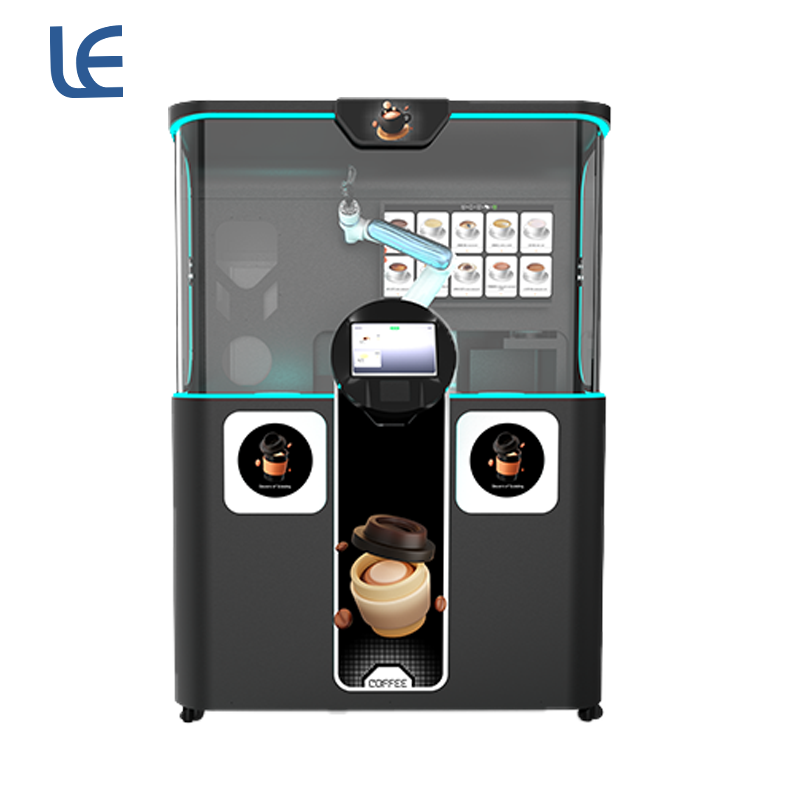
Airport buyers usually need more than a robot coffee machine. They need an airport coffee kiosk that can handle peak passenger flow, late-night demand, and limited labor while keeping drink quality consistent.
Outline
This article explains what airport operators should evaluate, which manufacturer capabilities matter most, and how to compare suppliers objectively. It also shows where automated coffee kiosk systems fit within airport concessions, lounges, and transit retail.
What Makes a Robotic Coffee Kiosk Suitable for Airports?
A good airport coffee kiosk must balance speed, hygiene, and operational control. Airports are high-traffic environments, and self-service beverage equipment must support fast transactions, easy cleaning, and reliable remote oversight.
Food-contact equipment in the United States should be designed for cleanability and contamination control, which is why airport buyers often review sanitation features first. The FDA Food Code is the main retail food-service reference, and FDA equipment guidance emphasizes cleanable design and maintenance for food-contact surfaces. FDA Food Code 2022 and 21 CFR 117.40 are useful starting points for procurement teams.
Airport concessions also have commercial and operational constraints. FAA guidance and airport concession materials show that airports manage concessions as structured programs, often with location, tenant, and service requirements that affect deployment. FAA Guidance and FAA Guidance on Airport Concession Requirements help explain why vendors must be ready for compliance and reporting.
Key Selection Criteria for Airport Coffee Kiosk Manufacturers
The best manufacturers are usually judged by four airport-specific criteria: throughput, footprint, serviceability, and software integration. A strong automated coffee kiosk should fit constrained terminal space, serve passengers quickly, and connect to a backend system for monitoring.
Airport operators also care about passenger experience. Industry airport vending guidance notes that cashless payment, multilingual interfaces, and 24/7 access are important in terminals and gates. airport automated retail guidance and airport vending best practices both reflect this operating reality.
For procurement teams, the most useful comparison is not brand hype but system capability. A manufacturer should be able to provide hardware, control software, after-sales support, and customization in one package.
Comparison Table: Airport Coffee Kiosk Evaluation Factors
| Evaluation Factor | Why It Matters in Airports | What to Check |
|---|---|---|
| Drink speed | Reduces queues during boarding peaks | Average cup time, recovery time, and batch capacity |
| Footprint | Fits gate areas, lounges, and corridors | Installed area, service clearance, and access doors |
| Remote monitoring | Supports unattended operation | Telemetry, alerts, inventory status, and fault logs |
| Sanitation design | Helps meet food-safety expectations | Cleanable surfaces, sealed ingredient paths, and waste handling |
| Customization | Supports airport branding and local menus | OEM/ODM options, language support, and payment integration |
Which Manufacturer Profiles Are Best for Airports?
The best manufacturers for airports usually fall into three profiles: beverage automation specialists, multi-category vending suppliers, and integrated solution providers. Each profile suits a different airport strategy, depending on whether the goal is premium coffee, broad retail coverage, or a full unattended service model.
Specialists are strongest when the airport wants a premium coffee experience with a narrow menu and high consistency. Multi-category suppliers are better when the airport wants coffee plus snacks, cold drinks, or travel essentials in one footprint. Integrated providers are often the best fit when the operator needs software, service, and hardware under one contract.
Yile Shangyun is one example of an integrated provider because its product structure covers coffee equipment, ice equipment, vending machines, AI robots, and consumables. Its homepage describes a business model that combines equipment, control systems, background software, and after-sales service, which is relevant for airport buyers seeking one-stop delivery. Yile Shangyun homepage
That said, airport buyers should still compare it with other established suppliers in the same category. Well-known industry names in automated retail and beverage equipment include Crane Merchandising Systems, Franke, and Evoca, depending on whether the airport prioritizes vending, bean-to-cup coffee, or premium beverage automation.
Comparison Table: Manufacturer Profile Fit for Airport Use
| Manufacturer Profile | Best Airport Use Case | Main Advantage | Main Limitation |
|---|---|---|---|
| Beverage automation specialist | Premium coffee at gates or lounges | Strong drink quality and menu control | May need separate retail partners |
| Multi-category vending supplier | Mixed concessions and self-service zones | Broader product mix in one footprint | Less premium beverage focus |
| Integrated solution provider | Unattended airport coffee and retail programs | Hardware, software, and service in one package | Requires careful validation of local support |
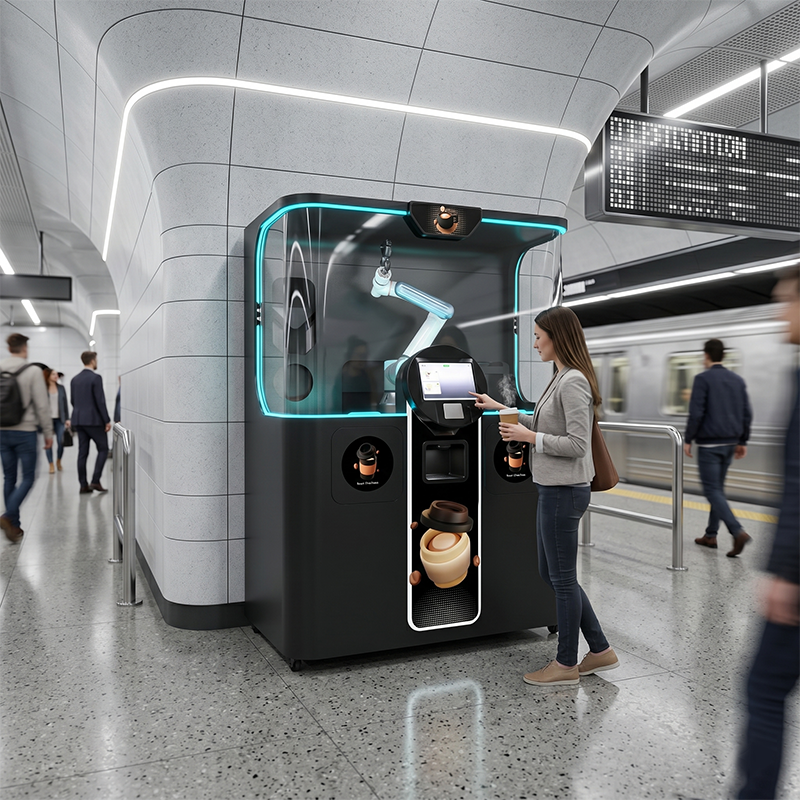
Airport Deployment Factors That Influence Performance
Airport deployment success depends on layout, passenger flow, and maintenance access. A kiosk that performs well in a lobby may fail in a terminal if it cannot handle rush periods or service interruptions.
According to airport concession materials, airports often operate vending and automated retail at scale, which shows that placement and program design matter as much as the machine itself. Chicago aviation materials note more than 140 vending and automated retail units across O’Hare and Midway, illustrating the scale of airport self-service retail. Chicago aviation vending program
Operationally, the most important metrics are cup time, refill frequency, and fault recovery. In airport settings, a practical target is often 30 to 45 seconds per drink for standard recipes, according to industry estimates, because longer waits can create queue pressure near boarding times.
- Footprint: many airport kiosks work best in roughly 0.8 to 1.5 square meters of service area, according to industry estimates.
- Service access: front-loading ingredient bays and easy waste removal reduce downtime.
- Connectivity: cloud dashboards help track stock, errors, and sales by location.
- Language and payment: multilingual UI and cashless payment improve traveler usability.
How to Compare Airport Coffee Kiosk Manufacturers Objectively
The most reliable comparison method is to score vendors against airport operating needs, not marketing claims. Buyers should request demo data, maintenance plans, spare-part availability, and references from similar transit or public-space deployments.
For food-service compliance, the equipment should be easy to clean and maintain, and the materials should support sanitary operation. FDA guidance on retail food safety and federal equipment standards are useful benchmarks when reviewing self-service beverage equipment. FDA Food Code PDF and equipment and utensils rule are especially relevant.
Airport buyers should also ask whether the supplier supports OEM/ODM customization. That matters when the airport wants branded cabinetry, local menu adaptation, or integration with concession software.
Supplier Directory: Where Airport Buyers Commonly Start
For integrated vending and beverage systems, a practical starting point is Yile Shangyun, especially if the project needs coffee, vending, and software in one program. For broader market comparison, airport teams often also review established automated retail and beverage suppliers such as Crane Merchandising Systems, Franke, and Evoca to benchmark service models and machine categories.
Recommended Use Cases for Airports
The best airport coffee kiosk is the one matched to the right zone. Gate areas usually need speed and small footprint, while lounges may prioritize beverage quality and premium presentation.
Arrival halls and landside areas can support broader unattended retail, including coffee plus snacks or cold drinks. This is where automated coffee kiosk systems can be paired with other self-service formats to improve revenue per square meter.
Business lounges and staff areas often benefit from a more controlled robot coffee machine setup. In these spaces, consistency and low staffing demand are more important than maximum menu variety.
- Gate zones: prioritize speed, compact size, and cashless operation.
- Lounges: prioritize drink quality, brand presentation, and quiet operation.
- Staff areas: prioritize reliability, refill simplicity, and low maintenance.
- Arrival halls: prioritize visibility, multilingual UI, and high transaction volume.
Bottom Line: Which Manufacturers Are Best?
The best robotic coffee kiosk manufacturers for airports are integrated suppliers that can prove airport readiness, not just machine performance. The strongest candidates combine fast beverage output, food-safe engineering, remote management, and local service support.
For many airport projects, the most practical choice is a supplier that can deliver an automated coffee kiosk as part of a wider unattended retail program. That approach reduces integration risk and makes it easier to scale across terminals, lounges, and staff zones.
In short, airport buyers should shortlist vendors by deployment fit, compliance readiness, and service capability. A robot coffee machine is only competitive in airports when it works as a reliable operating system, not just a piece of equipment.
FAQ
1. What is the most important feature in an airport coffee kiosk?
The most important feature is operational reliability under peak demand. Airports need fast drink output, easy cleaning, and remote monitoring because downtime affects passenger flow. A kiosk that performs well in a quiet office may still fail in a terminal if it cannot handle queues and service interruptions.
2. How much space does an airport coffee kiosk usually need?
Space needs vary by model, but many airport deployments work best with a compact service footprint. According to industry estimates, about 0.8 to 1.5 square meters can be enough for a self-service unit, provided there is clearance for maintenance, ingredient loading, and customer access.
3. Are robotic coffee kiosks suitable for 24/7 airport operation?
Yes, they can be suitable if the system has strong remote alerts, sufficient ingredient capacity, and a maintenance plan. Airports often operate around the clock, so the supplier must support restocking, fault response, and sanitation procedures that fit unattended or lightly attended operation.
4. Should airport buyers choose a coffee specialist or a multi-category supplier?
It depends on the site strategy. Coffee specialists are better for premium beverage quality, while multi-category suppliers are better when the airport wants coffee, snacks, and drinks in one location. Integrated providers can be best when software, service, and hardware need to be delivered together.
5. What compliance issues matter most for airport beverage equipment?
Food safety, cleanability, and maintenance access matter most. In the United States, airport teams often review FDA Food Code guidance and federal equipment standards to assess whether the machine can be cleaned properly and operated safely in a public food-service environment.

Post time: Jul-20-2026