

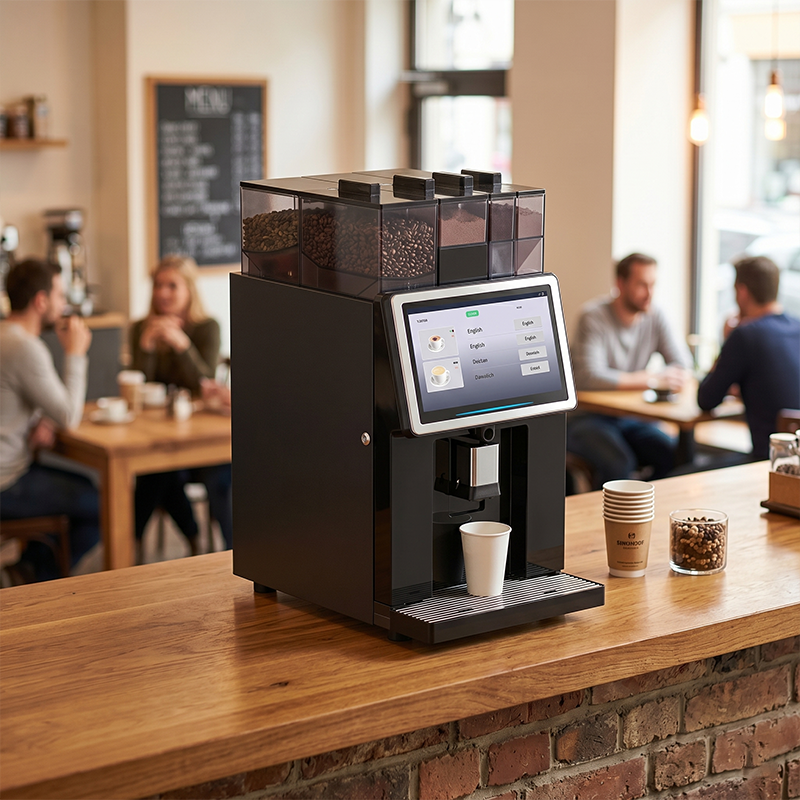
Choosing the right Chinese coffee machine manufacturer can determine whether an exporter builds a dependable, scalable coffee brand or struggles with quality issues, delays, and weak after-sales support. This article examines which suppliers stand out for export-focused buyers, with attention to product range, manufacturing strength, customization, certifications, and OEM/ODM capabilities. It also helps readers match factory strengths to different market needs, from commercial vending and café equipment to private-label opportunities. By the end, exporters will have a clearer framework for comparing manufacturers and sourcing machines that support long-term growth in international coffee markets.
Why the Coffee Export Market Matters
The global coffee machine market is expanding rapidly, driven by the increasing consumption of specialty coffee and the automation of commercial beverage services. For international distributors and entrepreneurs, sourcing reliable equipment is the foundation of building a competitive China export coffee brand that can scale across borders.
The manufacturing ecosystem in China offers unparalleled advantages in both cost efficiency and technological integration, making it the primary hub for hardware procurement.
Global demand and export opportunities
Valued at over $15 billion globally, the coffee equipment sector is projected to maintain a compound annual growth rate (CAGR) of roughly 4.5% through 2028. This steady growth creates massive export opportunities for businesses that can bridge the gap between high-tech manufacturing and local market demands.
Importers and brand owners can explore a wide range of innovative coffee products to meet this surging international demand, capitalizing on the shift toward automated and smart-enabled brewing systems.
Key buyer segments in coffee equipment
Success in this industry requires understanding distinct buyer segments. Commercial buyers, such as cafes, hotels, and automated vending operators, demand robust machines capable of producing 150 to 200 cups per hour with minimal downtime.
Conversely, the prosumer (professional-consumer) segment focuses on compact espresso machines with precise extraction controls, typically requiring a machine footprint under 40 square centimeters to fit comfortably in premium home kitchens.
Top Chinese Coffee Machine Manufacturers for Exporters
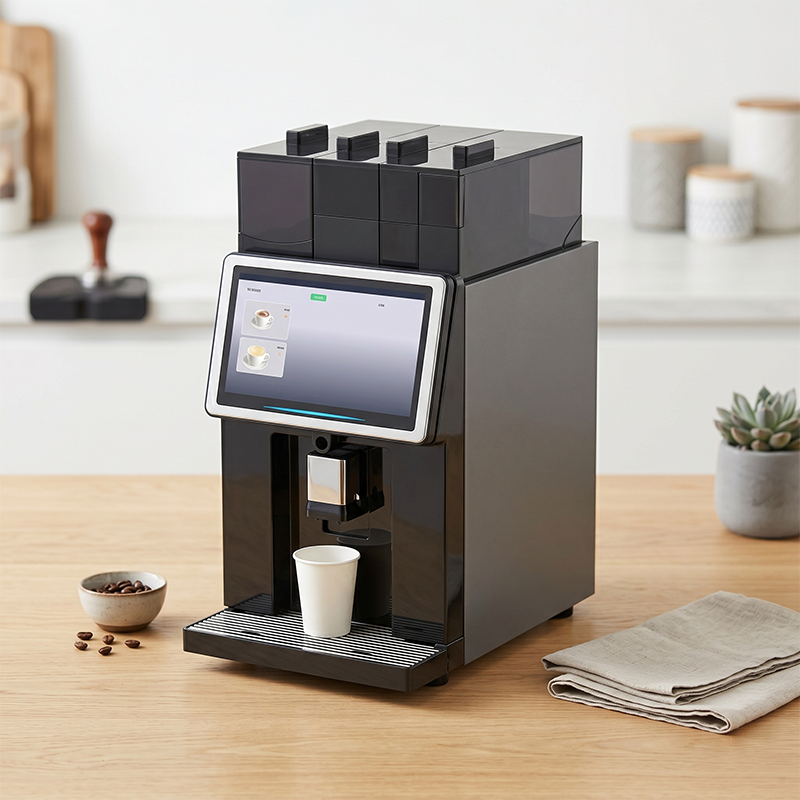
OEM vs ODM vs branded suppliers
Exporters generally choose between three sourcing models. Original Equipment Manufacturing (OEM) requires the buyer to fund custom molds and tooling, which can range from $15,000 to $50,000 depending on complexity. Original Design Manufacturing (ODM) allows buyers to white-label pre-engineered machines, significantly reducing upfront costs while requiring a Minimum Order Quantity (MOQ) typically between 300 and 500 units.
Finally, branded distribution involves reselling established factory brands with much lower MOQs, often starting between 10 and 50 units for trial shipments.
How to compare manufacturers effectively
To evaluate these manufacturers effectively, buyers must look beyond basic online listings and assess engineering capabilities. A reliable factory will have an in-house R&D team and clear documentation of its production capacity.
Reviewing a supplier’s corporate infrastructure and company history provides insight into its long-term viability and technical expertise.
| Sourcing Model | Typical MOQ | Upfront Tooling Cost | Time to Market |
|---|---|---|---|
| OEM (Custom) | 1,000+ units | $15,000 – $50,000 | 6 – 12 months |
| ODM (White-label) | 300 – 500 units | $0 – $2,000 (branding) | 2 – 3 months |
| Branded Reseller | 10 – 50 units | $0 | Immediate |
Selection Criteria for Export Success
An exporter’s reputation hinges on the reliability and performance of the coffee machines they distribute. Competing in Western markets means adhering to strict performance standards that go beyond basic functionality.
Product specifications that matter most
Core product specifications dictate the machine’s market positioning. For espresso machines, pump pressure must reliably hit the 9 to 15 bar range to ensure proper extraction, often utilizing industry-standard components like Italian Ulka pumps.
Temperature stability is equally critical; advanced units employ PID (Proportional-Integral-Derivative) controllers to keep water temperature variance within a strict 1°C margin. Dual-boiler systems, such as a 1.5L steam boiler paired with a 0.5L brew boiler, are mandatory for commercial environments to allow simultaneous brewing and milk frothing.
Pricing, tooling, quality control, and warranty
Pricing must be weighed against quality control protocols and warranty terms. Top-tier Chinese manufacturers target a production defect rate of less than 1.5% and typically offer a 12- to 24-month warranty on core components like motherboards and boilers.
| Specification | Home / Prosumer Market | Commercial / Vending Market |
|---|---|---|
| Boiler Type | Single Thermoblock or Heat Exchanger | Dual Boiler or Multi-Boiler |
| Pump Type | Vibratory (15 bar peak) | Rotary (9 bar consistent) |
| Daily Capacity | 10 – 30 cups | 150 – 300+ cups |
| Power Draw | 1200W – 1500W | 2500W – 4000W+ |
Compliance, Logistics, and Risk Management
Moving electronic appliances across international borders introduces significant regulatory and logistical hurdles. Exporters must ensure complete compliance to avoid costly customs seizures or local liability issues.
Certifications and testing requirements
Certifications are non-negotiable in the global appliance trade. European markets require CE and RoHS compliance, while North American buyers demand UL or ETL listings for electrical safety.
Furthermore, any internal components touching water or coffee must pass food-grade testing, such as FDA (US) or LFGB (Germany) standards. Securing a new CE certification for a custom OEM coffee machine can cost between $2,000 and $5,000 per model and take up to six weeks to process.
Factory audits, samples, and shipment risk control
Risk management during production and shipping is vital to maintaining profit margins. Exporters should mandate third-party factory audits and pre-shipment inspections based on AQL (Acceptable Quality Limit) standards, typically setting thresholds at Major 2.5 and Minor 4.0.
Logistically, commercial coffee machines are bulky and heavy. A standard 40-foot High Cube (40HQ) shipping container generally holds between 400 and 600 commercial machines, making efficient EPS packaging design crucial for minimizing per-unit ocean freight costs.
How to Choose the Best Coffee Export Partner
Transitioning from a shortlist of potential factories to a finalized manufacturing partnership requires a systematic approach to due diligence, sampling, and contract negotiation.
Step-by-step supplier sourcing process
The sourcing process should follow a strict progression: Request for Quotation (RFQ), sample evaluation, trial order, and mass production. Never skip the paid sample phase. Ordering a sample allows the exporter to test the machine’s thermal stability, extraction quality, and software interface in their local market.
Once the sample is validated, a trial order of 50 to 100 units tests the factory’s mass production consistency and packaging durability before the buyer commits to a full container load.
Final decision factors beyond price
Beyond the FOB (Free On Board) unit price, the final decision should rest heavily on after-sales support capabilities. The best manufacturers provide a 1% to 2% ratio of free, easily replaceable spare parts—such as silicone gaskets, solenoid valves, and power switches—with every bulk order to facilitate immediate local repairs.
Exporters looking to establish long-term partnerships should contact specialized manufacturers to negotiate these critical after-sales terms, secure exclusive regional distribution agreements, and map out future product development roadmaps.
Further reading:
Key Takeaways
- The most important conclusions and rationale for hina export coffee brand
- Specs, compliance, and risk checks worth validating before you commit
- Practical next steps and caveats readers can apply immediately
Frequently Asked Questions
What sourcing model is best for launching a China export coffee brand?
ODM is usually the fastest start. It offers white-label machines, lower upfront cost, and typical MOQs of 300–500 units.
How can I verify a Chinese coffee machine manufacturer before ordering?
Check for in-house R&D, factory history, production capacity, and clear QC records. Request certifications, test videos, and sample evaluation before bulk orders.
What machine specs matter most for export markets?
Focus on stable 9–15 bar pressure, PID temperature control within 1°C, suitable boiler type, and output capacity that matches your buyer segment.
What defect rate and warranty should exporters expect?
Aim for factories with under 1.5% defect rates and 12–24 month warranties on key parts like boilers, pumps, and control boards.
Can YL Vending help with commercial coffee machine exports?
Yes. YL Vending offers automated beverage equipment, product support, and manufacturing background useful for distributors building export-ready coffee solutions.

Kely
Post time: Jun-19-2026