

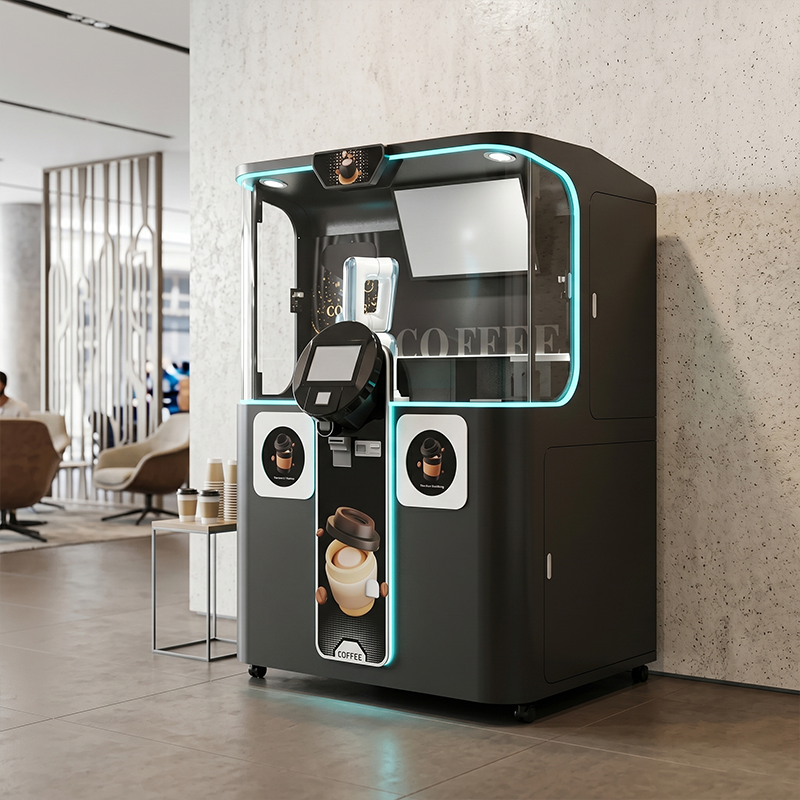
Airport retail demands coffee automation that can handle round-the-clock use, sudden passenger surges, tight footprints, and strict maintenance standards. That makes supplier selection more than a comparison of machine features: the best terminal coffee robot brand must combine drink quality, uptime, remote monitoring, service coverage, and a business model suited to concession operations. This article examines what separates strong airport-ready suppliers from generic vending providers, including capacity, reliability, customization, and support. By the end, you will have a clear framework for evaluating vendors and identifying which coffee robot partners are best aligned with airport retail performance and passenger expectations.
Why the Coffee Robot Brand Matters in Airports
Airport terminals represent one of the most demanding retail environments globally, characterized by fluctuating passenger volumes, strict security protocols, and continuous operations. Integrating automated food and beverage solutions has become a strategic priority for concessionaires aiming to maximize revenue per square foot. Selecting a reliable terminal coffee robot brand is not merely an equipment purchase; it is a long-term operational partnership that dictates passenger satisfaction and profitability. The right supplier ensures that the automated kiosk can withstand continuous 24/7 usage while consistently delivering high-quality specialty beverages that meet the expectations of modern travelers.
Passenger dwell time and labor constraints
Travelers typically experience an average dwell time of 60 to 90 minutes before boarding, during which they frequently seek premium food and beverage options. However, unpredictable security lines and varying gate distances mean that speed of service is critical. Traditional coffee shops in airports often suffer from severe labor constraints, leading to long queues and abandoned purchases. A commercial-grade coffee robot mitigates these issues by operating continuously without shift changes or breaks. High-performance models are engineered to produce 50 to 80 cups per hour, effectively capturing sales during early morning or late-night flight waves when human-staffed kiosks are closed or understaffed.
Best-fit airport retail formats
The spatial configuration of an airport necessitates flexible retail formats. Unlike traditional cafes that require extensive plumbing, seating, and storage, automated coffee kiosks are highly adaptable. A standard robotic unit typically occupies a compact footprint of 2 to 4 square meters, making it an ideal fit for underutilized terminal spaces. Best-fit locations include free-standing placements near remote departure gates, integrated setups within VIP airline lounges, and standalone units in baggage claim areas where arriving passengers wait for luggage. By leveraging these compact dimensions, airport operators can activate dead zones and convert them into high-margin retail touchpoints.
How to Compare Coffee Robot Suppliers
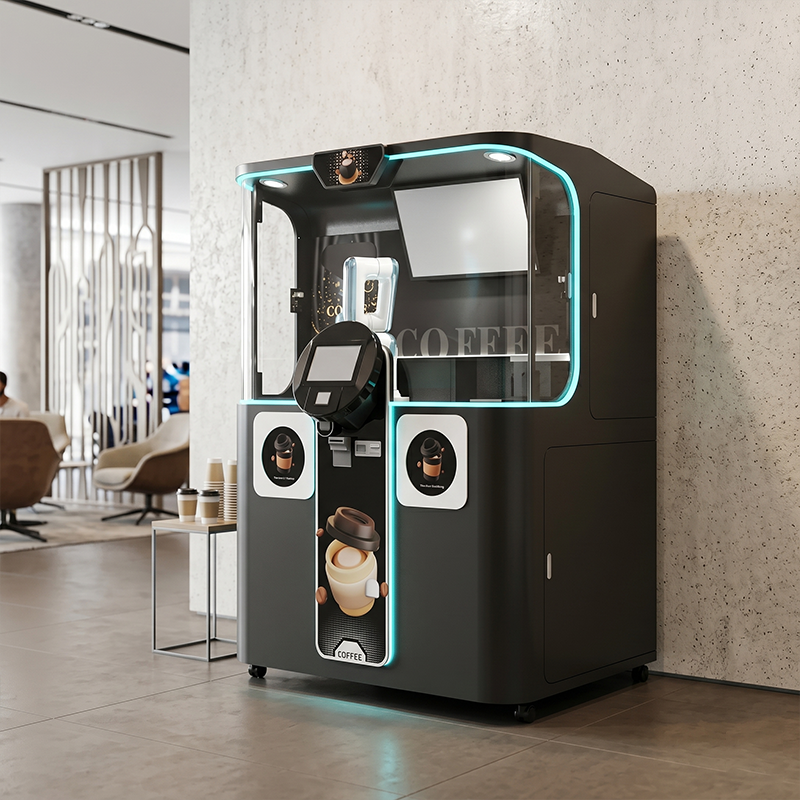
Evaluating automated kiosk manufacturers requires a rigorous analysis of both engineering quality and the underlying business model. Retail operators must look beyond the aesthetic appeal of the robotic arms and focus on the internal components, software ecosystem, and financial structures offered by the supplier.
Key technical and commercial criteria
The operational viability of a terminal coffee robot brand depends heavily on its technical specifications. Dispensing speed is a primary metric; competitive units must complete a complex espresso-based beverage in 45 to 60 seconds. Ingredient capacity is equally vital to minimize labor overhead. A high-tier unit should hold sufficient coffee beans, milk, and syrups to produce upwards of 200 cups before requiring human intervention for restocking. Additionally, commercial criteria must include robust payment gateway integrations that support international credit cards, mobile wallets, and multi-currency transactions, ensuring seamless purchases for global travelers.
Ownership and deployment models
Suppliers offer various financial models to accommodate different capital expenditure (CapEx) strategies. A direct purchase model typically requires an upfront investment ranging from $30,000 to $80,000 per unit, allowing the airport concessionaire to retain 100% of the daily revenue. Alternatively, some suppliers provide a revenue-sharing model where the hardware is placed at no upfront cost, but the manufacturer retains 15% to 30% of gross sales. Leasing agreements are also common, offering fixed monthly hardware costs while the operator manages the consumables and daily maintenance.
Buyer comparison table
To assist procurement teams in evaluating their options, the following table outlines the standard tiers of coffee robot models available in the commercial market:
| Model Tier | Estimated CapEx Range | Throughput (Cups/Hour) | Ingredient Capacity | Best Terminal Application |
|---|---|---|---|---|
| Entry-Level Compact | $30,000 – $45,000 | 30 – 40 | 100 cups | Baggage claim, small regional hubs |
| High-Throughput Standard | $50,000 – $65,000 | 50 – 60 | 200 cups | Main departure concourses, food courts |
| Premium Dual-Arm | $70,000 – $80,000+ | 70 – 90 | 300+ cups | International terminals, VIP lounges |
Operational and Compliance Risks to Assess
Deploying automated food and beverage systems within highly regulated airport environments introduces stringent compliance and logistical hurdles. Failure to thoroughly assess these risks during the supplier selection phase can lead to delayed deployments, failed inspections, or costly operational downtime.
Food safety, electrical, cybersecurity, and accessibility requirements
Airport retail equipment must adhere to rigorous international and local standards. Hardware must carry appropriate electrical and safety certifications, such as UL, CE, or NSF, to pass terminal fire and safety inspections. Accessibility is a strict legal requirement in many jurisdictions; for instance, the Americans with Disabilities Act (ADA) mandates that interactive touchscreens and dispensing areas must not exceed a reach height of 48 inches. Furthermore, because these kiosks process thousands of financial transactions, the payment terminals and underlying software networks must be strictly PCI-DSS compliant to protect against cybersecurity breaches.
Installation, utilities, and replenishment logistics
The physical installation of a robotic kiosk requires precise coordination with airport facilities management. Operators must confirm whether the kiosk requires a dedicated 220V or 110V electrical circuit and how it handles water supply. While some premium units require direct plumbing and drainage lines, others are designed to operate using internal 19-liter water jugs and wastewater tanks, which offer greater placement flexibility but require daily manual emptying. Replenishment logistics must also be factored in; staff must be able to access the terminal securely to perform daily cleaning cycles, which typically require 15 to 20 minutes of labor per machine.
Service levels, warranty, and uptime expectations
In a 24/7 airport environment, machine downtime directly translates to lost revenue and frustrated passengers. Concessionaires must negotiate strict Service Level Agreements (SLAs) with their chosen supplier. A standard operational target is 99% hardware uptime. Buyers should assess the supplier’s warranty terms and their ability to provide rapid on-site support. In major aviation hubs, a competitive SLA will guarantee a technician response time of 4 to 8 hours. The availability of remote diagnostic tools is also crucial, allowing the supplier to troubleshoot software glitches or reset robotic parameters without dispatching a technician.
Which Supplier Profile Fits Your Airport Retail Model
Matching a supplier’s manufacturing capabilities and support infrastructure with your specific airport concession strategy is vital for long-term profitability. Terminal demographics, passenger volume, and geographic location all dictate the type of supplier profile that will yield the highest return on investment.
When to choose premium or customized solutions
While standard models suffice for domestic or regional airports, high-end international terminals often benefit from premium or customized solutions. Luxury retail concourses may require bespoke exterior branding, specialized lighting, or interactive digital displays that align with the aesthetic of surrounding high-end boutiques. Operators should be aware that requesting custom fabrications or specialized dual-arm robotic configurations will significantly impact deployment timelines. While standard off-the-shelf units may have a lead time of 4 to 6 weeks, heavily customized kiosks can extend procurement lead times to 12 to 16 weeks.
How to assess supplier maturity by region
Supplier maturity varies significantly across different global regions, and operators must evaluate whether a manufacturer has the infrastructure to support deployments in their specific geography. A supplier based in Asia may offer highly competitive hardware pricing, but if they lack a localized spare parts distribution network in Europe or North America, operators risk extended downtime during breakdowns.
| Supplier Footprint | Hardware Cost Profile | Spare Parts Availability | Ideal Operator Profile |
|---|---|---|---|
| Regional / Domestic | Moderate to High | Excellent (1-2 days) | Single-airport concessionaires |
| Global / Multinational | High | Good (2-4 days) | Multi-hub airport retail groups |
| Overseas Exporter | Low to Moderate | Poor (7-14+ days) | Operators with in-house technical teams |
How to Make the Final Supplier Decision
Formalizing the procurement process ensures that the chosen robotic system aligns seamlessly with passenger demographics, terminal infrastructure, and overarching financial goals. A structured approach to sourcing minimizes capital risk and guarantees alignment between the operator and the hardware manufacturer.
Step-by-step sourcing process
The sourcing process should begin with the issuance of a detailed Request for Proposal (RFP) outlining the specific technical requirements, footprint constraints, and expected transaction volumes of the airport. Once a shortlist of suppliers is identified, operators should mandate a pilot testing phase. A standard pilot program typically runs for 3 to 6 months in a single, high-traffic terminal location. This testing period allows the concessionaire to validate the machine’s real-world throughput, monitor the frequency of mechanical jams, and assess the supplier’s responsiveness to maintenance requests before committing to a multi-unit rollout.
Final decision criteria
The ultimate supplier decision should be based on the Total Cost of Ownership (TCO) calculated over a standard 5-year hardware lifecycle. TCO analysis must incorporate the initial CapEx, shipping and installation fees, software licensing, and ongoing maintenance. Industry benchmarks suggest that annual maintenance and parts replacement will cost approximately 10% to 15% of the initial hardware purchase price. Operators must carefully weigh these long-term expenses against the projected gross margins of the dispensed beverages. To initiate this financial modeling and secure site-specific deployment plans, procurement teams should directly contact a terminal coffee robot brand to request detailed pricing matrices and technical compliance documentation.
Further reading:
Key Takeaways
- The most important conclusions and rationale for terminal coffee robot brand
- Specs, compliance, and risk checks worth validating before you commit
- Practical next steps and caveats readers can apply immediately
Frequently Asked Questions
What throughput should a terminal coffee robot deliver in an airport?
For most terminals, target 50–80 cups per hour, with espresso drinks finished in about 45–60 seconds to handle peak flight waves.
How much space does an airport coffee robot usually need?
Most units fit in about 2–4 square meters, making them practical for gates, lounges, baggage claim zones, and other underused terminal areas.
Which payment options are essential for airport coffee robot kiosks?
Choose a supplier that supports international credit cards, mobile wallets, and multi-currency payments so global travelers can buy quickly without friction.
What capacity should a coffee robot have before restocking?
A strong airport model should support around 200 cups or more per refill cycle to reduce staff visits and keep service running during busy periods.
Does YL Vending offer airport-ready coffee robot solutions?
Yes. YL Vending provides compact automated coffee kiosk options and deployment models worth reviewing for airport retail, lounge, and terminal concession use.

Kely
Post time: Jun-17-2026