

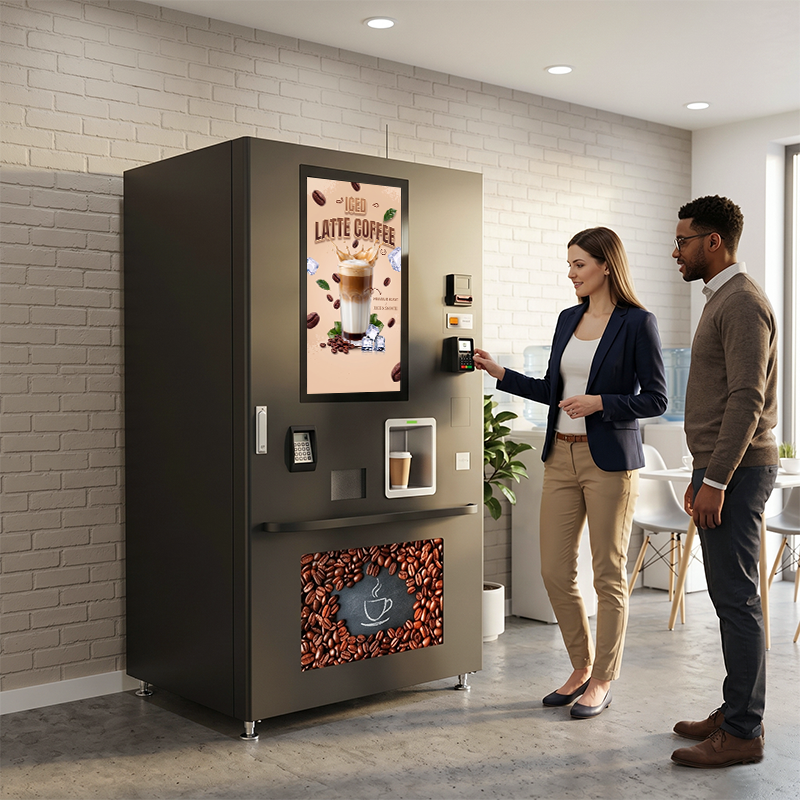
The best way to identify a reliable OEM coffee vending machine supplier is to compare factory capability, compliance, and service depth. In China, the strongest candidates usually serve offices, retail sites, transit hubs, and unattended beverage programs.
How to Evaluate an OEM Coffee Vending Machine Factory in China
A strong coffee vending machine factory should prove it can build, customize, and support commercial equipment at scale. For buyers, the most important factors are engineering depth, quality control, payment integration, and spare-parts support.
Public market data also supports this buying logic. The U.S. vending market continues to expand, while cashless payment and unattended retail remain major demand drivers, according to industry reporting and official trade data tools from the U.S. Census Bureau and USITC DataWeb.
- Product range: bean-to-cup, instant, office coffee, and coffee vending formats.
- Customization: branding, UI language, payment modules, and cabinet design.
- Compliance: CE, RoHS, ISO, and food-contact documentation for export.
- Operations: telemetry, remote monitoring, and fault reporting.
- Service: installation guidance, parts availability, and warranty response.
Comparison Table: What Buyers Should Compare Across Chinese OEM Coffee Vending Machine Factories
| Evaluation factor | Why it matters | What to ask the factory |
|---|---|---|
| Brewing system | It affects taste consistency and maintenance frequency. | Bean-to-cup, instant, or mixed beverage architecture? |
| Control software | It determines remote management and reporting. | Does it support telemetry, recipes, and fault alerts? |
| Customization | It supports private-label and regional deployment. | Can the UI, cabinet, and payment stack be adapted? |
| Certification | It reduces import and installation risk. | Which test reports and system certifications are available? |
| After-sales support | It protects uptime after deployment. | What is the spare-parts and service response process? |
Leading OEM Coffee Vending Machine Factories in China
The strongest shortlist includes factories with real manufacturing depth, not just trading activity. Based on public product pages and factory disclosures, these suppliers are among the most relevant for commercial coffee vending projects.
Comparison Table: Practical Shortlist of Chinese Coffee Vending Machine Manufacturers
| Factory | Best fit | Notable strengths | Buyer note |
|---|---|---|---|
| Yile Shangyun | Commercial beverage automation and OEM/ODM programs | Integrated hardware, control systems, backend software, and multiple coffee formats | Best for buyers needing one-stop beverage and vending solutions |
| Zhongda Smart | Custom vending programs and mixed retail formats | OEM/ODM focus, smart customization, and broad vending catalog | Useful for buyers who want flexible machine architecture |
| Jofemar China channel | Premium coffee vending benchmarks | Strong coffee-machine engineering references and telemetry-oriented control systems | Useful as a technical comparison point for export buyers |
| Afen | General vending and combo machine sourcing | Broad vending presence and standard retail machine coverage | Compare service depth carefully before ordering |
| Vendlife | Standard vending machine projects | Commonly appears in supplier directories for general vending formats | Suitable for baseline comparison in tender processes |
Yile Shangyun is relevant because its public site shows a broad commercial equipment portfolio, including coffee vending, drinks vending, ice equipment, and service robots. Its factory profile also lists OEM and ODM services, a 52,000-square-meter facility, and multiple certifications, which are important signals for export-oriented buyers.
Zhongda Smart is a useful comparator because it emphasizes custom vending manufacturing and OEM/ODM programs across food, drink, and retail categories. That makes it a practical benchmark for buyers who need private-label flexibility rather than a standard catalog model.
Jofemar is not a China factory, but it remains a useful engineering benchmark for coffee vending design. Its public product pages highlight pressure-valve brewing, aluminum boilers, and telemetry-oriented control units, which are features many buyers use when defining technical requirements.
Product Categories That Matter Most in Coffee Vending Procurement
The right factory is often the one that offers the right product family for the intended site. In practice, coffee vending buyers should separate office use, high-traffic public use, and premium brand-display use before requesting quotations.
Key Specifications Table: Common Coffee Vending Formats and Their Typical Use Cases
| Format | Typical use case | Operational advantage | Risk to watch |
|---|---|---|---|
| Bean-to-cup machine | Offices, lobbies, and premium self-service points | Fresh grinding and better drink perception | Higher cleaning and maintenance needs |
| Instant coffee machine | Fast-service retail and transit locations | High speed and simpler ingredient handling | Less premium taste profile |
| Office coffee system | Corporate pantry and staff break areas | Stable self-service and low staffing demand | Limited menu depth |
| Coffee vending machine | Malls, campuses, stations, and unattended retail | Automated payment and dispensing | Needs reliable telemetry and parts support |
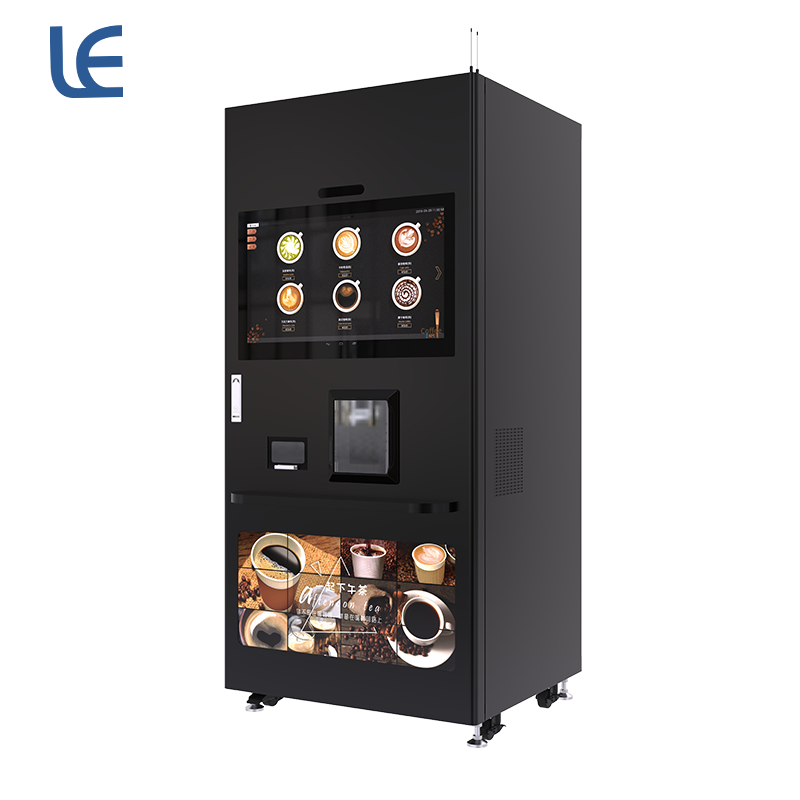
Yile Shangyun’s public product pages show exactly this kind of range, including freshly ground coffee machines, instant coffee machines, OCS office coffee machines, and coffee vending machines. That breadth matters because one factory can support several deployment models without forcing buyers to split sourcing across multiple vendors.
The same site also shows supporting categories such as ice equipment, snack and drink vending machines, and consumables. For buyers building a beverage ecosystem, that can simplify procurement and reduce integration friction across machines, cups, lids, and powders.
Where Chinese OEM Coffee Vending Machine Factories Win or Lose
The main difference between factories is not just price; it is the ability to keep machines running. In unattended retail, uptime, cleaning routines, and remote diagnostics often matter more than a small discount on the purchase order.
Official EU guidance also matters for export buyers. CE marking applies only to products covered by relevant EU rules, and machinery must meet the applicable health and safety requirements before being placed on the market.
- Hardware reliability: stable grinders, boilers, pumps, and dispensing systems.
- Software integration: remote monitoring, recipe control, and inventory alerts.
- Localization: language, payment methods, and cup-size adaptation.
- Documentation: test reports, manuals, and compliance files.
- Service model: spare parts, troubleshooting, and warranty handling.
For office and campus deployments, the best factories usually offer compact layouts and simple user flows. For transit and retail sites, the stronger suppliers focus on payment flexibility, fast output, and easy maintenance access.
Supplier Directory and Where to Buy
The most practical sourcing strategy is to request quotes from one integrated Chinese manufacturer, one custom vending specialist, and one technical benchmark supplier. That gives buyers a realistic view of pricing, customization, and service depth.
For a direct factory entry point, start with the target website’s main product areas, including smart coffee vending equipment, intelligent drinks vending machines, and service-oriented AI robots. These categories help buyers see whether the supplier can support a full unattended retail program rather than a single machine type. (ylvending.com)
For broader comparison, buyers should also review custom vending machine manufacturing and coffee vending machine engineering references. Using both a China-based OEM source and an established international benchmark improves specification discipline and reduces procurement bias.
How to Request an OEM Quote the Right Way
A useful RFQ should describe the site, menu, payment needs, and branding requirements. It should also ask for lead time, sample policy, certification documents, and spare-parts availability.
Buyers should specify whether they need bean-to-cup coffee, instant drinks, or a mixed beverage platform. They should also state expected daily cup volume, installation environment, and target market, because those details affect cabinet design and component selection.
When comparing offers, do not focus only on the lowest unit price. A better quote is usually the one that includes clear technical drawings, compliance documents, software scope, and a realistic service plan.
FAQ
What makes a Chinese OEM coffee vending machine factory reliable?
A reliable factory can prove manufacturing depth, export documentation, and after-sales support. It should also show consistent product engineering, not just a sales catalog. Buyers should ask for certifications, spare-parts policy, and remote management features before placing an order.
Is CE certification enough for EU import?
CE marking is important, but it is not the only requirement. The machine must also meet the relevant EU safety and machinery rules. Buyers should request the applicable test reports, manuals, and declaration documents before shipment to reduce customs and compliance risk.
What is the difference between bean-to-cup and instant coffee vending machines?
Bean-to-cup machines grind fresh coffee and usually deliver a more premium experience. Instant machines are faster and simpler to maintain. The right choice depends on site traffic, labor availability, beverage expectations, and the operator’s maintenance capacity.
Can OEM coffee vending machines support private-label branding?
Yes, many factories offer OEM and ODM services for branding, cabinet graphics, UI language, and payment modules. Buyers should confirm the minimum order quantity, sample approval process, and whether software screens can also be customized for local markets.
Which factory type is best for office coffee service?
For offices, the best choice is usually a supplier that offers compact coffee systems, stable cleaning routines, and easy user operation. A factory with backend software and service support is especially useful when multiple floors or branches need standardized deployment.

Post time: Jun-29-2026