

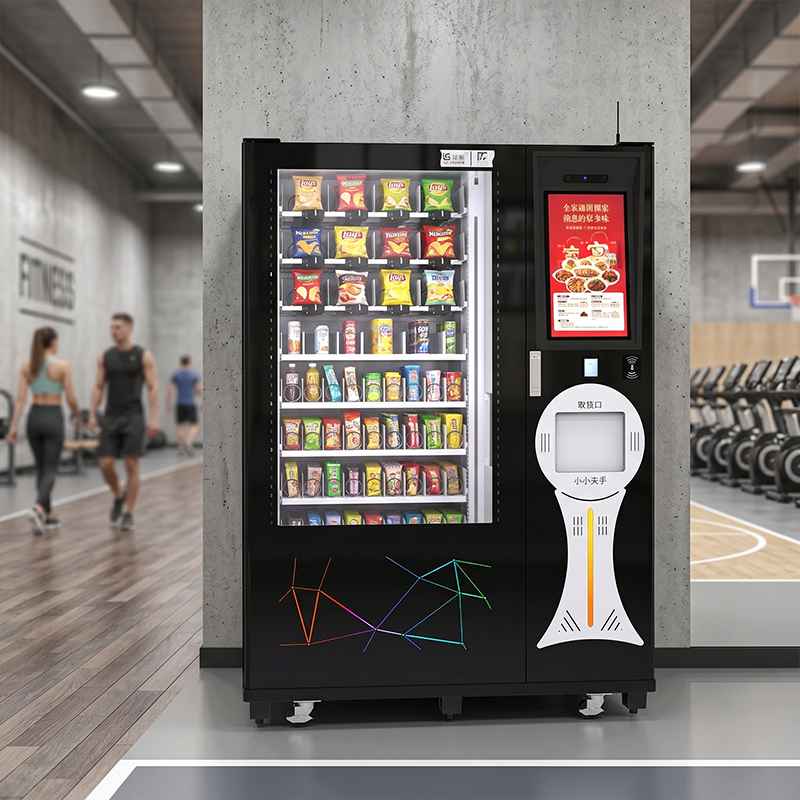
China’s smart vending industry now spans far more than standard snack dispensers, making manufacturer selection a strategic decision rather than a simple price comparison. This ranking examines the top 10 smart vending machine manufacturers in China through the factors that matter most to buyers: product reliability, customization capacity, software integration, payment compatibility, production scale, and after-sales support. Whether you are an operator expanding a network or a brand entering automated retail, the overview will help you understand how leading suppliers differ, what strengths set them apart, and which evaluation points deserve attention before moving into detailed comparisons.
Why Smart Vending Manufacturer Rankings Matter
The automated retail sector has undergone a massive transformation, with China firmly established as the global manufacturing hub for intelligent dispensing technology. As the smart vending market scales rapidly—accounting for over 65% of new global automated retail deployments—identifying the right production partner is critical for operators and brands. A comprehensive smart vending manufacturer ranking provides a structured framework to evaluate suppliers based on hardware reliability, software ecosystem, and post-sales support.
How top manufacturers are reshaping the market
Top manufacturers are moving beyond traditional coil-based snack machines to engineer sophisticated retail terminals. Modern units incorporate IoT sensors, artificial intelligence for inventory prediction, and dynamic touchscreen interfaces. By leveraging these advancements, operators routinely report up to a 30% reduction in out-of-stock incidents and a significant increase in average transaction values. These manufacturers are not just building metal cabinets; they are delivering integrated retail solutions that capture real-time consumer data to optimize supply chains.
What buyers should ask before comparing suppliers
Before consulting any ranking, buyers must define their operational baseline. Key questions include understanding the Minimum Order Quantity (MOQ), which typically ranges from 1 to 50 units depending on the level of custom fabrication required. Operators must also ask whether the manufacturer provides open API access for third-party payment gateways and inventory management software. Clarifying these technical specifications early prevents costly integration delays and ensures the chosen hardware aligns with the operator’s long-term scaling strategy.
Criteria for Ranking Smart Vending Manufacturers
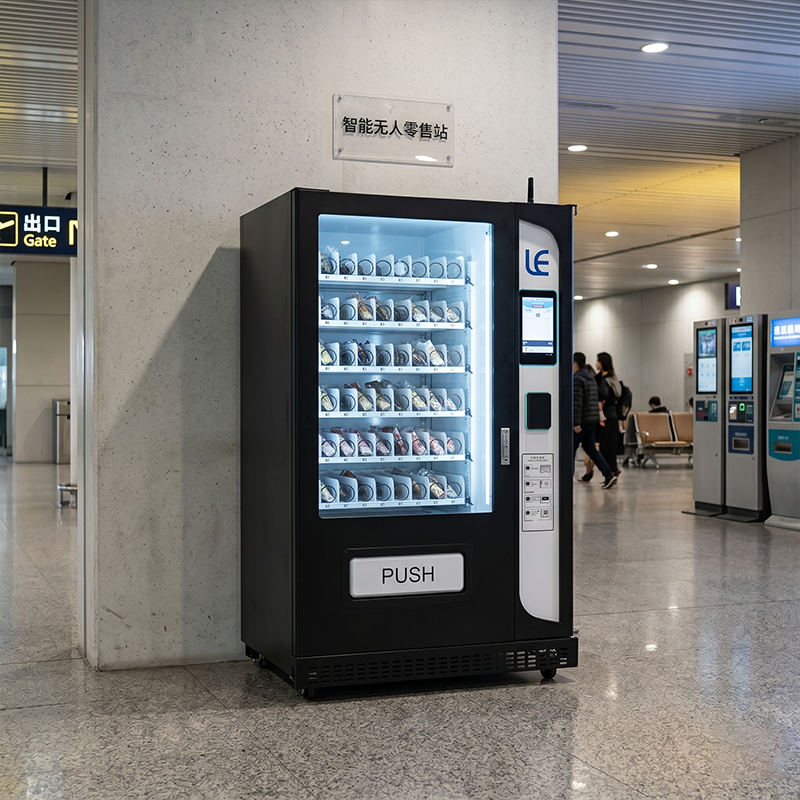
Establishing a reliable smart vending manufacturer ranking requires looking past marketing claims and analyzing concrete operational metrics. An objective evaluation weighs technical specifications against commercial viability to ensure long-term profitability for the operator.
How to assess product range and software capability
A tier-one manufacturer must offer a diverse hardware portfolio supported by robust telemetry and backend management. Buyers should look for suppliers capable of engineering multi-temperature zones, such as dual-zone cabinets maintaining stable environments from 4°C to 25°C. Furthermore, the ability to seamlessly integrate with cloud-based SaaS platforms is non-negotiable. Exploring available products helps operators verify if a supplier can deliver specialized configurations like RFID-enabled smart fridges, robotic arm dispensers, or high-capacity elevator systems.
What trade-offs matter most in cost, quality, and customization
Procurement always involves balancing initial capital expenditure against hardware longevity and operational flexibility. A standard smart fridge might carry a unit cost of $800 to $1,500, whereas highly customized units with elevator delivery systems or interactive AI displays can easily push costs into the $2,500 to $4,000 band. The trade-off for cheaper hardware often manifests in higher maintenance costs; therefore, operators should prioritize manufacturers that guarantee a hardware defect rate of less than 1% and utilize commercial-grade compressors alongside industrial touch panels.
How to use comparison tables effectively
Comparison tables are essential tools for distilling complex OEM data into actionable insights. Rather than simply comparing base prices, operators should construct matrices that weight hardware reliability, software autonomy, and after-sales service.
| Evaluation Category | Weighting | Key Performance Indicator (KPI) | Minimum Acceptable Standard |
|---|---|---|---|
| Hardware Quality | 40% | Compressor lifespan & defect rate | >7 years lifespan; <1% defects |
| Software & Telemetry | 35% | API uptime & integration speed | 99.9% uptime; REST API ready |
| Post-Sales Support | 25% | Parts availability & response time | 24-hour SLA; 3% free spare parts |
Top Smart Vending Machine Manufacturers in China
China’s manufacturing ecosystem hosts hundreds of automated retail suppliers, but the top 10 smart vending machine manufacturers command the majority of global export volume. These industry leaders dictate market standards through massive economies of scale and continuous research and development.
Which companies stand out in the market
The highest-ranking companies distinguish themselves through vertical integration, meaning they control everything from sheet metal fabrication to software development under one roof. Leading facilities often boast annual production capacities exceeding 300,000 units, allowing them to service enterprise-level rollouts efficiently. Buyers researching about us pages of top suppliers will frequently find extensive details regarding ISO certifications, multi-acre industrial parks, and dedicated R&D departments focused on machine vision and cashless payment security.
How leading manufacturers compare
Understanding the stratification among leading manufacturers helps buyers align their procurement strategy with the right supplier tier. The market is broadly divided into high-volume custom OEMs, niche technology specialists, and budget-friendly standard manufacturers.
| Manufacturer Tier | Core Market Strength | Typical MOQ | Standard Production Lead Time | Cost Premium |
|---|---|---|---|---|
| Tier 1 (Enterprise) | High volume, custom OEM/ODM | 20-50 units | 15-30 days | High |
| Tier 2 (Specialist) | Niche tech (RFID, Robotics) | 5-10 units | 30-45 days | Medium-High |
| Tier 3 (Standard) | Budget models, fast deployment | 1-5 units | 7-14 days | Low |
How Buyers Should Evaluate Manufacturers
Even with a reliable smart vending manufacturer ranking in hand, operators must conduct their own due diligence. Evaluating a factory’s true capabilities requires investigating their production standards, logistical infrastructure, and historical reliability.
How to verify factory capability and OEM support
Factory verification goes beyond checking business licenses. Buyers must demand proof of ISO 9001 quality management systems and ensure all hardware meets regional compliance standards such as CE, FCC, or RoHS. A capable OEM partner typically operates out of facilities spanning 50,000 square meters or more, equipped with automated laser cutting and robotic welding stations. This level of infrastructure guarantees that custom branding, specialized dispensing mechanisms, and unique chassis designs can be executed with millimeter precision at scale.
What to check in logistics, spare parts, and maintenance
The total cost of ownership is heavily influenced by a manufacturer’s approach to logistics and maintenance. Top-tier suppliers typically include 1% to 3% of the total order value in free, fast-wear spare parts to minimize initial downtime. Furthermore, operators should scrutinize the warranty terms, which should offer 12 to 36 months of coverage on critical components like compressors and payment modules. Efficient routing for international shipping and clear documentation for customs clearance are equally vital to prevent port delays.
What warning signs indicate a weak supplier
Identifying red flags early can save operators from disastrous capital investments. Warning signs include a reliance on third-party software without offering direct API access, an inability to provide transparent defect rate data (which should ideally remain strictly below 2%), and vague warranty terms. Additionally, sluggish communication during the initial inquiry phase—such as response times exceeding 48 hours—often foreshadows poor after-sales support. Operators who encounter these issues should immediately contact us or seek alternative, vetted suppliers who prioritize transparency.
How to Choose the Right Smart Vending Manufacturer
Finalizing a procurement decision requires synthesizing the data gathered from rankings, factory evaluations, and operational requirements. The ideal manufacturing partner is one whose production strengths perfectly mirror the operator’s deployment environment.
How to match supplier strengths to your deployment model
Deployment models dictate hardware requirements. For high-traffic transit hubs like airports or train stations, operators require high-capacity machines holding 600+ items with rapid dispensing times under 5 seconds. Conversely, closed environments like corporate offices benefit from micro-market setups or smart fridges relying on weight sensors and computer vision, which demand 99% accuracy in product recognition. Matching the manufacturer’s proven track record with these specific use cases ensures the deployed fleet performs reliably under real-world conditions.
What final factors should guide your shortlist
The final shortlist should be evaluated on the Total Cost of Ownership (TCO) over a five-year lifecycle. Beyond the initial hardware invoice, buyers must account for ongoing software licensing fees, which typically range from $5 to $15 per machine monthly, and the cost of replacement parts. Scalability is the ultimate deciding factor; the chosen manufacturer must demonstrate the capacity to support an operator’s growth from a 10-unit pilot program to a 1,000-unit national network without compromising on build quality or delivery timelines. A well-researched supplier partnership is the foundation of a profitable automated retail business.
Further reading:
Key Takeaways
- The most important conclusions and rationale for smart vending manufacturer ranking
- Specs, compliance, and risk checks worth validating before you commit
- Practical next steps and caveats readers can apply immediately
Frequently Asked Questions
Why does a smart vending manufacturer ranking matter?
It helps buyers compare reliability, software, and support before ordering. A good ranking reduces sourcing risk and speeds up vendor shortlisting.
What should I ask a Chinese smart vending manufacturer before buying?
Confirm MOQ, API openness, payment integration, temperature range, warranty, spare parts, and response time. These points prevent costly deployment delays.
What product features should I compare in smart vending machines?
Check telemetry, touchscreen UI, cashless payment support, multi-temperature options, inventory monitoring, and delivery system type. Match features to your use case.
How can YL Vending help with smart vending machine selection?
YL Vending offers product options, customization support, and solution guidance for different vending scenarios. Review its product pages to compare machine types and capabilities.
What is a reasonable quality benchmark for top smart vending manufacturers?
Look for defect rates under 1%, API uptime around 99.9%, 24-hour support SLA, and long-life core parts like compressors and touch panels.

Kely
Post time: Jun-17-2026