

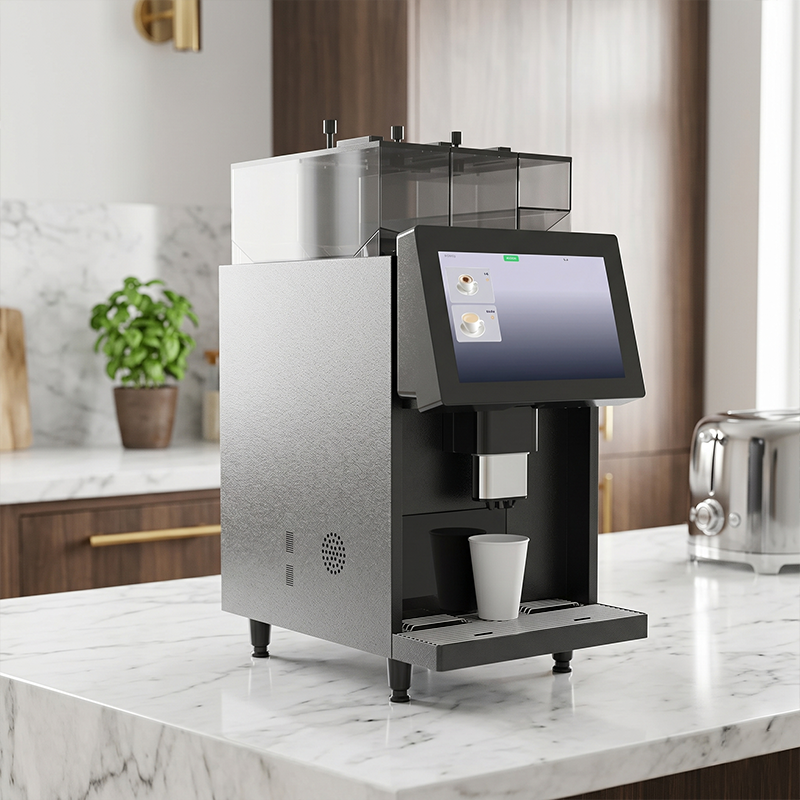
 A coffee vending machine is becoming popular in commercial spaces because it can provide consistent drinks with less staff involvement, longer service availability, and centralized operational control. The best automated coffee solution combines reliable brewing equipment, cashless payment, remote monitoring, simple cleaning routines, and a menu suited to the location rather than treating the machine as a standalone appliance.
- Automated coffee solutions extend beverage access beyond staffed service hours.
- Fresh-ground and instant coffee systems serve different speed, quality, and maintenance priorities.
- Remote monitoring helps operators manage stock, faults, menus, and service planning.
- Location, drink demand, cleaning access, payment preferences, and local regulations should guide equipment selection.
- A complete commercial coffee machine program includes hardware, software, replenishment, maintenance, and support.
Automated coffee solutions are gaining ground because they connect beverage production with labor efficiency, consistent preparation, and data-led operations. The United States Food and Drug Administration publishes the 2022 Food Code as a model for retail and food-service safety practices, showing why sanitation, equipment design, and operating procedures must be considered together. This guide explains how to evaluate coffee vending machines and commercial coffee machines for offices, hotels, campuses, factories, airports, and other busy spaces.
Why automated coffee solutions fit commercial spaces
The strongest reason for automation is that it separates beverage availability from the presence of a dedicated barista.
In an office lobby, a hotel corridor, or a factory break room, customers may want coffee before a staffed café opens, during a shift change, or when nearby food service is busy. A self-service machine can make the product available at those moments while allowing staff to focus on higher-value tasks. This does not mean automation eliminates every operational requirement. It changes the work from continuous drink preparation to replenishment, cleaning, quality control, and exception handling.
Commercial operators also value repeatability. A programmed recipe can control ingredient dosing, water delivery, grinding, mixing, and dispensing more consistently than an informal manual process. Consistency matters when a location serves employees, travelers, students, or hotel guests who expect the same menu experience from one visit to the next.
Automation can also support a broader service window. A machine placed in a secure workplace, residential community, or transport facility can provide drinks when a traditional café would be impractical. The result is not simply a coffee sale; it can improve convenience, increase the usefulness of under-served space, and complement existing food and beverage operations.
Coffee vending machine formats and their best use cases
The right coffee vending machine format depends on the desired drink experience, throughput pattern, footprint, and maintenance model.
| Format | Preparation approach | Best-fit environment | Primary operational priority |
|---|---|---|---|
| Fresh-ground coffee machine | Beans ground and brewed during service | Hotels, offices, premium public areas | Drink quality and menu appeal |
| Instant coffee machine | Soluble ingredients mixed with hot water | Factories, high-frequency break rooms, large facilities | Fast service and simplified operation |
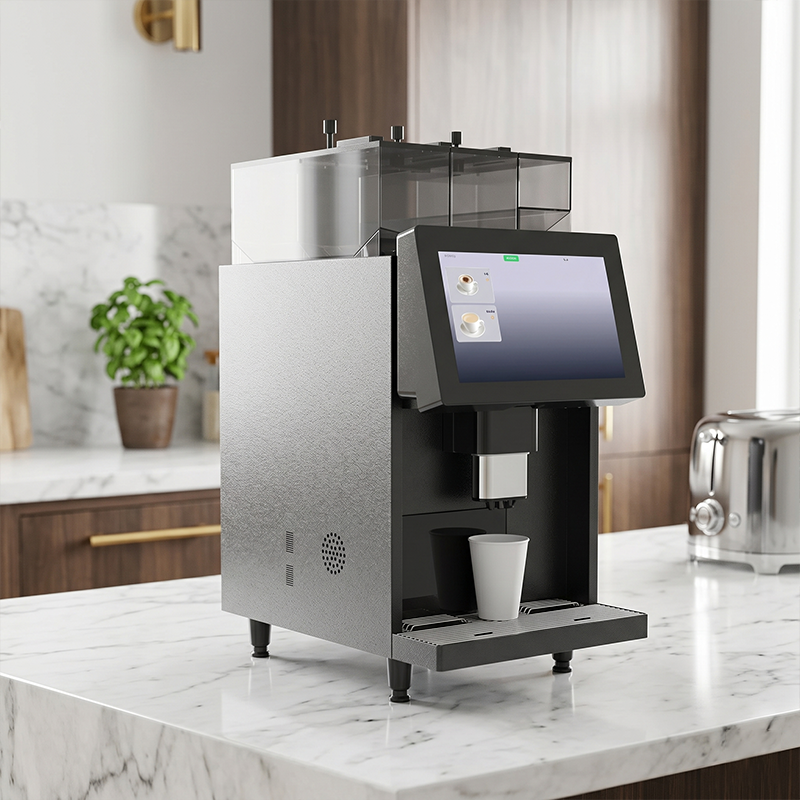
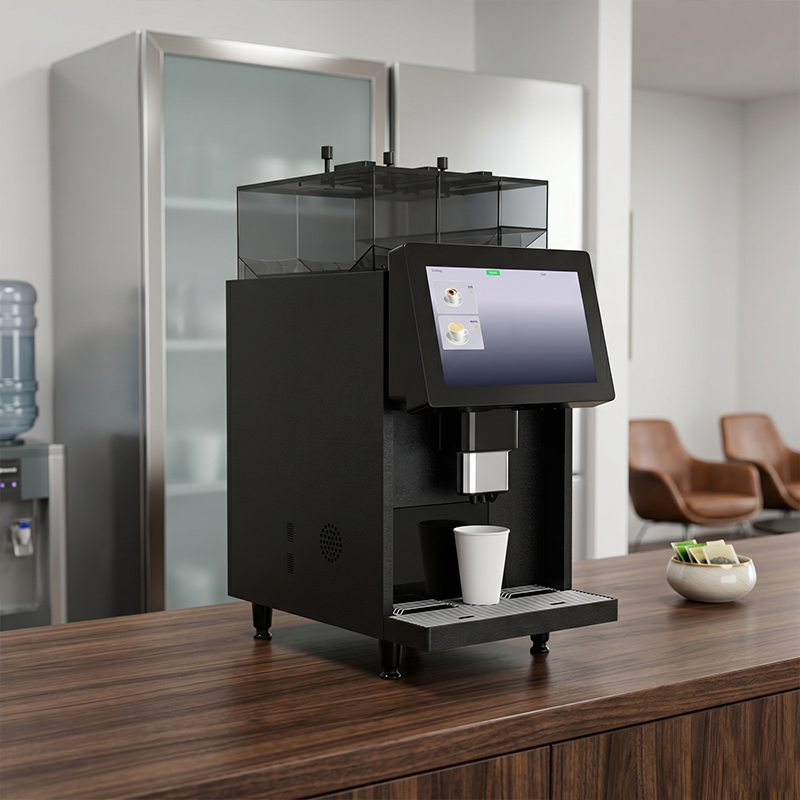
| Tabletop coffee vending machine | Compact automated preparation | Small offices, convenience areas, reception zones | Space efficiency and visibility |
| Integrated beverage terminal | Coffee combined with other automated retail functions | Campuses, communities, mixed-use facilities | Product range and unattended operation |
Fresh-ground equipment is usually selected when aroma, bean-to-cup preparation, and drink customization are central to the customer experience. Instant systems can be more suitable where rapid dispensing, straightforward ingredient handling, and easy service access matter more than a premium preparation narrative. Tabletop units help smaller venues create a visible self-service point without dedicating space to a full café counter.
Operators should avoid comparing formats only by purchase price. A lower-cost machine may require more frequent manual attention, while a more capable unit may justify its footprint through a wider menu, remote alerts, and stronger usage visibility. The correct comparison is total operating fit.
What makes a commercial coffee machine commercially viable?
A commercially viable machine must be easy for customers to use and easy for operators to maintain.
1. Simple customer interaction
Clear product names, readable prompts, accessible payment options, and an intuitive selection process reduce hesitation. In public settings, customers may have no training and only limited time. A confusing interface can reduce transactions even when the drink itself is good.
2. Flexible payment and language support
International venues may need card, mobile wallet, QR, cashless, or local payment integration. Multilingual interfaces are also important in airports, hotels, universities, and business parks. Payment capability should be assessed as part of the deployment plan, not added after the machine arrives.
3. Remote monitoring
Remote monitoring turns a vending machine into a managed business asset. Operators can review stock status, sales activity, machine alarms, ingredient consumption, and service needs without visiting every site. This allows replenishment routes to be planned around actual demand rather than fixed assumptions.
4. Maintainable internal design
Cleaning access, removable food-contact components, drain management, ingredient loading, and error recovery directly affect uptime. A machine that looks advanced but is difficult to clean can create more operational risk than a simpler system. The FDA Food Code is a useful reference point for developing hygienic operating procedures, although local authorities and site requirements remain decisive.
5. Menu control
A strong menu is location-specific. An office may need espresso-based drinks, black coffee, and milk options. A factory may prioritize speed and familiar selections. A hotel may require premium presentation and guest-friendly customization. Digital menu control allows operators to adjust products as preferences, supply conditions, or seasonal demand change.
 Automated coffee solution benefits by location
The business case becomes clearer when the machine is matched to a specific customer journey.
| Location | Customer need | Recommended capability | Key measurement |
|---|---|---|---|
| Office building | Convenient drinks during work breaks | Fresh-ground menu, cashless payment, remote alerts | Transactions by work period |
| Airport or transport site | Fast service with limited waiting | High-visibility interface, rapid recipes, multilingual support | Service time and queue flow |
| School or campus | Affordable access across varied schedules | Controlled menu, dependable payment, simple cleaning | Usage by location and time |
| Factory | Reliable drinks during shift changes | Fast preparation, durable construction, high-capacity supplies | Consumption per shift |
| Hotel | Guest convenience and perceived service quality | Premium drinks, clear branding controls, flexible placement | Guest usage and satisfaction |
For a factory, the most important feature may be predictable service during concentrated breaks. For a hotel, the same machine may be judged by presentation, menu quality, and ease of use. For an airport, speed and payment reliability may outweigh a larger recipe selection. These differences explain why a single universal specification rarely produces the best result.
How software improves unattended coffee operations
Software is valuable when it reduces uncertainty between customer demand and field service.
An Internet-connected management platform can provide a central view of machine status, ingredient levels, sales trends, and technical alarms. Operators can use this information to identify slow-moving products, detect abnormal consumption, and schedule replenishment more efficiently. The practical goal is not to collect data for its own sake; it is to make better decisions about stock, pricing, maintenance, and placement.
Data can also support menu testing. If a drink receives little demand in one location, the operator can review whether the issue is price, visibility, recipe preference, or timing before replacing equipment. If a product sells rapidly, inventory planning can be adjusted to reduce avoidable stockouts.
Connectivity must be designed with security and continuity in mind. Buyers should ask how user access is controlled, how software updates are handled, what happens during network interruptions, and whether transaction data can be exported. A machine should still provide a safe and understandable customer experience when connectivity is temporarily unavailable.
Fresh-ground versus instant coffee systems
Fresh-ground and instant systems solve different operational problems, so the choice should follow the service promise.
- Choose fresh-ground equipment when bean aroma, beverage customization, and a café-style experience influence purchase decisions.
- Choose instant equipment when speed, simplified ingredient handling, and straightforward cleaning are the dominant priorities.
- Consider a tabletop format when the site has limited floor area but still needs a visible automated beverage point.
- Use a mixed deployment when different buildings or customer groups require different service levels.
Fresh-ground systems may introduce more components that require cleaning and calibration, including grinders, brewing assemblies, and milk-handling parts where applicable. Instant systems can reduce preparation complexity but may offer a different taste profile and customer perception. In both cases, operators should validate water quality, electrical requirements, ventilation, drainage, consumable supply, and service access before purchase.
Buyer checklist for a commercial coffee machine
A structured site assessment prevents equipment decisions based only on appearance or advertised features.
- Define the customer group, operating hours, and expected demand pattern.
- Measure available floor or counter space and confirm access for delivery and service.
- Choose the drink preparation model and confirm ingredient storage requirements.
- Verify payment methods, network availability, language needs, and local compliance requirements.
- Review cleaning tasks, refill frequency, waste handling, and escalation procedures.
- Confirm remote monitoring functions, user permissions, reporting, and software support.
- Agree on installation, training, spare parts, warranty terms, and after-sales response.
Buyers can use an illustrative one-to-five score for each criterion, but the score should represent the site’s own priorities rather than a supplier’s performance claim.
| Evaluation criterion | Illustrative score range | What a high score means | Evidence to request |
|---|---|---|---|
| Customer usability | 1–5 | Fast, clear, low-training interaction | Interface demonstration |
| Maintenance access | 1–5 | Routine tasks are simple and visible | Cleaning and refill demonstration |
| Connectivity | 1–5 | Useful alerts and operational reporting | Live software walkthrough |
| Payment flexibility | 1–5 | Supports the site’s preferred payment methods | Integration and settlement details |
| Supply continuity | 1–5 | Ingredients and parts can be replenished reliably | Supply and service plan |
The scoring scale is a planning tool, not a certified performance measurement. A supplier should support claims with demonstrations, documentation, references, and a clear deployment plan.
Operational risks and how to manage them
Automation does not remove service work; it makes service work more measurable and more important.
Empty ingredient containers, blocked dispensing paths, payment failures, poor water quality, and neglected cleaning can quickly damage customer trust. Preventive routines should specify who checks the machine, what is inspected, how faults are recorded, and when a technician is contacted. The National Automatic Merchandising Association provides industry context for automatic merchandising, while local food-safety authorities should determine site-specific requirements.
Operators should also plan for demand variation. A machine in a workplace may have concentrated use during breaks, while a hotel unit may see more consistent but unpredictable guest demand. Remote data, staff feedback, and scheduled audits should be used together. Relying on a fixed refill schedule can result in unnecessary visits at some sites and stockouts at others.
Energy use is another consideration. Buyers can review applicable commercial food-service equipment guidance from ENERGY STAR commercial coffee maker resources and compare standby behavior, heating requirements, operating schedules, and local electricity conditions. Any energy comparison should use the exact model documentation and operating assumptions.
Why the complete solution matters
The best deployment combines equipment, consumables, software, and operating support into one accountable workflow.
A manufacturer or solution provider may support OEM or ODM customization for exterior design, recipes, languages, payment interfaces, and functional configuration. This can be useful when a hotel group, campus operator, or international distributor needs a consistent platform adapted to local conditions.
For a broader unattended retail program, coffee can be connected with snack and beverage vending, micro-market terminals, ice-making equipment, and service-oriented devices. This creates more customer touchpoints while allowing operators to coordinate replenishment and monitoring. The commercial logic is strongest when each product supports a real site need rather than being added simply to expand the catalog.
Yile Shangyun develops commercial self-service equipment covering coffee, beverages, ice, vending, and intelligent service terminals. Its approach combines hardware, connected management tools, customization, and operational support for offices, airports, schools, factories, hotels, campuses, and communities. Buyers can review the commercial automated vending solutions and discuss site requirements, menu configuration, payment integration, and service planning before selecting a deployment model.
FAQ
What is an automated coffee solution?
An automated coffee solution is a self-service beverage system that combines coffee preparation equipment with user controls, payment options, ingredients, monitoring, maintenance, and operating procedures.
Is a coffee vending machine suitable for an office?
Yes. Offices commonly benefit from convenient self-service access, consistent recipes, and reduced dependence on a staffed café. The machine should be selected according to workplace size, beverage preferences, cleaning access, and payment policy.
What is the difference between fresh-ground and instant coffee machines?
A fresh-ground machine grinds beans during preparation, while an instant machine mixes soluble coffee ingredients with hot water. Fresh-ground equipment generally supports a stronger bean-to-cup experience, while instant equipment can simplify speed and maintenance.
Do commercial coffee machines need an internet connection?
Not every machine requires continuous connectivity for basic dispensing, but a network connection can support remote alerts, stock visibility, sales reporting, menu control, and service planning. Buyers should confirm offline behavior before deployment.
How often does an automated coffee machine need cleaning?
Cleaning frequency depends on the machine design, ingredients, usage, local rules, and manufacturer instructions. The supplier should provide a written schedule covering daily checks, food-contact parts, waste areas, deep cleaning, and escalation procedures.
Can the payment system be customized?
Many commercial deployments can be configured for card, mobile wallet, QR, cashless, or regional payment methods, but compatibility depends on the machine, payment provider, network, and local market requirements.
What should buyers request before placing an order?
Request technical documentation, installation requirements, cleaning instructions, software capabilities, payment details, consumable specifications, warranty coverage, spare-parts arrangements, training information, and references from comparable locations.

Post time: Sep-22-2026