

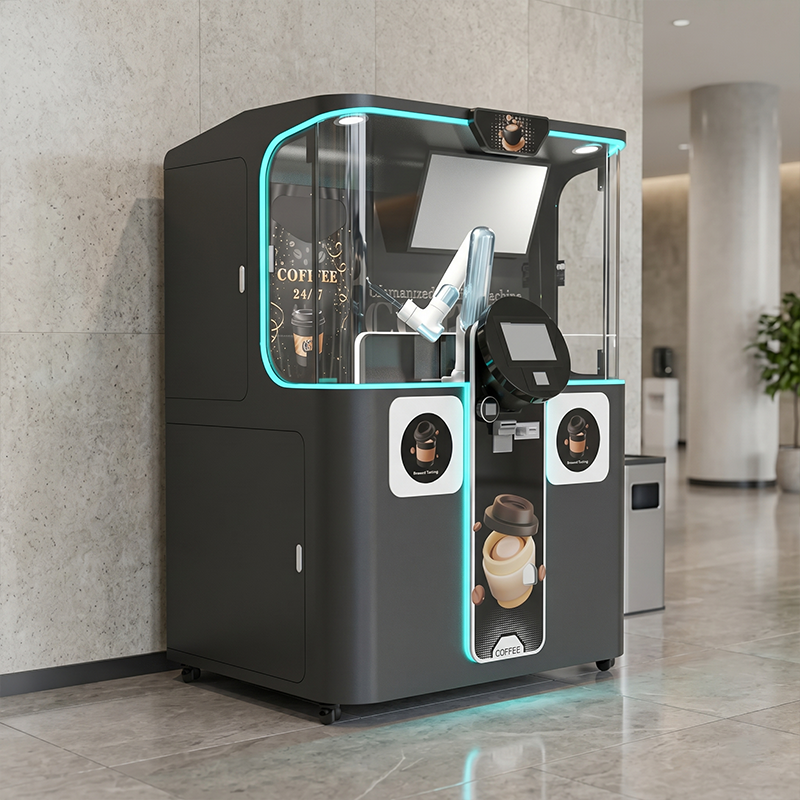
At busy tech exhibitions, brands have only seconds to attract attention and start meaningful conversations. An exhibition robot barista solves both challenges at once by combining live automation, hospitality, and visual spectacle in a compact booth feature. Instead of offering coffee as a routine giveaway, exhibitors turn beverage service into a demonstration that draws crowds, increases dwell time, and gives staff a natural opening to engage visitors. This article explains why coffee robot solutions have become so popular at event venues, from their impact on foot traffic and brand perception to their practical advantages in service consistency, staffing efficiency, and measurable booth performance.
Why Exhibition Robot Baristas Matter at Trade Shows
Trade shows demand high-impact strategies to capture attendee attention within a critical three-to-five-second window. As floor competition intensifies and traditional displays lose their novelty, integrating an exhibition robot barista has emerged as a high-return strategy for booth activation. These automated systems blend hospitality with cutting-edge engineering, transforming a standard coffee break into a highly visible technological showcase.
Beyond mere aesthetics, deploying automated food and beverage technology directly addresses the logistical challenges of event catering. By streamlining operations and creating a focal point, exhibitors can reliably boost foot traffic while maintaining strict control over per-cup costs and service quality.
How robot baristas improve booth engagement
Incorporating automation into a trade show footprint dramatically shifts visitor behavior. Traditional booths often struggle to retain attendees for more than 30 to 60 seconds unless a direct sales conversation is initiated. However, a robotic coffee station naturally extends dwell time. Visitors typically spend two to three minutes observing the mechanical precision of the preparation process.
This extended waiting period provides sales representatives with a captive audience and an organic conversation starter. Instead of aggressive cold-pitching, booth staff can engage attendees while they wait for their beverage, significantly increasing the volume of qualified interactions and badge scans per hour.
Why exhibitors choose automated coffee service
Exhibitors gravitate toward automated coffee services to guarantee consistent quality and high-volume output under pressure. A well-calibrated robotic system can seamlessly produce 50 to 60 cups per hour without requiring breaks, suffering from fatigue, or experiencing a drop in beverage quality.
This uninterrupted workflow ensures that peak traffic periods—such as the morning rush or post-keynote surges—are managed efficiently. Furthermore, the 100% consistency in pouring and mixing means every attendee receives the exact same premium experience, which translates into a positive and memorable brand association for the exhibiting company.
What Makes an Exhibition Robot Barista Effective
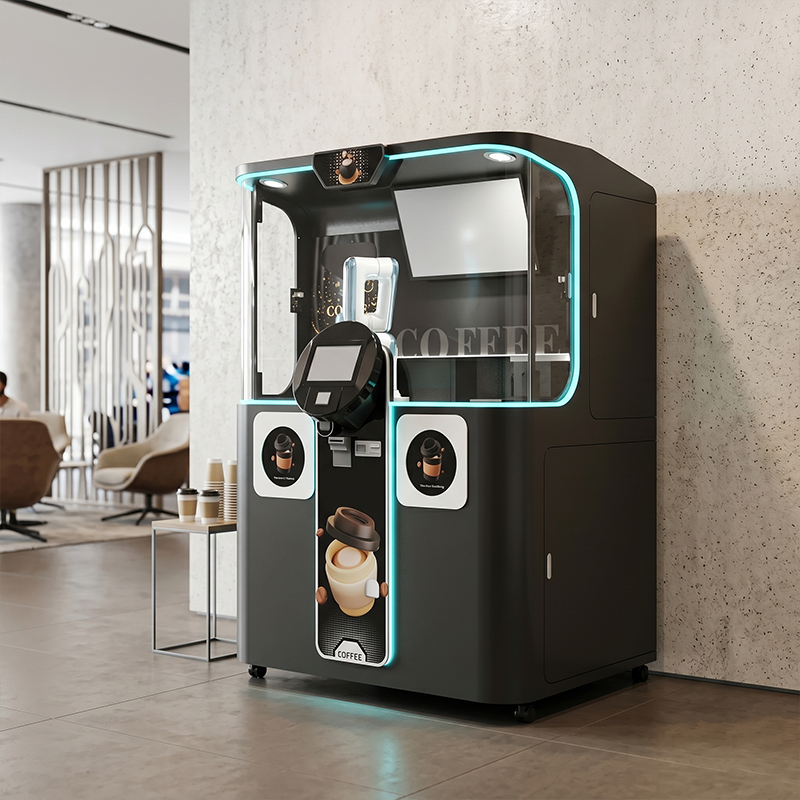
Core components and service workflow
The architecture of a standard exhibition unit includes a multi-axis robotic arm, a commercial-grade espresso machine, automated cup and lid dispensers, and precise syrup modules. When integrated with a user-friendly touchscreen interface, this exhibition robot barista executes a flawless service workflow that mimics human expertise.
The patron selects a beverage via a digital menu, and the robotic arm replicates the exact tamping, brewing, and pouring motions of a master barista. Advanced telemetry systems monitor internal temperatures and pressure in real-time, ensuring every latte or espresso meets strict quality parameters before it is served to the attendee.
Key performance metrics for events
Event organizers and exhibitors track specific metrics to gauge the success of their automated installations. Critical performance indicators include processing speed, system uptime, and ingredient yield, all of which directly impact the total return on investment for the booth.
| Performance Metric | Typical Range / Target | Event Impact |
|---|---|---|
| Preparation Time | 45 to 90 seconds per cup | Keeps queues moving efficiently without creating hall bottlenecks. |
| Operational Uptime | > 99.5% | Ensures continuous service during critical 8-to-10-hour exhibition days. |
| Order Accuracy | 100% programmable precision | Eliminates remakes and ingredient waste, keeping operational margins tight. |
| Material Waste | Under 2% | Maximizes the number of servings per ingredient load and reduces restocking needs. |
By maintaining these strict performance thresholds, robotic systems ensure that the cost-per-acquisition remains low while the perceived value of the booth experience remains exceptionally high.
Robot Baristas vs Human-Staffed Coffee Service
Deciding between a traditional human-staffed coffee cart and a robotic solution involves evaluating several logistical and financial variables. Both approaches offer unique benefits, but their operational profiles differ significantly in the context of a fast-paced exhibition environment.
Cost, speed, and experience trade-offs
The trade-offs between human and automated service center on cost structures, production speed, and the attendee experience. Human baristas offer personalized banter and adaptability but are limited by physical fatigue, typically maxing out at 50 to 60 cups per hour before efficiency drops. In contrast, a robot barista maintains a consistent, relentless pace of 50 to 70 cups per hour from the first minute to the last.
Financially, deploying a human team with commercial equipment often ranges from $1,500 to $2,500 per day, factoring in labor, travel, and hourly minimums. Robotic rentals generally occupy a similar or slightly higher bracket of $1,500 to $3,000 per day, but they offset this initial premium through extended operational hours, zero required break times, and the elimination of secondary staffing overhead.
How to compare both options
To effectively compare these options, event managers must analyze spatial requirements, consistency, and brand alignment to determine which service model best supports their trade show objectives.
| Comparison Factor | Human-Staffed Service | Exhibition Robot Barista |
|---|---|---|
| Footprint Requirement | 4 to 6 square meters | 2 to 3 square meters |
| Novelty & Draw | Moderate (standard hospitality) | Very High (technological spectacle) |
| Consistency | Variable (depends on operator fatigue) | Absolute (programmed precision) |
| Staffing Overhead | Requires dedicated baristas and runners | Requires one minimal-supervision attendant |
Ultimately, the choice comes down to whether the exhibitor values traditional hospitality warmth or the high-impact, high-efficiency draw of modern automation.
Operational and Compliance Considerations
Deploying complex machinery in a temporary exhibition hall requires strict adherence to facility guidelines and proactive logistical planning. Overlooking utility requirements or local safety standards can result in costly installation delays or operational shutdowns.
Power, water, connectivity, and refilling needs
Automated coffee systems demand specific utility hookups to function flawlessly. Most commercial units require a dedicated 220V or 110V electrical circuit capable of handling peak loads between 3,000W and 5,000W during the active brewing cycle. Securing this power early from the venue is critical to avoid last-minute surcharges.
Water supply is equally vital; setups typically rely on self-contained 19-liter (5-gallon) water reservoirs to maintain mobility, though direct plumbing lines can be utilized if the venue permits. Furthermore, telemetry and payment processing necessitate a stable 4G/5G cellular router or a dedicated venue Wi-Fi connection. Depending on volume, ingredient modules and water tanks generally require a brief refilling intervention every 100 to 150 cups.
Food safety, liability, and shipping factors
Safety and compliance are non-negotiable on a crowded trade show floor. Robotic systems must feature collision detection, pinch-point sensors, and emergency stop protocols to protect attendees who may lean too close to the enclosure. Additionally, all components touching consumables must carry appropriate food safety certifications, such as NSF, UL, or CE marks, depending on the region.
Shipping these units also requires specialized logistics. The combined weight of the robotic chassis, espresso machine, and protective casing often exceeds 250 kilograms. This necessitates heavy-duty, shock-absorbent crates and coordination with the event’s official drayage contractor to ensure safe transport from the loading dock to the booth space.
How to Decide if a Robot Barista Fits Your Event
Investing in an automated coffee station is a strategic decision that hinges on booth size, expected foot traffic, and overall marketing objectives. A methodical evaluation ensures the technology serves as a profitable lead-generation tool rather than just an expensive prop.
Steps to evaluate event fit and ROI
Evaluating event fit begins with analyzing spatial capacity and visitor volume. A booth footprint of at least 20×20 feet (400 square feet) is generally recommended to accommodate the machine, the queue, and the resulting sales interactions without causing hall congestion.
Exhibitors should project a minimum daily traffic of 500 visitors to justify the 150 to 200 cups the machine will dispense daily. By calculating the total cost of the rental against the number of qualified leads captured during the extended dwell time, companies can accurately project their return on investment. Organizations looking to integrate this technology should consult an exhibition robot barista provider early in the planning cycle to secure availability and discuss custom branding options for the machine’s exterior.
When a robot barista is the right choice
A robot barista is the ideal choice when an exhibitor aims to project an image of innovation, efficiency, and forward-thinking engineering. It is particularly effective at technology, manufacturing, software, and engineering trade shows, where the audience possesses an inherent appreciation for automation and precision.
In these high-tech environments, the robotic system reinforces the exhibitor’s core messaging. It transforms a simple hospitality gesture into a powerful, thematic extension of the brand identity, proving to potential clients that the company embraces the future of technology in every aspect of its operations.
Further reading:
Key Takeaways
- The most important conclusions and rationale for exhibition robot barista
- Specs, compliance, and risk checks worth validating before you commit
- Practical next steps and caveats readers can apply immediately
Frequently Asked Questions
Why do exhibition robot baristas attract more booth traffic?
They combine live robotics with fresh coffee, giving visitors a reason to stop, watch, and engage. That extra dwell time helps sales teams start more natural conversations.
How many drinks can an exhibition robot barista usually serve per hour?
A well-configured unit typically serves about 50 to 60 cups per hour, helping booths handle peak trade show traffic without long delays.
Are robot baristas reliable enough for full-day tech exhibition events?
Yes. Event-focused systems are built for high uptime, often targeting over 99.5%, with consistent drink quality across long 8- to 10-hour show days.
What should exhibitors check before renting or buying a robot barista?
Focus on cup output, preparation time, uptime, drink customization, footprint, and refill needs. YL Vending product options can help match the machine to your booth goals.
Is a robot barista better than a human-staffed coffee cart at exhibitions?
It depends on your goals. Robot baristas usually offer stronger visual impact, more consistent drinks, and easier cost control, while human carts may feel more personal.
Post time: Jun-23-2026