

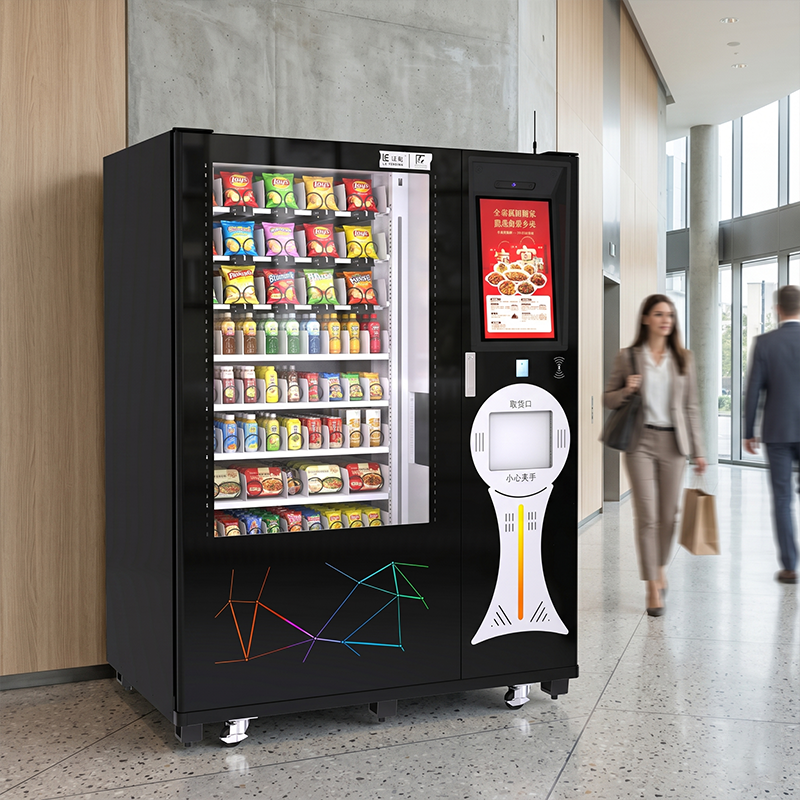
Rising labor costs, longer operating expectations, and the widespread use of cards and mobile wallets are pushing retailers toward smarter unattended sales options. A cashless retail machine does more than remove coins and bills; it combines seamless payment, inventory visibility, and around-the-clock availability in a compact retail format. For businesses, that can mean lower staffing pressure and better use of high-traffic locations. For customers, it means faster purchases with fewer barriers. This article explains why these machines are gaining traction, what problems they solve, and which retail settings are adopting them most quickly.
Why Cashless Retail Machines Are a Growth Strategy
The commercial retail landscape is undergoing a structural transformation, driven largely by the transition toward automated, unattended sales channels. A cashless retail machine represents a significant evolutionary step from traditional coin-operated vending, combining digital payment gateways with real-time inventory tracking to create highly efficient, autonomous storefronts.
Labor Pressure and Convenience Demand
With labor costs escalating—often exceeding $15 to $20 per hour in major metropolitan minimum wage brackets—retailers face immense pressure to optimize workforce allocation. Cashless retail machines alleviate this burden by functioning without on-site cashiers or floor staff. Concurrently, modern consumer behavior demands frictionless convenience. Consumers increasingly prefer tap-to-pay or mobile wallet transactions over carrying physical currency, accelerating the obsolescence of cash-only systems and driving the need for rapid, touch-and-go retail experiences.
Extended Hours and Unattended Selling
Unattended selling fundamentally alters the operational limits of a retail footprint. By deploying smart machines, businesses can extend their sales windows to 24 hours a day, 7 days a week. This continuous availability effectively increases the revenue-generating operating window by 30% to 50% for typical brick-and-mortar brands, capturing late-night or early-morning sales without incurring proportional overtime or night-shift labor expenses.
Retail Formats Adopting Smart Machines
Diverse retail environments are aggressively integrating these systems to capture localized demand. High-traffic transit hubs, corporate breakrooms, hospital cafeterias, and residential apartment lobbies serve as prime locations for autonomous units. Forward-thinking operators often review comprehensive industry data, such as the insights provided about us as a leading equipment manufacturer, to understand how various retail formats benefit from automated, cashless deployment strategies.
What Defines a Smart Cashless Retail Machine
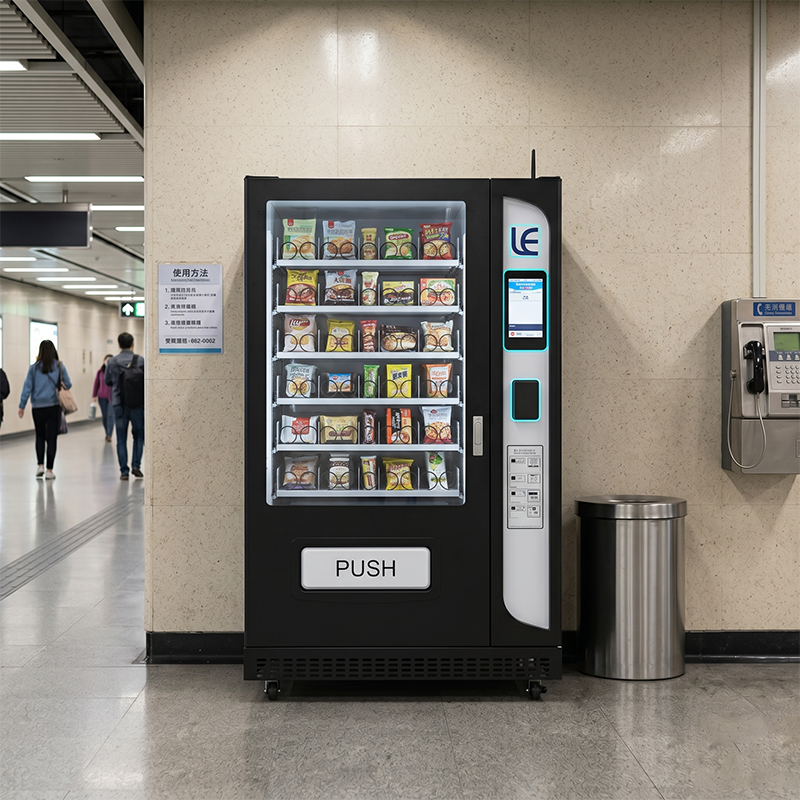
Transitioning from mechanical vending to smart retail requires understanding the specific hardware and software components that enable autonomous operations. A modern cashless retail machine is a sophisticated endpoint in a broader Internet of Things (IoT) network, engineered to maximize uptime and user engagement.
Core Technologies and Capabilities
The foundation of a smart machine lies in its embedded telemetry and connectivity modules. Utilizing 4G LTE or 5G cellular networks, these units maintain a continuous bidirectional data stream with cloud servers, aiming for a 99.9% network uptime. High-definition touchscreens, which replace traditional physical push-buttons, allow for dynamic product displays, digital advertising capabilities, and interactive nutritional information that engages the consumer before the purchase.
Payment, Inventory, and Remote Management Features
Advanced payment peripherals seamlessly accept EMV chip cards, NFC mobile wallets, and closed-loop campus or corporate ID cards. Beyond payments, sophisticated inventory management utilizes weight sensors, RFID tags, or computer vision cameras to track product removal in real-time. This remote management capability allows operators to monitor machine health, internal refrigeration temperatures, and sales velocity from a centralized digital dashboard.
How Buyers Should Compare Options
When evaluating equipment, buyers must analyze total cost of ownership against technical capabilities. Operators can explore various cashless retail machine models to benchmark specifications and ensure the hardware aligns with their operational goals.
| Feature Category | Traditional Vending | Smart Cashless Machine |
|---|---|---|
| Payment Acceptance | Coin, Paper Fiat | NFC, EMV Chip, Mobile Wallet |
| Inventory Tracking | Manual / On-site | Real-time Cloud Telemetry |
| User Interface | Mechanical Buttons | Interactive HD Touchscreen |
| Average Hardware Cost | $1,500 – $3,000 | $3,500 – $8,000+ |
Financial and Operational Benefits
The adoption of smart unattended retail solutions is primarily justified by compelling financial returns and streamlined backend operations. The integration of digital payments and telemetry fundamentally restructures the profit and loss dynamics of remote selling.
Revenue and Efficiency Gains
Implementing cashless payment gateways directly correlates with increased consumer spending. Industry data indicates that cashless transactions typically yield an average ticket size 20% to 30% higher than cash purchases, as buyers are not constrained by the physical bills in their pockets. Furthermore, eliminating cash handling removes the labor hours previously dedicated to counting coins, rolling currency, and executing manual bank deposits, directly boosting net operating margins.
Shrinkage, Maintenance, and Refill Optimization
Operational efficiency scales dramatically with remote monitoring. Telemetry software reduces unnecessary route visits by allowing drivers to service only machines that require restocking. This targeted approach can decrease out-of-stock events by up to 40% and drastically reduce fuel and vehicle maintenance costs. Additionally, smart inventory tracking minimizes product shrinkage, while predictive maintenance alerts notify operators of compressor failures before a machine goes entirely offline.
Key ROI and Cost Drivers
The initial capital expenditure (CapEx) for a high-end smart machine ranges between $3,500 and $8,000, depending on the footprint, refrigeration needs, and sensor complexity. However, the combination of higher sales volume and reduced routing costs typically results in a highly favorable Return on Investment (ROI). In optimal locations with steady foot traffic, operators frequently achieve full ROI within 12 to 18 months, establishing a highly scalable and repeatable business model.
Risks, Compliance, and Deployment Challenges
Despite the clear financial incentives, deploying a fleet of connected retail machines introduces specific regulatory, technical, and security challenges that operators must proactively manage to ensure sustainable profitability and legal compliance.
Payment Security, Privacy, and Accessibility
Security and compliance are paramount in unattended retail environments. All integrated card readers and payment gateways must adhere strictly to Payment Card Industry Data Security Standard (PCI-DSS) guidelines to protect consumer financial data through end-to-end encryption. Furthermore, physical accessibility is a strict legal requirement in many jurisdictions; for instance, the Americans with Disabilities Act (ADA) mandates that interactive screens and payment terminals must not exceed a maximum reach height of 48 inches from the ground for wheelchair accessibility.
Connectivity and Rollout Risks
The reliance on continuous cloud connectivity presents a distinct rollout risk. Machines placed in underground transit stations, concrete-heavy hospital basements, or rural areas may suffer from cellular dead zones, rendering the cashless systems inoperable. Operators must conduct rigorous pre-installation site surveys to test signal strength, sometimes necessitating the installation of secondary Wi-Fi antennas or cellular signal boosters. For complex deployment strategies, operators should contact us or consult with networking specialists to guarantee uninterrupted service.
How to Decide if a Cashless Retail Machine Fits Your
Strategic planning is the differentiator between a highly profitable automated retail fleet and a stranded capital investment. Operators must rigorously assess site viability, product strategy, and deployment phasing before committing to hardware purchases.
Site Selection, Product Mix, and Customer Profile
Successful deployment hinges on matching the right machine and product mix to the demographic of the location. A baseline requirement for a profitable deployment is typically a minimum of 200 to 300 daily passersby in a captive environment. High-margin electronics might suit an airport terminal, while fresh food performs best in corporate breakrooms.
| Location Type | Min. Daily Foot Traffic | Optimal Product Mix | Target Gross Margin |
|---|---|---|---|
| Corporate Office | 150+ | Fresh Food, Premium Beverages | 40% – 50% |
| Transit Hub | 1,000+ | Electronics, Travel Accessories | 50% – 65% |
| Gym / Fitness | 200+ | Supplements, Protein Snacks | 45% – 55% |
Pilot vs Full Deployment Decision Criteria
To mitigate financial exposure, businesses should utilize a phased rollout strategy. A pilot program consisting of 3 to 5 machines allows operators to establish baseline metrics, such as daily transaction volume, peak purchasing hours, and product turnover rates in real-world conditions. Once the pilot proves that the location meets the target 12-to-18-month ROI threshold and operational workflows are refined, the operator can confidently transition to a full-scale deployment of 50 or more units, leveraging economies of scale.
Further reading:
Key Takeaways
- The most important conclusions and rationale for cashless retail machine
- Specs, compliance, and risk checks worth validating before you commit
- Practical next steps and caveats readers can apply immediately
Frequently Asked Questions
Why are cashless retail machines becoming more popular?
They reduce labor needs, support 24/7 sales, and match how customers prefer to pay—tap, card, or mobile wallet.
What payment methods should a modern cashless retail machine accept?
Look for EMV chip cards, NFC tap-to-pay, mobile wallets like Apple Pay or Google Pay, and optional campus or employee ID payments.
How do smart retail machines help operators save time?
They provide real-time inventory, sales, and machine-status data, so teams can refill faster, reduce site visits, and fix issues sooner.
Where do cashless retail machines perform best?
High-traffic, unattended locations work best, such as offices, hospitals, transit hubs, schools, and apartment lobbies.
How can I compare cashless retail machine options on YL Vending?
Review YL Vending product specs for payment support, telemetry, touchscreen features, cooling, and remote management to match your location and budget.

Kely
Post time: Jun-14-2026