

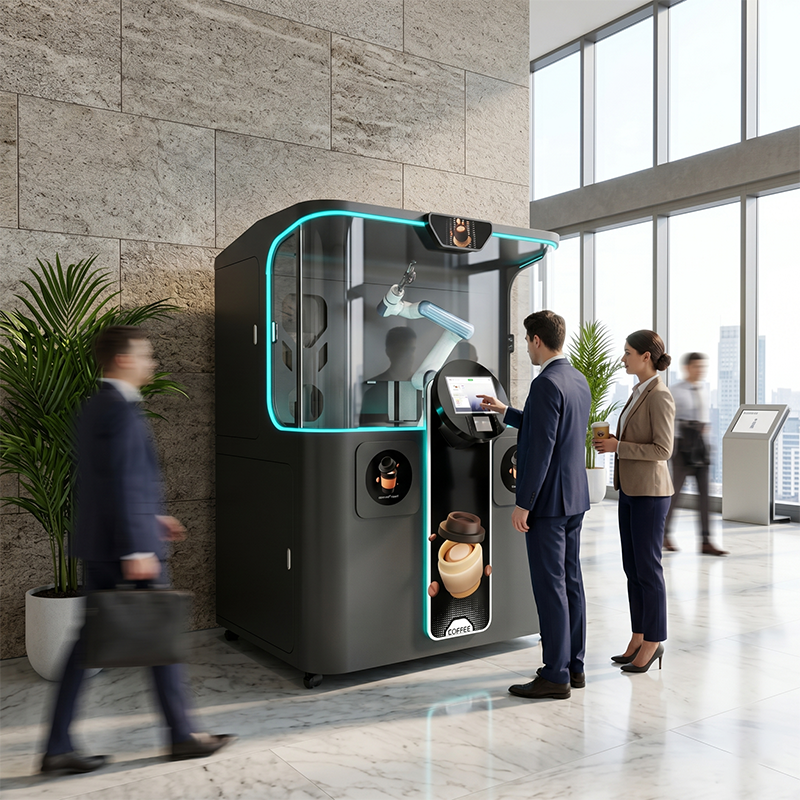
Shopping malls are under pressure to serve more visitors with fewer staff and tighter operating margins. A robot coffee machine fits that need by combining speed, consistency, and unattended service in one compact format.
Why Shopping Malls Need a Robot Coffee Machine in 2026
A robot coffee machine is most valuable in malls because it turns peak-hour beverage demand into a predictable self-service workflow. In busy retail environments, that matters more than novelty, because customers expect short waits and consistent quality.
According to the U.S. Census Bureau Retail Trade data, retail traffic and sales patterns remain highly concentrated in large commercial settings, which makes service speed a practical advantage. In parallel, the IAAPA research hub shows that experience-driven venues continue to invest in interactive food and beverage formats to support dwell time and repeat visits.
For mall operators, the main benefit is operational. A self-service beverage point can extend service hours, reduce dependence on peak staffing, and keep output more uniform across the day.
What a Shopping Mall Coffee Kiosk Solves
A shopping mall coffee kiosk solves three recurring problems: long queues, inconsistent drink preparation, and high labor intensity. These issues are especially visible near cinemas, entrances, food courts, and transit-connected retail zones.
- It shortens service time during lunch, evening, and weekend peaks.
- It standardizes recipes across locations and shifts.
- It supports unattended or lightly attended operation models.
- It creates a beverage point where full cafes may not be economical.
For operators comparing formats, the kiosk model is often easier to deploy than a full cafe buildout. It needs less floor area, fewer service touchpoints, and simpler menu control.
Comparison Table: Mall Beverage Formats and Operational Fit
| Format | Best Use Case | Labor Need | Operational Strength |
|---|---|---|---|
| Traditional cafe | Full menu, seating, premium dwell zones | High | Brand depth and customization |
| Shopping mall coffee kiosk | Fast beverage sales in traffic corridors | Medium | Compact footprint and quick service |
| Robot coffee machine | Self-service or semi-unattended beverage points | Low | Consistency and automation |
How a Coffee Robot Improves Mall Operations
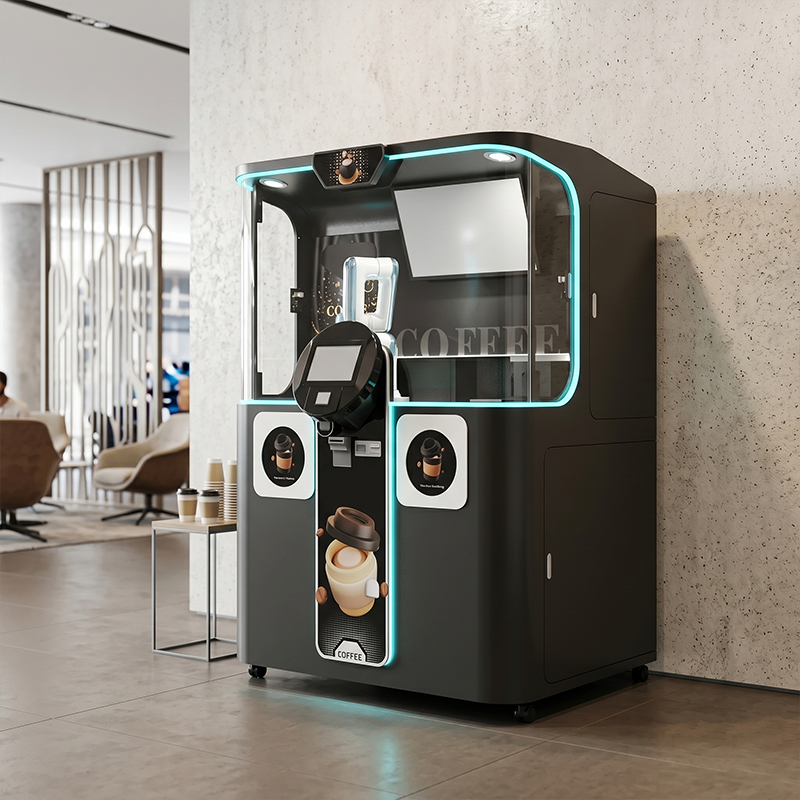
A coffee robot improves mall operations by turning beverage service into a repeatable process. The machine handles grinding, brewing, dispensing, and payment integration with less human intervention than a conventional counter setup.
This matters because mall operators increasingly evaluate equipment by uptime, throughput, and maintenance burden. The National Institute of Standards and Technology emphasizes measurement, repeatability, and process control as core elements of reliable automation, and those principles apply directly to beverage systems.
In practical terms, a robot system can help operators manage demand spikes without adding temporary labor. It also reduces training complexity, because the drink logic is embedded in the machine rather than in staff behavior.
Key Specifications for Mall Beverage Automation
| Specification | Why It Matters | Typical Mall Impact |
|---|---|---|
| Drink cycle time | Controls queue length | Faster service during peak hours |
| Recipe consistency | Maintains taste across orders | More predictable customer experience |
| Remote monitoring | Supports maintenance and stock checks | Lower downtime risk |
| Payment integration | Enables cashless self-service | Smoother transaction flow |
Where the Model Works Best in a Mall
The best mall locations for automated coffee are areas with high pass-through traffic and limited seating dependence. These include entrances, cinema lobbies, elevator banks, and mixed-use corridors.
- Transit-linked malls need fast service for commuters.
- Family malls benefit from quick beverage access near entertainment zones.
- Premium retail centers can use automation as a visible service feature.
- Food courts can add a beverage point without expanding staffing needs.
Placement matters because a machine performs best where customers already expect convenience. If the site is too hidden, the automation advantage is lost even if the equipment is technically strong.
What Mall Buyers Should Evaluate Before Purchase
Buyers should evaluate a robot coffee machine by service speed, maintenance access, menu flexibility, and software support. The hardware is only one part of the system; the control platform and after-sales process are equally important.
For procurement teams, the most useful questions are operational rather than promotional. Can the machine support local payment methods? Can it be monitored remotely? Can it be serviced quickly during mall operating hours?
Industry guidance from the ISO 9241-210 human-centered design framework is relevant here because self-service equipment must be intuitive, safe, and easy to use. In a mall, poor interface design can reduce conversion even when the machine itself is reliable.
Supplier Directory for Mall Coffee Automation
A complete sourcing strategy should compare equipment, software, and service coverage together. For buyers exploring one-stop commercial automation, the target website offers several relevant product groups, including coffee vending machines, vending machines, and ice maker vending machines.
For broader mall deployment, the same supplier ecosystem also includes coffee and tea vending machines and robot coffee vending solutions. These categories are useful when a mall wants to combine beverage automation with a stronger visual experience.
Other well-known industry references for procurement benchmarking include the NSF for food equipment safety concepts and the U.S. FDA Food guidance pages for hygiene and food-contact considerations. Those sources help buyers evaluate compliance expectations before final selection.
Why 2026 Favors Automated Beverage Points
2026 favors automated beverage points because malls are optimizing for lower operating friction and higher service density. A robot coffee machine supports both goals by reducing manual steps and making beverage service available in more locations.
According to industry estimates, malls that combine self-service drinks with digital payment and remote monitoring can improve service coverage without expanding front-of-house staffing. That is especially relevant where labor availability is tight or operating hours are extended.
The strongest use case is not replacing every cafe. It is filling the gaps where a full-service counter is too expensive, too slow, or too labor intensive.
Conclusion
A robot coffee machine is a practical mall asset when the goal is faster service, lower labor dependence, and consistent beverage quality. In 2026, shopping centers that treat it as an operational tool rather than a novelty are more likely to see real value.
For decision-makers, the best approach is to match the machine to the site, traffic pattern, and service model. That is how a shopping mall coffee kiosk becomes a scalable part of the retail experience instead of a standalone gadget.
FAQ
1. Why do malls choose automated coffee instead of adding more staffed cafes?
Malls often choose automation because it serves high traffic with fewer labor requirements. A self-service beverage point can reduce queue pressure, extend operating hours, and keep drink quality more consistent when staffing is limited or demand is uneven.
2. Is a robot coffee machine suitable for premium shopping centers?
Yes, if the design and menu fit the environment. Premium malls usually care about presentation, speed, and reliability. A well-placed automated unit can support those goals while adding a modern service layer near entrances, cinemas, or lifestyle zones.
3. What is the main difference between a coffee kiosk and a coffee robot?
A coffee kiosk is the service location, while a coffee robot is the automation system inside it. The kiosk may be staffed or semi-staffed, but the robot handles the beverage workflow, which improves consistency and reduces manual preparation steps.
4. What should mall operators check before installing one?
Operators should check footprint, power requirements, water supply, payment compatibility, cleaning access, and remote monitoring capability. They should also confirm service response times, because downtime in a mall can quickly affect sales and customer satisfaction.
5. Can one machine support both coffee and other drinks?
Some systems can support multiple beverage types, depending on recipe design and ingredient modules. In mall settings, that flexibility can be useful, but operators should avoid overcomplicating the menu if speed, uptime, and easy maintenance are the main priorities.

Post time: Jul-08-2026